
GUIDE
NUK Timeless Comfy vs. Bibs Colour Pacifier
Published on
Both are well-made pacifiers with loyal followings. NUK wins on orthodontic design and price. Bibs wins on natural materials and aesthetics. Your baby's preference will be the real tiebreaker.
NUK and Bibs approach pacifier design from completely different philosophies — one is German-engineered for jaw development, the other is Danish-designed with natural rubber and muted colors. We compared them on the things that actually matter so you can stop spiraling in the baby aisle.
Log pacifier use, sleep, and feeding patterns
Two Very Different Pacifiers — One Very Opinionated Baby
The NUK Timeless Comfy and the Bibs Colour pacifier are both wildly popular, but they could not be more different in their approach. NUK built theirs around decades of orthodontic research. Bibs built theirs around natural materials and Scandinavian design sensibility.
Here is the thing nobody tells you: your baby does not care about any of that. They care about how it feels in their mouth. Some babies will only take one shape. Others will happily use whatever you hand them. The brand wars matter a lot less than the nipple shape.
That said, there are real differences in materials, safety considerations, durability, and price that are worth understanding before you buy a six-pack of something your baby might spit across the room.
| Feature | NUK Timeless Comfy | Bibs Colour | What It Means |
|---|---|---|---|
| Manufacturer | NUK (MAPA GmbH, Germany) | BIBS (Denmark) | Both are established European baby brands with strong safety records. |
| Nipple material | BPA-free silicone | 100% natural rubber latex | Silicone is more durable and hypoallergenic. Natural rubber is softer and closer to skin feel but can trigger latex allergies. |
| Nipple shape | Orthodontic (flat, asymmetric) | Round cherry-shaped (symmetric) | NUK's shape supports jaw development. Bibs' round shape mimics the breast and is accepted by many breastfed babies. |
| Shield design | Curved, lightweight shield with ventilation holes | Classic round shield with three vent holes | NUK's curved shield sits closer to the face. Bibs' round shield is larger and has a more vintage look. |
| BPA-free | Yes | Yes | Tie. Both are free of BPA, PVC, and phthalates. |
| Size options | 0–6 months, 6–18 months, 18–36 months | 0–6 months, 6–18 months | NUK offers a third size for toddlers. Bibs covers the two most common age ranges. |
| Color range | Muted neutrals and pastels (6–8 colors) | 30+ colors including muted tones and bolder shades | Bibs wins on color variety by a wide margin. Their palette is a big part of the brand's appeal. |
| Durability | High — silicone resists wear and sterilization well | Moderate — natural rubber degrades faster with heat and UV | NUK pacifiers last longer between replacements. Budget for replacing Bibs more often. |
| Ease of cleaning | Dishwasher-safe, handles frequent boiling | Hand-wash recommended, limited boiling (5 min max) | NUK is lower maintenance. Bibs requires a bit more care to preserve the rubber. |
| One-piece construction | No — nipple attached to shield | Yes — nipple and shield are one piece | Bibs' one-piece design means no joints where bacteria can collect. Slightly easier to keep clean despite the material being fussier. |
| Latex-allergy safe | Yes — silicone contains no latex | No — made from natural rubber latex | If there is any family history of latex allergy, NUK is the safer choice. |
The Shape Question: Orthodontic vs. Cherry
This is the single biggest functional difference between these two pacifiers, and it is the one most likely to determine which your baby accepts.
NUK Timeless Comfy uses a flat, asymmetric orthodontic nipple. It sits against the palate with a flat bottom and a slightly raised top, mimicking the shape of a mother's nipple during breastfeeding according to NUK's research. Pediatric dentists tend to favor this design for long-term pacifier users because it puts less pressure on developing teeth and jaw.
Bibs Colour uses a round, cherry-shaped nipple that is symmetric — it goes in the mouth the same way regardless of orientation. Many breastfed babies find this shape more intuitive because it feels closer to a real nipple in their mouth. It also means parents do not have to worry about putting it in "upside down."
There is no universally correct answer here. Orthodontic shape is generally recommended by dental professionals for extended use. Round shape is often easier for breastfed babies to accept initially. Buy one of each and let your baby decide.
Materials: Silicone vs. Natural Rubber
The material difference has real practical implications beyond how the nipple feels.
NUK's silicone is odorless, tasteless, and extremely durable. It does not break down with heat, UV light, or repeated sterilization. It is also completely latex-free, making it safe for babies with latex allergies. Silicone feels firmer in the mouth, which some babies prefer and others reject.
Bibs' natural rubber is softer, more flexible, and has a slight natural scent and taste. Many parents say their babies prefer the softer feel. The tradeoff is durability — natural rubber breaks down faster with exposure to heat, sunlight, saliva, and sterilization. You will replace Bibs pacifiers more often, and you need to inspect them regularly for cracks or stickiness.
If your family has any history of latex allergy, this is not a close call — go with NUK's silicone. Natural rubber latex can trigger allergic reactions in sensitive individuals, and this is not something to test on a baby.
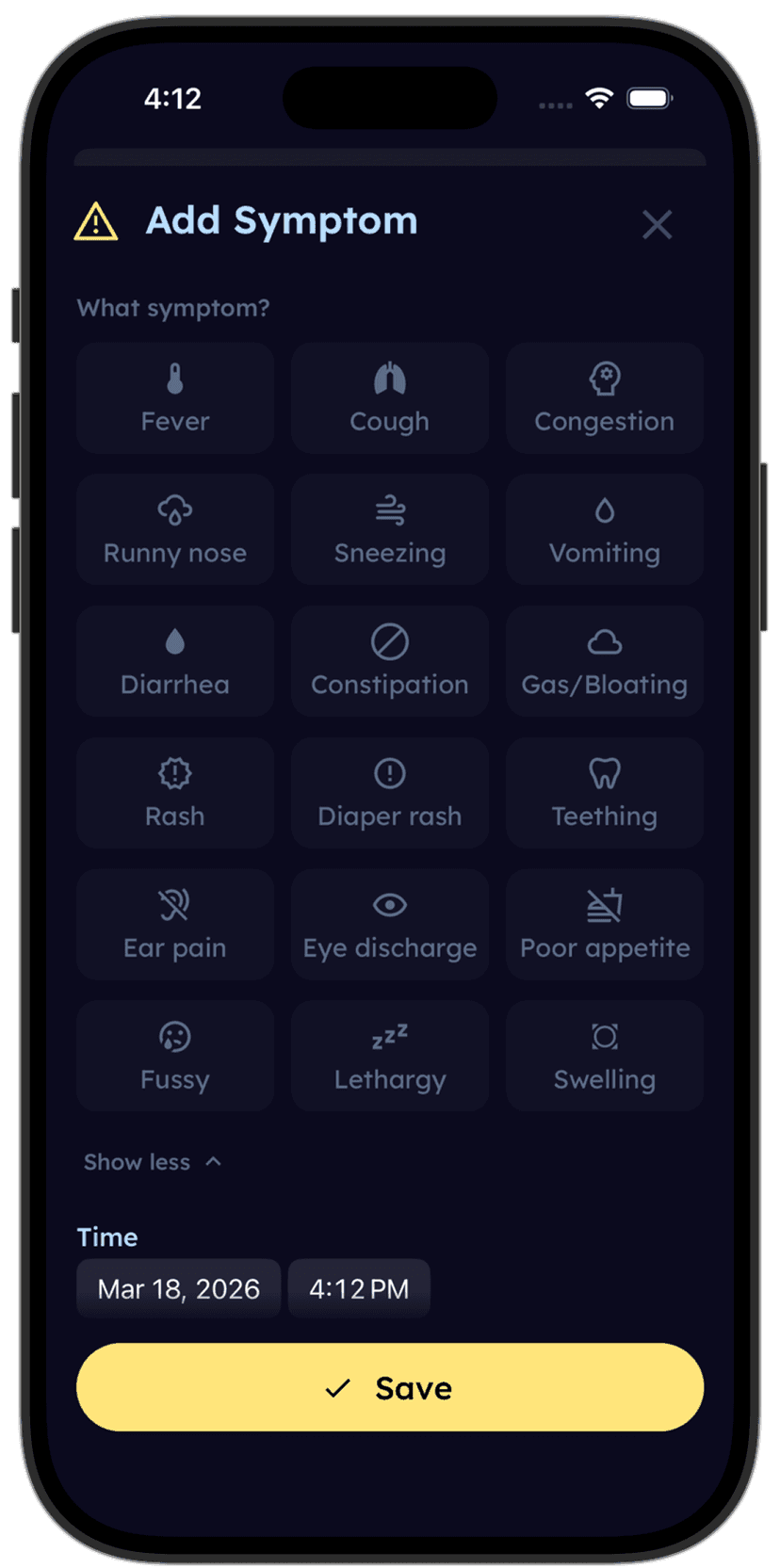
Tinylog helps you track what soothes your baby.
Log pacifier use alongside sleep and feeding patterns. Spot what works for your baby and share the data with your pediatrician.


Durability and Replacement Cost
This is where the long-term cost picture gets interesting. NUK's silicone pacifiers are cheaper per unit and last longer. Bibs' natural rubber pacifiers cost more and need replacing sooner. Over a year of pacifier use, the difference adds up.
A rough estimate: if your baby uses pacifiers from 0–12 months, you might go through 6–8 NUK pacifiers versus 10–14 Bibs pacifiers. That is the difference between roughly $25–$40 for NUK and $50–$100 for Bibs over a year.
Is it a massive expense either way? No. But if you are buying multiple pacifiers to keep around the house, the car, the diaper bag, and the grandparents' place — it adds up faster than you think.
Some tips to save money on pacifiers regardless of brand:
- Buy multi-packs. Both NUK and Bibs offer value packs that drop the per-unit cost.
- Inspect before tossing. Replace when you see damage, not on a rigid schedule. Silicone pacifiers in good condition can stretch beyond the 8-week mark.
- Keep them out of direct sunlight. UV breaks down both silicone and natural rubber. Store them in a case or pouch when not in use.
- Have a "going out" pacifier and a "home" pacifier. The ones that roll under restaurant tables get replaced faster. Protect your good ones.
| Product | Typical Price | Cost Per Pacifier | Replacement Cycle |
|---|---|---|---|
| NUK Timeless Comfy (2-pack) | $7–$10 | ~$3.50–$5.00 | Every 6–8 weeks |
| Bibs Colour (2-pack) | $10–$14 | ~$5.00–$7.00 | Every 4–6 weeks |
The Aesthetics Factor (Yes, It Matters)
Look, we are not going to pretend aesthetics do not matter. You are going to see this pacifier in approximately 4,000 photos of your baby. Bibs knows this, and they have built a brand around it.
Bibs Colour pacifiers come in over 30 colors — dusty rose, sage, vanilla, petrol blue — and they have become a genuine fashion accessory in the baby world. Instagram is full of color-coordinated Bibs flat lays, and there is a whole secondary market for discontinued colors.
NUK Timeless Comfy pacifiers are more restrained. They come in a handful of muted neutrals and pastels. They look clean and modern, but they are not going to be the star of your nursery aesthetic board.
Does this affect how well the pacifier works? Not even slightly. But if the Bibs colorway brings you a tiny spark of joy in the fog of new parenthood, that is a perfectly valid reason to buy them.
Cleaning and Sterilization: What You Need to Know
Before first use, sterilize any new pacifier by boiling it for 5 minutes. After that, daily cleaning with warm soapy water is fine for routine use. Sterilize again if your baby has been sick or the pacifier hits a particularly questionable surface.
NUK Timeless Comfy handles sterilization like a champ. Boil it, steam it, toss it in the dishwasher — silicone shrugs it all off. The material will not degrade, discolor, or get sticky from heat exposure.
Bibs Colour needs a gentler touch. Boil for no more than 5 minutes, and do not do it every day or the rubber will break down faster. Squeeze out any water that gets trapped inside the nipple after boiling — trapped moisture can cause mold. A UV or steam sterilizer is easier on the rubber than direct boiling.
Both brands sell dedicated pacifier cases that keep things clean in the diaper bag. Worth the few extra dollars to avoid the "dropped pacifier on a dirty floor" panic.
Choose NUK Timeless Comfy If
- Your baby takes a bottle with an orthodontic or flat nipple
- You want a pacifier that lasts longer between replacements
- Anyone in your household has a latex allergy or sensitivity
- You prefer lower-maintenance cleaning (dishwasher, frequent boiling)
- Your pediatric dentist recommended an orthodontic shape
- You want a pacifier option for toddlers up to 36 months
Choose Bibs Colour If
- Your baby is breastfed and prefers a round, breast-like nipple
- You prefer natural materials over synthetic ones
- Aesthetics and color matching matter to you (no judgment — they look great)
- You like the one-piece construction for easier hygiene
- Your baby has rejected flat or orthodontic pacifiers already
Where to Buy
If orthodontic design and durability are your priorities, the NUK Timeless Comfy (~$4/pacifier) is a smart, affordable pick backed by decades of dental research. Silicone holds up to sterilization, it is latex-free, and the three size options mean you will not need to switch brands as your baby grows.
If natural materials and that gorgeous Scandinavian design speak to you, the Bibs Colour (~$6/pacifier) is the one to grab. The soft natural rubber and round nipple shape win over a lot of breastfed babies, and you get to pick from a color palette that would make a Farrow & Ball swatch card jealous.
Honest recommendation: buy one pack of each. Pacifier preference is something your baby decides, not you. The $15–$20 experiment is worth it to avoid a drawer full of rejected pacifiers.
Tinylog earns a small commission on purchases made through these links, at no cost to you.
We've found promo.new handy for finding discounts on baby gear. Doesn't always have what you need, but it's worth a shot.
The Bottom Line
The NUK Timeless Comfy and Bibs Colour are both quality pacifiers from reputable brands. The differences are real and worth understanding:
NUK Timeless Comfy wins on orthodontic design, silicone durability, latex-allergy safety, easier cleaning, toddler sizing, and lower long-term cost.
Bibs Colour wins on soft natural-rubber feel, breast-like round nipple shape, one-piece construction, and a color range that honestly makes grown adults excited about a pacifier.
Your baby will tell you which one they prefer by either accepting it or launching it across the room. Buy one of each, try them both, and stock up on the winner.
If you are tracking your baby's soothing patterns — which can help you figure out sleep and feeding rhythms — Tinylog makes it simple to log everything in one place.
Related Guides
- Pacifier Weaning — When and how to ditch the pacifier without losing your mind
- Baby Sleep Training Methods — Every major method compared honestly
- Baby Feeding Chart — How much your baby should eat by age
- Breastfeeding Essentials — Gear and tips for the first few months
Sources
- NUK. "NUK Timeless Comfy Pacifier — Product Information." nuk.com, 2026.
- BIBS. "BIBS Colour — Product Information." bibsworld.com, 2026.
- American Academy of Pediatric Dentistry. "Policy on Non-Nutritive Sucking Habits." aapd.org, 2024.
- Pediatric Dentistry Journal. "Pacifier Use and Malocclusion: A Systematic Review." 2023.
- Consumer Product Safety Commission. "Pacifier Safety Requirements." cpsc.gov, 2025.
- BabyGearLab. "Best Pacifiers of 2026." babygearlab.com, 2026.
This guide is for informational purposes only. Pacifier preference varies between babies. If your baby shows signs of a latex allergy (redness, swelling, hives around the mouth) after using any natural rubber product, discontinue use and consult your pediatrician immediately.
Frequently asked questions
- Is the NUK Timeless Comfy or the Bibs Colour better for newborns?
- Both come in newborn-friendly sizes (0–6 months). NUK's orthodontic nipple shape is specifically designed to support jaw and palate development from birth. Bibs' round cherry-shaped nipple closely mimics a breast, which some breastfed newborns accept more readily. Try both — babies are notoriously picky.
- Are Bibs Colour pacifiers safe since they're made of natural rubber?
- Yes. Bibs Colour pacifiers meet EN 1400 and CPSC safety standards. Natural rubber latex is a safe, time-tested material for pacifiers. However, if your baby or family has a known latex allergy, choose silicone pacifiers like the NUK Timeless Comfy instead.
- Why does my baby reject one pacifier but accept the other?
- Nipple shape matters more than brand loyalty. NUK uses a flat, asymmetric orthodontic nipple. Bibs uses a round, cherry-shaped nipple. Babies who are breastfed often prefer the round shape. Babies used to certain bottle nipples may prefer the flatter NUK shape. It is genuinely trial and error.
- How often should I replace pacifiers?
- Replace any pacifier every 4–8 weeks, or immediately if you see cracks, tears, discoloration, or stickiness. Natural rubber (Bibs) tends to degrade faster than silicone (NUK) — especially with frequent sterilization. Inspect before every use.
- Can I sterilize both pacifiers the same way?
- Both can be sterilized in boiling water, but technique differs. NUK silicone pacifiers handle repeated boiling well with minimal wear. Bibs natural rubber pacifiers should be boiled for no more than 5 minutes, and frequent boiling will shorten their lifespan. A steam sterilizer is gentler on both.
- Do orthodontic pacifiers actually prevent dental problems?
- Orthodontic pacifiers like NUK are designed to reduce the risk of open bite and misalignment compared to round nipples. Pediatric dentists generally recommend orthodontic shapes if a pacifier is used beyond 6 months. That said, the biggest factor in dental health is stopping pacifier use by age 2–3, regardless of nipple shape.