
Let baby lead
Especially in those early weeks — they honestly know when they're hungry better than any schedule does.
GUIDE
Published on ·Updated on
How much and how often — from day one to the first birthday.
Bookmark this one. Seriously. You'll be back at 2 AM.
Free tool • Based on AAP guidelines
“What we're looking for in the office is consistent weight gain over time, not day-to-day changes.”
 Dr. Kristin Barrett, MD, Pediatrician, Cleveland Clinic
| Age | Per Feeding | Daily Total | Frequency | Tip |
|---|---|---|---|---|
| 0–2 weeks | 1–2 oz | 12–20 oz | 8–12x | Tiny tummy, tiny meals. Wake them every 3 hrs if they're too sleepy. |
| 2–4 weeks | 2–3 oz | 16–24 oz | 8–10x | Evening cluster feeding? Totally normal. Hang in there. |
| 1–2 months | 3–4 oz | 20–28 oz | 7–8x | You might get a slightly longer sleep stretch. Celebrate. |
| 2–4 months | 4–5 oz | 24–32 oz | 6–8x | If they push the bottle away, they're done — trust them. |
| 4–6 months | 4–6 oz | 24–36 oz | 5–7x | Keep an eye out for signs they're ready for solids. |
| 6–9 months | 6–8 oz | 24–32 oz | 4–6x | Solids are starting but milk is still the main event. |
| 9–12 months | 7–8 oz | 24–30 oz | 3–5x | More food variety now — they're becoming a real foodie. |
| Age | Duration | Frequency | Notes |
|---|---|---|---|
| 0–2 weeks | 10–20 min/side | 8–12x/day | Colostrum first, then your milk comes in. Feed whenever baby wants. |
| 2–6 weeks | 15–20 min/side | 8–10x/day | Your supply is building. Growth spurt around 3 weeks — they'll be hungry. |
| 1–3 months | 10–15 min/side | 7–9x/day | Baby's getting faster at this. Another growth spurt around 6 weeks. |
| 3–6 months | 5–15 min/side | 6–8x/day | Quicker sessions — they've gotten really good at eating. |
| 6–12 months | 5–10 min/side | 4–6x/day | Solids are joining the party. Try nursing before meals. |
If your baby is trending in the right direction at checkups, the day-to-day variation in feeding amounts is perfectly normal. For formula-fed babies, it's also a good idea to sign up for free recall alerts so you're notified immediately if your brand is affected by an FDA, UK FSA, or Canadian CFIA recall.
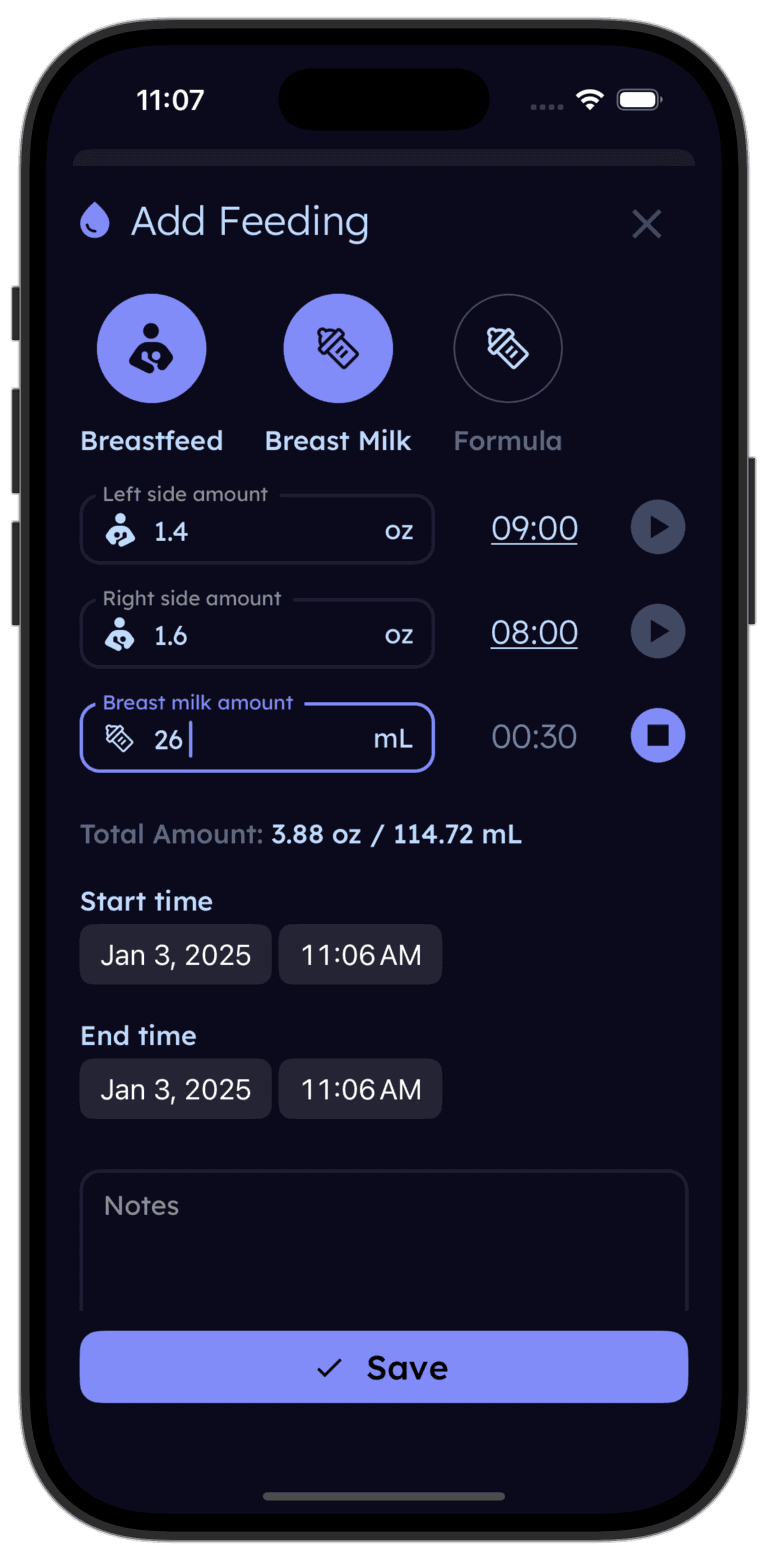
Log bottle or breast feedings in a couple taps — then see your daily totals, spot patterns, and get gentle reminders. Your sleep-deprived brain will thank you.


Especially in those early weeks — they honestly know when they're hungry better than any schedule does.
Rooting, lip smacking, fists in mouth — those cues tell you way more than a timer ever will.
Around 2–3 weeks, 6 weeks, 3 months, and 6 months your baby might eat like they've never seen food before. It passes.
Breastfed and formula-fed babies eat different amounts. Both are totally fine. Your baby is doing great.
Wondering when those growth spurts actually hit? Check out our baby growth spurt timeline for all the windows and what to expect at each one.
How Much Formula by Age — A guide by age and weight
How Much Solid Food by Age — A realistic guide