
Fork
Mashes banana, avocado, sweet potato, cooked egg, soft fruits, cooked beans, and lentils. This handles more first foods than any gadget.
GUIDE
Published on
Cook it, mash it, serve it. You don't need a baby food maker, a cookbook, or a Pinterest board. A fork and a pot handle 90% of it.
Baby food at home is faster and cheaper than you'd expect. The equipment list is: stuff you already own.
Log foods and reactions
Making baby food at home is genuinely easy. The baby food industry — which is worth billions of dollars — has a strong incentive to make you believe it's complicated, time-consuming, or requires special equipment. It doesn't.
Here's what most baby food prep actually looks like: you cook a vegetable until it's very soft, you mash it with a fork, and you serve it. That's it. For more complex purees (meat, for example), an immersion blender or regular blender helps. But for most first foods — sweet potato, banana, avocado, peas, lentils, eggs — a fork is the only tool you need.
This doesn't mean commercial baby food is bad. It has its place — travel, daycare, busy days when cooking isn't happening. But the idea that making baby food at home is some elaborate, equipment-intensive project is marketing, not reality.
Mashes banana, avocado, sweet potato, cooked egg, soft fruits, cooked beans, and lentils. This handles more first foods than any gadget.
Steaming preserves more nutrients than boiling. A cheap steamer basket that fits inside a pot you already own is the only 'equipment' worth buying, and you probably already have one.
For smooth purees — especially meats, which are hard to mash by hand. An immersion blender is more convenient (blend right in the pot), but a regular blender works fine.
For straining out skins and fibers if you want ultra-smooth purees. Most parents skip this after the first week when they realize baby doesn't care about a few lumps.
What you don't need: A dedicated baby food maker ($50-150 for a single-purpose appliance that does what a pot and blender already do). A baby food cookbook (this guide and common sense cover it). Silicone freezer trays with individual compartments and matching lids (regular ice cube trays work identically at a fraction of the price).
| Food | Cooking Method | Test for Doneness | For Purees | For BLW / Finger Food |
|---|---|---|---|---|
| Sweet potato / Butternut squash | Bake at 400°F until soft (45-60 min) or steam cubes for 15-20 min | Should smoosh easily between your fingers with zero resistance | Mash with fork, add liquid for smoother texture | Cut into finger-length strips about the width of your pinky |
| Carrots | Steam or boil until very soft (15-20 min) | Should smoosh between your fingers — no snap, no crunch | Blend with cooking water until smooth | Cut into finger-length sticks. Must be VERY soft — raw or undercooked carrot is a choking hazard |
| Broccoli | Steam until very tender (8-12 min) | Floret should collapse when squeezed gently | Blend with liquid. May need straining for very smooth puree. | Offer whole florets — the stem is a natural handle. Must be very soft. |
| Peas | Steam or boil frozen peas (5-8 min). Fresh peas take longer. | Should smoosh easily between your fingers | Blend and strain through a sieve to remove skins (optional — skins are fine to leave) | Mash lightly with a fork so they're not perfectly round (round shape = rolling hazard). Or serve smashed on toast. |
| Chicken / Turkey | Bake, poach, or slow-cook until very tender. Thigh meat stays moister than breast. | Should shred easily with a fork — no tough or chewy pieces | Blend with broth or cooking liquid until smooth. Add more liquid than you think you need. | Shred into thin strips. Or offer a drumstick with cartilage removed — baby gnaws meat off the bone. |
| Beef | Slow-cook, braise, or use ground beef cooked until well done | Should fall apart or mash easily. No tough, chewy pieces. | Blend ground beef or shredded braised beef with liquid until smooth | Offer thin strips of slow-cooked beef, or form ground beef into finger-length logs |
| Lentils (red) | Boil in water for 15-20 min — red lentils dissolve into a natural puree | Should be completely broken down, almost mushy | Red lentils make their own puree. Add liquid for thinner consistency. | Spread thick lentil mash on toast strips or load onto a spoon for self-feeding |
| Eggs | Scramble, hard-boil, or make thin omelet. Must be fully cooked (no runny yolk for babies). | No liquid egg remaining. Fully set. | Mash hard-boiled egg with a fork. Mix with breast milk or avocado for smoother texture. | Scrambled egg pieces, omelet strips, or quartered hard-boiled egg |
| Banana | No cooking needed | Ripe enough that it mashes easily with a fork | Mash with fork. That's it. | Cut in half, then into thirds lengthwise. Leave some peel on for grip, or roll in hemp seeds/ground flax so it's not slippery. |
| Avocado | No cooking needed | Should be ripe — soft when pressed gently | Mash with fork. Add a squeeze of lemon to prevent browning. | Cut into finger-length strips. Leave some skin on for grip, or roll in hemp seeds. |
If you want to be efficient about it, here's a Sunday afternoon approach that takes about 30 minutes of active time:
Pick 3-4 foods. One iron-rich option (lentils are easiest for batch prep), one or two vegetables, and one fruit.
Cook them simultaneously. Lentils on one burner, sweet potato in the oven, broccoli in the steamer. Everything cooks at the same time.
Mash or blend. Puree each food separately (or in combinations you like — sweet potato + chicken, lentil + carrot, pear + oat cereal).
Portion into ice cube trays. Fill trays, freeze overnight, pop out the cubes in the morning and store in labeled freezer bags.
Result: 20-30 individual portions of 3-4 different foods. Each morning, pull out what you need and thaw. Total active prep time: about 30 minutes. Total food ready: enough for a week or more.
Pour purees into silicone ice cube trays, freeze until solid, pop out, and store in labeled freezer bags. Each cube is roughly 1 ounce. This is the most efficient batch prep method — spend 30 minutes on a Sunday and you've got food for the week.
Frozen cubes of sweet potato and frozen cubes of butternut squash look identical. Write the food name and date on every freezer bag. You will thank yourself later.
Homemade baby food lasts 2-3 days in the fridge. If you're not going to use it in that window, freeze it. When in doubt, throw it out. Baby food safety isn't the place to push boundaries.
Thaw frozen baby food in the fridge overnight, or run the sealed container under warm water. You can also thaw in the microwave — but stir well and test the temperature before serving. Microwaves create hot spots. Never re-freeze thawed food.
Once your baby has been eating solids for a few weeks and has tried a range of foods, the simplest approach isn't baby food at all — it's whatever you're eating, modified for baby.
Making pasta with tomato sauce? Set aside some plain pasta (soft, cut into small pieces) and some sauce (no added salt) for baby. Stir-frying chicken and vegetables? Pull out a few soft pieces before you add the soy sauce. Making chili with beans? Perfect baby food — just cool it down and mash it slightly.
The modifications are straightforward: reduce salt (babies should have less than 1g of salt per day under 12 months), avoid honey, cut foods into safe shapes, and make sure textures are soft enough. Beyond that, babies can eat a remarkable range of family foods — herbs, spices, garlic, and complex flavors are all fine and actually help develop adventurous eating habits.
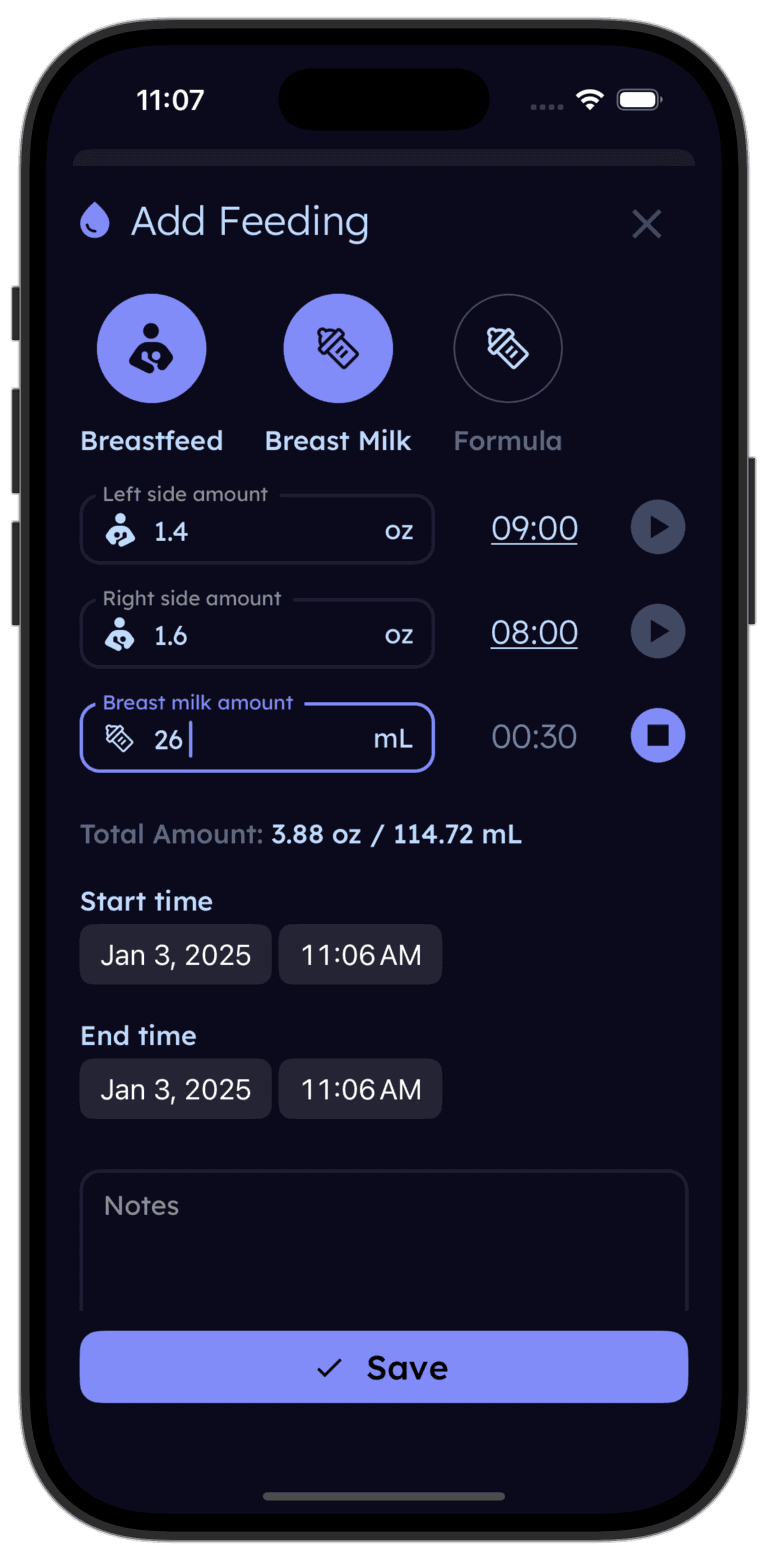
Tinylog makes food tracking fast enough that it doesn't feel like homework. Log what baby ate, note any reactions, and keep a running record of their expanding menu.


Commercial pouches train a different skill than eating. The squeezing-and-sucking motion used with pouches is completely different from spoon-eating or chewing. Occasional pouches are fine — but if they're the primary way your baby eats, they're not learning the oral motor skills that solid food develops. Think of pouches as a convenience tool, not a feeding strategy.
The heavy metals conversation. The 2021 Congressional report on heavy metals in baby food was alarming. But context matters: the metals (arsenic, lead, cadmium, mercury) are present in soil and water and therefore in all food — including homemade. The issue is concentration and cumulative exposure. Homemade food isn't automatically safer. What helps: vary the foods you serve (especially grains — don't rely heavily on rice), offer a diverse diet, and don't stress about individual servings.
Organic vs. conventional, honestly. Organic produce has lower pesticide residue. It is not meaningfully more nutritious. If organic fits your budget, it's a reasonable choice. If it doesn't, your baby will be perfectly well-nourished on conventional produce. The most important thing is that your baby eats a variety of fruits and vegetables — the organic/conventional distinction is far less important than the variety.
How to Start Solids — A first-time parent's complete guide
First Foods for Baby — Best foods to start with
How Much Solid Food by Age — A realistic guide
This guide is for informational purposes only and is not a substitute for professional medical advice. Consult your pediatrician before starting solids, especially regarding allergen introduction for high-risk infants. All caregivers should be trained in infant CPR before offering solid foods.