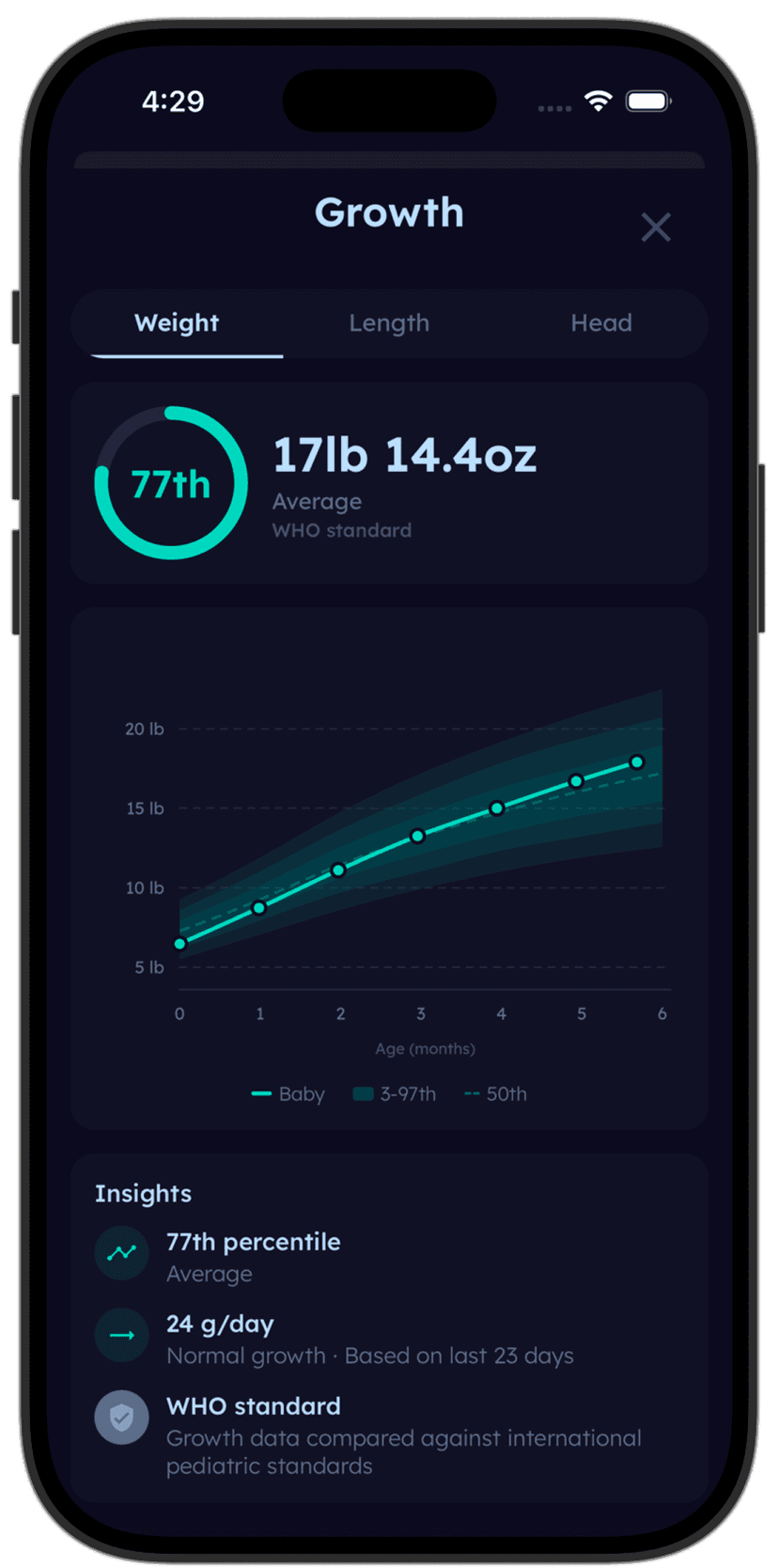
It's easy to confuse a growth spurt with
cluster feeding
, a sleep regression, or teething. They can all look pretty similar at
3 AM. Here's how to tell them apart:
A growth spurt brings more hunger, fussiness, and
sleep changes all at once — but it only lasts 2–7 days. Baby is
otherwise fine and still making plenty of wet diapers.
Cluster feeding is when baby wants to eat every 30–60
minutes for a few hours, usually in the evening. It often
happens during a growth spurt, but it can show up on its own
too.
A sleep regression looks similar but lasts way longer
— usually 2–4 weeks. It's tied to developmental milestones rather
than physical growth.
And teething? Drooling, chewing on everything, maybe a
low-grade fever. The big tell is that appetite usually goes
down with teething — the opposite of a growth spurt.
An illness may cause changes in appetite and sleep, but
usually comes with additional symptoms like fever, congestion, or
vomiting that growth spurts don't cause. If your baby has appetite
changes plus any of those symptoms, it's worth checking with your
pediatrician.