
Set up a cluster feeding station
Pick your most comfortable spot. Load it up with water bottles, snacks, your phone charger, the remote, and a pillow for your arm. You're going to be here for a while — make it nice.
GUIDE
Published on ·Updated on
Your baby isn't broken. This is biology working exactly as designed.
Cluster feeding feels alarming the first time it happens — your baby just ate and now they want to eat AGAIN? But it's one of the most normal things babies do, especially in the first six weeks. Here's everything you need to know.
Log breast, bottle and solids
Cluster feeding is when your baby feeds very frequently — sometimes every 30 to 60 minutes — for a stretch of several hours. It usually happens in the evening, roughly between 5pm and midnight, and it's most common in the first six weeks of life.
Here's what's actually going on: your baby is signaling your body to produce more milk. Breast milk works on a supply-and-demand system. More demand (more feeding) equals more supply. Cluster feeding is your baby placing a bulk order for the next growth phase. Prolactin (the milk-making hormone) is highest in the evening and overnight, so evening cluster feeding is especially effective at boosting supply. (For a closer look at when these spurts happen, see our baby growth spurt timeline.)
It's also common for babies to cluster feed to "tank up" before their longest sleep stretch. So yes — that marathon evening nursing session is often followed by the best sleep you'll get all night. Hang in there.
| Age / Phase | Duration | Typical Pattern | What's Happening |
|---|---|---|---|
| Days 2–5 | 2–3 days | Feeding every 30–60 minutes around the clock | Your milk is transitioning from colostrum to mature milk. Baby is placing the order for your supply. |
| 2–3 weeks | 2–4 days | Evening marathons — feeds stacked from 5pm to midnight | First major growth spurt. Baby needs more milk, so they're telling your body to make more. |
| 6 weeks | 2–5 days | Frequent feeds day and night, plus extra fussiness | The biggest early growth spurt. This one can feel relentless. It passes. |
| 3 months | 1–3 days | Shorter but more frequent feeds, especially in the afternoon | Another growth spurt plus a developmental leap. Baby is growing and learning to use their hands — it's a lot. |
| 4–6 months | Varies | Frequent feeding that may look like cluster feeding but baby is easily distracted | Often not true cluster feeding. Baby may be distracted during regular feeds and making up for it later, or going through a sleep regression. |
If most of these describe your situation, you're in normal cluster feeding territory. It's exhausting, but it's working.
Any of these warrants a call to your pediatrician. It's probably nothing, but it's always worth checking. That's literally what they're there for.
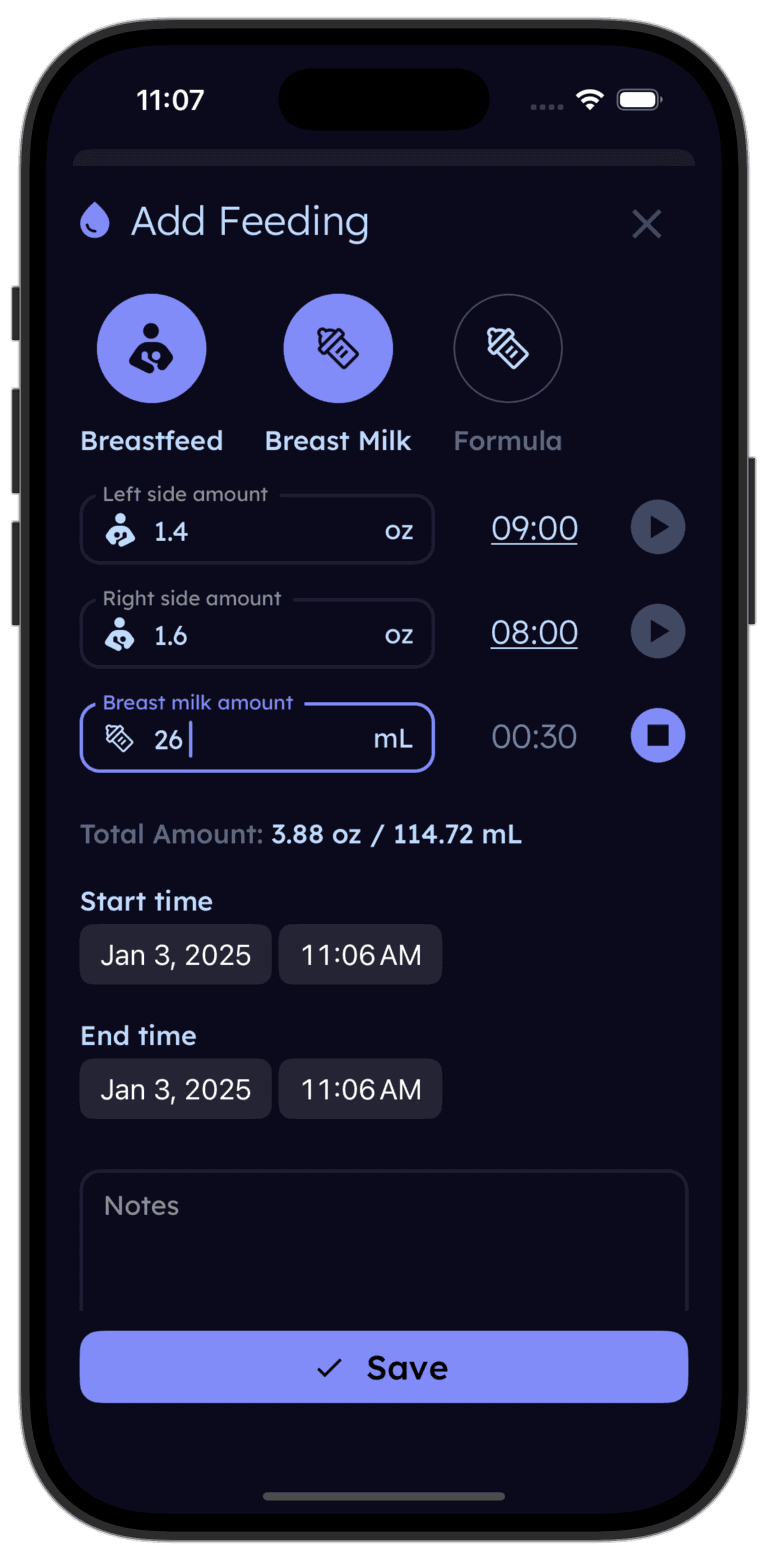
Tinylog helps you see the difference between a cluster feeding day and a concerning pattern. Log each feed in a few taps and watch the data tell the story.


Pick your most comfortable spot. Load it up with water bottles, snacks, your phone charger, the remote, and a pillow for your arm. You're going to be here for a while — make it nice.
Not 2–3 weeks. Days. When you're in the thick of it at 10pm and the baby wants to eat again for the sixth time since dinner, remember: this part is almost over. Your body is responding and building up supply.
The only thing you need to do is feed the baby. Everything else — dishes, laundry, cooking, diaper changes between feeds, burping — can be handed off. If someone asks how they can help, this is the answer.
This is the number one fear during cluster feeding. Baby eating constantly does not mean you don't have enough milk. It means baby is building your supply for the next stage. That's exactly how it's supposed to work.
Having a tiny human attached to you for hours is physically and emotionally exhausting. Feeling frustrated, overwhelmed, or just done doesn't make you a bad parent. Put the baby down safely for a few minutes if you need a break. They'll be fine.
Lots of babies tank up in the evening and then sleep their longest stretch of the night. It doesn't feel like a reward at 9pm, but at 2am when you realize they've been asleep for 4 hours? Worth it.
The My Brest Friend pillow (~$45) buckles around you so it actually stays put — unlike pillows that slide every time you shift. The flat top keeps baby at the right height without you hunching. Your back will thank you.
Tinylog earns a small commission on purchases made through these links, at no cost to you.
Before you buy, it's worth checking promo.new for a deal. It doesn't cover everything, but we've had good luck with it.
Cluster Feeding by Age — A complete chart and guide
Eating All the Time — Growth spurts and cluster feeding explained
Baby Growth Spurts — When they happen and what to expect