GUIDE

Baby Eating All the Time?

If your baby suddenly wants to eat nonstop, the most likely explanation is a growth spurt. They're temporary, normal, and a sign that everything is working.

Your baby just ate 45 minutes ago and they're acting hungry again. Before that, they ate an hour before that. You're starting to wonder if something is wrong, if you're not making enough milk, or if your baby has a bottomless stomach. Deep breath — this is almost certainly a growth spurt, and here's everything you need to know.

The Most Likely Explanation: Growth Spurt

If your baby has suddenly started eating much more than usual, the most common explanation — by far — is a growth spurt. Babies grow in bursts, not at a steady rate, and during those bursts they need significantly more calories.

Growth spurts typically happen at predictable ages: 2-3 weeks, 6 weeks, 3 months, 6 months, 9 months, and 12 months. Each one lasts about 2-7 days. During a spurt, your baby may want to eat every 1-2 hours, refuse to go more than an hour between feeds, and act like they haven't eaten in days.

For breastfed babies, this isn't just about hunger — it's also about building supply. When your baby nurses more frequently, it signals your body to produce more milk. The "constant eating" IS the solution, not the problem. Your baby is placing a bigger order for the next growth phase.

For formula-fed babies, offer an extra ounce or two per bottle during the spurt. Follow your baby's hunger cues — if they're still hungry after their usual amount, give them more.

For a complete timeline of when growth spurts happen, see our growth spurts guide.

Why Babies Eat Constantly: By Cause
Growth spurt
Common Ages2-3 weeks, 6 weeks, 3 months, 6 months, 9 months, 12 months
How Long2-7 days
What to Look ForSudden increase in appetite + fussiness + sleep changes, resolves on its own
Cluster feeding
Common AgesMost intense weeks 1-6, can continue through 3-4 months
How Long2-5 hours per evening, ongoing for weeks
What to Look ForBunched feeding in the evening, baby is fine during the day
Developmental leap
Common AgesVarious (Wonder Weeks theory: weeks 5, 8, 12, 19, 26, etc.)
How LongA few days to a week
What to Look ForFussiness, clinginess, new skills emerging, appetite increase
Increased activity
Common Ages6+ months (rolling, crawling, cruising, walking)
How LongOngoing as activity level increases
What to Look ForGradually larger appetite that matches new mobility
Pre-solids hunger
Common AgesAround 4-6 months
How LongGradual increase leading up to starting solids
What to Look ForBaby watches you eat, reaches for food, seems unsatisfied after milk feeds
Comfort nursing
Common AgesAny age (breastfed babies)
How LongOngoing, situational
What to Look ForBaby wants to nurse for soothing, not just hunger. Non-nutritive sucking at the breast.
Growth spurts and cluster feeding are by far the most common reasons. The others can contribute but are less likely to cause dramatic, sudden changes in appetite.
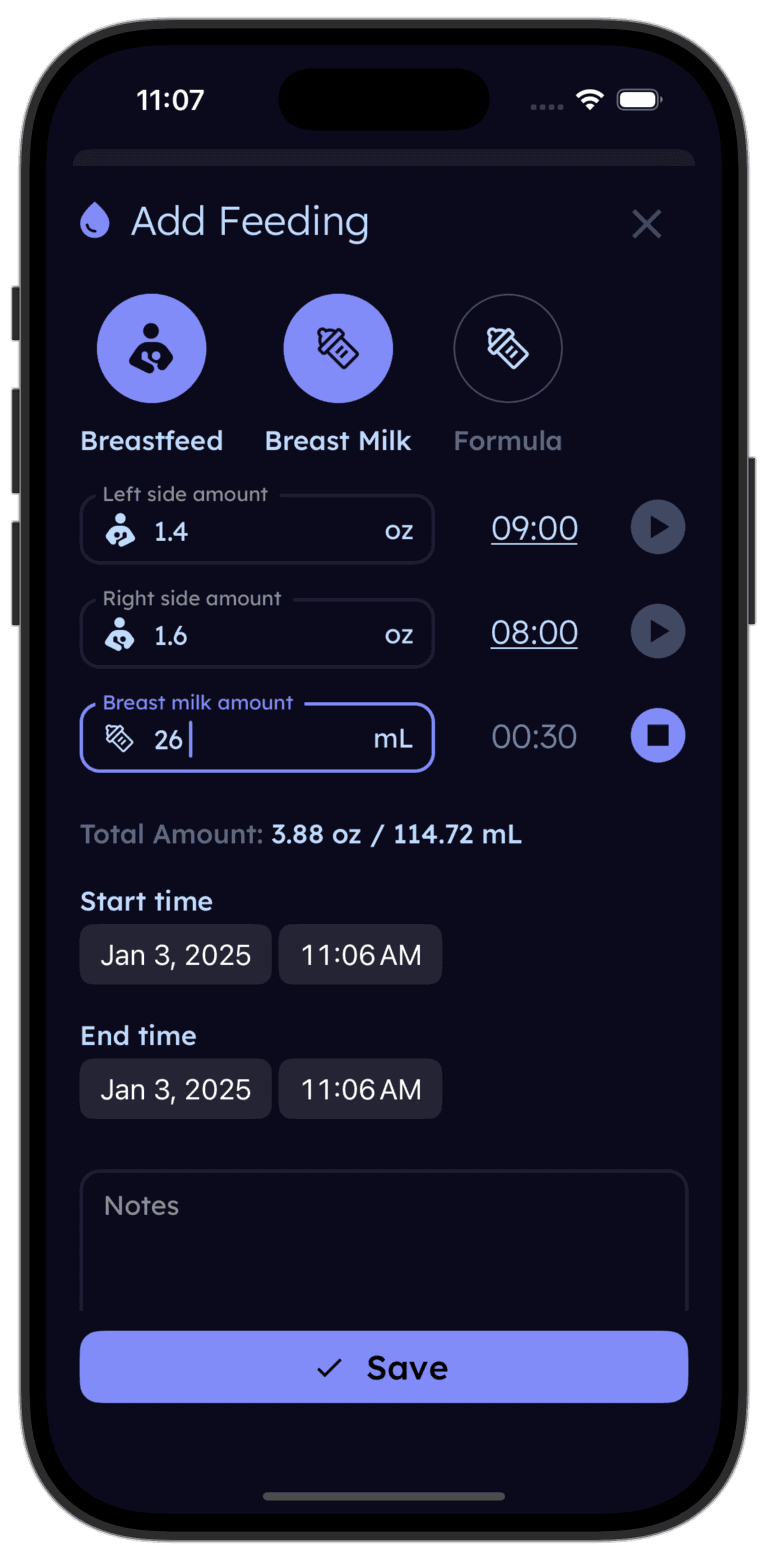
tinylog feed log showing feeding frequency during a growth spurt

When it feels like your baby never stops eating, the data shows you the actual pattern.

tinylog logs feeds in seconds. After a few days, you can scroll back and see the actual feeding frequency — and you'll usually notice it's a temporary spike, not a permanent change. That data is reassuring during a growth spurt and useful if you need to talk to your pediatrician.

Download on the App StoreGet It On Google Play

Signs Your Baby's Constant Eating Is Normal

  • Baby is producing 6+ wet diapers per day
  • Weight gain has been appropriate at checkups
  • The increased eating started suddenly (not a gradual decline in satisfaction)
  • Baby is at a common growth spurt age
  • They're feeding effectively — good latch, audible swallowing, seeming satisfied temporarily
  • Between feeding bursts, baby seems normal — alert, active, meeting milestones

If these apply, you're almost certainly looking at a growth spurt or cluster feeding — both normal, both temporary.

What Constant Eating Looks Like at Different Ages

Newborns (0-6 weeks): Eating all the time is their job

In the first 6 weeks, feeding every 1-3 hours is completely normal. Add cluster feeding (marathon evening sessions) and growth spurts, and it can feel like your baby never stops eating. They're establishing your milk supply and fueling the most rapid growth of their lives. It's temporary.

2-4 months: Growth spurts drive feeding frenzies

By 2-4 months, you might have a rough feeding rhythm. When a growth spurt hits, that rhythm disappears for a few days. Your baby may go back to newborn-level feeding frequency. It resolves. For more on feeding at this stage, see our baby feeding chart.

4-6 months: Hunger before solids

Around 4-6 months, some babies seem like milk alone isn't cutting it anymore. They're bigger, more active, and their calorie needs are increasing. This is normal and is one of the signs (along with sitting with support and showing interest in food) that they may be ready for solids. Talk to your pediatrician about timing.

6-12 months: Activity drives appetite

Once your baby is rolling, crawling, pulling up, and eventually walking, their energy needs increase significantly. Bigger appetite is a natural response to bigger activity. Combined with growth spurts at 6, 9, and 12 months, there are several periods where your baby may seem insatiable.

The Milk Supply Question

If you're breastfeeding, the #1 worry during a feeding frenzy is: "Am I not making enough milk?"

In the vast majority of cases: yes, you are. The constant feeding IS how your body knows to make more. It's not evidence of failure — it's the system working.

Here's the test: Is your baby making 6+ wet diapers per day? Are they gaining weight at checkups? Can you hear them swallowing during feeds? If yes, your supply is fine. Your baby is just placing orders for tomorrow's milk.

True low supply does exist, but it's much less common than perceived low supply. If you're genuinely concerned, a lactation consultant can assess supply objectively — weighing your baby before and after feeds to measure transfer. That's a much better approach than guessing.

For more on this topic, see our guide on whether your baby is eating enough.

When to Check With Your Pediatrician

  • Constant eating persists for more than 2 weeks with no improvement
  • Baby never seems satisfied — not even for 20-30 minutes after a full feed
  • Fewer than 4 wet diapers in 24 hours
  • Weight gain has stalled or reversed
  • Baby seems in pain during or after feeds
  • You can't hear swallowing during breastfeeding
  • Baby is losing weight or not gaining despite constant feeding

These signs suggest that the constant eating might be more than a typical growth spurt. Your pediatrician can help determine the cause.

The Bottom Line

A baby who suddenly wants to eat all the time is almost always experiencing a growth spurt — a temporary, normal, biologically necessary burst of growth that requires extra calories. Feed on demand, trust the process, and know that it will end within days.

If the constant eating persists for more than two weeks or comes with warning signs, check in with your pediatrician. But for the vast majority of parents reading this: your baby is growing. They're hungry because they're building a bigger body. And in a few days, feeds will go back to normal — until the next spurt.

Related Guides

Sources

  • World Health Organization (WHO) — Infant and young child feeding guidelines
  • American Academy of Pediatrics (AAP) — Breastfeeding and the use of human milk
  • La Leche League International — Growth spurts and cluster feeding
  • Kent JC, et al. "Volume and frequency of breastfeedings." Pediatrics, 2006.
  • Lampl M, Johnson ML. "Infant growth in length follows prolonged sleep and increased naps." Sleep, 2011.

This guide is for informational purposes only and is not a substitute for professional medical advice. If you have concerns about your baby's feeding, please consult your pediatrician.

Get this guide in your inbox.
We'll email you this reference so you can check it during the next marathon feeding session.
Track the pattern and you'll see it: a few intense days, then back to normal.
Download tinylog free — log feeds and spot growth spurts in the data.
Download on the App StoreGet It On Google Play