GUIDE

Is My Baby Eating Enough?

If your baby is following their growth curve and producing adequate wet diapers, they're almost certainly eating enough. The amounts look small because they ARE small — and that's normal.

This is the guide for the 2 AM anxiety spiral when baby barely ate dinner and you're convinced they're starving.

The Question Behind the Question

"Is my baby eating enough?" is rarely just about food. It's about fear — fear that you're doing something wrong, fear that your baby isn't getting what they need, fear that some number or quantity is the difference between thriving and failing.

Here's the reality: the vast majority of babies in developed countries, with access to breast milk or formula and age-appropriate solid foods, are eating enough. The amounts look tiny because babies are tiny. A tablespoon of food for a 15-pound baby is proportionally equivalent to a much larger portion for an adult. And until 12 months, breast milk or formula is doing most of the nutritional heavy lifting anyway.

The question you actually need to answer is not "did my baby eat 4 tablespoons at lunch?" It's "is my baby growing, developing, and producing wet diapers?" If the answer is yes, they're eating enough.

Early Feeding Guide (Birth to 6 Months)
Days 1-3
Feeding Frequency8-12+ feeds per day
Amount per Feed5-7ml (1-1.5 tsp) per feed — colostrum
Diapers1-3 wet, dark meconium stool
Key SignFeeding frequently is normal — stomach is marble-sized
Days 4-7
Feeding Frequency8-12 feeds per day
Amount per Feed15-30ml (0.5-1 oz) per feed
Diapers3-5+ wet, stool transitioning to yellow
Key SignMilk is coming in — breasts feel fuller, baby is more satisfied
Weeks 2-4
Feeding Frequency8-12 feeds per day
Amount per Feed60-90ml (2-3 oz) per feed
Diapers6+ wet, 3-4+ stools
Key SignBack to birth weight by 10-14 days — the big milestone
1-3 months
Feeding Frequency7-9 feeds per day
Amount per Feed90-150ml (3-5 oz) per feed
Diapers6+ wet, stools may decrease
Key SignLonger stretches between feeds, more predictable pattern emerging
3-6 months
Feeding Frequency5-8 feeds per day
Amount per Feed120-180ml (4-6 oz) per feed
Diapers6+ wet
Key SignEfficient feeder — sessions shorter but intake consistent
These are rough averages — follow your baby's cues rather than strict amounts. Breastfed babies may eat more or less per session since breast milk delivery varies.
Milk-to-Solid Balance by Age
6 months
Milk Intake24-32 oz formula or 5-8 nursing sessions
Solid Intake1-2 tablespoons, 1x/day
Balance NoteMilk is everything. Solids are practice. If baby eats zero solids, they're still fine nutritionally.
7-8 months
Milk Intake24-32 oz formula or 4-6 nursing sessions
Solid Intake2-4 tablespoons, 2x/day
Balance NoteMilk still dominant. Solids increasing. Most calories still from milk.
9-10 months
Milk Intake20-28 oz formula or 3-5 nursing sessions
Solid Intake1/4-1/2 cup, 3x/day
Balance NoteThe balance is shifting. Solids are a real nutrition contributor now. Milk starting to decrease.
11-12 months
Milk Intake16-24 oz formula or 3-4 nursing sessions
Solid Intake1/4-1 cup, 3x/day + snacks
Balance NoteNearly equal. By 12 months, solids take over as primary nutrition. Milk becomes supplementary.
12+ months
Milk Intake16-24 oz whole cow's milk (max)
Solid Intake3 meals + 2 snacks
Balance NoteSolids are primary. Milk supports but shouldn't exceed 24 oz/day (or it displaces food and iron).
These are ranges, not targets. Your baby may be on the higher or lower end of any of these — that's normal. The overall trend matters more than any single day's numbers.

Signs Baby IS Getting Enough

  • Following their growth curve at well visits — even if it's the 15th or 25th percentile
  • Producing at least 6 wet diapers per day
  • Active, alert, and meeting developmental milestones
  • Generally content after meals (not persistently fussy or hungry)
  • Having regular bowel movements (frequency varies but should be regular for your baby)
  • Gaining weight steadily over weeks and months (not necessarily day to day)
  • You can hear swallowing during breastfeeding
  • Skin is healthy-looking and elastic

If you're seeing these signs, your baby is eating enough. Even if today's dinner ended up on the floor.

Signs That Actually Warrant Concern

  • Falling off their established growth curve — not just being on a low percentile, but dropping percentiles
  • Fewer than 6 wet diapers per day (possible dehydration)
  • Lethargic, unusually sleepy, or less active than normal
  • Refusing both milk AND solids for extended periods (more than 24 hours in a young baby)
  • Visible ribs, sunken fontanelle, or other signs of poor nutrition
  • Pediatrician expresses concern about weight gain at a well visit
  • Dark, concentrated urine after the first few days

These are the actual red flags — and they're much rarer than the anxiety would have you believe. If you're seeing any of these, contact your pediatrician.

Managing the Anxiety

Zoom out from today's meal

One bad meal doesn't matter. One bad day barely matters. What matters is the pattern over days and weeks. A baby who ate nothing at dinner but had a great breakfast and lunch is fine. A baby who had a poor eating day after a week of good eating is fine. Zoom out.

The growth curve is your friend

Your pediatrician tracks your baby's growth at every well visit. If baby is following their curve — whether it's the 10th percentile or the 90th — they're getting enough. A baby who has always been on the 15th percentile and stays there is thriving. It's crossing curves that matters, not the number.

Babies self-regulate better than we do

Healthy babies eat when they're hungry and stop when they're full. They don't undereat out of stubbornness or overeat out of greed. If your baby is refusing food, they're not hungry. If they're devouring everything, they're growing. Trust the system — it's been working for a very long time.

Track for clarity, not for control

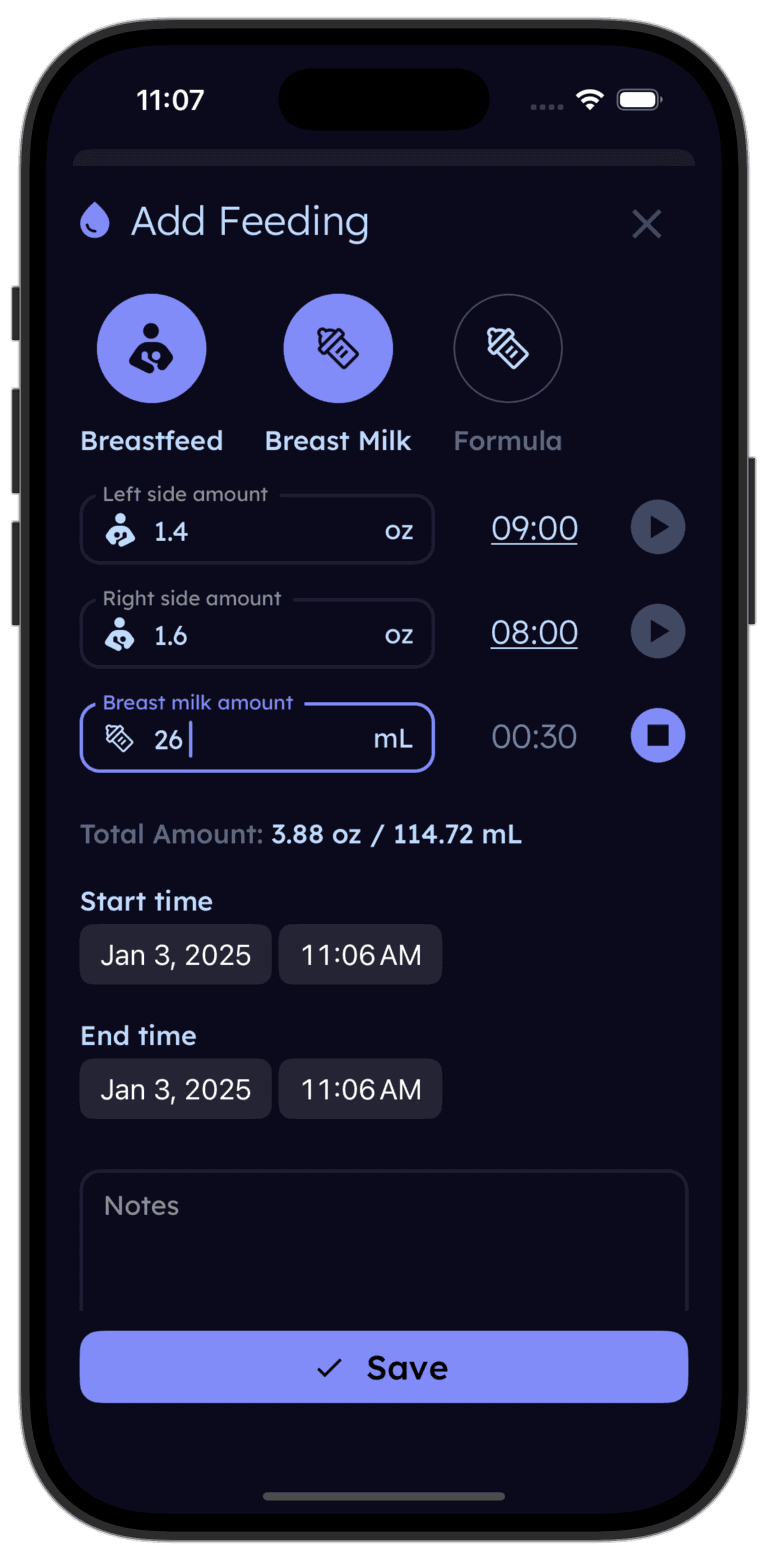
Logging meals can either reduce anxiety (by showing you the real picture) or increase it (by giving you more data points to obsess over). Use tracking to see patterns — not to hit targets. A few days of logged meals before a pediatrician visit gives you useful information. Obsessively measuring tablespoons at every meal does not.

tinylog showing daily summary of milk feeds and solid meals

If you're worried about whether baby is eating enough, a few days of logged meals gives you (and your pediatrician) a realistic picture instead of anxious guessing.

tinylog tracks both milk feeds and solid meals, so you can see how the balance shifts over time. When you bring real data to your pediatrician instead of a vague sense that 'something feels off,' the conversation is more productive for everyone.

Download on the App StoreGet It On Google Play

The Too-Much-Milk Problem

One of the most common and under-discussed causes of poor solid food intake is excessive milk consumption. This typically shows up around 9-12 months: baby is supposed to be eating more solids, but they're barely interested because they're filling up on milk.

If baby is drinking more than 32 ounces of formula per day (or nursing very frequently with long sessions), they may not have room for solids. Milk is calorie-dense and filling. A baby who's full of milk simply isn't hungry for food.

The fix is gradual, not abrupt. You don't cut milk intake dramatically overnight. Instead, start offering solids before milk at one or two meals. Gradually reduce the volume of bottles or the duration of nursing sessions. The goal is to create enough appetite for solids without cutting milk so aggressively that baby loses weight.

After 12 months, the milk concern flips. Too much cow's milk (more than 24 ounces per day) can suppress appetite for food AND interfere with iron absorption, potentially causing iron deficiency anemia — one of the most common nutritional deficiencies in toddlers. If your toddler prefers milk over food, limiting milk to 16-24 ounces per day usually increases food interest.

Related Guides

Sources

  • American Academy of Pediatrics. (2024). Starting Solid Foods. HealthyChildren.org.
  • USDA & HHS. (2020). Dietary Guidelines for Americans, 2020-2025.
  • Satter, E. (2000). Child of Mine: Feeding with Love and Good Sense. Bull Publishing.
  • Ziegler, E. E. (2011). Consumption of cow's milk as a cause of iron deficiency in infants and toddlers. Nutrition Reviews, 69(s1), S37-S42.
  • WHO. (2023). Complementary Feeding. WHO.int.
  • AAP Committee on Nutrition. (2014). Diagnosis and Prevention of Iron Deficiency and Iron-Deficiency Anemia in Infants and Young Children. Pediatrics, 126(5).

Medical Disclaimer

This guide is for informational purposes only and is not a substitute for professional medical advice. Consult your pediatrician before starting solids, especially regarding allergen introduction for high-risk infants. All caregivers should be trained in infant CPR before offering solid foods.

Get this guide in your inbox.
We'll send you the milk-to-solid balance chart so you can check in as baby's eating evolves.
Data beats anxiety. A few days of logged meals shows the real picture.
Download tinylog free — track milk and solids together and see the balance shift.
Download on the App StoreGet It On Google Play