GUIDE

Baby Not Eating Solids

Most solid food refusal is normal, temporary, and not a sign that anything is wrong. Babies refuse food for different reasons at different ages — and the solution is almost never to push harder.

Before you spiral: a baby who isn't eating much at 6-7 months is still getting nutrition from milk. Deep breath.

Food Refusal Is Almost Always Normal

Your baby is sitting in the highchair with pureed sweet potato on the spoon approaching their face, and they're... turning away. Clamping their mouth shut. Pushing the spoon away. Maybe crying. You've done everything right — you waited for readiness signs, you prepared the food carefully, and now your baby wants absolutely nothing to do with it.

Before you spiral: this is one of the most common experiences in early feeding, and it almost always resolves on its own. Babies refuse food for dozens of reasons — they're not hungry, they're distracted, they're teething, the texture is unfamiliar, they're exerting independence, they're going through a developmental leap, or they simply don't feel like it right now. Very rarely is food refusal a sign of a medical problem.

The most important thing to understand: your job is to offer. Baby's job is to decide. When those roles get reversed — when you start trying to make baby eat — feeding becomes a battle that nobody wins.


Food Refusal by Age: Why It Happens and What to Do
6 months
Common ReasonsNot quite developmentally ready, tongue-thrust reflex still active, unfamiliarity with textures, not hungry (recently had milk)
What to DoKeep offering without pressure. Try again in a few days. Make sure baby is showing readiness signs. Offer solids when alert and not starving.
When to WorryNot a concern yet. Solids are practice, not nutrition.
7-8 months
Common ReasonsTexture aversion (especially if only offered smooth purees), teething pain, distraction, testing independence, preference for milk
What to DoVary textures — try finger foods if purees are refused, or vice versa. Offer when baby is in a good mood. Model eating. Don't pressure.
When to WorryIf baby shows no interest in any food by 8 months, mention it to your pediatrician.
9-10 months
Common ReasonsDevelopmental leap (crawling, pulling up) consuming attention, teething, testing boundaries, emerging food preferences
What to DoOffer variety and let baby choose. Family meals help — babies eat better when they see others eating. New foods alongside familiar favorites. Stay consistent with meal times.
When to WorryIf baby was eating well and suddenly stops for 2+ weeks, or if there's weight concern.
11-12 months
Common ReasonsGrowth rate slowing (normal around 12 months), milk intake too high (displacing food appetite), increasing independence and food preferences
What to DoReduce milk intake slightly if it's very high (this is a common cause). Offer solids before milk. Continue offering variety without pressure.
When to WorryIf baby eats almost nothing solid by 12 months, a feeding evaluation may be helpful.
The pattern is consistent across ages: offer without pressure, stay consistent, and give it time. Most refusal phases resolve in days to weeks.

Strategies That Actually Work

The Division of Responsibility

Ellyn Satter's feeding model is the gold standard: Parent decides WHAT food is offered, WHEN it's offered, and WHERE. Baby decides WHETHER to eat and HOW MUCH. This isn't permissive — you still structure meals and offer appropriate food. But you don't control whether or how much baby eats. This single framework prevents the majority of feeding struggles.

Repeated exposure works — but it takes time

Research shows it can take 10-15 exposures to a new food before a baby accepts it. That's 10-15 SEPARATE OCCASIONS, not 10-15 bites in one sitting. If baby rejected broccoli on Tuesday, offer it again on Friday. And next week. And the week after. Without pressure, without commentary, just casually present.

Check the milk-to-solid ratio

One of the most common reasons older babies (9-12 months) don't eat much solid food is that they're drinking too much milk. If baby is having 30+ ounces of formula or nursing very frequently, they may not be hungry for solids. Gradually reducing milk (in consultation with your pediatrician) often increases solid food interest naturally.

Eat together

Babies are social learners. They learn to eat by watching you eat. Sitting at the table together — actually eating food yourself, not just hovering over baby — normalizes eating and motivates baby to participate. Family meals matter more than most feeding tricks.

Remove distractions

Screens, toys, and entertainment during meals teach baby that eating is something that happens in the background. Turn off screens, remove toys from the highchair, and make the meal the activity. If baby's attention is elsewhere, they won't eat.

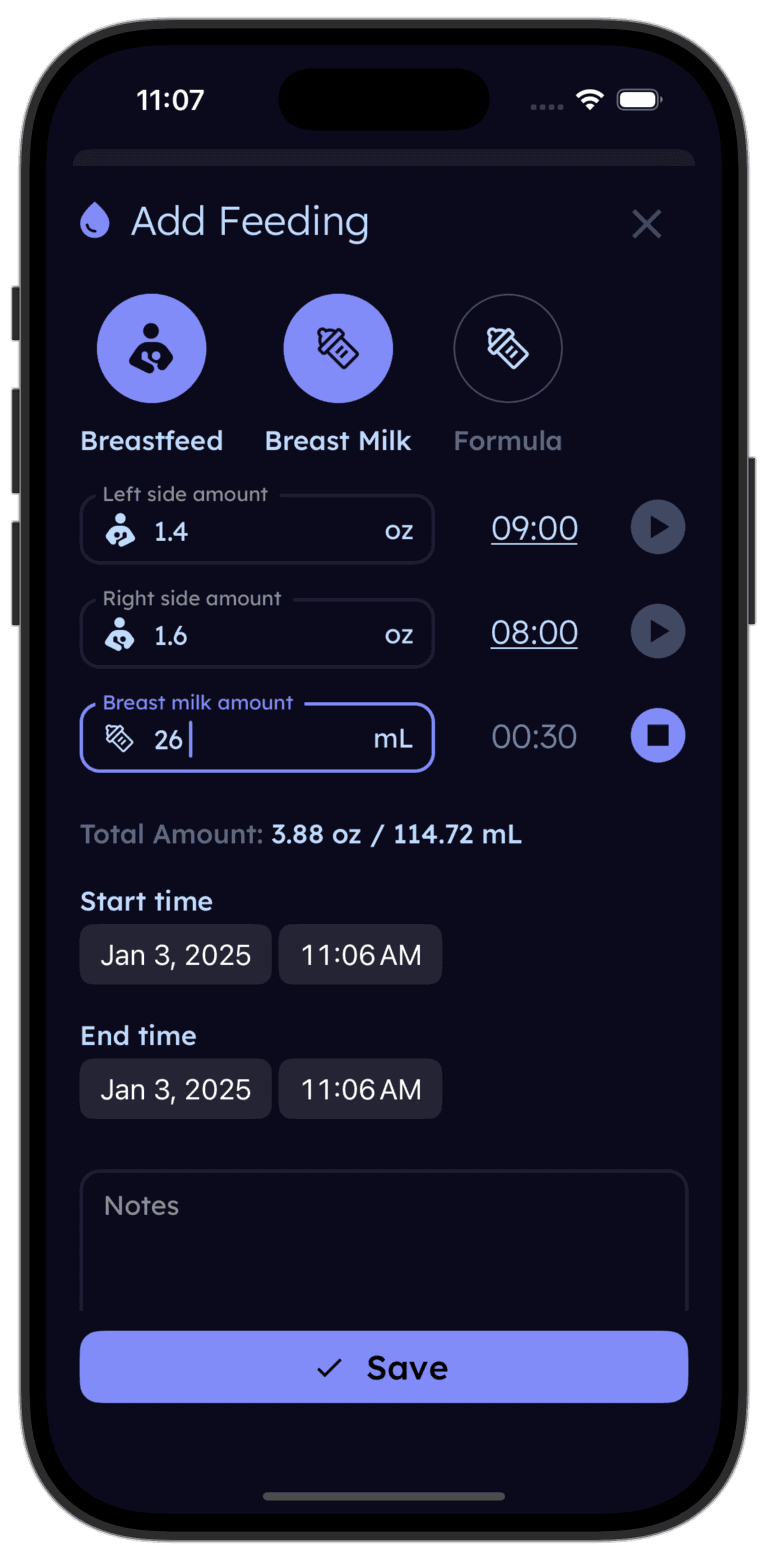
tinylog showing feeding log with both milk and solid meals

If you're worried about whether baby is eating enough, a few days of logged meals gives you real data instead of anxious guessing.

tinylog tracks both milk feeds and solid meals, so you can see the actual picture. When you bring real data to your pediatrician instead of 'I think they're eating less,' the conversation is more productive.

Download on the App StoreGet It On Google Play

When Food Refusal Is Worth Investigating

Most food refusal is developmental and temporary. But some patterns warrant professional evaluation:

See your pediatrician if: Baby refuses all solids consistently past 8 months with no progress. There's weight loss or poor weight gain. Baby seems to be in pain during or after eating. Gagging or vomiting occurs at most meals and doesn't improve over time.

Ask about a feeding evaluation if: Baby can't manage any textures beyond smooth puree past 9-10 months. Baby shows extreme aversion to specific textures (gagging at the sight of lumpy food). There are oral motor concerns — difficulty chewing, excessive drooling, jaw clenching. Baby has a known developmental delay or sensory processing concerns.

A feeding therapist (SLP or OT) can help with: Texture aversion, oral motor skill delays, sensory-based food refusal, and feeding anxiety. Early intervention is effective — the earlier you address a genuine feeding difficulty, the better the outcome.

Related Guides

Sources

  • Satter, E. (2000). Child of Mine: Feeding with Love and Good Sense. Bull Publishing.
  • Maier, A., et al. (2007). Effects of repeated exposure on acceptance of initially disliked vegetables in 7-month old infants. Food Quality and Preference, 18(8), 1023-1032.
  • American Academy of Pediatrics. (2024). Starting Solid Foods. HealthyChildren.org.
  • USDA & HHS. (2020). Dietary Guidelines for Americans, 2020-2025.
  • WHO. (2023). Complementary Feeding. WHO.int.

Medical Disclaimer

This guide is for informational purposes only and is not a substitute for professional medical advice. Consult your pediatrician before starting solids, especially regarding allergen introduction for high-risk infants. All caregivers should be trained in infant CPR before offering solid foods.

Get this guide in your inbox.
We'll send you the age-by-age refusal guide so you can figure out what's going on with your baby specifically.
A few days of logged meals gives you — and your pediatrician — something real to work with.
Download tinylog free — track what's being offered and what's actually being eaten.
Download on the App StoreGet It On Google Play