GUIDE

When Can Baby Eat Meat?

From 6 months — and you should consider making it one of the first foods you offer. Meat is the best source of heme iron, which is more easily absorbed than plant-based iron.

Meat as a first food sounds unusual, but it makes more nutritional sense than starting with sweet potato.

Why Meat Deserves to Be a First Food

When parents think about first foods, they usually picture sweet potato, avocado, or banana. Nobody imagines handing their 6-month-old a chicken drumstick. But from a nutritional standpoint, meat makes a stronger case as a first food than any fruit or vegetable.

The reason is iron. Babies are born with iron stores that deplete around 6 months — this is the primary nutritional reason for starting solids. Breast milk is low in iron. Formula is fortified, but babies still benefit from dietary iron. And meat provides the most absorbable form of iron available.

Iron comes in two forms: heme iron (from animal sources) and non-heme iron (from plants and fortified foods). Heme iron is absorbed at a rate of 15-35%. Non-heme iron is absorbed at only 2-20%. This means the iron in 3 ounces of beef is significantly more bioavailable than the iron in a half cup of spinach — even though the spinach has a comparable amount on paper.

This doesn't mean plant-based iron is useless — it's not, especially when paired with vitamin C. But if you're going to offer one iron-rich food in the first week of solids, meat gives you the biggest nutritional return.


How to Prepare Meat for Baby by Type
Beef
Best CutGround beef, or slow-cooked chuck/stew meat
Puree PrepCook ground beef until well done, blend with broth until smooth
BLW PrepThin strips of slow-cooked beef, or form ground beef into finger-length logs
Iron Content2.7mg per 3 oz (cooked)
Chicken (dark meat)
Best CutThighs, drumsticks
Puree PrepBake or slow-cook until very tender. Blend with cooking liquid.
BLW PrepShred into thin strips. Or offer a drumstick with skin/cartilage removed — baby gnaws meat off the bone.
Iron Content1.1mg per 3 oz (cooked thigh)
Turkey
Best CutGround turkey, or turkey thigh
Puree PrepSame as chicken — cook until very tender, blend with liquid
BLW PrepShredded strips or ground turkey formed into finger-length logs
Iron Content1.4mg per 3 oz (cooked dark meat)
Lamb
Best CutGround lamb, or slow-cooked lamb shoulder
Puree PrepCook ground lamb well done, blend with broth
BLW PrepThin strips of tender slow-cooked lamb, or ground lamb logs
Iron Content1.7mg per 3 oz (cooked)
Pork
Best CutGround pork, or slow-cooked pork shoulder (pulled pork)
Puree PrepCook until very tender, blend with cooking liquid
BLW PrepPulled pork shredded into thin strips — already a perfect BLW texture
Iron Content0.9mg per 3 oz (cooked)
Liver (beef or chicken)
Best CutBeef liver or chicken liver
Puree PrepPan-fry with a little butter until cooked through. Blend with broth.
BLW PrepCut into thin strips. Strong flavor — mix into other foods or serve with familiar items.
Iron Content5.2mg per 3 oz (beef liver — extremely iron-dense)
All meat must be cooked until very tender — tender enough that it falls apart or mashes easily. No tough, chewy, or gristly pieces.
Iron Content Comparison: Meat vs. Plant Sources
Beef liver (3 oz)
Iron Content5.2mg
Iron TypeHeme (15-35% absorbed)
NotesThe single most iron-dense food. Strong flavor — not for everyone.
Beef (3 oz)
Iron Content2.7mg
Iron TypeHeme (15-35% absorbed)
NotesBest everyday heme iron source. Ground beef is easiest for babies.
Iron-fortified infant cereal (1/4 cup)
Iron Content4.5mg (varies by brand)
Iron TypeNon-heme (fortified)
NotesReliable source but non-heme. Pair with vitamin C for absorption.
Lentils (1/2 cup cooked)
Iron Content3.3mg
Iron TypeNon-heme (2-20% absorbed)
NotesBest plant-based source. Pair with vitamin C. Budget-friendly.
Chicken thigh (3 oz)
Iron Content1.1mg
Iron TypeHeme (15-35% absorbed)
NotesLess iron than beef, but well-absorbed heme form.
Egg (1 whole)
Iron Content0.9mg
Iron TypeNon-heme
NotesModerate iron plus protein, choline, and healthy fats.
Spinach (1/2 cup cooked)
Iron Content3.2mg
Iron TypeNon-heme (poorly absorbed)
NotesLooks high on paper, but oxalates reduce absorption significantly.
Tofu (1/2 cup firm)
Iron Content3.4mg
Iron TypeNon-heme
NotesGood plant-based option. Pair with vitamin C.
Heme iron (from meat) is absorbed 2-7x better than non-heme iron (from plants). Pairing non-heme sources with vitamin C improves absorption significantly.

Practical Tips

The drumstick trick

Offering a chicken drumstick to a 6-month-old sounds radical, but it's one of the most effective BLW approaches to meat. Remove the skin, cartilage, and any loose bone fragments. The bone is a natural handle. Baby gnaws and shreds the tender meat off the bone at their own pace. It sounds wild, but it works.

Slow-cooker is your friend

Meat for babies needs to be VERY tender — tender enough to shred with a fork. A slow-cooker makes this effortless. Throw in chicken thighs, beef chuck, or pork shoulder with some broth in the morning. By dinner, the meat falls apart. Perfect for baby, minimal effort for you.

Mix meat into foods baby already likes

If baby is hesitant about plain meat, mix it in. Shredded chicken in yogurt. Ground beef in mashed lentils. Pureed meat mixed with sweet potato. The iron still counts even when it's hiding in a more familiar food.

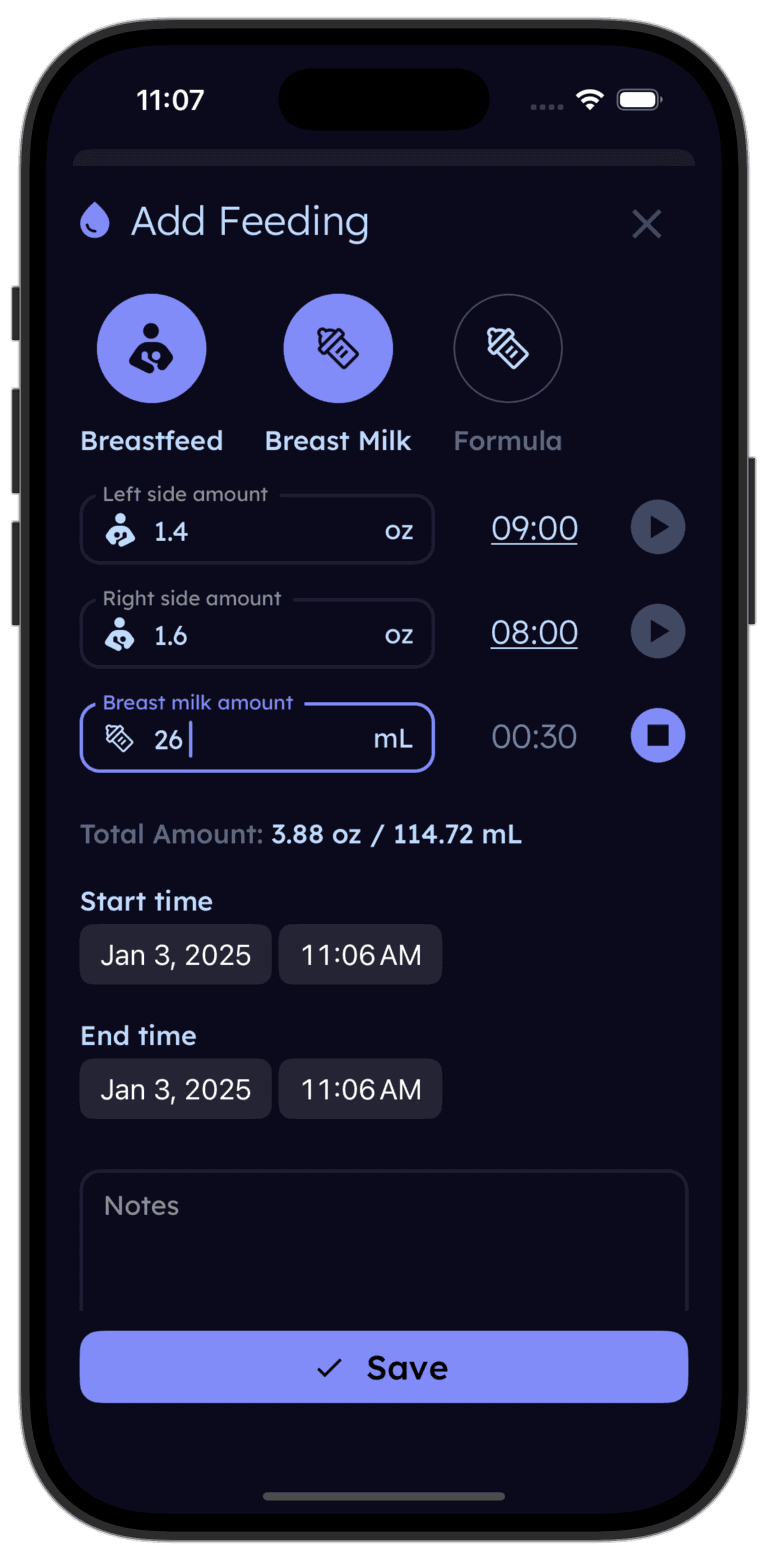
tinylog meal log with iron-rich foods

Tracking whether baby's meals include iron-rich foods becomes second nature when it's a few taps away.

tinylog lets you log meals quickly — so you can glance back at the week and make sure iron-rich foods are in the regular rotation, not just the first-day novelty.

Download on the App StoreGet It On Google Play

Related Guides

Sources

  • AAP Committee on Nutrition. (2014). Diagnosis and Prevention of Iron Deficiency and Iron-Deficiency Anemia in Infants and Young Children. Pediatrics, 126(5).
  • USDA & HHS. (2020). Dietary Guidelines for Americans, 2020-2025.
  • Krebs, N. F., et al. (2006). Meat as a first complementary food for breastfed infants: feasibility and impact on zinc intake and status. Journal of Pediatric Gastroenterology and Nutrition, 42(2), 207-214.
  • Hallberg, L., & Hulthén, L. (2000). Prediction of dietary iron absorption. AJCN, 71(5), 1147-1160.
  • World Health Organization. (2023). Complementary Feeding. WHO.int.

Medical Disclaimer

This guide is for informational purposes only and is not a substitute for professional medical advice. Consult your pediatrician before starting solids, especially regarding allergen introduction for high-risk infants. All caregivers should be trained in infant CPR before offering solid foods.

Get the meat prep guide in your inbox.
We'll send you the age-by-age meat preparation chart so you can reference it in the kitchen.
Iron-rich meals, logged. Your baby's nutrition story in one place.
Download tinylog free — track what baby eats without the hassle.
Download on the App StoreGet It On Google Play