
GUIDE
Best BLW Foods by Age
Published on
At 6 months: finger-length strips they can palm. By 9 months: smaller pieces they can pincer-grasp. The size and shape changes as their grip develops.
This is the guide you bookmark for quick reference when you're standing in the kitchen wondering how to cut a mango for a 7-month-old.
Log foods and reactions
Why Shape and Size Matter
With BLW, food preparation isn't just about softness — the shape and size of food must match your baby's developing grip. Get this wrong and baby either can't pick up the food (frustrating), or you've created a choking risk (dangerous). Get it right and baby can eat a remarkable range of foods safely from 6 months onward.
The key principle: food shape follows grip development. At 6 months, baby uses a palmar grasp — their whole fist wraps around the food. They eat whatever sticks out above their fist. By 8-9 months, the pincer grasp develops — thumb and forefinger — and baby can pick up much smaller pieces. By 12 months, most babies can handle a wide range of sizes and shapes.
This guide gives you the specific cuts and preparations for each stage, so you're not guessing.
| Food | Shape/Cut | Prep Tip | Soft Enough? |
|---|---|---|---|
| Avocado | Finger-length wedges (2-3 inches long, 1 inch wide) | Leave some skin on for grip, or roll in hemp seeds / ground flax to reduce slipperiness | Ripe avocado is naturally soft enough — no cooking needed |
| Banana | Cut in half crosswise, then into thirds lengthwise. Each piece is a graspable stick. | Leave some peel on as a handle, or roll in hemp seeds. Overripe banana is mushier but easier to eat. | Ripe banana — yes. Underripe/green banana — too firm, wait until it ripens. |
| Sweet potato | Finger-length strips, about the width of your pinky to index finger | Bake at 400°F for 45-60 min or steam cubes 15-20 min. Can coat in a tiny bit of olive oil for grip. | Should smoosh between your fingers with zero resistance. |
| Steamed broccoli | Whole florets with stem as a handle | Steam until very tender — 8-12 min. The floret should collapse when squeezed gently. | If the stem snaps when you bend it, steam longer. |
| Steamed carrot | Finger-length sticks, about the width of your finger | Steam 15-20 min until VERY soft. Raw carrot is a serious choking hazard. | Must smoosh between fingers with no resistance at all. |
| Chicken drumstick | Whole drumstick with skin, cartilage, and loose bone fragments removed | Bake or slow-cook until meat easily pulls off the bone. Baby gnaws meat off. | Meat should shred easily with a fork. |
| Toast strips | Finger-length strips of lightly toasted bread | Use soft bread, lightly toasted. Top with thin spread of PB, avocado, or hummus. | Should be soft enough to gum — not super crusty. |
| Omelet strips | Thin omelet cut into finger-length strips | Make a thin omelet (one egg spread across a pan). Cut into strips after cooking. | Fully cooked but still tender — not rubbery. |
| Mango | Finger-length strips with the pit sliced off in large sections | Ripe mango only. Can leave the skin on a large slice as a handle — baby gums the flesh off. | Ripe mango is naturally soft. Unripe is too firm. |
| Soft meatball | Flattened slightly (not round) or cut in half | Add breadcrumbs and liquid to meatball mixture for tender texture. Flatten to prevent rolling. | Should be soft enough to break apart between your fingers. |
| Food | Shape/Cut | Prep Tip | Notes |
|---|---|---|---|
| Pasta | Large shapes (fusilli, penne, rigatoni) that baby can grip. Cut long pasta (spaghetti) into shorter pieces. | Cook slightly past al dente — softer than you'd eat it yourself. | Fusilli is the perfect BLW pasta — easy to grip, holds sauce. |
| Shredded meat | Thin strips of pulled/shredded chicken, beef, or pork | Slow-cook or braise until it falls apart. Shred into thin, graspable strips. | Easier to manage than drumstick gnawing at this age. |
| Cheese | Thin strips of soft cheese (mozzarella, cheddar). Not cubes — too easy to bite off a choking-sized piece. | Thin strips or grated. Melt on toast for easier texture. | Cheese is a common allergen (dairy) — introduce dairy first if not already done. |
| Strawberries | Cut in half lengthwise for small berries, quarters for large. Or offer whole large strawberry for gnawing. | Ripe, soft berries only. Firm berries need to be halved or quartered. | Redness around mouth from strawberries is usually contact irritation, not allergy. |
| Watermelon | Finger-length strips or thin wedges | Remove all seeds. The rind can serve as a handle. | Refreshing and hydrating. Most babies love the flavor. |
| Salmon | Flaked into large pieces, or offer a whole soft fillet chunk | Bake or pan-cook. Check meticulously for bones. Flake and check again. | Excellent omega-3 and protein source. Check for bones three times. |
| Bean patties | Small patties or finger-length logs | Mash beans, mix with breadcrumbs and egg, form into patties. Pan-fry gently. | Iron-rich. Great way to make legumes graspable. |
| Steamed green beans | Whole beans — they're already finger-shaped | Steam until very soft. The natural shape is a perfect BLW size. | Must be very soft. A firm green bean can be a choking risk. |
| Food | Shape/Cut | Prep Tip | Notes |
|---|---|---|---|
| Blueberries | Smashed flat with a fork or cut in half | Whole blueberries are a choking hazard — round, firm, and airway-sized. Always smash or halve. | Nutritious but must be modified. Will turn everything purple. |
| Peas | Lightly smashed or served on a loaded spoon | Smash gently with a fork so they're not perfectly round. Or serve on hummus/yogurt on a spoon. | Round shape = rolling hazard if not modified. |
| Grapes | Quartered lengthwise (not just halved — must be cut in FOUR pieces lengthwise) | This is the #1 choking hazard food for children. Always quarter lengthwise until age 4. | Whole grapes are the most common food cause of fatal choking in children. |
| Cherry tomatoes | Quartered lengthwise | Same as grapes — round, firm, and sized to lodge in the airway. Quarter every time. | The skin makes them especially dangerous whole. |
| Chickpeas | Smashed flat individually, or served in hummus/patty form | Whole chickpeas are round and firm — a choking risk. Smash each one or use in hummus. | Iron-rich and protein-rich. Hummus is the easiest way to serve. |
| Rice and grains | Serve with a pre-loaded spoon or mixed into patties/balls with binding ingredients | Loose rice is hard to self-feed. Mix into rice balls, add to patties, or offer on a pre-loaded spoon. | Vary grains — don't rely on rice exclusively (arsenic concern). |
| Ground meat crumbles | Small crumbles — pincer grasp practice | Cook ground meat, break into small pieces. Can add to sauce, mix with rice, or serve plain. | Great pincer grasp practice and iron source. |
| Diced soft fruits | Pea-sized to chickpea-sized pieces | Ripe peach, pear, kiwi, melon — diced small for pincer grasp practice. | Match piece size to grip ability. Soft fruits only — no raw apple chunks. |
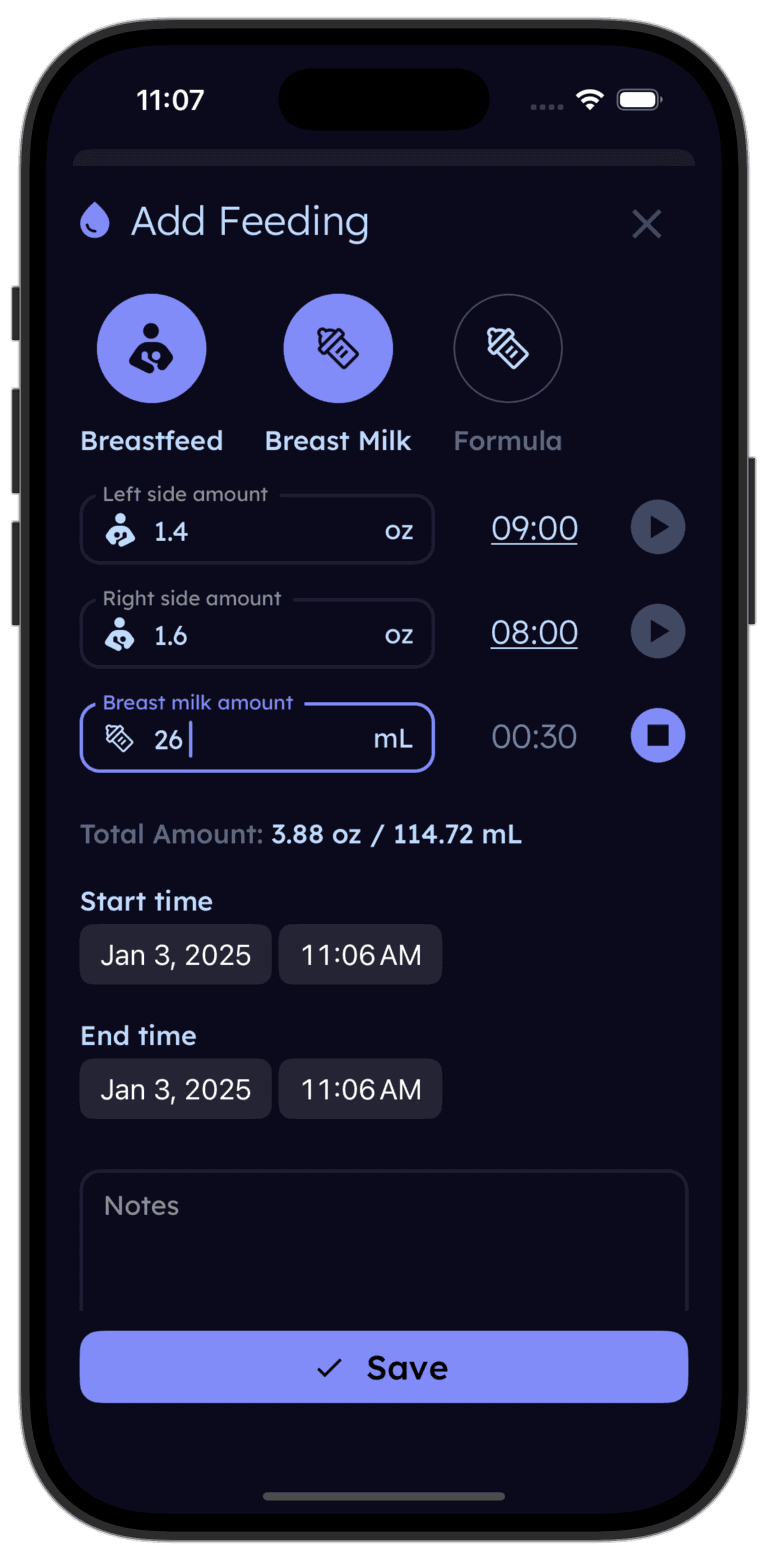
As baby's grip develops and their food repertoire expands, it's easy to lose track of what they've tried. A running food log keeps you honest.
Tinylog lets you log meals and new food introductions in a few taps — so you can track variety over time and make sure you're still rotating allergens and iron-rich foods alongside all the exciting new options.


One High Chair Worth Considering
The one thing that actually matters is that baby sits upright at 90 degrees with feet flat on something solid. The Stokke Tripp Trapp (~$280) nails this — adjustable seat and footrest, pulls right up to your table, and your kid will still use it at age ten. If that is out of budget, the IKEA Antilop (~$25) works great with a $15 aftermarket footrest.
Tinylog earns a small commission on purchases made through these links, at no cost to you.
We've found promo.new handy for finding discounts on baby gear. Doesn't always have what you need, but it's worth a shot.
The Slippery Food Problem
The biggest practical frustration in early BLW: slippery food. Avocado, banana, mango, and steamed vegetables can be almost impossible for a 6-month-old to grip. The food shoots out of their hand like a wet bar of soap, over and over, until everyone is frustrated.
Solutions that actually work:
- Roll in hemp seeds or ground flax — creates a gritty surface that baby can grip. Adds nutrition too.
- Leave skin partially on — banana peel, avocado skin, and mango skin can serve as a grip surface. Baby eats the flesh and leaves the skin.
- Roll in breadcrumbs — same principle as hemp seeds, less nutritious but widely available.
- Score the surface with a fork — creates ridges on soft foods like avocado or banana that improve grip.
- Offer on a pre-loaded spoon — for very slippery foods, loading a spoon and handing it to baby is still self-feeding.
- Use a crinkle cutter — the wavy edges create a better grip surface on vegetables like sweet potato and carrot.
Foods to Avoid Until Specific Ages
Avoid until 12 months: Honey (botulism risk), cow's milk as a drink (fine as ingredient from 6 months), added salt in significant quantities, added sugar.
Avoid until age 4-5 (choking hazards): Whole nuts, popcorn, whole grapes (quarter them), hard raw vegetables (raw carrot sticks, raw celery), hard candy, gum, large chunks of raw apple.
Always modify: Hot dogs (never in round slices — cut lengthwise into thin strips), cherry tomatoes (quarter lengthwise), blueberries (smash or halve), olives (quarter or slice), grapes (quarter lengthwise every single time).
Related Guides
-
Baby-Led Weaning Guide — Getting started safely with BLW
-
BLW Progression by Month — How eating skills develop
-
BLW Safety: Choking Hazards — What every parent should know
Sources
- Rapley, G., & Murkett, T. (2010). Baby-Led Weaning: The Essential Guide to Introducing Solid Foods.
- Fangupo, L. J., et al. (2016). A Baby-Led Approach to Eating Solids and Risk of Choking. Pediatrics, 138(4).
- American Academy of Pediatrics. (2024). Choking Prevention. HealthyChildren.org.
- CDC. (2024). When, What, and How to Introduce Solid Foods. CDC.gov.
- WHO. (2023). Complementary Feeding. WHO.int.
Medical Disclaimer
This guide is for informational purposes only and is not a substitute for professional medical advice. Consult your pediatrician before starting solids, especially regarding allergen introduction for high-risk infants. All caregivers should be trained in infant CPR before offering solid foods.
Frequently asked questions
- What size should BLW food be for a 6-month-old?
- Finger-length strips, about the width of your index finger. At 6 months, babies use a palmar grasp (whole fist around the food) and eat what sticks out above the top of their fist. Food needs to be long enough to grip with room to spare.
- When can I start giving smaller pieces?
- When the pincer grasp develops, usually around 8-9 months. You'll see baby start picking up small objects between thumb and forefinger. Once this skill emerges, you can offer smaller pieces — pea-sized to chickpea-sized — alongside larger strips.
- How soft should BLW food be?
- Soft enough that you can smoosh it between your thumb and forefinger with gentle pressure. If it resists, snaps, or stays firm, it needs more cooking. This 'squish test' works for virtually every food.
- Can I give raw fruits and vegetables?
- Some soft raw fruits are fine from 6 months — ripe banana, avocado, mango. Most vegetables and harder fruits need to be steamed or cooked until very soft. Raw carrot, raw apple, and raw celery are choking hazards and should not be offered as finger foods until age 3-4.