GUIDE

Baby-Led Weaning: Getting Started

Baby-led weaning means skipping purees and letting your baby self-feed soft finger foods from the start. It's safe when done right, and most babies take to it naturally.

Yes, the kitchen will be a disaster. Yes, your baby will gag. Both of these things are normal and expected.

What Baby-Led Weaning Actually Is

Baby-led weaning (BLW) is a straightforward concept: instead of spoon-feeding purees, you offer your baby soft, graspable finger foods and let them feed themselves from the very beginning of solid food introduction. Baby controls what goes in their mouth, how much they eat, and the pace of the meal.

The term was coined by Gill Rapley, a UK health visitor and researcher, and the approach has gained massive popularity over the past decade. The core philosophy is that babies are capable of feeding themselves if given appropriate food, and that self-feeding promotes better motor development, self-regulation of appetite, and exposure to real food textures from the start.

What BLW is NOT: it's not a free-for-all. It's not tossing random food at your baby and hoping for the best. It requires specific food preparation (safe shapes, appropriate textures), knowledge of choking hazards, and consistent supervision. The "baby-led" part means baby controls the eating — not that you abandon all structure.


The Non-Negotiable Safety Rules

  • Baby must be seated upright at 90 degrees — never reclined, never lying down
  • Baby feeds themselves — you offer the food, they decide if and how much to eat
  • Always supervise — never leave baby alone with food, not even for a second
  • Food must pass the 'squish test' — if you can't smoosh it between your thumb and finger, it's too hard
  • Cut foods into graspable shapes appropriate for baby's age and grip development
  • Take an infant CPR course before starting — every caregiver who feeds baby should know what to do
  • Know the choking hazards and modify them (whole grapes → quartered, hot dogs → thin strips, nut butters → thinned)

These aren't suggestions. Every one of these rules exists because of a specific safety concern. Follow all of them, every meal.

Best First BLW Foods
Avocado
Shape/SizeFinger-length strips, skin partially left on for grip (or rolled in hemp seeds)
Why It WorksSoft, nutrient-dense, mild flavor. The classic BLW starter.
Common IssueSlippery — roll in hemp seeds, ground flax, or breadcrumbs for grip
Banana
Shape/SizeCut in half, then thirds lengthwise. Leave some peel on as a handle.
Why It WorksSoft, no cooking needed, naturally sweet. Most babies love it.
Common IssueAlso slippery. The peel trick helps. Can be constipating.
Steamed broccoli
Shape/SizeWhole florets — the stem is a natural handle
Why It WorksHigh in vitamin C (boosts iron absorption), interesting texture, built-in handle.
Common IssueMust be very soft. If it snaps, steam it longer.
Sweet potato
Shape/SizeFinger-length strips, about the width of your index finger
Why It WorksSoft when cooked, mild flavor, good nutrition.
Common IssueCan be crumbly if overcooked. Aim for soft but holding its shape.
Steamed carrot sticks
Shape/SizeFinger-length sticks, soft enough to smoosh between your fingers
Why It WorksEasy to grip, mild flavor.
Common IssueRAW carrot is a choking hazard. Must be steamed until VERY soft.
Chicken drumstick
Shape/SizeRemove skin, cartilage, and loose bone. Baby gnaws meat off the bone.
Why It WorksExcellent iron source. Baby practices pulling meat with their gums. Natural handle.
Common IssueFeels scary to offer, but the bone is a handle and baby controls the pace.
Meatball or meat strip
Shape/SizeFlatten meatball slightly or cut into finger-length strips
Why It WorksIron-rich. Good for practicing biting and chewing.
Common IssueMust be soft — add breadcrumbs and liquid to meatball mixture for tender texture.
Toast strips
Shape/SizeLightly toasted bread cut into finger-length strips, with thin spread of nut butter or avocado
Why It WorksEasy to grip, can be a vehicle for allergens (PB, tahini) and nutrition.
Common IssueAvoid super crusty bread — it should be soft enough that baby can gum it.
Egg omelet strips
Shape/SizeThin omelet cut into finger-length strips
Why It WorksIron, protein, healthy fats. Introduces egg allergen. Easy to grip.
Common IssueMust be fully cooked. Thin omelets work better than thick scrambled chunks early on.
Cucumber spears (6+ months with teeth/9+ months)
Shape/SizeThick spears with skin partially peeled for grip. Seeds removed.
Why It WorksRefreshing, good for teething gums.
Common IssueCan be too hard for young babies without teeth. Start with very ripe cucumber or wait until 8-9 months.
Start with 2-3 foods per meal. Offer a mix of textures and flavors. Don't be discouraged if baby ignores some foods — they're learning.

BLW Safety: The Stuff That Actually Matters

The squish test

Before offering any food, try to smoosh it between your thumb and forefinger. If it flattens with gentle pressure, it's soft enough for baby. If it resists, breaks with a snap, or stays hard, it needs more cooking. This simple test works for almost everything.

Shapes matter as much as softness

At 6 months, baby uses a palmar grasp (whole fist). Food needs to be finger-length strips — long enough that the top sticks out above their fist. By 8-9 months, the pincer grasp develops and baby can handle smaller pieces. Match food size to grip development.

Round foods are the highest risk

Anything round, firm, and small enough to fit in the airway is a choking hazard: whole grapes, cherry tomatoes, blueberries, hot dog rounds, whole olives. Modify by quartering lengthwise (grapes, tomatoes), smashing (blueberries), or slicing into thin strips (hot dogs).

Gagging is not choking

Gagging is loud, visible, and involves coughing/retching. It's a protective reflex — baby's body is learning to manage food. Choking is silent or near-silent, with no effective coughing. Gagging is normal and frequent in early BLW. Choking is rare when food is prepared safely. Learn the difference — it will save your nerves.

For detailed coverage of gagging vs. choking and all major choking hazards, see our gagging vs. choking guide and BLW choking hazards guide.

What to Actually Expect
Week 1-2
What Baby DoesMost food goes on the floor, in the hair, on the chair, and on you. Baby explores texture, taste, and temperature more than they eat. Actual swallowed food: minimal.
What You ExperienceExciting, messy, nerve-wracking when baby gags (which they will). You'll wonder if they're getting enough. They are — milk is handling nutrition.
Week 3-4
What Baby DoesBaby gets more purposeful about bringing food to mouth. They start to figure out biting and chewing. More food makes it in, but still a lot on the floor.
What You ExperienceYou're getting more comfortable. Gagging bothers you less. Cleanup routine is established.
Month 2 (7-8 months)
What Baby DoesNoticeable improvement in efficiency. Baby can handle more textures. Portions increase. Meals start to feel like actual meals.
What You ExperienceConfidence is building. You're getting creative with food combinations. Less anxiety, more enjoyment.
Month 3-4 (8-9 months)
What Baby DoesPincer grasp develops — baby can pick up smaller pieces. Wider variety of foods. Three meals a day becoming routine.
What You ExperienceBLW feels natural now. Baby is eating recognizable food. Family meals feel possible.
This is a rough timeline. Some babies move faster, some slower. The mess, however, is universal.
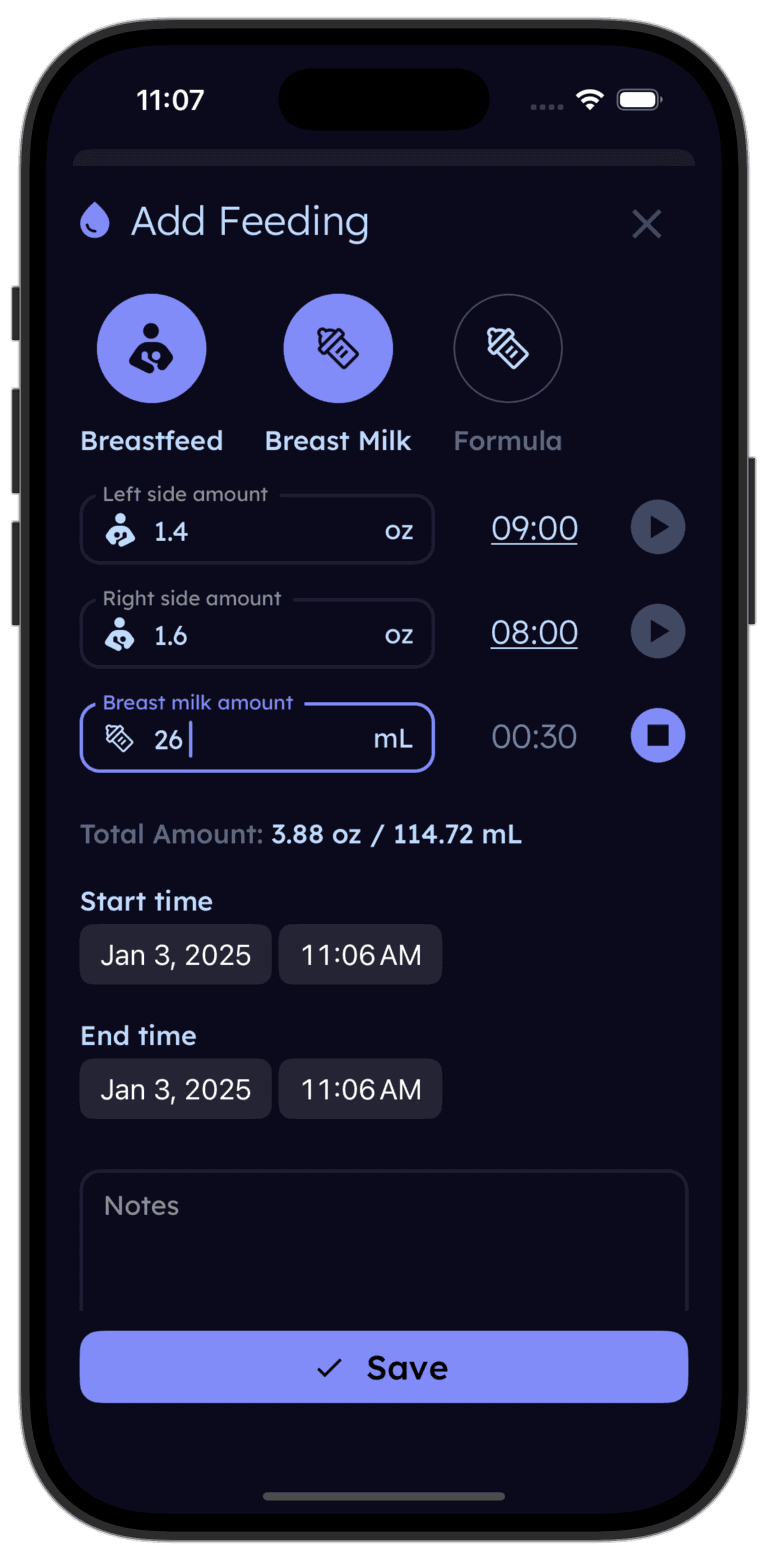
tinylog meal log showing BLW meal entries

When most of the food is on the floor, it's hard to know what baby actually ate. A quick log at least tracks what was offered.

tinylog lets you log BLW meals in seconds. Even if you can't tell exactly how much baby ate (welcome to BLW), logging what was offered helps you track variety and make sure you're rotating allergens and iron-rich foods.

Download on the App StoreGet It On Google Play

The Iron Question

One legitimate concern about BLW is iron intake. When baby self-feeds, they eat less volume in the early weeks than a spoon-fed baby — much of the food is being explored, not consumed. This matters because iron is the primary nutritional need from solids starting around 6 months.

The solution isn't to abandon BLW — it's to prioritize iron-rich finger foods. Offer shredded meat, iron-fortified cereal on a pre-loaded spoon, lentil patties, egg strips, and tofu strips at every meal. Don't fill the tray with banana and avocado and hope iron happens later. It needs to happen from the start.

If you're concerned about iron, talk to your pediatrician about checking baby's iron levels at the 9 or 12-month visit. This is standard practice regardless of feeding approach.

BLW and Daycare

Not all daycares are comfortable with BLW, and that's worth discussing before you start. Some practical approaches:

Talk to your provider early. Explain what BLW is, what the safety rules are, and what foods you'll be sending. Provide a printed choking hazard list and safe food preparation guide.

Send pre-cut food. Make it easy — send finger foods already cut to appropriate sizes in a labeled container.

Accept that daycare may use purees. If your daycare isn't able to do BLW, your baby can eat finger foods at home and purees at daycare. This combination approach works fine. Consistency of method matters less than consistency of exposure to varied foods.

Related Guides

Sources

  • Rapley, G., & Murkett, T. (2010). Baby-Led Weaning: The Essential Guide to Introducing Solid Foods.
  • Fangupo, L. J., et al. (2016). A Baby-Led Approach to Eating Solids and Risk of Choking. Pediatrics, 138(4).
  • Daniels, L., et al. (2015). Baby-Led Introduction to SolidS (BLISS) study. BMC Pediatrics, 15, 179.
  • Taylor, R. W., et al. (2017). Effect of a Baby-Led Approach to Complementary Feeding on Infant Growth and Overweight. JAMA Pediatrics, 171(9), 838-846.
  • AAP Committee on Nutrition. (2014). Diagnosis and Prevention of Iron Deficiency and Iron-Deficiency Anemia in Infants and Young Children. Pediatrics, 126(5).
  • American Academy of Pediatrics. (2024). Starting Solid Foods. HealthyChildren.org.

Medical Disclaimer

This guide is for informational purposes only and is not a substitute for professional medical advice. Consult your pediatrician before starting solids, especially regarding allergen introduction for high-risk infants. All caregivers should be trained in infant CPR before offering solid foods.

Get the BLW starter guide in your inbox.
We'll send you the food prep chart and safety checklist so you have it handy for those first meals.
BLW meals are messy. Logging them doesn't have to be.
Download tinylog free — track meals and new foods in a few taps.
Download on the App StoreGet It On Google Play