GUIDE

Baby-Led Weaning vs. Purees

Both approaches work. Neither is nutritionally superior. Most families end up doing a combination — and that's perfectly fine.

The internet will try to make you pick a side. You really don't have to.

The Debate That Doesn't Need to Be a Debate

If you've spent any time in parenting forums, you've seen the BLW vs. purees argument. It can get intense. BLW advocates sometimes frame spoon-feeding as controlling or outdated. Puree advocates sometimes frame BLW as reckless or messy chaos. Both sides cherry-pick studies and personal anecdotes to support their position.

The reality is boring compared to the debate: both methods work. Neither is nutritionally superior. Neither carries significantly more risk when done properly. And most families, regardless of which camp they initially identify with, end up doing some version of both.

The research bears this out. The BLISS study (Baby-Led Introduction to SolidS, Daniels et al., 2015) found no significant difference in energy intake, growth, or iron status between BLW and traditional spoon-feeding when both groups were given appropriate guidance. The Fangupo et al. (2016) study found no increased choking risk with BLW when parents were educated about food preparation. Both approaches, done well, produce the same outcome: a baby who learns to eat.

So instead of picking a side, let's look at what each approach actually offers and help you figure out what works for your family.

Side-by-Side Comparison
What it looks like
Traditional PureesParent spoon-feeds smooth, blended food. Texture progresses from thin to thick to lumpy over weeks/months.
Baby-Led WeaningBaby self-feeds soft finger foods from the start. Food is cut into graspable shapes. Baby controls what goes in their mouth.
CombinationMix of spoon-fed purees and self-fed finger foods at the same meal or different meals.
Motor skill development
Traditional PureesSpoon-feeding develops lip closure and swallowing skills. Texture progression is controlled by parent.
Baby-Led WeaningSelf-feeding develops hand-eye coordination, pincer grasp, and chewing skills earlier. Baby practices grasping, bringing food to mouth, and biting.
CombinationBaby gets practice with both spoon skills and self-feeding skills.
Choking risk
Traditional PureesLower gagging initially (smooth textures don't trigger the gag reflex as much). But delayed texture introduction past 9 months may increase later choking risk.
Baby-Led WeaningMore gagging early on (which is normal and protective). No increased choking risk when food is prepared safely (Fangupo et al., 2016).
CombinationSimilar to BLW — baby learns to manage textures through finger food exposure.
Mess factor
Traditional PureesModerate. Food goes on face, bib, high chair. Parent controls the spoon.
Baby-Led WeaningExtreme. Food goes everywhere. The floor, the hair, the walls, the dog. This is not an exaggeration.
CombinationSomewhere in between. Puree meals are neater. Finger food meals are a disaster. Average it out.
Parent control over intake
Traditional PureesHigher — parent can see exactly how much baby eats. Can feel reassuring for anxious feeders.
Baby-Led WeaningLower — baby decides what and how much to eat. Parent can't easily quantify intake. Can feel stressful initially.
CombinationMixed — puree meals give more visibility, finger food meals require more trust.
Convenience
Traditional PureesRequires prep (blending, cooking, portioning) or buying commercial purees. Easy to take on the go in pouches/jars.
Baby-Led WeaningCan often share modified family meals. Less separate prep. Harder to do on the go (messy, needs a seat).
CombinationMost flexible — purees for convenience, finger foods when you have time and space.
Iron intake
Traditional PureesIron-fortified cereal puree is an easy, reliable iron source. Meat purees deliver iron well.
Baby-Led WeaningIron intake may be slightly lower initially — babies eat less volume with self-feeding at first. Prioritize iron-rich finger foods.
CombinationIron-fortified cereal via spoon plus iron-rich finger foods covers both bases.
This comparison assumes both approaches are done with appropriate safety precautions and food preparation.

BLW Advantages

  • Baby learns to chew before they learn to swallow smooth food — this may build better oral motor skills
  • Self-regulation of appetite — baby eats to their hunger, which may support healthier eating patterns long-term
  • Exposure to real food textures from the start — skips the 'texture transition' challenge
  • Less separate food prep — baby can eat modified versions of family meals
  • Promotes fine motor development (grasping, pincer grip, hand-eye coordination)
  • May encourage more adventurous eating — baby explores food as a sensory experience

These advantages are real, but they don't make BLW the 'only right way.' Spoon-fed babies develop these skills too — just on a slightly different timeline.

BLW Challenges

  • The mess is significant — plan for extensive cleanup after every meal
  • Gagging is frequent early on — it's normal and protective, but it's hard to watch
  • Iron intake can be lower initially because babies eat less volume at first
  • It's harder to track exactly how much baby is eating (most of it may end up on the floor)
  • Not all caregivers (daycare, grandparents) may be comfortable with the approach
  • Requires specific food preparation knowledge — wrong shapes/sizes can pose choking risks

None of these are reasons not to try BLW. They're things to be aware of so you can plan for them.

Puree Advantages

  • Easier to ensure adequate iron intake — iron-fortified cereal is simple and reliable
  • Less messy than finger food meals
  • More familiar approach for many caregivers — grandparents, daycare staff may be more comfortable
  • Easier to track how much baby is eating
  • Convenient commercial options available for travel and busy days
  • Less gagging initially — which can be easier for anxious parents

Purees have been the standard approach for decades for good reason — they work.

Puree Challenges

  • If textures aren't progressed on time (by 8-9 months), baby may resist lumpy/solid foods later
  • Parent controls the pace and amount, which can override baby's self-regulation cues
  • Overreliance on pouches can delay oral motor development — sucking is not chewing
  • Smooth purees don't teach chewing skills — baby must learn this later during texture transition
  • Commercial baby food 'stages' are marketing constructs, not developmental guidelines
  • Baby food industry tends to overrepresent sweet flavors (apple, pear, sweet potato)

The key risk with purees is staying on smooth textures too long. If you progress textures between 7-9 months, most of these concerns are minimized.

The Case for Combination Feeding

Here's what most families actually do: a bit of both. Purees when it's convenient or when you want to make sure baby gets their iron-fortified cereal. Finger foods when you're eating a family meal and can share. A pouch in the diaper bag for emergencies. A pre-loaded spoon that baby brings to their own mouth.

This isn't a compromise or a failure to commit to a method. It's the most practical approach for real life. Your baby gets the motor skill benefits of self-feeding, the iron reliability of fortified cereal via spoon, and the exposure to both textures and spoon skills.

The only real rule: progress textures. Whatever approach you use, make sure your baby is experiencing lumpy, mashed, and soft-solid textures by 8-9 months. Babies who stay on smooth purees past this window may have more difficulty accepting textured foods later. The texture progression matters more than the method.

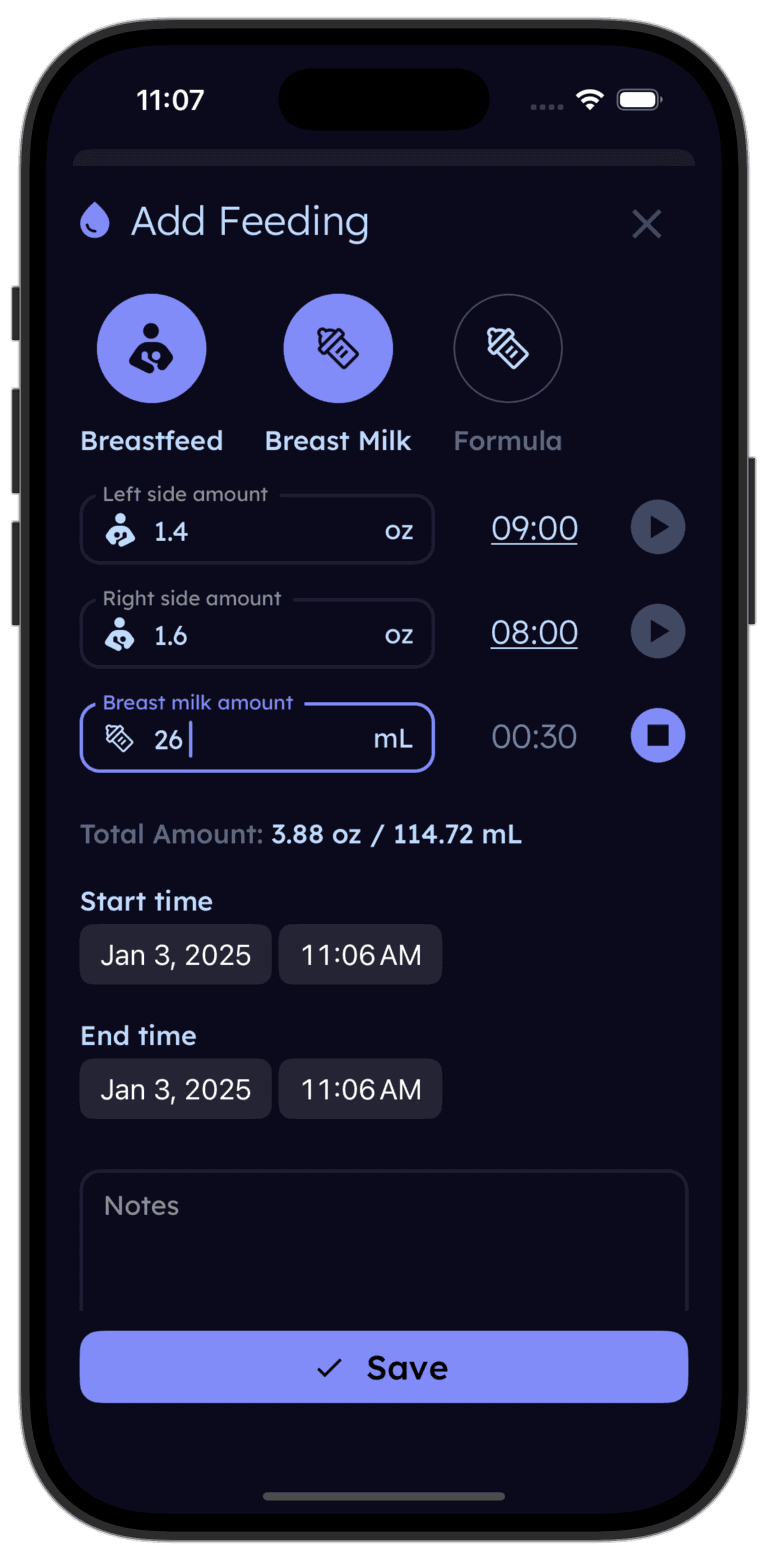
tinylog meal logging showing variety of foods offered

Whether it's purees, finger foods, or both — tracking what you've offered helps you see the bigger picture.

tinylog lets you log meals regardless of method. Purees, BLW meals, or a bit of both — it all goes in the same feed log, so you can see what baby has tried and what's next to introduce.

Download on the App StoreGet It On Google Play

How to Decide What's Right for You

Ask yourself these questions:

How do you feel about gagging? If watching your baby gag (which is normal, protective, and different from choking) would cause significant anxiety, starting with purees and working up to finger foods might be gentler on your nerves. If you can handle the gagging with some deep breaths, BLW might feel natural. Either way, take an infant CPR course — it helps with confidence regardless of method.

What does your daycare do? If baby is in childcare, ask about their feeding approach. Many daycares are more comfortable with purees. If your caregiver isn't trained in BLW food preparation and safety, sending purees may be the right call.

How much mess can you handle? This sounds trivial, but it's not. BLW is genuinely messy, every single meal, for months. If that would make mealtimes stressful for you, purees are a perfectly valid choice.

What does your baby prefer? Some babies grab food and refuse the spoon. Some open wide for the spoon and ignore finger foods. Some want both. Once you start, your baby will show you what they prefer. Follow their lead.


Tips for Whichever Approach You Choose

You can switch approaches any time

Started with purees and want to try BLW? Go for it. Started with BLW and feeling overwhelmed? Spoon-feeding is fine. Doing both? Also fine. This isn't a binding contract. Adapt as you go based on what works for your baby and your sanity.

The 'rules' of BLW are less rigid than the internet suggests

Gill Rapley, who coined the term, intended BLW as a flexible approach, not a strict protocol. Pre-loading a spoon for your baby is still self-feeding. Helping guide a piece of food to their mouth is fine. Offering a pouch on a busy day doesn't undo anything.

Focus on progression, not method purity

Whatever approach you start with, the goal is the same: by 12 months, your baby should be eating a variety of textures including soft solids, managing finger foods, and moving toward family meals. The path there matters less than the destination.

Related Guides

Sources

  • Fangupo, L. J., et al. (2016). A Baby-Led Approach to Eating Solids and Risk of Choking. Pediatrics, 138(4).
  • Daniels, L., et al. (2015). Baby-Led Introduction to SolidS (BLISS) study: a randomised controlled trial of a baby-led approach to complementary feeding. BMC Pediatrics, 15, 179.
  • Rapley, G., & Murkett, T. (2010). Baby-Led Weaning: The Essential Guide to Introducing Solid Foods.
  • Taylor, R. W., et al. (2017). Effect of a Baby-Led Approach to Complementary Feeding on Infant Growth and Overweight. JAMA Pediatrics, 171(9), 838-846.
  • Morison, B. J., et al. (2016). How different are baby-led weaning and conventional complementary feeding? A cross-sectional study of infants aged 6-8 months. BMJ Open, 6(5).
  • AAP Committee on Nutrition. (2014). Diagnosis and Prevention of Iron Deficiency and Iron-Deficiency Anemia in Infants and Young Children. Pediatrics, 126(5).

Medical Disclaimer

This guide is for informational purposes only and is not a substitute for professional medical advice. Consult your pediatrician before starting solids, especially regarding allergen introduction for high-risk infants. All caregivers should be trained in infant CPR before offering solid foods.

Get this comparison in your inbox.
We'll send you the pros/cons breakdown so you can share it with your partner and decide together.
However you feed your baby, tracking new foods takes the guesswork out.
Download tinylog free — log purees, finger foods, and everything in between.
Download on the App StoreGet It On Google Play