GUIDE

Gagging vs. Choking

Gagging is loud, visible, and means the safety system is working. Choking is silent and means the airway is blocked. Knowing the difference is the most important thing you'll learn before starting solids.

That dramatic retching and coughing? That's gagging. It looks terrifying but it's protective. The one to worry about is the quiet one.

The Most Important Distinction in Infant Feeding

If you only learn one thing before starting solids, make it this: the difference between gagging and choking. They look different, they sound different, they mean completely different things, and they require opposite responses.

Gagging is your baby's built-in safety system doing exactly what it's supposed to do. When food moves too far back on the tongue, the gag reflex triggers a dramatic coughing, retching, sputtering response that pushes the food forward. It's loud. It's messy. Baby's face turns red. It looks absolutely terrifying. And it means everything is working correctly.

Choking is when food actually blocks the airway. The defining characteristic is silence — baby cannot cough effectively, cannot cry, and cannot move air. There may be a weak attempt to cough, but it's ineffective. Baby's face may turn blue. This is a medical emergency that requires immediate intervention.

The most dangerous confusion is treating gagging like choking (which can make things worse) or treating choking like gagging (which wastes critical seconds). Understanding the difference lets you stay calm during normal gagging and act immediately during the rare true choking event.

Gagging vs. Choking: Side by Side
Sound
GaggingLoud — coughing, retching, sputtering. You'll hear it.
ChokingSilent or near-silent. Baby cannot make effective sounds.
Color
GaggingFace may turn red from the effort of coughing/retching
ChokingFace may turn blue or purple, especially lips and around the mouth
Breathing
GaggingBaby can breathe between gag episodes. Air is moving.
ChokingBaby cannot breathe effectively. Air is not moving.
Coughing
GaggingStrong, effective coughing — the body is clearing the food
ChokingNo effective cough, or only weak, silent attempts
Eyes
GaggingEyes may water. Baby looks startled but alert.
ChokingWide-eyed panic. May look terrified.
What's happening
GaggingGag reflex triggered food forward on the tongue. Body is pushing food away from the airway. The system is WORKING.
ChokingFood has entered and is blocking the airway. The body cannot clear it. This is an EMERGENCY.
What to do
GaggingStay calm. Stay close. Let baby work through it. Do NOT pat their back or put fingers in their mouth.
ChokingAct immediately. Back blows, chest thrusts. Call 911. This requires intervention.
How common
GaggingVery common in early solid feeding — happens frequently, especially in weeks 1-4
ChokingRare when food is prepared safely and choking hazards are avoided
The key differentiator is sound. Gagging is LOUD. Choking is SILENT. If your baby is making noise, they are gagging — and the system is working.

Why Babies Gag So Much (and Why That's Good)

Babies' gag reflex is in a different place than adults'

This is the single most important thing to understand about why babies gag so much. In adults, the gag reflex is triggered near the back of the throat. In young babies, it's triggered about two-thirds of the way forward on the tongue. This means food barely has to enter the mouth before the gag reflex fires. It's an extra safety margin — the reflex catches food well before it could reach the airway.

The gag reflex moves backward over time

As babies gain experience with solid food, the gag reflex gradually migrates to the back of the tongue — closer to where it is in adults. This is why gagging decreases with practice. By 8-9 months, most babies gag much less than they did at 6 months. The system is literally learning and adapting.

Gagging is practice for safe eating

Every time your baby gags, their body is learning how to manage food. The gag pushes food that went too far back toward the front of the mouth, where baby can try again (or spit it out). This is oral motor learning. It looks alarming, but it's literally the process by which babies learn to eat safely.

When Baby Is Gagging: What to Do

  • Stay calm — your reaction matters. If you gasp, scream, or look panicked, baby picks up on that and may develop a fear of eating.
  • Stay at the table, close to baby. Watch and monitor, but don't intervene physically.
  • Do NOT pat baby's back — this can push food further toward the airway.
  • Do NOT stick your fingers in baby's mouth to fish food out — same risk of pushing food deeper.
  • Let baby cough and work through it. The cough reflex is powerful and effective.
  • Once the gag resolves, baby will often continue eating as if nothing happened. Follow their lead.
  • If gagging makes you extremely anxious, it's okay to take a breath yourself. Your calm energy helps baby stay calm.

The hardest part of gagging is managing YOUR reaction, not the gag itself. Baby will recover. Your job is to stay calm and let them.

When Baby Is Choking: Emergency Response

  • Recognize it: baby is SILENT, cannot cough effectively, may be turning blue
  • Call 911 immediately — or shout for someone else to call while you act
  • Place baby face-down on your forearm, head lower than body, supporting their head and jaw
  • Give 5 firm back blows between the shoulder blades with the heel of your hand
  • Turn baby face-up on your forearm. Give 5 chest thrusts using 2 fingers on the center of the breastbone, just below the nipple line
  • Repeat back blows and chest thrusts until the object is dislodged, baby starts coughing/crying, or paramedics arrive
  • NEVER do abdominal thrusts (Heimlich maneuver) on an infant under 1 year — only back blows and chest thrusts

These steps are a reference — not a substitute for hands-on CPR training. Take an infant CPR course BEFORE you need these steps.

Infant CPR: Non-Negotiable

Take an infant CPR course before starting solids

This is not optional advice. It is the single most important thing you can do before offering your baby solid food. Every caregiver who will feed your baby — parents, grandparents, babysitters, daycare staff — should be trained in infant choking response and CPR. The American Red Cross, American Heart Association, and many hospitals offer infant CPR courses. Some are available online. Do it before the first meal.

Reading about it isn't the same as practicing it

The steps described above are a reference, not a substitute for hands-on training. In a real choking emergency, you need muscle memory — not a guide to scroll through. Take the course. Practice on a doll. Know the motions in your body, not just in your head.

Managing Your Own Anxiety

Here's the part nobody talks about: watching your baby gag is genuinely awful, even when you know it's normal. Your every parental instinct screams to intervene — grab the food, pat the back, do something. Learning to sit still while your baby coughs and sputters goes against everything your body wants to do.

This anxiety is normal. It doesn't make you a helicopter parent. It makes you a parent whose evolutionary wiring is working correctly. The way through it is knowledge and practice:

Before starting solids: Take the CPR course. Know what gagging looks like (videos are available — watch a few). Understand why it happens. This intellectual knowledge is your foundation.

During the first gags: Tell yourself what's happening: "Baby is gagging. They're making noise, which means air is moving. The gag reflex is working. My job is to stay calm." Narrating the physiology to yourself helps override the panic response.

After a few weeks: It gets better. As baby gags less frequently and you've seen the cycle resolve safely dozens of times, your nervous system recalibrates. What was terrifying at day 3 is unremarkable at day 30.

If anxiety is overwhelming: If the fear of choking is so intense that you can't bring yourself to offer solid food, or if you're restricting your baby's food to only the smoothest, safest options well past the age when they should be progressing — talk to your pediatrician. Some anxiety is normal. Anxiety that prevents your baby from learning to eat is worth addressing with support.


tinylog meal log showing solid food entries

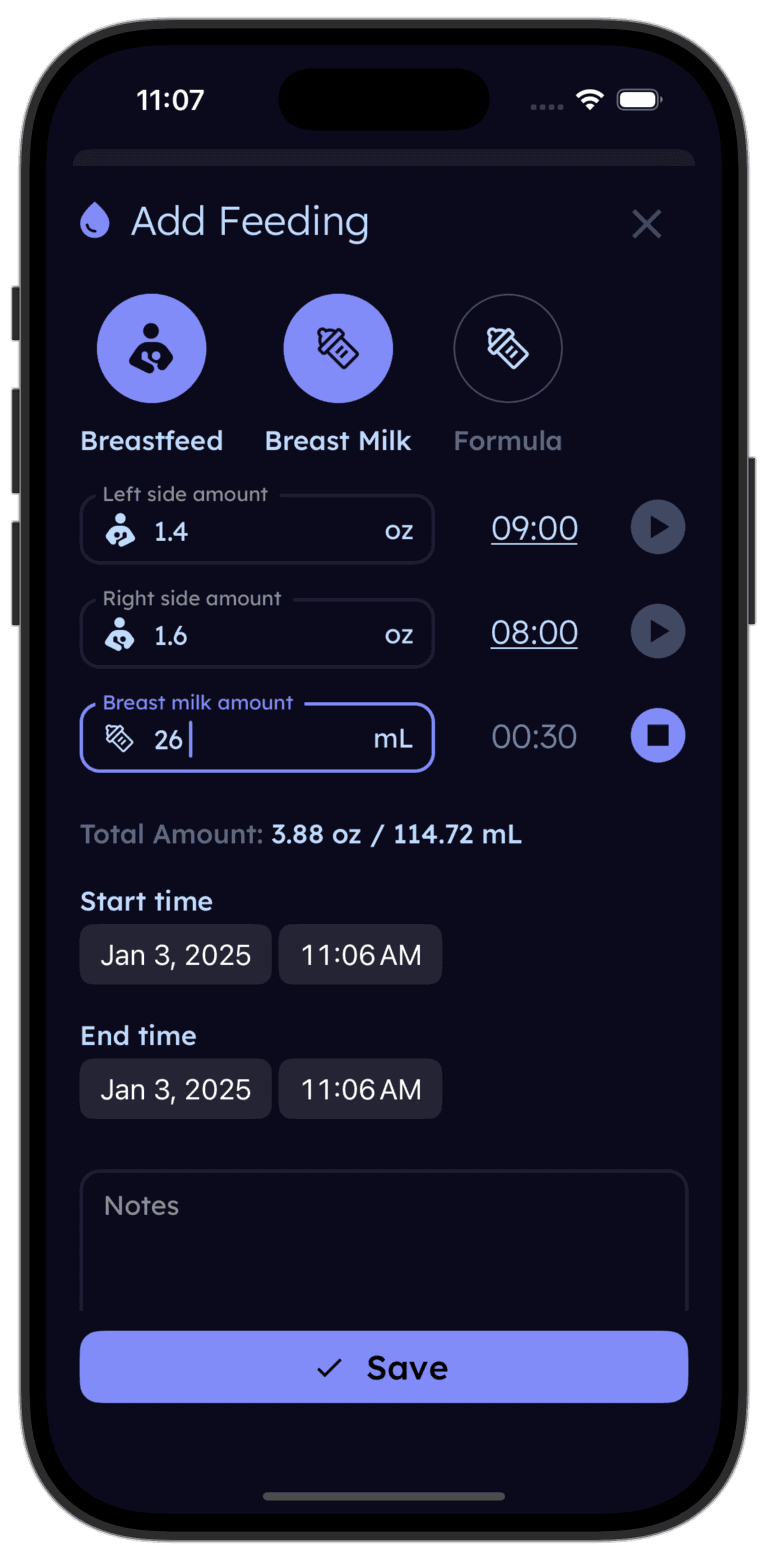
Once you're past the gagging anxiety, tracking what baby eats gets a lot more fun.

tinylog keeps a simple log of meals and new foods, so you can focus on the feeding — not the record-keeping. A few taps per meal, and you've got a complete picture of your baby's eating progress.

Download on the App StoreGet It On Google Play

Related Guides

Sources

  • Fangupo, L. J., et al. (2016). A Baby-Led Approach to Eating Solids and Risk of Choking. Pediatrics, 138(4).
  • American Academy of Pediatrics. (2024). Choking Prevention. HealthyChildren.org.
  • American Red Cross. (2024). Infant CPR and Choking First Aid.
  • Rapley, G., & Murkett, T. (2010). Baby-Led Weaning: The Essential Guide to Introducing Solid Foods.
  • Naylor, A. J. (2005). Infant oral motor development in relation to the duration of exclusive breastfeeding. In: Bentley, M. E., & Pelto, G. H., eds. Complementary Feeding of Young Children in Developing Countries.
  • Brown, A. (2018). No difference in self-reported frequency of choking between infants introduced to solid foods using a baby-led weaning or traditional spoon-feeding approach. Journal of Human Nutrition and Dietetics, 31(4), 496-504.

Medical Disclaimer

This guide is for informational purposes only and is not a substitute for professional medical advice. Consult your pediatrician before starting solids, especially regarding allergen introduction for high-risk infants. All caregivers should be trained in infant CPR before offering solid foods.

Get this guide in your inbox.
We'll send you the gagging vs. choking comparison so you can share it with every caregiver who feeds your baby.
Confident feeding starts with knowing the difference. Track the rest.
Download tinylog free — log meals, new foods, and keep your feeding record clear.
Download on the App StoreGet It On Google Play