
The squish test is your best friend
Can you smoosh the food between your thumb and forefinger with gentle pressure? If yes, it's soft enough. If it resists, snaps, or stays firm, cook it more or don't offer it. This works for nearly everything.
GUIDE
Published on
Most choking incidents are caused by food shape, not food type. Round, hard, sticky, and coin-shaped foods are the primary hazards — and almost all of them can be modified to be safe.
This is the reference guide to print out, stick on the fridge, and share with every person who feeds your baby.
Log foods and reactions
Choking in infants is almost always caused by one of three things: food that's the wrong shape (round, airway-sized), food that's too hard (can't be adequately chewed), or food that's sticky/gummy (adheres to the airway). Understanding these three categories covers 90% of choking prevention.
The good news: almost every choking hazard can be modified to be safe. Grapes aren't dangerous — whole grapes are dangerous. The food itself is fine; the preparation is what matters. You don't need to avoid most of these foods. You need to prepare them correctly.
The one action that matters more than any list: take an infant CPR course before starting solids. Know what choking looks like. Know how to respond. Every caregiver who feeds your baby should be trained. The American Red Cross and American Heart Association both offer infant CPR courses — many are available online and take less than an hour.
| Food | Why It's Dangerous | Safe Modification | Never Do This |
|---|---|---|---|
| Whole grapes | Round, firm, and sized to perfectly block a child's airway. The smooth skin creates a seal. | Quarter lengthwise (cut into 4 pieces top to bottom). Continue until age 4. | Never serve whole or just halved to children under 4 |
| Whole cherry tomatoes | Same as grapes — round, firm, skin creates an airway seal | Quarter lengthwise | Never serve whole to babies or young toddlers |
| Hot dogs | Round cross-section is a perfect airway plug. Compressible but firm enough to lodge. | Cut lengthwise into thin strips, then into small pieces. Never in rounds. | Never cut into coin/round shapes |
| Whole nuts | Hard, small, and irregularly shaped. Cannot be adequately chewed by babies. | Only as nut butters (thinned) or finely ground into food. Never whole. | Never give whole nuts to children under 4-5 |
| Thick nut butter | Sticky glob can adhere to the airway and is difficult to clear | Always thin with liquid before serving, or spread a very thin layer on toast | Never give a spoonful of thick nut butter |
| Raw carrot sticks | Hard, firm, can snap into airway-sized pieces | Steam until very soft (must pass squish test). Grated raw carrot is safer than sticks. | Never offer raw carrot sticks to babies |
| Raw apple chunks | Hard and can snap into sharp-edged pieces that lodge in the airway | Steam or bake until soft, or offer very thin shavings. Grate for younger babies. | Never offer raw apple chunks to babies |
| Popcorn | Hard kernels, husks, and irregular shapes. Cannot be safely modified. | No safe modification exists. Avoid until age 4+. | Never offer popcorn to babies or toddlers |
| Hard candy / lollipops | Hard, round, designed to be sucked (not chewed) | Not appropriate for babies at all. | Never — not a baby food |
| Marshmallows | Soft but sticky and compressible — can conform to the airway shape | Not appropriate for babies. Even mini marshmallows are a risk. | Never give marshmallows to babies or young toddlers |
| Chunks of meat | Tough, chewy pieces that baby can't adequately break down | Shred into thin strips, cook until very tender, or offer as ground meat crumbles | Never offer tough, chewy cubes of meat |
| Chunks of cheese | Firm cubes can be bitten in half, creating an airway-sized piece | Thin strips, grated, or melted on toast | Never offer cheese in cubes to babies |
| Whole blueberries | Round, firm, and small — similar hazard to grapes at a smaller scale | Smash flat with a fork or cut in half | Never serve whole to babies — even when they seem small enough |
| Raisins and dried fruit | Sticky, chewy, and can clump together to form an airway-blocking mass | Chop finely and mix into food, or soften by soaking in water first | Never give whole dried fruit pieces to babies under 12 months |
| Coin-shaped food pieces | Any food cut into round, flat pieces (coins) can block the airway | Cut into strips or irregular shapes instead of rounds | Never cut sausages, bananas, or other cylindrical foods into rounds for babies |
These are the ones that catch parents off guard because they seem harmless. The round shape and firm texture make them risky.
Can you smoosh the food between your thumb and forefinger with gentle pressure? If yes, it's soft enough. If it resists, snaps, or stays firm, cook it more or don't offer it. This works for nearly everything.
Soft foods can still be choking hazards if they're the wrong shape. A whole grape is soft but perfectly shaped to block an airway. A round meatball can be a hazard even if it's tender. Always consider both softness AND shape.
Every meal, every snack, every time. Never leave baby alone with food — not to answer the door, not to check your phone, not for 10 seconds. Choking events happen in seconds, and your presence is the most important safety measure.
Grandparents, babysitters, daycare workers, your partner — everyone who might offer food to your baby should know these hazards. Print this list out. Put it on the fridge. Have the conversation before it matters.
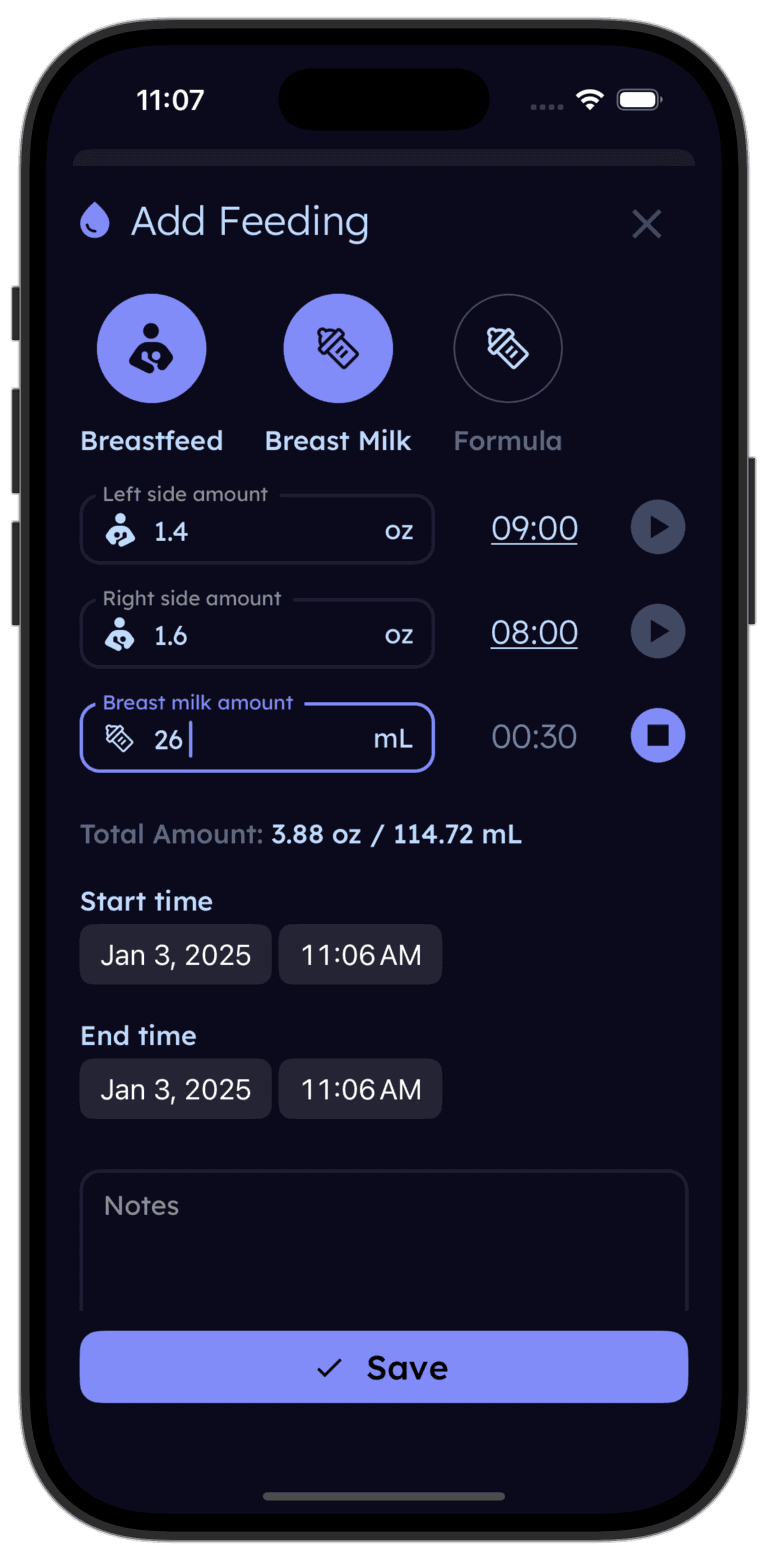
Once you've got the safety basics down, logging meals in Tinylog takes just a few taps. Track what baby ate, when, and any new foods introduced — all without adding stress to an already eventful mealtime.


The highchair itself is part of the safety setup:
Upright at 90 degrees. Baby should sit with their torso upright, not reclined. A reclined position increases choking risk because gravity works against clearing the airway.
Feet supported. A footrest (or a box/step stool if your highchair doesn't have one) gives baby stability and the core support needed for safe swallowing. Dangling feet reduces trunk stability.
Strapped in. Use the highchair straps. Every time. Baby shouldn't be standing, twisting, or climbing during meals.
No distractions. Screen time during meals doesn't just reduce engagement with food — it reduces awareness of what's in their mouth. A distracted baby is a baby who's more likely to shove food in without adequately chewing.
Gagging vs. Choking — How to tell the difference and what to do
Baby-Led Weaning Guide — Getting started safely with BLW
Best BLW Foods by Age — Safe shapes, sizes, and textures
This guide is for informational purposes only and is not a substitute for professional medical advice. Consult your pediatrician before starting solids, especially regarding allergen introduction for high-risk infants. All caregivers should be trained in infant CPR before offering solid foods.