
GUIDE
Pampers Pure Protection vs. Pampers Baby Dry
Published on
Pampers Pure Protection uses plant-based materials, skips fragrance, and is designed for sensitive skin. Pampers Baby Dry focuses on maximum absorbency for up to 12 hours at a lower price. Both are reliable diapers — your pick depends on whether ingredient quality or absorbency-per-dollar matters more.
Both diapers come from Procter & Gamble under the Pampers brand, but they sit in different tiers. Pure Protection is the premium, clean-ingredient option built for parents who want fewer synthetic materials touching their baby's skin. Baby Dry is the everyday workhorse optimized for long-lasting dryness and value. They overlap in many sizes, but they solve different problems.
Log changes, blowouts, and rashes
Same Brand, Different Philosophy — Here's What Matters
Pampers Pure Protection and Pampers Baby Dry sit at opposite ends of the Pampers lineup, and the difference goes beyond just price. They're built around different ideas about what a diaper should prioritize.
Pampers Pure Protection is the clean-ingredient option. It uses plant-based materials in the outer cover, skips fragrance entirely, and is designed for parents who care about what touches their baby's skin. The cotton-like top sheet feels noticeably softer, and the whole diaper has a more premium feel in your hand.
Pampers Baby Dry is the absorbency-first option. It's slightly thicker, holds more liquid, and is built to keep your baby dry for up to 12 hours. It's also significantly cheaper per diaper, which adds up fast when you're changing 6–8 times a day.
These aren't interchangeable products in fancy and plain packaging. They make genuinely different tradeoffs, and the right choice depends on what your baby actually needs.
| Feature | Pampers Pure Protection | Pampers Baby Dry | What It Means |
|---|---|---|---|
| Manufacturer | Procter & Gamble | Procter & Gamble | Same parent company, same Pampers brand — but different product tiers with different priorities. |
| Product tier | Premium (clean-ingredient line) | Active (everyday value line) | Pure Protection sits above Baby Dry in Pampers' lineup and is priced accordingly. |
| Size range | Newborn–Size 6 (up to 35+ lbs) | Sizes 1–7 (8–41+ lbs) | Pure starts earlier with a Newborn size. Baby Dry extends further with Size 7 for big toddlers. |
| Materials | Plant-based outer cover, premium cotton-like top sheet | Standard synthetic outer cover and liner | Pure uses more plant-derived materials. Baby Dry uses conventional diaper construction. |
| Fragrance | Fragrance-free | Light fragrance | Pure Protection wins for sensitive skin. Baby Dry's scent is mild but present. |
| Chlorine bleaching | No elemental chlorine bleaching | No elemental chlorine bleaching | Tie. Neither uses elemental chlorine bleaching in their manufacturing process. |
| Absorbent core | Standard absorbent core with plant-based materials | Extra Absorb Channels with drier-feeling liner | Baby Dry holds more liquid overall. Pure's core is adequate but not built for marathon stretches. |
| Overnight performance | Good for average wetters (up to 8–9 hours) | Up to 12 hours of protection | Baby Dry wins overnight. Heavy wetters will notice the difference after 8+ hours in Pure. |
| Wetness indicator | Yes — color-changing line | Yes — color-changing line (smaller sizes) | Both include a wetness indicator, though Baby Dry drops it in larger sizes. |
| Softness and feel | Premium cotton-like softness, noticeably gentle | Standard soft inner liner | Pure Protection feels softer against skin. Parents frequently notice the texture difference. |
| Hypoallergenic | Yes — dermatologist-tested, free of parabens and latex | Yes — dermatologist-tested, free of parabens and latex | Both are hypoallergenic. Pure goes further by removing fragrance and using plant-based materials. |
| Environmental claims | Plant-based materials, responsibly sourced pulp | Standard manufacturing, no specific eco claims | Pure makes more environmental claims, but neither diaper is biodegradable or compostable. |
Ingredients: What's Actually in These Diapers
This is where the two products differ the most, and it's the main reason Pure Protection costs more.
Pampers Pure Protection uses a plant-based outer cover, premium cotton-like materials in the top sheet, and is manufactured without elemental chlorine bleaching. It contains no fragrance, no parabens, and no latex. Procter & Gamble lists the key materials on the packaging, which is more transparency than you get from most diaper brands.
Pampers Baby Dry uses standard diaper construction — synthetic outer cover, conventional liner, and a light fragrance. It's still free of parabens and latex, and it's dermatologist-tested. But it doesn't make the same clean-ingredient claims that Pure does.
Here's the honest truth: both diapers use superabsorbent polymers (SAP) in the core. That's the material that actually absorbs liquid, and there's no plant-based alternative that performs as well yet. So Pure Protection isn't a fully natural diaper — it's a conventional diaper with cleaner surrounding materials. That matters for skin contact, but it's worth knowing what you're actually paying extra for.
Absorbency: Baby Dry's Strongest Advantage
If your main concern is keeping your baby dry for as long as possible, Baby Dry wins this one clearly.
Pampers Baby Dry uses Extra Absorb Channels with a drier-feeling inner liner that's built to handle 10–12 hours without a change. The core holds significantly more liquid than Pure Protection's core — in our reading of independent tests, Baby Dry absorbs roughly 20–30% more liquid before leaking in the same size.
Pampers Pure Protection is perfectly adequate for daytime use and handles 8–9 hours for average wetters. But heavy wetters — especially babies older than 6 months who are drinking more — will push Pure to its limits overnight.
Practical takeaway: If overnight leaking is your problem, Baby Dry is probably the answer. If your baby sleeps through the night without leaks in Pure, there's no reason to switch.
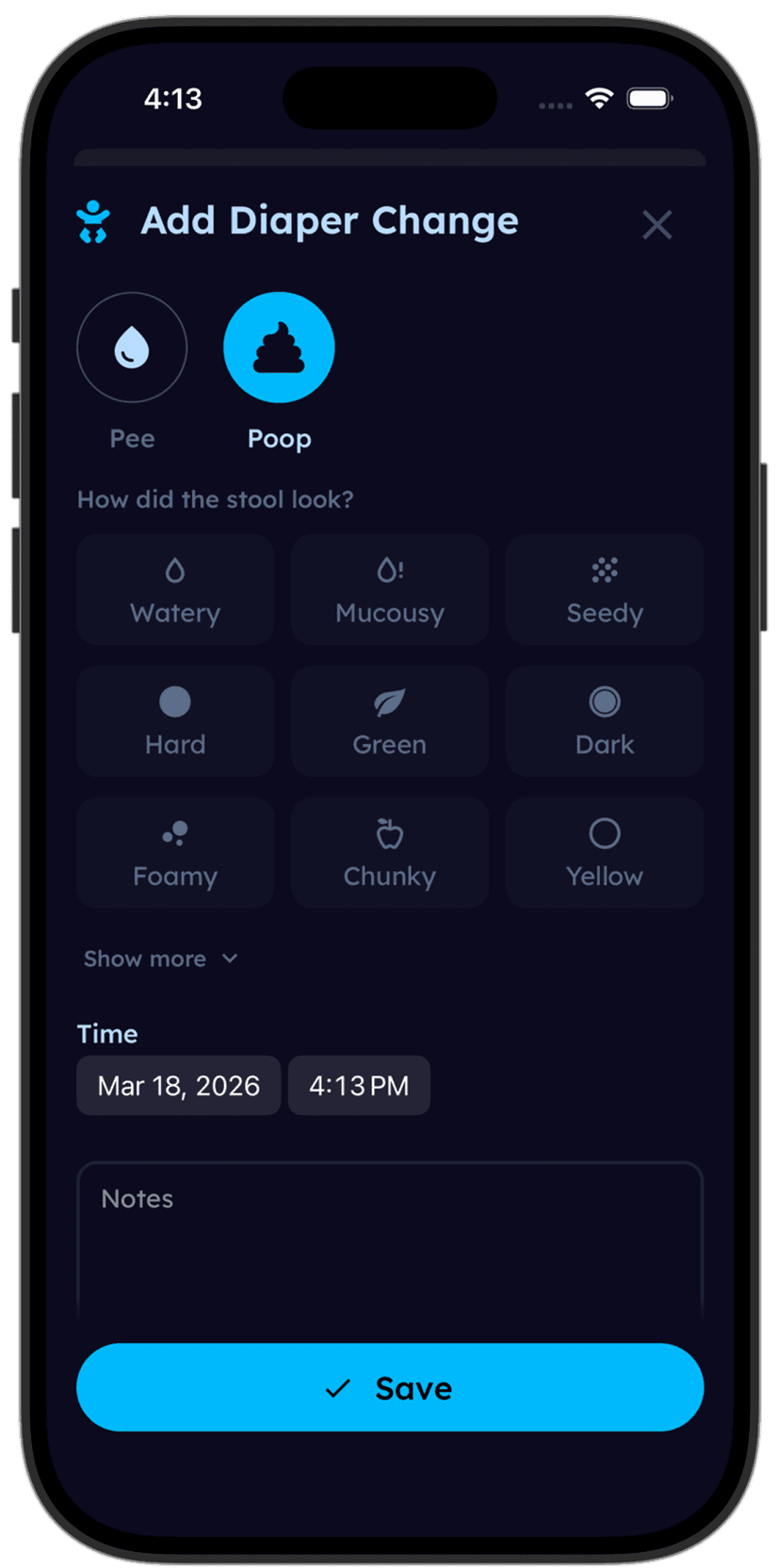
Tinylog tracks diapers so you can spot patterns.
Log wet and dirty diapers, note blowouts and rashes, track output over days and weeks. Bring the data to your next pediatrician visit.


Sensitive Skin: Pure Protection's Strongest Advantage
If your baby's skin reacts to diapers, this is the section that matters most.
Fragrance is one of the most common irritants in baby products. It's not that every baby reacts to it — most don't. But for the ones who do, switching to a fragrance-free diaper can clear up persistent rashes within days. Pure Protection removes that variable entirely.
The plant-based outer cover and softer top sheet also reduce friction against skin. Parents with eczema-prone babies report fewer flare-ups after switching from standard diapers to Pure Protection. That's not a guarantee — every baby's skin is different — but the pattern is consistent enough to be meaningful.
Pampers Baby Dry contains a light fragrance and uses standard synthetic materials. For most babies, this causes zero issues. If your baby has been wearing Baby Dry without rashes or irritation, their skin is fine with it. Don't switch to Pure just because it sounds better — switch because there's a reason to.
| Product | Typical Price | Cost Per Diaper | Monthly Estimate |
|---|---|---|---|
| Pampers Pure Protection (Size 3, 116-ct box) | $44–$52 | ~$0.38–$0.45 | ~$68–$108 |
| Pampers Baby Dry (Size 3, 168-ct box) | $42–$50 | ~$0.25–$0.30 | ~$45–$72 |
| Pampers Pure Protection (Size 5, 82-ct box) | $42–$50 | ~$0.51–$0.61 | ~$77–$110 |
| Pampers Baby Dry (Size 5, 132-ct box) | $44–$52 | ~$0.33–$0.39 | ~$50–$78 |
Price: The Gap Is Real
Pure Protection costs roughly $0.08–$0.12 more per diaper than Baby Dry. That sounds small until you multiply it out.
At 7 diapers per day, the difference is about $0.70–$0.84 per day, or $21–$25 per month. Over a year, that's $250–$300 in extra diaper spending. For families on a tight budget, that's significant.
Here's how to reduce the cost of either option:
- Amazon Subscribe & Save takes 5–20% off depending on your total subscriptions.
- Target Circle and Walmart+ run frequent Pampers promotions worth stacking.
- Warehouse clubs (Costco, Sam's Club) sell both in bulk at 15–20% below standard retail.
- Mix and match. Some parents use Pure Protection during the day (when skin contact matters most) and Baby Dry at night (when absorbency matters most). This cuts the premium roughly in half.
The mix-and-match approach is genuinely practical. Your baby's skin gets the gentler materials during waking hours, and you get Baby Dry's superior overnight absorbency when it counts.
Choose Pampers Pure Protection If
- Your baby has sensitive skin, eczema, or reacts to fragranced products
- You want a diaper with plant-based materials and fewer synthetic ingredients
- Fragrance-free is non-negotiable for your family
- You're willing to pay a premium for cleaner-ingredient products
- Your baby's skin looks irritated after wearing standard diapers
- You prefer products with fewer chemical additives touching your baby's skin
Choose Pampers Baby Dry If
- You need a diaper that lasts through 10–12 hour overnight stretches
- Your baby is a heavy wetter and you need maximum absorbent capacity
- You want strong diaper performance at a lower price point
- Your baby's skin tolerates standard diapers without irritation
- You need Size 7 for your older toddler (Pure only goes to Size 6)
- Budget matters and you're going through 6–8 diapers per day
Where to Buy
For sensitive skin and cleaner ingredients, Pampers Pure Protection (~$0.40/diaper in bulk) is worth the premium if your baby needs it. The fragrance-free, plant-based design genuinely makes a difference for babies who react to standard diapers. Buy the biggest box you can find — per-diaper price drops significantly with larger counts.
For maximum absorbency and everyday value, Pampers Baby Dry (~$0.27/diaper in bulk) delivers strong performance at a price that makes sense long-term. It's the diaper most families reach for when skin sensitivity isn't a concern, and it handles overnight better than Pure.
If you're unsure which your baby needs, buy a small pack of each and try them side by side for a week. Your baby's skin will tell you more than any comparison chart.
Tinylog earns a small commission on purchases made through these links, at no cost to you.
We've found promo.new handy for finding discounts on baby gear. Doesn't always have what you need, but it's worth a shot.
The Bottom Line
Pampers Pure Protection and Pampers Baby Dry are built for different priorities, and neither is objectively better — just better for different situations.
Pampers Pure Protection wins on ingredient quality, skin gentleness, and fragrance-free design. It's the right diaper for babies with sensitive skin or parents who want fewer synthetic materials against their baby's body.
Pampers Baby Dry wins on absorbency, overnight performance, and price. It's the right diaper for heavy wetters, overnight use, and families watching their spending.
The smartest move for many families is using both — Pure during the day for gentler skin contact, Baby Dry at night for superior leak protection. You get the benefits of both without fully committing to Pure's higher price.
If you're tracking diaper output to make sure your baby is eating and hydrating enough, Tinylog makes it easy to log every change and share the data with your pediatrician.
Related Guides
- Pampers Swaddlers vs. Pampers Pure Protection — Comparing Pampers' two premium diaper options
- Pampers Cruisers vs. Pampers Baby Dry — Mobility vs. absorbency within the Pampers lineup
- Baby Diaper Rash — Causes, treatment, and when to call your doctor
- Baby Eczema — Managing eczema flare-ups and choosing gentle products
Sources
- Pampers.com. "Pampers Pure Protection Diapers — Product Information." 2026.
- Pampers.com. "Pampers Baby Dry Diapers — Product Information." 2026.
- Consumer Reports. "19 Best Diapers From Our Tests." consumerreports.org, 2026.
- BabyGearLab. "Best Disposable Diapers 2026." babygearlab.com.
- Mommyhood101. "The Best Diapers of 2026, Tested & Reviewed." mommyhood101.com.
- Healthline Parenthood. "How to Choose the Best Diaper for Your Baby." healthline.com.
- AAP. "Diaper Rash: How to Treat and Prevent." healthychildren.org.
This guide is for informational purposes only. Diaper choice is a personal preference based on your baby's individual needs. If your baby develops persistent rash or skin irritation with any diaper brand, consult your pediatrician.
Frequently asked questions
- What is the main difference between Pampers Pure Protection and Pampers Baby Dry?
- Pampers Pure Protection uses plant-based materials, is fragrance-free, and contains no chlorine bleaching, parabens, or latex — it's built for sensitive skin. Pampers Baby Dry focuses on maximum absorbency with up to 12 hours of dryness at a lower price point. Pure is the cleaner-ingredient option; Baby Dry is the budget-friendly absorbency champ.
- Is Pampers Pure Protection worth the extra cost over Baby Dry?
- It depends on your baby's skin. If your baby has sensitive skin, eczema, or reacts to fragranced diapers, Pure Protection is worth the premium. If your baby tolerates standard diapers without issues, Baby Dry gives you excellent performance for less money. The cost difference is roughly $0.08–$0.12 per diaper.
- Which is better for overnight, Pampers Pure Protection or Baby Dry?
- Pampers Baby Dry is the better overnight diaper. It's specifically engineered for extended wear with up to 12 hours of leak protection. Pure Protection works fine for average wetters overnight, but heavy wetters may see leaks after 8–9 hours.
- Does Pampers Pure Protection contain fragrance?
- No. Pampers Pure Protection is completely fragrance-free. Pampers Baby Dry contains a light fragrance. If fragrance is a dealbreaker for you, Pure Protection is the right choice within the Pampers lineup.
- Are Pampers Pure Protection diapers really more natural?
- They use plant-based materials in the outer cover and are free of fragrance, chlorine bleaching, parabens, and latex. However, they are not fully organic or biodegradable — the absorbent core still uses standard superabsorbent polymers. They're a step toward cleaner ingredients, not a fully natural product.
- What sizes do Pampers Pure Protection and Baby Dry come in?
- Both are available in a wide size range. Pampers Pure Protection comes in Newborn through Size 6 (up to 35+ lbs). Pampers Baby Dry comes in Sizes 1–7 (8–41+ lbs). Baby Dry covers a slightly wider range overall, especially at the larger end for older toddlers.