
GUIDE
Philips Avent Natural vs. NUK Simply Natural Glass Bottles
Published on
Both are quality bottles with thoughtful nipple designs. Philips Avent Natural offers a wider latch and easier assembly. NUK Simply Natural provides a more breast-like nipple shape and the durability of glass. Your baby's preference will likely be the deciding factor.
Philips Avent Natural and NUK Simply Natural Glass Bottles are two of the most popular options parents consider when choosing baby bottles. Each takes a different approach to mimicking breastfeeding — Avent with its wide, flexible nipple and NUK with its asymmetric, orthodontic design. Both have loyal followings, and for good reason.
Log bottles, nursing sessions, and pumping
Two Solid Bottles — Here's What Actually Sets Them Apart
Philips Avent Natural and NUK Simply Natural Glass Bottles are both popular, well-reviewed options that take different approaches to bottle feeding. The core question is not which bottle is "better" — it is which bottle your baby will accept and which fits your daily routine.
Avent Natural prioritizes simplicity: a wide breast-shaped nipple, lightweight plastic body, and minimal parts to clean. NUK Simply Natural Glass prioritizes durability and feeding mechanics: an orthodontic nipple that matches how a breast compresses in a baby's mouth, paired with a glass body that will not scratch, stain, or leach chemicals.
We broke down the materials, nipple design, cleaning, anti-colic features, and pricing so you can pick the right fit — or decide to try both.
For more on how much your baby should be eating at each age, see our baby feeding chart.
| Feature | Philips Avent Natural | NUK Simply Natural Glass | What It Means |
|---|---|---|---|
| Manufacturer | Philips (Avent) | NUK (Jarden/Newell Brands) | Both are established, trusted baby product brands with decades of market presence. |
| Bottle material | Polypropylene plastic (BPA-free) | Borosilicate glass | NUK's glass is more durable long-term, chemical-free by nature, and won't discolor. Avent's plastic is lighter and won't shatter. |
| Nipple shape | Wide, round, breast-shaped | Asymmetric orthodontic shape | Different philosophies. Avent mimics breast shape. NUK mimics the shape a nipple takes inside the baby's mouth. |
| Nipple material | Silicone | Silicone | Tie. Both use medical-grade, BPA-free silicone. |
| Anti-colic system | AirFree vent (sold separately on some models) | Integrated anti-colic air system | NUK includes anti-colic venting built in. Avent's AirFree vent is effective but adds cost and parts on older models. |
| Ease of cleaning | Wide neck, 4 parts, very easy | Wide neck, 5–6 parts with vent | Avent is simpler with fewer pieces. NUK's vent system adds a couple of small parts to wash. |
| Flow rates available | Newborn, 1, 2, 3, 4, variable | Slow, medium, fast, variable | Both offer a full range. Avent has slightly more granularity with numbered flow rates. |
| Sizes available | 4 oz, 9 oz, 11 oz | 4 oz, 8 oz | Avent offers a larger 11 oz option. NUK tops out at 8 oz in glass — reasonable since larger glass bottles get heavy. |
| Weight (empty, 4 oz) | ~3 oz | ~6 oz | Avent is roughly half the weight. Glass is heavier — this matters for travel and when baby starts self-feeding. |
| Dishwasher safe | Yes (top rack) | Yes (top rack) | Tie. Both are fully dishwasher safe. |
| Durability | Good — plastic can scratch and cloud over time | Excellent — glass resists scratching, staining, and odors | Glass wins on longevity. Avent plastic bottles should be replaced every 3–6 months if scratched. |
| Price range | $6–$9 per bottle | $8–$12 per bottle | NUK glass costs more upfront, but glass bottles last longer and can be reused for subsequent children. |
Nipple Design: The Difference That Matters Most to Your Baby
The nipple is the single most important part of any bottle. Babies are surprisingly opinionated about shape, flow, and feel — and you will not know your baby's preference until you try.
Philips Avent Natural uses a wide, rounded nipple designed to resemble the shape of a breast. The idea is that babies who switch between breast and bottle will find the transition easier. The flexible silicone compresses naturally during feeding, and the wide base encourages a deep latch.
NUK Simply Natural uses an asymmetric, orthodontic nipple — flat on one side and rounded on the other. This shape is based on research into how a mother's nipple actually flattens against the palate during breastfeeding. NUK's multiple micro-openings at the tip aim to create a more natural milk flow pattern.
Which is "more natural"? Both have defensible claims. Avent mimics the external shape of the breast. NUK mimics the functional shape inside the mouth. Your baby will tell you which one they prefer — typically within a feeding or two.
Glass vs. Plastic: A Real Tradeoff
This comparison pits glass against plastic, and neither material is objectively superior. Each comes with genuine tradeoffs.
Glass (NUK Simply Natural):
- Free of BPA, BPS, phthalates, and any plastic-related chemicals by nature
- Will never scratch, cloud, stain, or absorb odors
- Can be sterilized at high temperatures without degradation
- Lasts for years — many parents reuse glass bottles across multiple children
- Heavier (roughly double the weight of plastic) and can break if dropped
Plastic (Philips Avent Natural):
- Lightweight and shatter-resistant — better for travel and daycare
- Easier for babies to hold when they start self-feeding
- BPA-free polypropylene, tested to food-safety standards
- Will scratch and cloud over time, requiring periodic replacement
- Should not be used if visibly scratched, as micro-scratches can harbor bacteria
If you are primarily at home, glass is a strong choice. If you are on the move, at daycare, or have a baby who likes to throw things off the high chair, plastic makes life easier.
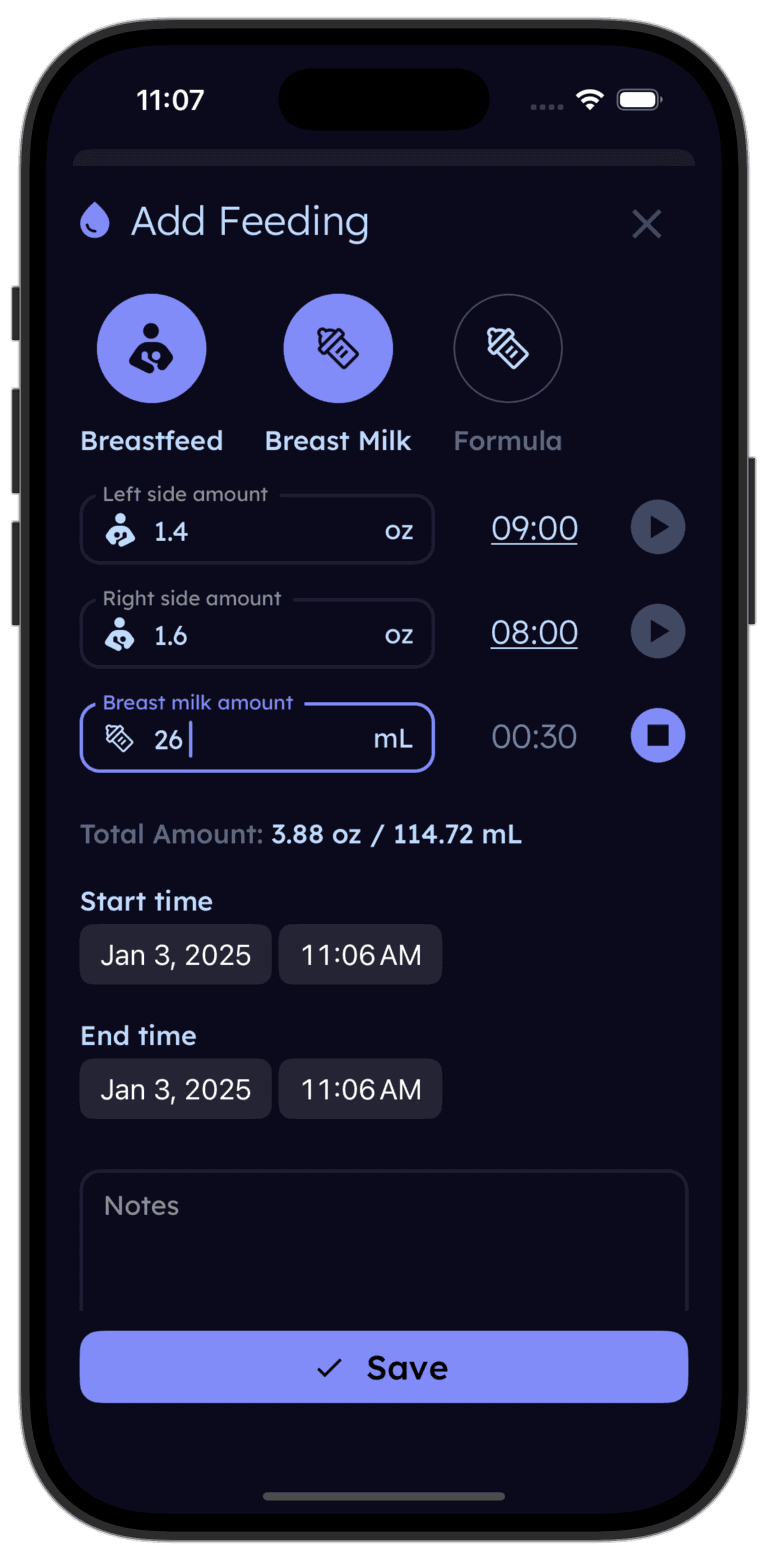
Tinylog tracks feedings so you can spot patterns.
Log bottle feedings, nursing sessions, and pumping. Track ounces over days and weeks. Bring the data to your next pediatrician visit.


Anti-Colic Features: What Actually Helps
Gas and fussiness during bottle feeding are common, and both bottles address this — but differently.
NUK Simply Natural includes an integrated anti-colic air system that vents air out of the bottle and away from the milk. This means your baby swallows less air during feeding, which can reduce gas, spit-up, and discomfort. The system is built into the bottle design — no extra parts to buy.
Philips Avent Natural offers an AirFree vent on newer models, though some versions require purchasing the vent separately. When used, it keeps the nipple full of milk even when the bottle is held at a low angle, reducing air ingestion.
Both approaches work. If your baby struggles with gas, the built-in venting on NUK is convenient. If your baby has no gas issues, the simpler Avent setup without the extra vent may be all you need.
| Product | Typical Price | Cost Per Bottle | Replacement Frequency |
|---|---|---|---|
| Philips Avent Natural (4 oz, 4-pack) | $24–$32 | ~$6–$8 | Replace every 3–6 months |
| NUK Simply Natural Glass (4 oz, 3-pack) | $27–$36 | ~$9–$12 | Lasts indefinitely if not broken |
| Philips Avent Natural (9 oz, 4-pack) | $28–$36 | ~$7–$9 | Replace every 3–6 months |
| NUK Simply Natural Glass (8 oz, 3-pack) | $30–$40 | ~$10–$13 | Lasts indefinitely if not broken |
Price: Upfront vs. Long-Term Value
NUK Simply Natural Glass bottles cost more per unit — roughly $2–$4 more per bottle than Philips Avent Natural. But glass bottles do not need to be replaced the way plastic does.
A set of four plastic Avent bottles replaced every four months costs roughly the same over a year as a set of glass NUK bottles that lasts the entire time (and into a second child). If you plan on having more than one baby, glass pays for itself.
That said, you will likely need to replace nipples every 2–3 months regardless of which bottle you choose. Silicone nipples wear out from use and sterilization, and both brands price their replacement nipples similarly at $4–$8 per pack.
The practical advice: do not stock up before your baby arrives. Buy one or two bottles from each brand, see which your baby takes, then invest in a full set of the winner.
Choose Philips Avent Natural If
- Your baby latches well with a wide, round nipple shape
- You want the lightest bottle for travel and on-the-go feeding
- Fewer parts and simpler cleaning are top priorities
- You need a larger bottle size (9 oz or 11 oz)
- You plan to let baby self-feed early — the lighter weight is easier for small hands
Choose NUK Simply Natural Glass If
- Your baby prefers an orthodontic or asymmetric nipple shape
- You want glass for chemical-free durability and easy sterilization
- Built-in anti-colic venting matters to you
- You plan to reuse bottles for future children — glass holds up across years of use
- You want a bottle that resists staining, odors, and scratching
- Your baby has gas or fussiness and you want to try a vented system
Where to Buy
If you want a lightweight, simple bottle with a wide breast-shaped nipple, the Philips Avent Natural (~$7/bottle in a multi-pack) is a reliable choice — easy to clean, widely available, and accepted by many breastfed babies. Grab a 4-pack from Amazon or Target for the best per-bottle price.
If you want the durability of glass with a thoughtfully designed orthodontic nipple, the NUK Simply Natural Glass Bottles (~$10/bottle in a multi-pack) are worth the upfront investment — built-in anti-colic venting, zero plastic in contact with milk, and a bottle body that will last for years. Available at Amazon, Buy Buy Baby, and most major retailers.
Our honest advice: buy one of each before committing. The "right" bottle is whichever one your baby drinks from without fussing, and you truly cannot predict that in advance.
Tinylog earns a small commission on purchases made through these links, at no cost to you.
We've found promo.new handy for finding discounts on baby gear. Doesn't always have what you need, but it's worth a shot.
The Bottom Line
Both Philips Avent Natural and NUK Simply Natural Glass are well-made bottles backed by real design thinking. The differences are meaningful but come down to priorities:
Philips Avent Natural wins on simplicity, weight, and ease of cleaning. It is the better choice for parents who want a straightforward, lightweight bottle with minimal parts.
NUK Simply Natural Glass wins on material durability, anti-colic features, and long-term value. It is the better choice for parents who prioritize chemical-free materials and plan to reuse bottles across children.
For most families, the honest answer is: your baby gets the final vote. Try both, watch how your baby feeds, and go with whichever produces calm, comfortable feedings with minimal gas.
If you are tracking feeding amounts and frequency — which is especially useful in the first few months — Tinylog makes it easy to log bottles and spot intake trends over time.
Related Guides
- Baby Feeding Chart — How much your baby should eat by age
- Baby Spitting Up — What's normal and when to call your doctor
- Breastfeeding Tips — Latching, positioning, and troubleshooting
- Baby Gas Relief — Causes, remedies, and when to worry
Sources
- Philips.com. "Philips Avent Natural Baby Bottle — Product Information." 2026.
- NUK-USA.com. "NUK Simply Natural Glass Bottles — Product Information." 2026.
- Consumer Reports. "Best Baby Bottles From Our Tests." consumerreports.org, 2026.
- Babylist. "Best Baby Bottles of 2026." babylist.com.
- WhatToExpect. "Best Baby Bottles for Breastfed Babies." whattoexpect.com, 2026.
- American Academy of Pediatrics. "Baby Bottles and Bisphenol A (BPA)." healthychildren.org.
- Mommyhood101. "Best Baby Bottles of 2026, Tested & Reviewed." mommyhood101.com.
This guide is for informational purposes only. Bottle choice is a personal preference based on your baby's individual needs. If your baby refuses to feed or shows signs of feeding difficulty, consult your pediatrician or a lactation consultant.
Frequently asked questions
- Are Philips Avent Natural bottles good for breastfed babies?
- Yes. The Philips Avent Natural nipple has a wide, rounded shape designed to mimic the breast. Many breastfed babies accept it well, though some prefer the more asymmetric shape of nipples like NUK. Trial and error is normal — most babies have a preference you cannot predict in advance.
- Are NUK Simply Natural Glass Bottles dishwasher safe?
- Yes. The borosilicate glass body is dishwasher safe on the top rack. The silicone nipples, collars, and caps should also be placed on the top rack. Glass bottles are generally easier to sterilize than plastic because they do not absorb odors or stains.
- Which bottle is easier to clean?
- Philips Avent Natural has fewer parts (typically 4 pieces) and a wider neck, making it easier to clean by hand. NUK Simply Natural also has a wide neck but includes an anti-colic vent system with additional components. Both are dishwasher safe.
- Do NUK Simply Natural bottles reduce colic and gas?
- NUK Simply Natural bottles include an integrated anti-colic air system designed to vent air away from the milk. Many parents report less gas and fussiness. However, no bottle can guarantee colic prevention — colic has multiple causes, and bottle design is just one factor.
- Can I switch between Philips Avent and NUK bottles?
- Yes. There is no medical reason you cannot alternate between bottle brands. However, nipples are not interchangeable between brands — each uses a proprietary collar and nipple system. Some babies adapt easily to different nipple shapes; others are particular.
- Is glass or plastic better for baby bottles?
- Glass bottles (like NUK Simply Natural Glass) are free of BPA, BPS, and phthalates by nature and do not degrade over time. They are heavier and can break if dropped. Plastic bottles (like Philips Avent Natural) are lighter and more portable but should be replaced if scratched or cloudy. Both are safe when used as directed.