Despite its strengths, Baby Daybook isn't the right fit for every family. Here are the most common reasons parents start exploring other options.
No AI features or smart guidance
Baby Daybook is a traditional tracker — it records what happened, but it doesn't analyze your data or offer personalized recommendations. Parents who want their tracker to tell them what to do next, not just what they logged, start looking for more intelligent tools.
Need preemie support (Fenton charts)
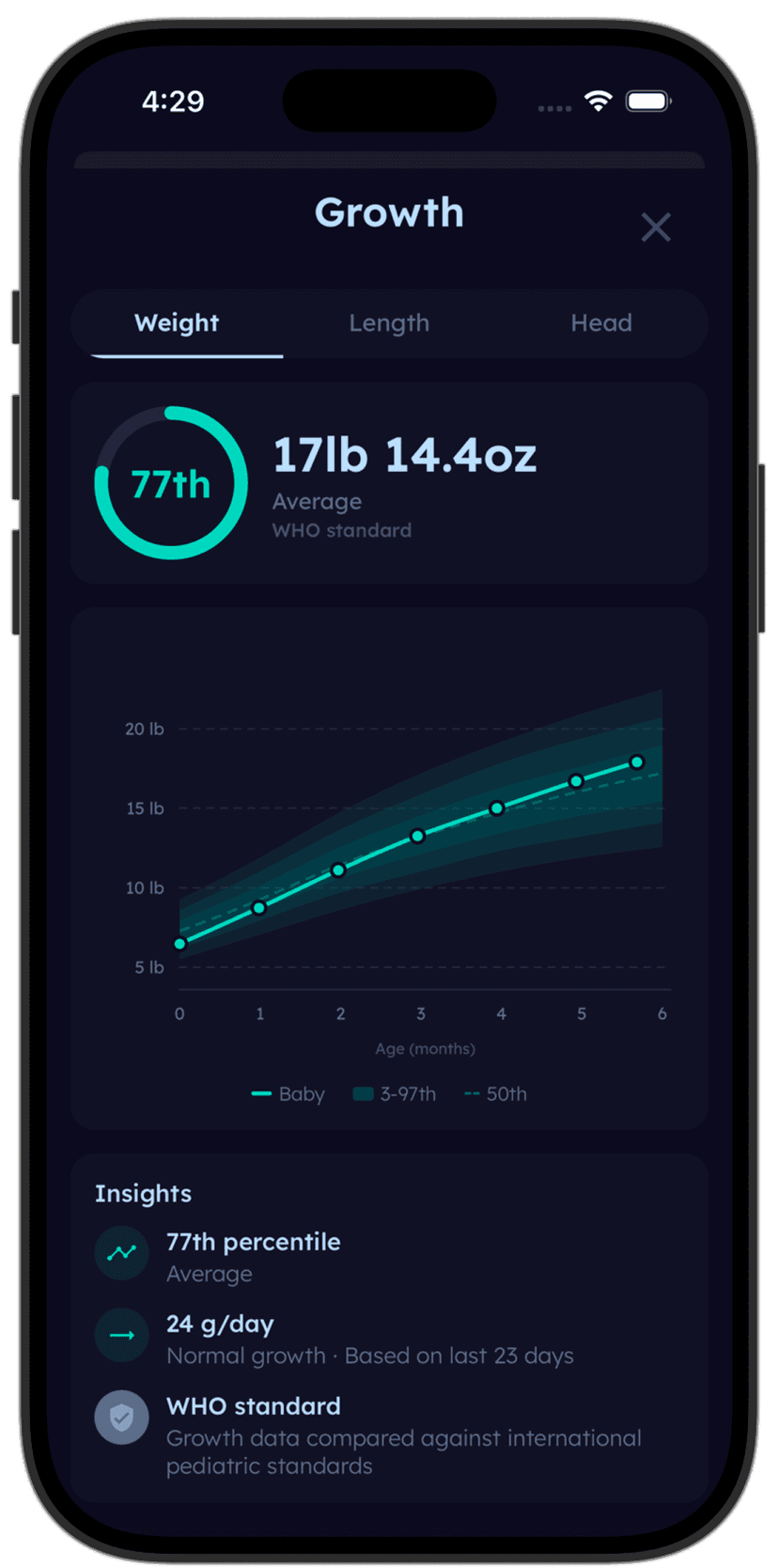
Baby Daybook offers WHO growth charts but doesn't include Fenton charts designed for premature babies. If your baby was born early, you need charts that NICUs actually use — standard charts aren't calibrated for preterm infants.
Ads in the free tier
Baby Daybook's free version includes ads. At 3 AM with a crying baby, an ad between you and logging a feeding is more than a minor annoyance. Some parents prefer an ad-free experience from the start.
Want guidance, not just data
There's a point where recording everything stops being enough. Some parents realize they have plenty of data — what they lack is someone (or something) telling them what it means. A timeline of feeds is useful; a personalized care plan is transformative.
Interface could be faster
Baby Daybook's timer-based approach requires starting and stopping timers for feeds and sleep. Some parents prefer a simpler tap-to-log approach that doesn't require remembering to stop a running timer while half-asleep.