GUIDE

Baby's Immune System

Babies are born with borrowed immunity that fades — and that is by design.

Your baby arrived with a starter kit of maternal antibodies, but those wear off around 4-6 months. After that, every cold and every vaccination is building the immune system your child will carry for life. Here is how it actually works, what helps, and what is just marketing.

How Your Baby's Immune System Actually Works

Your baby was not born defenseless. During the third trimester of pregnancy, your body transferred a large supply of IgG antibodies across the placenta — a class of antibodies that represents your own immune memory accumulated over a lifetime. These maternal antibodies give your newborn passive protection against many of the infections you have already fought off.

This is passive immunity, and it is an elegant system. Your baby arrives pre-loaded with antibodies that provide real protection during the most vulnerable early weeks. But there is a catch: these borrowed antibodies are temporary. Your baby's body cannot make more of them. Like a gift card with a declining balance, maternal IgG levels steadily decrease over the first months of life, reaching their lowest point around four to six months of age.

This is also why the timing of the childhood vaccination schedule is not random. Vaccines are introduced starting at two months, while maternal antibodies are still providing some background protection but baby's own immune system is mature enough to start responding to the vaccine antigens and building its own targeted defenses. Each vaccine dose teaches the immune system to recognize a specific dangerous pathogen and produce its own antibodies against it. That is active immunity — and unlike passive immunity, it lasts.

If you are breastfeeding, there is another layer of protection: secretory IgA antibodies in breast milk. These work differently from the IgG that crossed the placenta. Secretory IgA does not enter your baby's bloodstream. Instead, it coats the mucosal surfaces of the gut and respiratory tract, acting like a protective barrier at the entry points where most infections begin. Colostrum — the thick, yellowish first milk — is especially rich in IgA. This protection continues for as long as breastfeeding continues, though it provides local defense rather than systemic immunity.

How Immunity Develops: A Timeline
Third trimester
What's HappeningMaternal IgG antibodies cross the placenta, giving baby a starter supply of the mother's immunity
Type of ImmunityPassive immunity
Birth
What's HappeningBaby is born with maternal IgG but an immature adaptive immune system. Innate immune system (first responders like neutrophils) is functional but less efficient than an adult's
Type of ImmunityPassive immunity
First feeds (breast milk)
What's HappeningSecretory IgA in colostrum and breast milk coats the baby's gut and respiratory lining, providing local barrier protection. Does not enter the bloodstream.
Type of ImmunityPassive immunity
2 months
What's HappeningFirst routine vaccinations begin (DTaP, IPV, Hib, PCV13, rotavirus, HepB). Baby's own adaptive immune system starts producing targeted antibodies in response.
Type of ImmunityActive immunity begins
4-6 months
What's HappeningMaternal IgG levels decline significantly. Baby is increasingly reliant on their own developing immune system. This is often when babies start getting noticeably sick.
Type of ImmunityTransition period
6-12 months
What's HappeningBaby encounters more pathogens (especially if starting daycare or solids). Each infection and each vaccine dose trains the immune system to respond faster next time.
Type of ImmunityActive immunity building
12-24 months
What's HappeningImmune memory is expanding rapidly. Baby still gets sick often but may recover faster. Booster vaccines strengthen immune responses.
Type of ImmunityActive immunity strengthening
2-6 years
What's HappeningFrequency of illness begins to decline as the immune system has encountered many common viruses. Children who attended daycare often get sick less frequently in school.
Type of ImmunityMaturing immunity
This timeline explains why babies seem to get sick more starting around 4-6 months — maternal protection is fading while their own immune system is still learning.

Why Babies Get Sick So Often

Here is a number that puts things in perspective: a healthy baby in the first two years of life will typically catch six to eight colds per year. If that baby attends daycare, it can be eight to twelve. Each cold lasts seven to fourteen days. If you do the math on the high end — twelve colds at ten days each — that is 120 days of illness, or a third of the year.

That feels like your baby is always sick. Because, functionally, your baby is always sick.

But this is not a sign that something is wrong with your baby's immune system. This is what a healthy, functioning, developing immune system looks like. Your baby has never encountered a rhinovirus before. Or a coronavirus (the common cold kind). Or parainfluenza. Or RSV. Or any of the hundreds of viral strains that circulate through families and daycares. Every single one of these is a first encounter, and first encounters take longer to fight off.

Adults get two to four colds per year because we have already met most of these viruses and our immune system recognizes them quickly. Your baby is starting from zero. Each cold, as miserable as it is in the moment, is an education. The immune system is cataloging each pathogen, building memory cells, and getting faster at mounting a response next time. By the time your child enters elementary school, they will have a substantial immune memory bank — and they will get sick far less often.

What Actually Supports Immune Development
Vaccination
Evidence StrengthStrong — most effective immune intervention available
DetailsVaccines teach the immune system to recognize specific dangerous pathogens without causing the disease. This is active immunity at its most efficient. The childhood vaccine schedule is designed around when babies are most vulnerable and most able to mount an immune response.
Breastfeeding
Evidence StrengthModerate to strong
DetailsProvides secretory IgA, lactoferrin, white blood cells, and prebiotics (human milk oligosaccharides). Reduces rates of ear infections, respiratory infections, and gastroenteritis. Benefits are real but not absolute — breastfed babies still get sick.
Adequate sleep
Evidence StrengthModerate
DetailsSleep is when the body produces cytokines — proteins that help fight infection and inflammation. Babies who are chronically sleep-deprived may have reduced immune function. Following age-appropriate sleep schedules supports overall immune health.
Good nutrition (age-appropriate)
Evidence StrengthModerate
DetailsOnce on solids, a varied diet with adequate iron, zinc, and vitamins A, C, and D supports immune function. Iron deficiency in particular is linked to increased infection susceptibility. Breast milk or formula provides complete nutrition for the first 6 months.
Vitamin D supplementation
Evidence StrengthModerate (for deficiency prevention)
DetailsThe AAP recommends 400 IU/day of vitamin D for breastfed infants from birth. Vitamin D plays a role in immune regulation. This is about preventing deficiency, not 'boosting' immunity beyond normal.
The most impactful things you can do for your baby's immune health are also the most evidence-based: vaccinate on schedule, breastfeed if you can, ensure adequate sleep and nutrition.
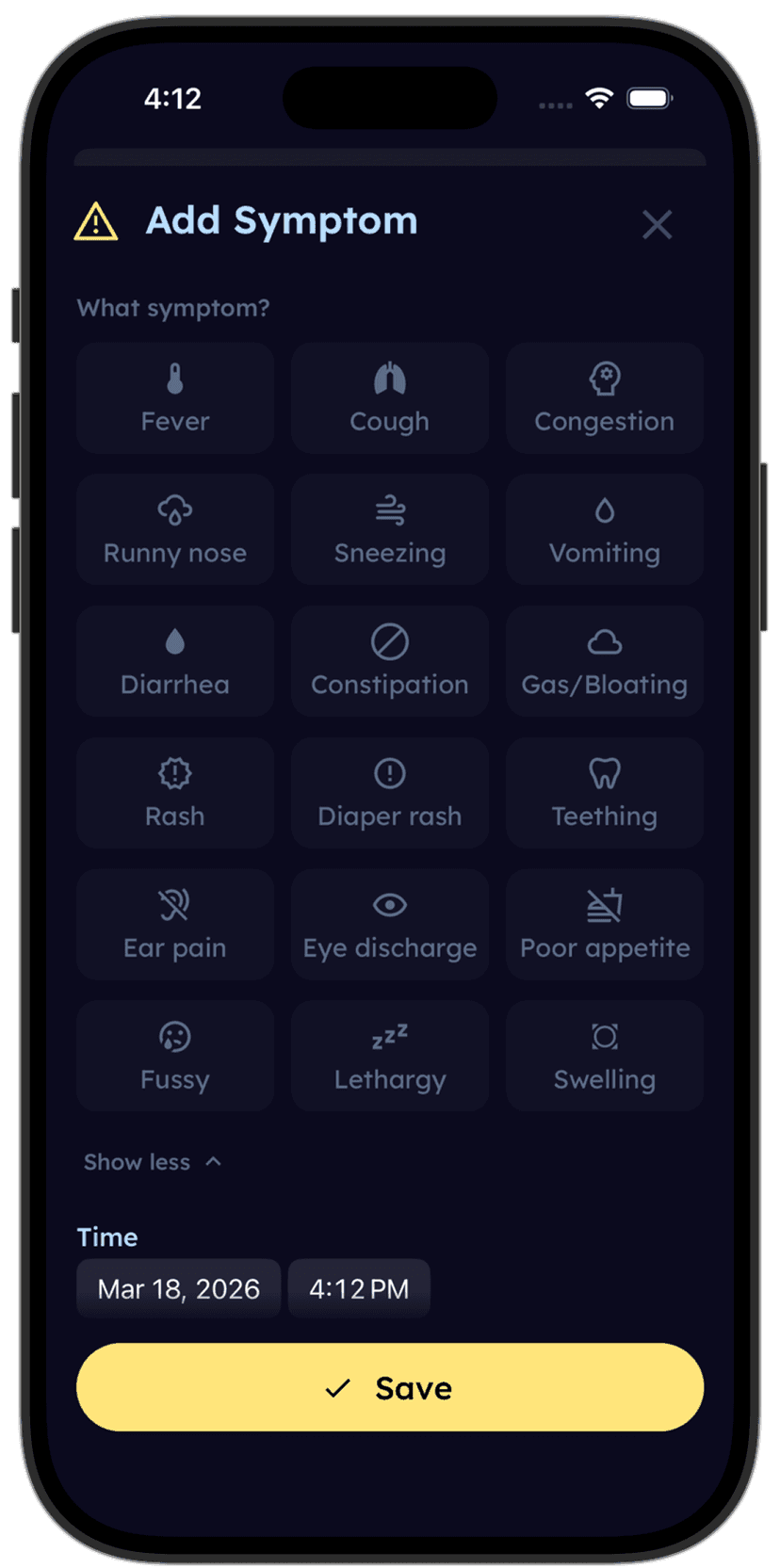
tinylog symptom tracking screen showing illness frequency log

See the pattern behind all those sick days.

Track fevers, symptoms, and medications in tinylog so you can spot whether your baby's illness frequency is within the normal range. When you can look back and see six colds in six months, it feels less alarming — because you can see that each one resolved and your baby bounced back.

Download on the App StoreGet It On Google Play

What DOES NOT Help (Despite the Marketing)

The infant supplement industry is enormous, and a significant portion of it is built on parental anxiety about immune health. When your baby is on their fourth cold in two months, the promise of something — anything — that could prevent the fifth one is deeply appealing. But the evidence for most products marketed as immune boosters for babies ranges from weak to nonexistent.

This is not to say that nutrition does not matter for immunity — it absolutely does. But there is a crucial difference between preventing deficiency (which impairs immune function) and supplementing beyond adequacy (which does not enhance it). If your baby is well-nourished through breast milk, formula, or a varied solid food diet, adding extra supplements will not create a super-immune system. Excess water-soluble vitamins like vitamin C are simply excreted. You are paying for expensive urine.

The one supplement with solid recommendations behind it is vitamin D. The AAP recommends 400 IU per day for all breastfed infants starting from birth, because breast milk typically does not contain enough vitamin D and deficiency is common. This is about maintaining adequate levels for bone health and immune regulation — not about boosting beyond normal.

Probiotics are a more nuanced conversation. There is genuine scientific interest in how the gut microbiome influences immune development, and the research is promising. But the leap from "the microbiome matters for immunity" to "this specific commercial probiotic product will prevent your baby from getting sick" is one that the evidence does not yet support for healthy infants. The most effective way to build a healthy gut microbiome in infancy is vaginal birth when possible, breastfeeding, and eventual introduction of a varied diet — not a supplement.

Immune 'Boosters' That Do Not Have Strong Evidence
Elderberry syrup for babies
What the Evidence Actually ShowsNo robust evidence it prevents illness in infants. Some products may pose choking or contamination risks for very young babies. The studies that exist are small, mostly in adults, and often industry-funded.
Infant probiotic drops for 'immune support'
What the Evidence Actually ShowsWhile probiotics may help with specific conditions (like antibiotic-associated diarrhea), evidence that they broadly 'boost immunity' in healthy babies is weak. The gut microbiome is important for immune development, but commercial probiotic products are not well-regulated for infants.
Extra vitamin C supplements
What the Evidence Actually ShowsIf your baby is getting adequate nutrition through breast milk, formula, or a varied solid food diet, additional vitamin C supplementation is unnecessary. Excess vitamin C is simply excreted. There is no evidence it prevents colds in well-nourished children.
Sterilizing everything past newborn stage
What the Evidence Actually ShowsAfter the first 2-3 months, obsessive sterilization of toys, pacifiers, and surfaces is unnecessary for healthy, full-term babies. Normal household cleanliness is sufficient. Some microbial exposure is actually important for immune education.
Keeping baby away from all sick people indefinitely
What the Evidence Actually ShowsReasonable precaution in the first 2-3 months when the immune system is most vulnerable. But indefinite isolation from normal germs is not realistic or beneficial. Immune systems need exposure to develop properly.
If a product promises to 'boost' your baby's immune system, ask for the clinical trial data in infants. Most of the time, it does not exist.

The Hygiene Hypothesis: Finding the Middle Ground

In 1989, epidemiologist David Strachan noticed something curious: children with more older siblings had lower rates of hay fever. He proposed that early childhood infections transmitted by older siblings might protect against allergic disease. This became known as the hygiene hypothesis, and it has shaped how we think about immune development ever since.

The core idea has been refined over the decades, but the basic principle holds up: early microbial exposure helps calibrate the immune system. Without enough diverse microbial encounters in early life, the immune system may become more prone to overreacting to harmless substances — which is essentially what allergies and autoimmune conditions are. The immune system, undertrained in recognizing real threats, starts picking fights with pollen, peanuts, and the body's own tissues.

This does not mean you should stop washing your hands or let your baby lick the subway floor. Basic hygiene — handwashing, food safety, keeping sick people away from very young newborns — prevents genuinely dangerous infections and saves lives. The hygiene hypothesis is about the overall microbial environment, not about abandoning common sense.

The practical takeaway is reassuring: you do not need to keep your baby in a sterile bubble, and you do not need to deliberately expose them to germs. Normal life provides plenty of immune education. Having pets, playing outside, interacting with other children, and being in a household that is clean but not hospital-sterile is enough. If a pacifier falls on the floor after the first few months, rinsing it off is fine — you do not need to boil it.


The Hygiene Hypothesis — What It Means for Parents
The basic idea
ExplanationChildren raised in overly clean environments may have higher rates of allergies and autoimmune conditions because their immune systems do not get enough early microbial exposure to calibrate properly.
What it does NOT mean
ExplanationIt does not mean you should stop washing hands or let babies eat off the floor. Basic hygiene prevents genuinely dangerous infections. The hypothesis is about the overall microbial environment, not about abandoning cleanliness.
What the evidence shows
ExplanationChildren raised on farms, with pets, or with older siblings tend to have lower rates of asthma and allergies. Children who attend daycare early have more infections initially but may have lower allergy rates later. The mechanism involves training the immune system to distinguish threats from harmless substances.
Practical takeaway
ExplanationNormal household cleanliness is fine. Let your baby explore age-appropriate environments. Do not panic about dropped pacifiers after the first few months. Wash hands before handling a newborn. There is a wide, sensible middle ground between sterile bubble and reckless exposure.
The middle ground is wide and sensible: practice normal hygiene, protect newborns, but do not try to eliminate all microbial exposure from your baby's world.

The Daycare Question

If you are sending your baby to daycare, you already know what is coming — or you are about to find out. Daycare is a petri dish of shared viruses, and your baby will catch many of them. The first year of daycare is often brutal: back-to-back illnesses that make you question every parenting decision you have ever made.

But here is what the research consistently shows: daycare children front-load their illness experience. A large study published in Pediatrics found that children who attended group daycare before age two and a half had more infections early on but significantly fewer infections during the elementary school years compared to children who did not attend daycare. The total illness burden over childhood appears roughly similar — the question is when it happens, not whether.

This means that the decision to use daycare should not be driven by fear of illness. Your child will encounter these viruses eventually. Daycare just accelerates the timeline. And there may even be a protective effect: some research suggests that early diverse microbial exposure, including the kind that happens in daycare settings, may reduce the risk of allergic conditions later.

None of this makes the fifth consecutive week of daycare sniffles feel better. It is genuinely exhausting. But knowing that this phase is temporary and productive — that your baby's immune system is doing exactly what it is supposed to — can help reframe the experience.

tinylog health log showing illness and recovery tracking over time

Track the daycare sick season without losing your mind.

Log each illness, fever, and recovery in tinylog so you can see that despite how it feels, your baby IS recovering from each one. Over months, the pattern becomes clear: more time healthy, faster recoveries, a growing immune system doing its job.

Download on the App StoreGet It On Google Play

Tips for Supporting Your Baby's Immune Development

The 4-6 month vulnerability window is real

Many parents notice their baby starts getting sick right around 4-6 months and wonder what went wrong. Nothing went wrong — this is when maternal antibodies fade and baby's own immune system is still ramping up. It is the most immunologically vulnerable period, and it coincides with when many babies start daycare, begin putting everything in their mouths, and become more socially interactive. If your baby seemed bulletproof for the first few months and then suddenly catches everything, this is why.

Vaccination is immune education, not immune overload

Babies encounter thousands of antigens every day just from breathing, eating, and touching things. The antigens in the entire childhood vaccine schedule represent a tiny fraction of what a baby's immune system is already processing. Vaccines are carefully selected to train the immune system against the most dangerous pathogens in the most efficient way possible. They do not overwhelm the immune system — they educate it.

Breastfeeding is valuable but not a guarantee

Breast milk provides meaningful immune benefits, and the evidence for this is solid. But breastfed babies still get sick — sometimes a lot. If your breastfed baby is catching every cold that comes through the house, that does not mean breastfeeding is not working. It means your baby is encountering viruses, and their immune system is learning. Do not let anyone make you feel like your baby's illnesses are your fault because of how you feed them.

The daycare trade-off

Daycare children get sick more often in the first two years — that is an undeniable reality. But research consistently shows they get sick less often once they enter elementary school. The total lifetime illness burden appears similar whether exposure happens at 1 year or 5 years. Daycare is not weakening your child's immune system — it is front-loading the education that would happen anyway.

Related Guides

Sources

  • Simon, A. K., Hollander, G. A., & McMichael, A. (2015). Evolution of the immune system in humans from infancy to old age. Proceedings of the Royal Society B, 282(1821).
  • Palmeira, P., et al. (2012). IgG placental transfer in healthy and pathological pregnancies. Clinical and Developmental Immunology, 2012.
  • Hanson, L. A. (2007). Session 1: Feeding and infant development — Breast-feeding and immune function. Proceedings of the Nutrition Society, 66(3), 384-396.
  • American Academy of Pediatrics. (2025). Recommended Immunization Schedule for Children and Adolescents. AAP.org.
  • Ball, T. M., & Castro-Rodriguez, J. A. (2006). The effect of being in day care on the common cold during the first year of life. Pediatrics, 117(6), 2070-2078.
  • Strachan, D. P. (1989). Hay fever, hygiene, and household size. BMJ, 299(6710), 1259-1260.

Medical Disclaimer

This guide is for informational purposes only and is NOT a substitute for professional medical advice. When in doubt, always call your pediatrician. If your baby is under 3 months with a fever, having difficulty breathing, showing signs of dehydration, or seems seriously unwell, seek immediate medical attention.

Get this guide in your inbox.
We'll email you this guide so you can reference it the next time you're wondering whether all this sickness is normal.
Track illness patterns to see the bigger picture.
Download tinylog free — log symptoms, fevers, and medications with a single tap.
Download on the App StoreGet It On Google Play