
Interview at least 2-3 doulas
Chemistry matters as much as credentials. Ask about their philosophy, how many births they've attended, how they handle situations where you change your mind about your birth plan, and who provides backup coverage.
GUIDE
Published on
Research consistently shows that having a doula reduces C-section rates, shortens labor, and increases satisfaction. A doula isn't medically necessary, but the data supporting their impact is remarkably strong.
Whether a doula is right for you depends on your budget, your birth setting, and what kind of support you want in the room.
Be prepared from day one
“Certified doulas can offer an immeasurable amount of support. They're very familiar with what women need during labor and are a valuable asset both to birthing people and their healthcare providers.”
 Tamara Noy, MSN, CNM, Certified Nurse Midwife, Cleveland Clinic
The evidence on birth doulas is unusually consistent for obstetric research. A 2017 Cochrane review — the gold standard for medical evidence synthesis — analyzed 26 trials involving over 15,000 women and found that continuous labor support from a trained person like a doula was associated with shorter labor, lower C-section rates, less use of pain medication, fewer instrumental deliveries, higher Apgar scores, and greater satisfaction with the birth experience.
These benefits held true regardless of whether the woman had a partner present, regardless of birth setting, and regardless of whether she used pain medication. The continuous, one-on-one nature of doula support fills a gap that busy nurses and intermittently present partners cannot.
What the research doesn't show: that doulas are medically necessary, that all women benefit equally, or that hiring a doula guarantees a specific outcome. The data shows population-level benefits. Your individual experience depends on your doula, your provider, your birth circumstances, and a fair amount of factors nobody can predict.
| Aspect | With Doula | Without Doula |
|---|---|---|
| C-section rate | Reduced by approximately 25% compared to no continuous support (Cochrane review). | Standard rate — approximately 32% nationally, varies by hospital and provider. |
| Labor duration | Associated with shorter labor — approximately 40 minutes shorter on average. | Standard duration — first-time labor averages 12-18 hours. |
| Pain medication use | Lower rates of epidural use when doula is present. More use of coping techniques. | Higher likelihood of requesting epidural, especially for first-time mothers. |
| Birth satisfaction | Consistently higher satisfaction scores in studies. Women report feeling more supported and heard. | Satisfaction depends heavily on provider, partner support, and birth experience. |
| Instrumental delivery | Lower rates of forceps and vacuum-assisted delivery. | Standard rates of instrumental delivery based on clinical need. |
| Newborn outcomes | Some studies show higher Apgar scores at 5 minutes with doula support. | Standard newborn outcomes based on medical management. |
| Cost | $500-$2,500+ for doula services, typically not covered by insurance. | No additional cost beyond standard birth expenses. |
Benefits are strongest for first-time mothers and in hospitals where nursing ratios are stretched.
Interview doulas carefully. The right fit matters as much as the research statistics.
Many women have excellent birth experiences without a doula.
These factors can be mitigated with a supportive provider, a good birthing class, and a well-prepared partner.
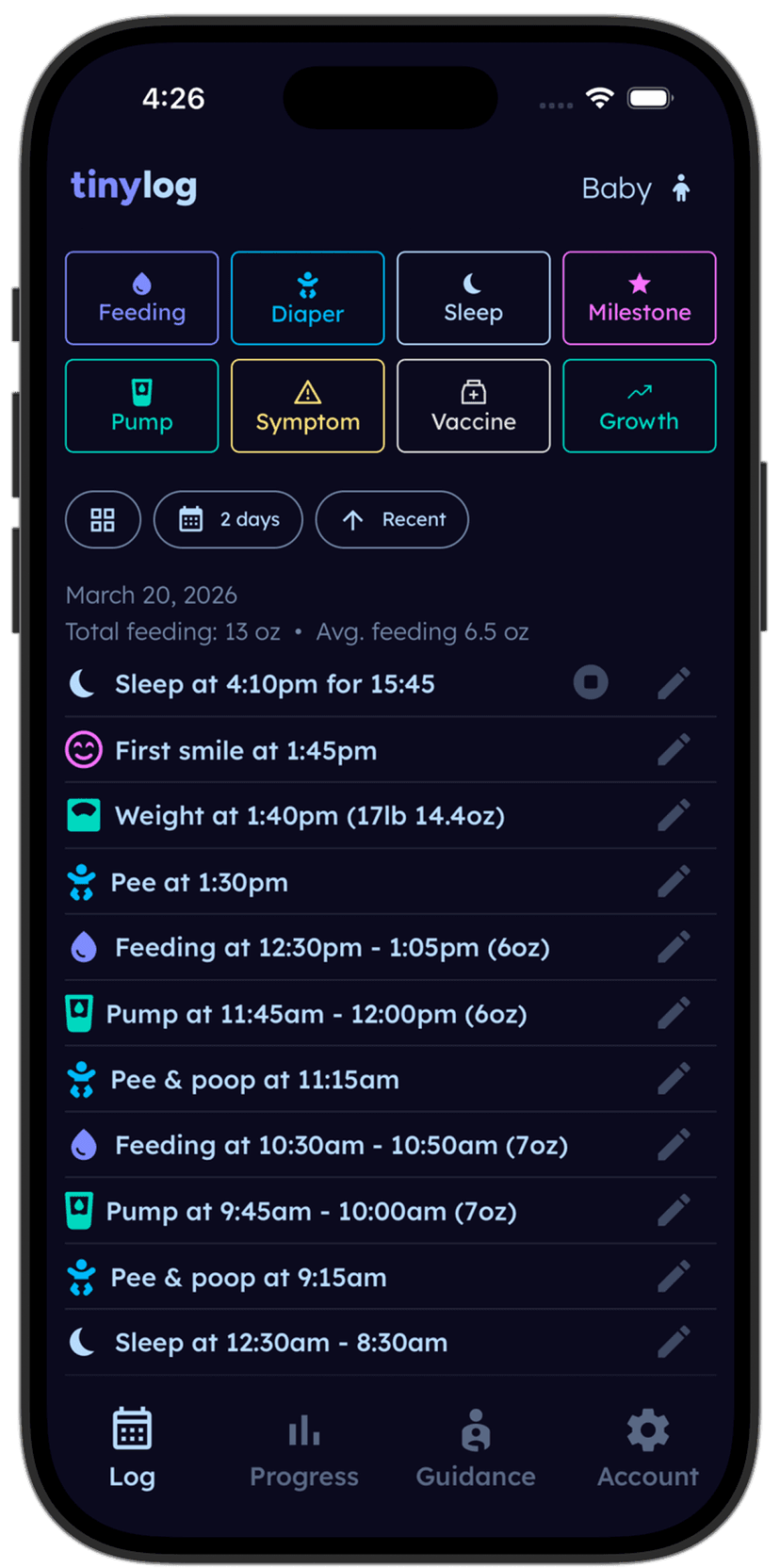
Tinylog helps you track feeds, diapers, and sleep from the first hour — so the transition from delivery to daily newborn care is one less thing to figure out.


The doula's role is often misunderstood. They are not a medical provider — they don't check dilation, monitor fetal heart rate, or make clinical decisions. They are a trained support person whose job is to provide continuous physical and emotional support throughout labor.
In practical terms, this means suggesting position changes when labor stalls, applying counter-pressure during contractions, guiding natural pain relief techniques, providing massage, running the shower for hydrotherapy, and being a calm, experienced presence in a room that can feel chaotic. During the pushing phase, they help with positioning and encouragement. After delivery, they support immediate skin-to-skin contact and early breastfeeding.
Doulas also serve as advocates — not by overriding medical decisions, but by helping you understand what's being proposed, asking questions on your behalf when you're in the middle of a contraction, and ensuring your birth preferences are communicated to the medical team. For partners, doulas provide coaching ("push here on her lower back"), reassurance ("this is normal"), and permission to take a break without leaving the laboring person unsupported.
If you're a first-time parent, the evidence most strongly supports doula use. First labors are typically longer, the learning curve is steeper, and continuous support has the most measurable impact. If budget allows and you find a doula whose philosophy aligns with yours, the data suggests it's a worthwhile investment.
If cost is a barrier, explore options. Many doula training programs offer free or reduced-cost services through certification candidates. Some hospitals have volunteer doula programs. Community organizations like DONA International and DoulaMatch.com can help you find affordable options. Some insurance plans and HSA/FSA accounts now cover doula services.
If you decide against a doula, invest in a good childbirth education class with your partner. The knowledge gap is what doulas help bridge — if your partner understands the stages of labor, comfort measures, and what to expect, they can provide more effective support even without professional training.
Chemistry matters as much as credentials. Ask about their philosophy, how many births they've attended, how they handle situations where you change your mind about your birth plan, and who provides backup coverage.
A good doula supports all informed choices — epidurals, inductions, and C-sections included. If a doula says they only support unmedicated births or expresses judgment about medical interventions, keep looking.
If a birth doula isn't in the budget, a postpartum doula can provide valuable support after delivery — help with breastfeeding, newborn care, and recovery. Some families find this more practical than birth support.
This guide is for informational purposes only and is not a substitute for professional medical advice. Consult your healthcare provider for guidance specific to your situation.