
GUIDE
Chicco Duo Hybrid vs. Lansinoh Anti-Colic Baby Bottles
Published on
Both are solid bottles with effective anti-colic systems. The Chicco Duo stands out for its glass-lined interior and break-proof durability. The Lansinoh wins on nipple design for breastfed babies and affordability. Your baby's latch preference will likely be the deciding factor.
The Chicco Duo Hybrid and the Lansinoh Anti-Colic are two of the most recommended bottles for newborns — but they solve different problems. One prioritizes material safety with a glass-plastic hybrid build. The other prioritizes a smooth breast-to-bottle transition with a clinically tested nipple shape. Here is how they actually compare.
Log bottles, nursing sessions, and spit-up
Two Good Bottles That Solve Different Problems
The Chicco Duo Hybrid and the Lansinoh Anti-Colic are both popular choices, but they are built around different priorities. The Chicco Duo is a material innovation story — glass on the inside, plastic on the outside, so your baby's milk never touches plastic. The Lansinoh is a breastfeeding compatibility story — a nipple designed to mimic the breast so babies can switch back and forth without confusion.
Both have effective anti-colic venting systems. Both are BPA-free. Both are well-reviewed by parents. The real question is which problem matters more to you: what the milk touches or how the nipple feels to your baby.
If you are pumping and bottle-feeding, you may also want to check our baby feeding chart for age-appropriate feeding volumes.
| Feature | Chicco Duo Hybrid | Lansinoh Anti-Colic | What It Means |
|---|---|---|---|
| Manufacturer | Chicco (Artsana Group) | Lansinoh Laboratories | Both are established baby product brands with decades in the market. |
| Bottle material | Invinci-Glass interior bonded to plastic exterior (hybrid) | BPA/BPS-free plastic (glass version also available separately) | Chicco's hybrid design means milk only touches glass. Lansinoh offers a separate glass line if you want that option. |
| Nipple shape | Intui-Latch — slightly flattened, breast-shaped | NaturalWave — gradually tapered, flexible tip | Lansinoh's gradual taper is preferred by most lactation consultants for breastfed babies. Chicco's flatter shape works but may encourage a shallower latch. |
| Anti-colic system | Built-in anti-colic valve in nipple | Air Ventilation System (AVS) in nipple | Both vent air effectively. Neither requires extra parts like Dr. Brown's internal vent system. |
| Nipple acceptance rate | 9 out of 10 (manufacturer-reported) | Clinically proven to reduce nipple confusion | Both claim high acceptance. Lansinoh's claim is backed by clinical studies on breastfed babies specifically. |
| Sizes available | 5 oz and 9 oz | 2 oz, 5 oz, 8 oz, and 11 oz | Lansinoh offers a wider range, including a 2oz size for newborns and an 11oz for older babies. |
| Flow options | Slow flow and medium flow (Intui-Latch only) | Extra-slow, slow, medium, and fast flow | Lansinoh has more flow stages, including extra-slow for premature or very young newborns. |
| Number of parts | Four (bottle, collar, nipple, cap) | Three (bottle, nipple/collar, cap) | Lansinoh's simpler design is slightly easier to clean and assemble, especially at 3 AM. |
| Dishwasher safe | Yes | Yes (hand-wash nipples recommended for longer life) | Both are dishwasher safe. Lansinoh recommends hand-washing nipples for durability. |
| Microwave sterilizer safe | No — electric sterilizer or boiling only | Yes | Lansinoh wins on sterilization flexibility. The Chicco Duo cannot go in a microwave sterilizer. |
| Weight | Lightweight (glass adds minimal weight) | Very lightweight (standard plastic) | Both are easy for parents and older babies to hold. Chicco is slightly heavier due to the glass layer. |
| Nipple cross-compatibility | Lansinoh nipples fit on Chicco Duo bottles | Universal fit on all Lansinoh bottles | A useful hack: you can pair the Chicco Duo body with Lansinoh NaturalWave nipples. |
The Material Question: Glass, Plastic, or Both?
The Chicco Duo's headline feature is Invinci-Glass — a micro-thin layer of glass permanently bonded to the inside of a plastic bottle using medical-grade technology. Your baby's milk touches only glass, but the bottle itself is lightweight and will not shatter if dropped.
This matters to parents who worry about chemicals leaching from plastic into warm milk. While BPA-free plastics are considered safe by the FDA, some parents prefer to avoid all plastic contact with breast milk or formula as a precaution. The Chicco Duo gives you that option without the weight and breakability of a traditional glass bottle.
Lansinoh Anti-Colic bottles are standard BPA/BPS-free plastic. They are safe by all current regulatory standards. If you want glass from Lansinoh, they sell a separate borosilicate glass bottle line at a higher price point (~$12 per bottle).
The Chicco hybrid approach is genuinely clever — but it does come at roughly 2.5 to 3 times the cost per bottle compared to Lansinoh's plastic option.
Nipple Design: Where Lactation Consultants Weigh In
This is the difference that matters most for breastfed babies.
Lansinoh's NaturalWave nipple has a gradually tapered shape — narrow at the tip, widening toward the base — with a soft, flexible silicone tip that stretches as the baby sucks. This design encourages the same wide, deep latch babies use at the breast. It is clinically proven to reduce nipple confusion and is one of the most recommended bottle nipples among lactation consultants.
Chicco's Intui-Latch nipple is slightly flattened horizontally, similar to the MAM bottle nipple. It has a soft, skin-like texture and achieves a 9-out-of-10 acceptance rate according to the manufacturer. However, some lactation consultants note that the flatter shape can encourage a narrower, shallower latch — which may cause issues for babies who are still establishing breastfeeding.
A practical workaround that many parents use: put Lansinoh NaturalWave nipples on the Chicco Duo bottle body. They are compatible. This gives you the glass-lined interior with the lactation-consultant-preferred nipple shape.
If your baby is exclusively formula-fed, the nipple shape is less critical — go with whichever your baby accepts.
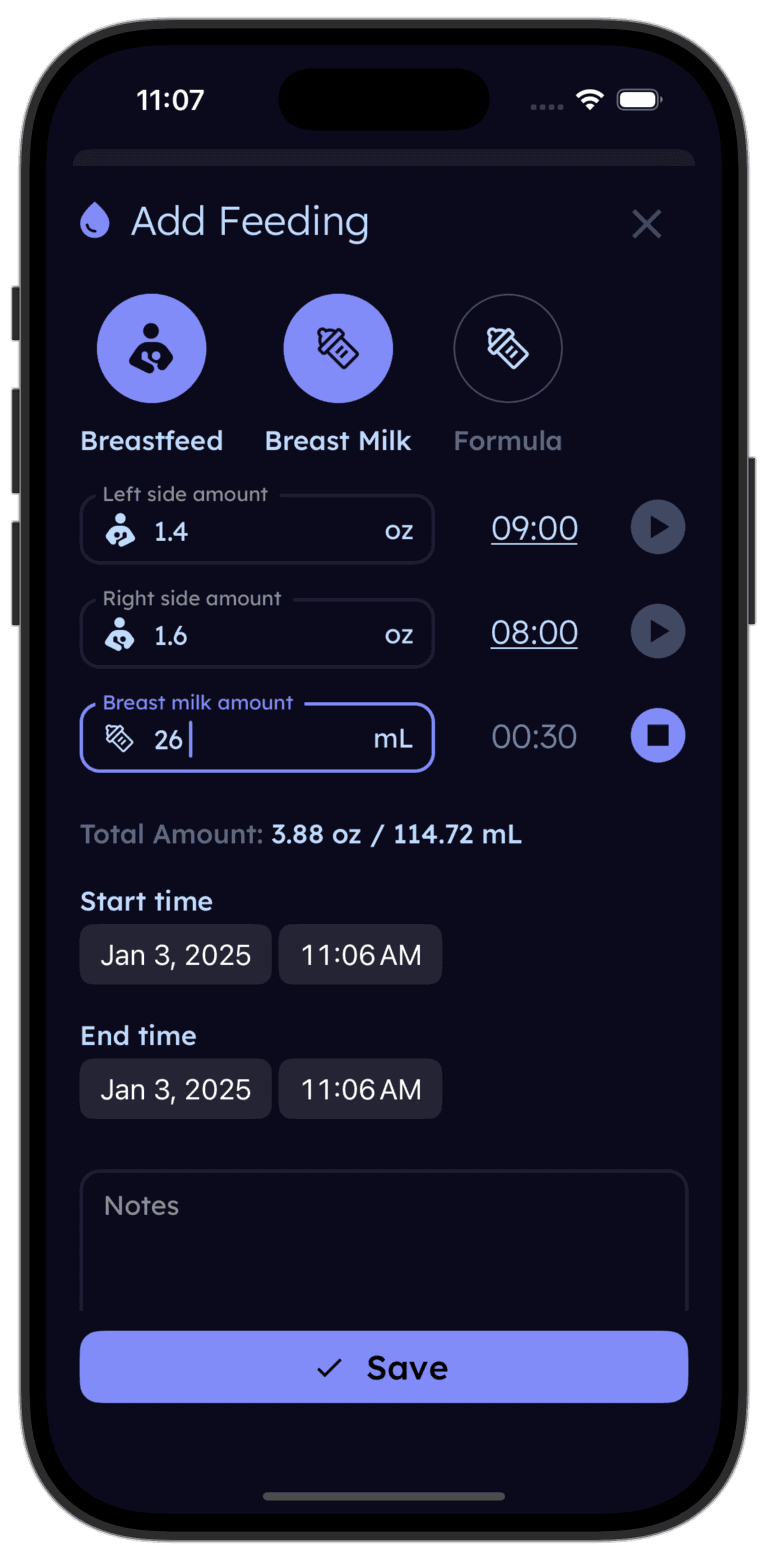
Tinylog tracks bottles so you can spot feeding patterns.
Log bottle feeds, note spit-up and gas, track ounces per day. Bring the data to your next pediatrician visit.


Anti-Colic Performance: Both Do the Job
Gas and colic are top concerns for new parents, and both bottles address this with built-in venting systems.
The Chicco Duo has an anti-colic valve integrated into the Intui-Latch nipple. Air is channeled away from the milk so your baby swallows less of it during feeding. Parent reviews consistently report low gas with this bottle.
The Lansinoh Anti-Colic uses an Air Ventilation System (AVS) also built into the NaturalWave nipple. It works the same way — gently channeling excess air away from the milk as baby feeds.
Neither bottle uses an internal vent system like Dr. Brown's, which means fewer parts to wash. Both keep the venting in the nipple itself, and both are effective. In practice, most parents report similar colic and gas reduction with either bottle.
If your baby has significant reflux or colic, the bottle alone will not solve it — but either of these will help reduce air intake during feeds.
| Product | Typical Price | Cost Per Bottle | Note |
|---|---|---|---|
| Chicco Duo 5oz 2-Pack | $18–$22 | ~$9–$11 | Glass-lined hybrid |
| Chicco Duo 9oz 2-Pack | $20–$24 | ~$10–$12 | Glass-lined hybrid |
| Lansinoh Anti-Colic 5oz 3-Pack | $10–$14 | ~$3.50–$4.50 | BPA/BPS-free plastic |
| Lansinoh Anti-Colic 8oz 3-Pack | $18–$22 | ~$6–$7 | BPA/BPS-free plastic |
| Lansinoh Glass 5oz 4-Pack | $45–$50 | ~$11–$12.50 | Borosilicate glass |
Price: A Real Difference Here
Unlike diapers, where the per-unit cost difference is pennies, the cost gap between these bottles is meaningful.
A Lansinoh Anti-Colic 5oz bottle costs roughly $3.50–$4.50. A Chicco Duo 5oz bottle costs roughly $9–$11. If you buy six bottles (a typical starter set), that is the difference between ~$22 and ~$60.
The Chicco Duo's higher price is the cost of the glass-lined hybrid construction. If that feature matters to you, it is worth the premium. If it does not, the Lansinoh is an excellent bottle at a much lower price.
Worth noting: replacement nipples are also cheaper for Lansinoh (~$6 for a 2-pack) compared to Chicco Intui-Latch nipples. Over the first year, nipple replacements add up.
Choose the Chicco Duo Hybrid If
- You want milk to touch only glass, not plastic, during every feed
- You prefer a single bottle that combines glass safety with plastic durability
- Your baby latches well on the Intui-Latch nipple shape
- You want a bottle that won't stain, retain odors, or discolor over time
- You are okay with a higher per-bottle cost for the hybrid construction
Choose Lansinoh Anti-Colic Bottles If
- You are transitioning a breastfed baby to a bottle and want to minimize nipple confusion
- Your lactation consultant recommended a gradually tapered nipple shape
- You want more flow-rate options, including extra-slow for a very young newborn
- Budget matters — Lansinoh plastic bottles cost about one-third the price per bottle
- You need microwave sterilizer compatibility
- You want fewer parts to wash and assemble
Where to Buy
If material safety is your top priority, the Chicco Duo Hybrid Baby Bottle (~$10/bottle) gives you the only glass-lined plastic bottle on the market — lightweight, break-proof, and your milk never touches plastic. The Invinci-Glass interior will not stain or retain odors. The 5oz size is ideal for newborns; size up to 9oz as your baby's intake grows.
If you are breastfeeding and want the smoothest bottle transition, the Lansinoh Anti-Colic Baby Bottles (~$3.50/bottle) are hard to beat — the NaturalWave nipple is clinically proven to reduce nipple confusion, and the simple 3-piece design makes cleaning painless. The 5oz 3-pack is a great starter set.
Pro tip: if you want the best of both worlds, buy the Chicco Duo bottle bodies and pair them with Lansinoh NaturalWave nipples. They are compatible, and many parents swear by this combination.
Tinylog earns a small commission on purchases made through these links, at no cost to you.
We've found promo.new handy for finding discounts on baby gear. Doesn't always have what you need, but it's worth a shot.
The Bottom Line
The Chicco Duo Hybrid and Lansinoh Anti-Colic are both well-designed bottles, but they excel in different areas:
Chicco Duo Hybrid wins on material innovation — the glass-lined interior is unique in the market, the build quality is excellent, and it eliminates concerns about plastic-to-milk contact. It is heavier on the wallet but lighter on worry.
Lansinoh Anti-Colic wins on breastfeeding compatibility, nipple design, price, and flexibility — more sizes, more flow options, fewer parts, and the NaturalWave nipple that lactation consultants consistently recommend.
For breastfed babies, start with Lansinoh unless you specifically want the glass interior. For formula-fed babies, either bottle will work well — let your baby's preference and your budget decide.
If you are tracking feeds — which is especially helpful in the early weeks to make sure your baby is eating enough — Tinylog makes it easy to log bottles, note spit-up, and share feeding data with your pediatrician.
Related Guides
- Baby Feeding Chart — How much your baby should eat by age
- Breastfeeding Essentials — What you actually need for nursing and pumping
- Baby Gas — Causes, relief techniques, and when to call your doctor
- Baby Spit-Up — Normal spit-up vs. reflux and when to worry
Sources
- ChiccoUSA.com. "DUO Baby Bottle — The First Hybrid Baby Bottle." chiccousa.com, 2026.
- Lansinoh.com. "Anti-Colic Baby Bottles with NaturalWave Nipple." lansinoh.com, 2026.
- Mommyhood101. "Chicco Duo Baby Bottles: Hands-on Review." mommyhood101.com, 2025.
- Uniquely Yours Lactation Services. "A Deep Dive into Evenflo Balance Plus, Lansinoh, Dr. Brown's, and Chicco DUO." uniquelyyourslactationservices.com, 2024.
- Beyond Birth Collective. "Best Bottles for Your Breastfed Baby According to a Breastfeeding Expert." beyondbirthcollective.com, 2024.
- BabyGearLab. "The Best Baby Bottles, Tested & Ranked." babygearlab.com, 2026.
- Rachel O'Brien, IBCLC. "Bottles for Breastfed Babies — Introducing a Bottle." rachelobrienibclc.com, 2024.
This guide is for informational purposes only. Bottle choice depends on your baby's individual feeding needs and preferences. If your baby has persistent feeding difficulties, colic, or reflux, consult your pediatrician or a board-certified lactation consultant.
Frequently asked questions
- Is the Chicco Duo Hybrid bottle safe if the inner glass breaks?
- Chicco's Invinci-Glass is engineered not to shatter, chip, crack, or flake. It is permanently bonded to the plastic exterior using medical-grade technology. That said, inspect bottles regularly for any signs of damage. If you notice cloudiness, cracks, or anything unusual on the inner surface, replace the bottle.
- Are Lansinoh nipples compatible with Chicco Duo bottles?
- Yes. Lansinoh NaturalWave nipples fit on Chicco Duo bottles. Many parents use this combination to get the glass-lined bottle body with the gradually tapered nipple shape that lactation consultants prefer for breastfed babies.
- Which bottle is better for breastfed babies?
- Most lactation consultants favor the Lansinoh NaturalWave nipple for breastfed babies because its gradually sloped shape encourages a wide, deep latch similar to breastfeeding. The Chicco Intui-Latch nipple is slightly flatter, which may encourage a shallower latch in some babies. However, every baby is different — some latch well on either.
- Do both bottles help with colic and gas?
- Yes. Both bottles include anti-colic venting systems. The Chicco Duo has a built-in anti-colic valve in the Intui-Latch nipple. The Lansinoh uses an Air Ventilation System (AVS) integrated into the NaturalWave nipple. Both are designed to reduce air intake during feeds.
- Can I sterilize both bottles in the microwave?
- The Lansinoh bottles can be sterilized in a microwave sterilizer. Chicco does not recommend microwave sterilization for the Duo bottles — use an electric sterilizer or boil for five minutes instead. Both are dishwasher safe.
- Which bottle is cheaper?
- Lansinoh bottles are significantly cheaper. A 3-pack of Lansinoh 5oz bottles runs about $11, or roughly $3.50 per bottle. The Chicco Duo 5oz 2-pack costs about $20, or roughly $10 per bottle. The price gap reflects the cost of the Invinci-Glass hybrid construction.