
GUIDE
Comotomo Silicone Baby Bottles vs. Chicco Duo Hybrid Baby Bottle
Published on
Both are top-rated bottles with very different designs. Comotomo is the best choice for breastfed babies who need a soft, skin-like bottle for easy breast-to-bottle transition. Chicco Duo is ideal for parents who want the purity of glass without the weight or breakage risk.
The Comotomo and Chicco Duo represent two fundamentally different approaches to baby bottle design. Comotomo uses 100% medical-grade silicone to mimic the feel of a breast. Chicco Duo bonds a micro-thin layer of glass to a plastic shell, so milk only touches glass while the bottle stays lightweight and shatterproof. Your baby's feeding habits, your priorities around materials, and how you handle cleaning will determine which one fits your family best.
Log bottles, nursing, and pumping
Two Different Philosophies — Same Goal
The Comotomo and the Chicco Duo solve the same problem — feeding your baby safely and comfortably — but they take opposite approaches to get there.
Comotomo builds the entire bottle from 100% medical-grade silicone. The body is soft, squeezable, and designed to feel like skin. The wide nipple mimics the shape of a breast, making it a favorite among breastfeeding families who need to supplement or transition to bottles.
Chicco Duo takes a hybrid approach with its Invinci-Glass technology: a micro-thin layer of borosilicate glass bonded permanently to the inside of a plastic shell. Your baby's milk only ever touches glass, but the bottle is lightweight, shatterproof, and feels like standard plastic in your hand.
Both are BPA-free, well-reviewed, and designed with anti-colic features. The right choice depends on what matters most to you: breast-like feel and silicone purity, or glass-contact safety and traditional durability.
| Feature | Comotomo | Chicco Duo | What It Means |
|---|---|---|---|
| Manufacturer | Comotomo (South Korea) | Chicco (Artsana Group, Italy) | Comotomo specializes in baby bottles. Chicco is a full-range baby gear brand. |
| Bottle material | 100% medical-grade silicone | Invinci-Glass interior bonded to BPA-free plastic exterior | Different philosophies. Comotomo avoids plastic entirely. Chicco gives you glass purity with plastic durability. |
| Nipple material | Soft silicone, wide breast-like shape | Soft silicone Intui-Latch nipple | Comotomo's wider base promotes a more breast-like latch. Chicco's nipple has a 9 out of 10 infant acceptance rate. |
| Sizes available | 5 oz (150 mL) and 8 oz (250 mL) | 5 oz and 9 oz | Very similar. Chicco's larger size holds 1 extra ounce. |
| Anti-colic system | Dual anti-colic vents (on nipple sides) | Built-in anti-colic valve (in nipple) | Both reduce air intake effectively. Neither is a dedicated anti-colic system like Dr. Brown's. |
| Breast-to-bottle transition | Excellent — wide, skin-like nipple base mimics breast | Good — soft nipple with natural feel | Comotomo is the stronger choice for babies switching between breast and bottle. |
| Stability | Can tip over (narrow base, soft body) | Stable (wide, flat base, rigid body) | Chicco wins here. Comotomo's squeezable body and narrow base make it less stable on flat surfaces. |
| Cleaning | Wide neck — no brush needed, dishwasher safe | Easy disassembly, dishwasher safe | Both are easy to clean. Comotomo's wide mouth is especially convenient for hand washing. |
| Sterilization | Dishwasher, microwave, boiling, electric sterilizer | Dishwasher, boiling, electric sterilizer (no microwave sterilizer) | Comotomo offers more sterilization options. Chicco specifically warns against microwave sterilization. |
| Chemical safety | BPA, PVC, phthalate free — no plastic contact with milk | BPA, BPS, PVC, phthalate free — milk touches only glass | Both excel here. Comotomo uses no plastic at all. Chicco's glass lining prevents plastic-milk contact. |
| Measurement markings | Hard to read (opaque silicone) | Faint on 5 oz size, clearer on 9 oz | Neither is great. Both can be hard to read during nighttime feedings. |
The Material Question: Silicone vs. Hybrid Glass
This is the core difference between these two bottles, and it matters.
Comotomo is 100% silicone — body, nipple, everything. There is zero plastic contact with your baby's milk. Medical-grade silicone is inert, meaning it does not leach chemicals when heated. It is also naturally resistant to bacterial buildup. The tradeoff: silicone is opaque, making measurement markings harder to read, and the soft body can tip over on flat surfaces.
Chicco Duo lines the inside of a plastic bottle with Invinci-Glass, a micro-thin layer of borosilicate glass. This means milk contacts only glass — the same material used in laboratory equipment — while the outer plastic shell provides structure and drop protection. In durability tests, the Duo bounced on tile and hardwood without chipping or cracking. The tradeoff: the bottle cannot be sterilized in a microwave, and you are still handling a plastic exterior.
Both approaches eliminate the main concern parents have: BPA and other plasticizers leaching into warm milk. They just solve it differently.
Nipple Design: Where Breastfed Babies Notice the Difference
If your baby is also nursing, the nipple shape and feel of a bottle matters more than almost any other feature.
Comotomo's nipple has an extra-wide base that allows your baby to make cheek, nose tip, and chin contact — similar to what happens during breastfeeding. The silicone is soft and stretchy, encouraging a natural, wide latch. This is why lactation consultants frequently recommend Comotomo for breast-to-bottle transitions.
Chicco Duo's Intui-Latch nipple is softer and more skin-like than many standard bottle nipples. Chicco reports a 9 out of 10 acceptance rate among infants. However, the nipple base is narrower than Comotomo's, and some parents report the nipple can feel thick or occasionally deflate during feeding, requiring a quick break to let air back in.
For exclusively bottle-fed babies, either nipple works well. For babies who switch between breast and bottle, Comotomo's wider, more breast-like design gives it a clear edge.
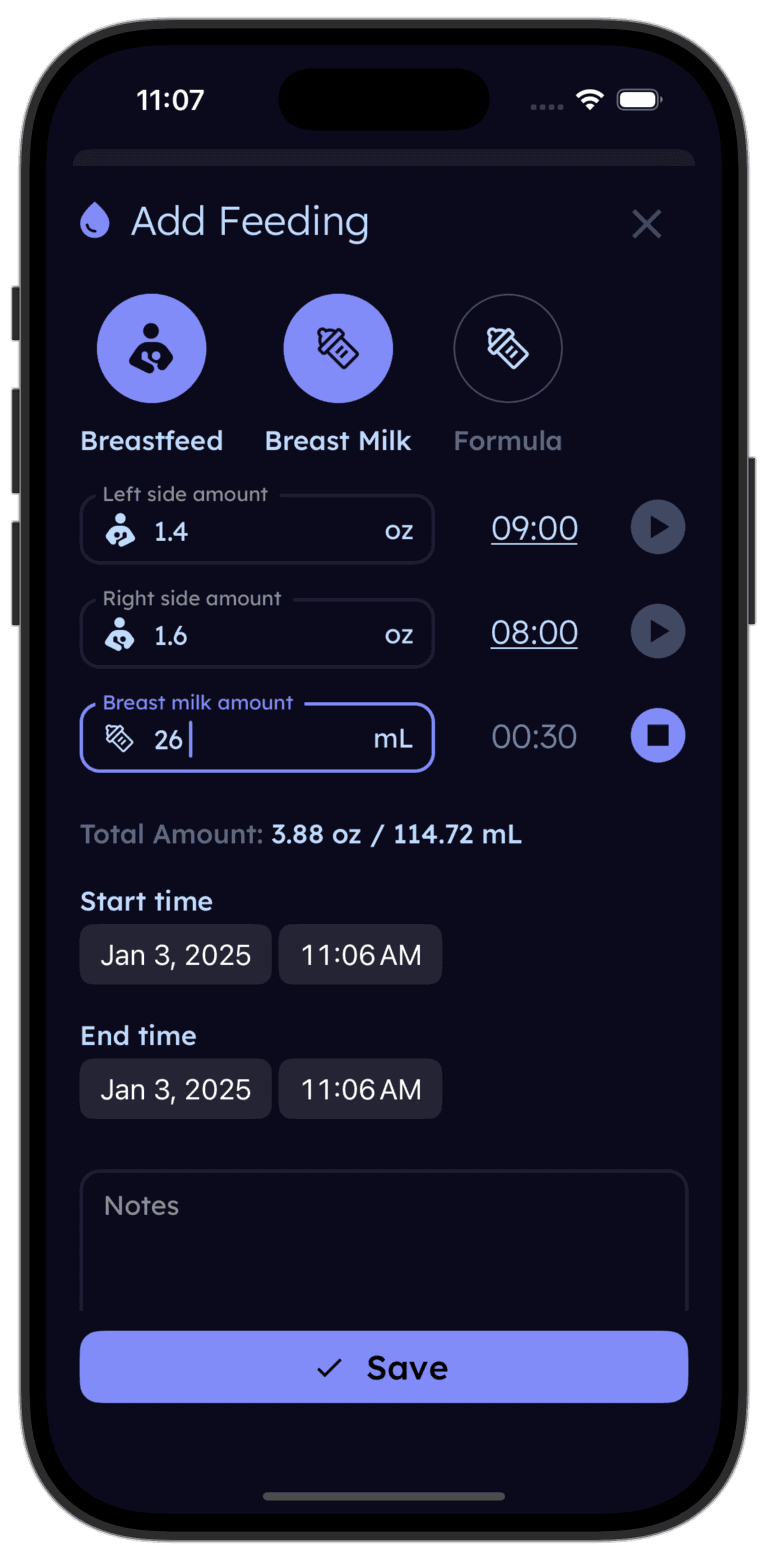
Tinylog tracks bottles so you can spot feeding patterns.
Log bottle feedings, nursing sessions, and pumping. Track ounces over days and weeks. Bring the data to your next pediatrician visit.


Practical Differences That Show Up Daily
Beyond materials and nipples, a few practical differences affect your day-to-day experience.
Stability. The Chicco Duo has a wide, flat base and a rigid body. It sits securely on high chair trays, nightstands, and countertops. The Comotomo is soft and squeezable with a narrower base — it tips over more easily, especially when partially full. If you are the kind of parent who sets a bottle on a table and walks away, the Chicco Duo is more forgiving.
Cleaning. Both bottles are dishwasher safe and have minimal parts. Comotomo's ultra-wide neck lets you reach inside with your hand — no bottle brush required. This is a genuine time saver, especially when you are washing bottles at midnight. The Chicco Duo cleans well too, but its standard neck size means you will likely want a brush.
Weight and grip. Comotomo is extremely light and its soft silicone body is easy for babies to grip once they start holding their own bottles (usually around 6–9 months). The Chicco Duo is also lightweight for a glass-lined bottle, but its rigid structure makes it harder for small hands to squeeze and hold.
Durability. Silicone does not crack, chip, or shatter, but it can develop a sticky texture over time if not cleaned thoroughly. The Chicco Duo's glass lining will not stain, hold odors, or develop aftertaste — a real advantage if you rotate between breast milk and formula.
| Product | Typical Price | Cost Per Bottle | Notes |
|---|---|---|---|
| Comotomo 5 oz (2-pack) | $23–$28 | ~$12–$14 | Includes slow flow nipples (0–3 months) |
| Comotomo 8 oz (2-pack) | $23–$28 | ~$12–$14 | Includes medium flow nipples (3–6 months) |
| Chicco Duo 5 oz (single) | $10–$12 | ~$10–$12 | Includes Intui-Latch slow flow nipple |
| Chicco Duo 9 oz (single) | $10–$12 | ~$10–$12 | Includes Intui-Latch slow flow nipple |
Price: Similar but Not Identical
On a per-bottle basis, both the Comotomo and Chicco Duo fall in the $10–$14 range, making them premium bottles compared to basic options from brands like Philips Avent or Dr. Brown's.
Comotomo bottles are typically sold in two-packs for $23–$28, which works out to about $12–$14 per bottle. Replacement nipples run about $8–$10 for a two-pack. Comotomo also sells bundles on their website that include multiple sizes and nipple flows.
Chicco Duo bottles are usually sold individually for $10–$12 each, or in two-packs and gift sets at a slight discount. Replacement Intui-Latch nipples are available separately.
Most families need 4–6 bottles in rotation. Here is what that looks like:
- 4 Comotomo bottles: ~$46–$56
- 4 Chicco Duo bottles: ~$40–$48
The difference is modest. Neither bottle will break your budget, and both will last through at least one child if properly maintained.
Choose Comotomo If
- Your baby is breastfed and you need a smooth breast-to-bottle transition
- You want a completely plastic-free bottle made from medical-grade silicone
- You prefer a soft, squeezable bottle your baby can grip and hold
- Easy hand washing without a bottle brush is a priority
- You want full sterilization flexibility, including microwave
- Your baby has difficulty latching onto traditional bottle nipples
Choose Chicco Duo If
- You want the purity of glass without the weight or breakage risk
- Bottle stability on surfaces like high chairs and counters matters to you
- You prefer a more traditional, rigid bottle shape
- You want a bottle that won't stain, hold odors, or develop aftertaste over time
- You are looking for a slightly lower per-bottle cost
- Your baby does well with standard-shaped nipples and doesn't need a wide breast-like base
Where to Buy
If breast-to-bottle transition is your priority, the Comotomo Silicone Baby Bottles (~$12–$14/bottle) are a standout choice — soft, squeezable, 100% silicone, and designed specifically to mimic the breast. The wide nipple base is one of the best on the market for breastfed babies, and the Gen 2 version (2026) brings improved nipple flow and easier assembly.
If you want the purity of glass without any of the downsides, the Chicco Duo Hybrid Baby Bottle (~$10–$12/bottle) delivers a clever solution — Invinci-Glass interior means milk never touches plastic, while the outer shell stays lightweight and shatterproof. It is stable, easy to clean, and has a strong track record with parents.
Our honest advice: if your baby is breastfed and you are introducing a bottle for the first time, start with Comotomo. If your baby is formula-fed or you prioritize glass-contact safety and durability, start with the Chicco Duo. Either way, buy just one or two bottles first before committing to a full set.
Tinylog earns a small commission on purchases made through these links, at no cost to you.
Want to save a few bucks? promo.new is worth a quick look. It won't always have your product, but when it does, the savings are real.
The Bottom Line
The Comotomo and Chicco Duo are both excellent bottles that appeal to parents who care about what touches their baby's milk. They solve the same core problem — eliminating BPA and plasticizer concerns — through completely different engineering approaches.
Comotomo wins on breast-to-bottle transition, squeezable grip, plastic-free construction, and flexible sterilization options. It is the better pick for breastfeeding families who want a bottle that feels as close to the real thing as possible.
Chicco Duo wins on stability, odor resistance, glass-contact purity, and a rigid design that is easier to handle in a bottle warmer or diaper bag. It is the better pick for parents who want traditional bottle handling with the safety of glass.
For most families, the deciding factor is simple: is your baby breastfed and struggling with bottles? If yes, start with Comotomo. If not, either bottle will serve you well.
If you are tracking feeding amounts and frequency — which is especially useful in the first weeks to make sure your baby is getting enough — Tinylog makes it easy to log every bottle and spot patterns over time.
Related Guides
- Baby Feeding Chart — How much your baby should eat by age
- Baby Gas — Causes, relief, and when to call your doctor
- Baby Spit-Up — What's normal and when to worry
- Breastfeeding Basics — Getting started with nursing
Sources
- BabyGearLab. "The Best Baby Bottles | Tested & Ranked." babygearlab.com, 2025.
- BabyGearLab. "Comotomo Review | Tested & Rated." babygearlab.com, 2025.
- Mommyhood101. "Best Baby Bottles of 2026, Tested & Reviewed." mommyhood101.com.
- Mommyhood101. "Chicco Duo Baby Bottles: Hands-on Review." mommyhood101.com.
- The Bump. "Comotomo Baby Bottle Review." thebump.com, 2025.
- The Bump. "9 Best Baby Bottles, Parent-Tested." thebump.com, 2025.
- ChiccoUSA.com. "DUO Baby Bottle | The First Hybrid Baby Bottle." chiccousa.com.
- Comotomo.com. "Comotomo Baby Bottle — Product Information." comotomo.com.
- Amazon.com. "Comotomo Silicone Baby Bottle Gen 2 — 2026 Release." amazon.com.
- Baby Foode. "Review: Comotomo Baby Bottle (Pros + Cons)." babyfoode.com.
This guide is for informational purposes only. Bottle choice is a personal preference based on your baby's individual feeding needs. If your baby has persistent feeding difficulties, gas, or colic, consult your pediatrician or a lactation consultant.
Frequently asked questions
- Is the Comotomo bottle good for breastfed babies?
- Yes. The Comotomo is one of the best bottles for breastfed babies. Its wide, naturally shaped silicone nipple allows babies to make cheek, nose, and chin contact similar to nursing, which promotes a natural latch and reduces nipple confusion. Many lactation consultants recommend it for breast-to-bottle transitions.
- Does the Chicco Duo actually have glass inside?
- Yes. The Chicco Duo uses a proprietary technology called Invinci-Glass — a micro-thin layer of borosilicate glass permanently bonded to the interior of a plastic shell. Your baby's milk only touches the glass surface, not the plastic. The glass will not shatter, chip, crack, or flake.
- Can you put Comotomo bottles in the dishwasher?
- Yes. Comotomo bottles are dishwasher safe (top rack), microwave safe, and compatible with most electric sterilizers. The medical-grade silicone will not leach chemicals when heated. The wide-neck design also makes hand washing easy without a bottle brush.
- Are Chicco Duo bottles microwave safe?
- Chicco Duo bottles are dishwasher safe, bottle warmer safe, and electric sterilizer safe. However, Chicco does not recommend microwave sterilization for Duo bottles, as the heat distribution may cause damage to the hybrid construction.
- Which bottle is better for colic and gas?
- Both bottles include anti-colic venting systems. The Comotomo uses dual anti-colic vents on either side of the nipple. The Chicco Duo uses a built-in anti-colic valve in the Intui-Latch nipple. In practice, both perform well at reducing air intake. If your baby has severe colic, a dedicated anti-colic system like Dr. Brown's may be more effective than either.
- Can I switch between Comotomo and Chicco Duo bottles?
- Yes. There is no medical reason you cannot use both bottles. However, some babies develop a preference for one nipple shape over another. If your baby is also nursing, introducing too many different nipple shapes at once can cause confusion. Try one bottle type first and give your baby a few days to adjust before switching.