
GUIDE
Dr. Brown's Anti-Colic Options+ vs. Chicco Duo Hybrid
Published on
Both are solid bottles with different strengths. Dr. Brown's is the gold standard for colic and gas reduction with its internal vent system. Chicco Duo offers unique flexibility by switching between an angled and straight bottle. Cost is comparable.
Dr. Brown's Natural Flow Anti-Colic Options+ and the Chicco Duo Hybrid represent two different philosophies on baby bottle design. Dr. Brown's has built its reputation on a patented internal vent system that reduces air ingestion. Chicco takes a hybrid approach, letting parents switch between an angled and straight configuration. For most babies, either will work — the differences show up in how you handle gas, cleaning, and day-to-day convenience.
Log bottles, note spit-up, and track ounces
Two Popular Bottles — Same Goal, Different Approach
Dr. Brown's Natural Flow Anti-Colic Options+ and the Chicco Duo Hybrid both aim to make feeding smoother and less gassy for your baby. They take very different paths to get there.
Dr. Brown's uses a patented internal vent system that channels air through the bottle without mixing it into the milk. It is the most well-known anti-colic bottle on the market and has been a pediatrician recommendation for over 25 years.
Chicco's Duo Hybrid takes a dual-configuration approach — you can set it up as an angled bottle (to reduce air intake through positioning) or as a straight bottle (for easier filling and cleaning). It is a newer design that prioritizes flexibility and simplicity.
The honest truth: both bottles work well for most babies. The question is whether your baby needs heavy-duty colic management (Dr. Brown's) or whether you want a more versatile, low-maintenance bottle that still reduces gas (Chicco Duo).
For more on feeding amounts by age, see our baby feeding chart.
| Feature | Dr. Brown's Options+ | Chicco Duo Hybrid | What It Means |
|---|---|---|---|
| Manufacturer | Handi-Craft Company | Chicco (Artsana Group) | Both are established baby product companies with decades of experience. |
| Anti-colic system | Patented internal vent system | Angled bottle design reduces air intake | Dr. Brown's vent system is more engineered and clinically tested. Chicco relies on bottle angle and nipple design. |
| Bottle configuration | Standard straight bottle | Hybrid — switches between angled and straight | Chicco's dual configuration is unique. You get two bottle styles in one purchase. |
| Material options | Polypropylene plastic or borosilicate glass | Plastic with optional Invinci-Glass silicone sleeve | Dr. Brown's offers a true glass option. Chicco's Invinci-Glass is a silicone-sleeved plastic, not actual glass. |
| Nipple shape | Narrow, traditional shape (wide-neck also available) | Wide, breast-shaped with textured surface | Chicco's wider nipple may suit breastfed babies. Dr. Brown's offers both narrow and wide-neck options. |
| Flow rates available | Preemie, Level 1–4, Y-cut | Slow, medium, fast | Dr. Brown's offers more granular flow control, including a preemie size. |
| Number of parts | 5 parts (with vent), 3 parts (without vent) | 3 parts | Chicco is simpler. Dr. Brown's extra parts are the trade-off for its vent system. |
| Ease of cleaning | More difficult — vent parts require brush and thorough drying | Easier — fewer parts, wider opening | Chicco wins here. Parents consistently cite Dr. Brown's cleaning as the biggest drawback. |
| Dishwasher safe | Yes (top rack) | Yes (top rack) | Tie. Both are dishwasher safe on the top rack. |
| Sizes available | 2 oz, 4 oz, 8 oz, 9 oz | 5 oz, 9 oz | Dr. Brown's offers more size options, including smaller bottles for newborns. |
| BPA-free | Yes | Yes | Tie. Both are BPA-free, as required by FDA regulations for baby bottles. |
The Vent System: Dr. Brown's Biggest Advantage (and Biggest Hassle)
The internal vent system is what sets Dr. Brown's apart from nearly every other bottle on the market. Here is how it works:
Air enters through a vent at the top of the bottle and is channeled through an internal tube to the back of the bottle. This means air never mixes with the milk or formula your baby is drinking. The result is less oxidation (preserving nutrients like vitamins A, C, and E), reduced bubbles, and significantly less air swallowed during feeding.
For babies with moderate to severe gas, colic, or reflux, this system makes a real difference. Multiple parents report dramatic improvement in fussiness and gas pain after switching to Dr. Brown's from standard bottles.
The trade-off is cleaning. The vent system adds a vent insert, a vent reservoir, and a travel disk to every bottle. All of these need to be disassembled, washed, and dried after each use. With the Options+ line, you can remove the vent entirely once your baby outgrows the gassy phase — which is a meaningful improvement over older Dr. Brown's models that required the vent at all times.
Chicco Duo's Hybrid Design: Simplicity Meets Flexibility
The Chicco Duo's standout feature is its ability to convert between an angled bottle and a straight bottle. In the angled position, the bottle naturally tilts milk toward the nipple, reducing air pockets. In the straight position, it functions like a conventional bottle — easier to fill, store, and clean.
This matters more than it sounds. Angled bottles help with semi-upright feeding, which pediatricians often recommend for babies with reflux. But angled bottles are notoriously annoying to fill and to fit into bottle warmers and diaper bags. Chicco's solution is elegant: use it angled when you need the anti-gas benefit, and switch to straight when convenience matters more.
The Chicco Duo also uses a wide, textured nipple designed to mimic the feel of a breast. For babies transitioning between breast and bottle, this can reduce nipple confusion — though results vary widely from baby to baby.
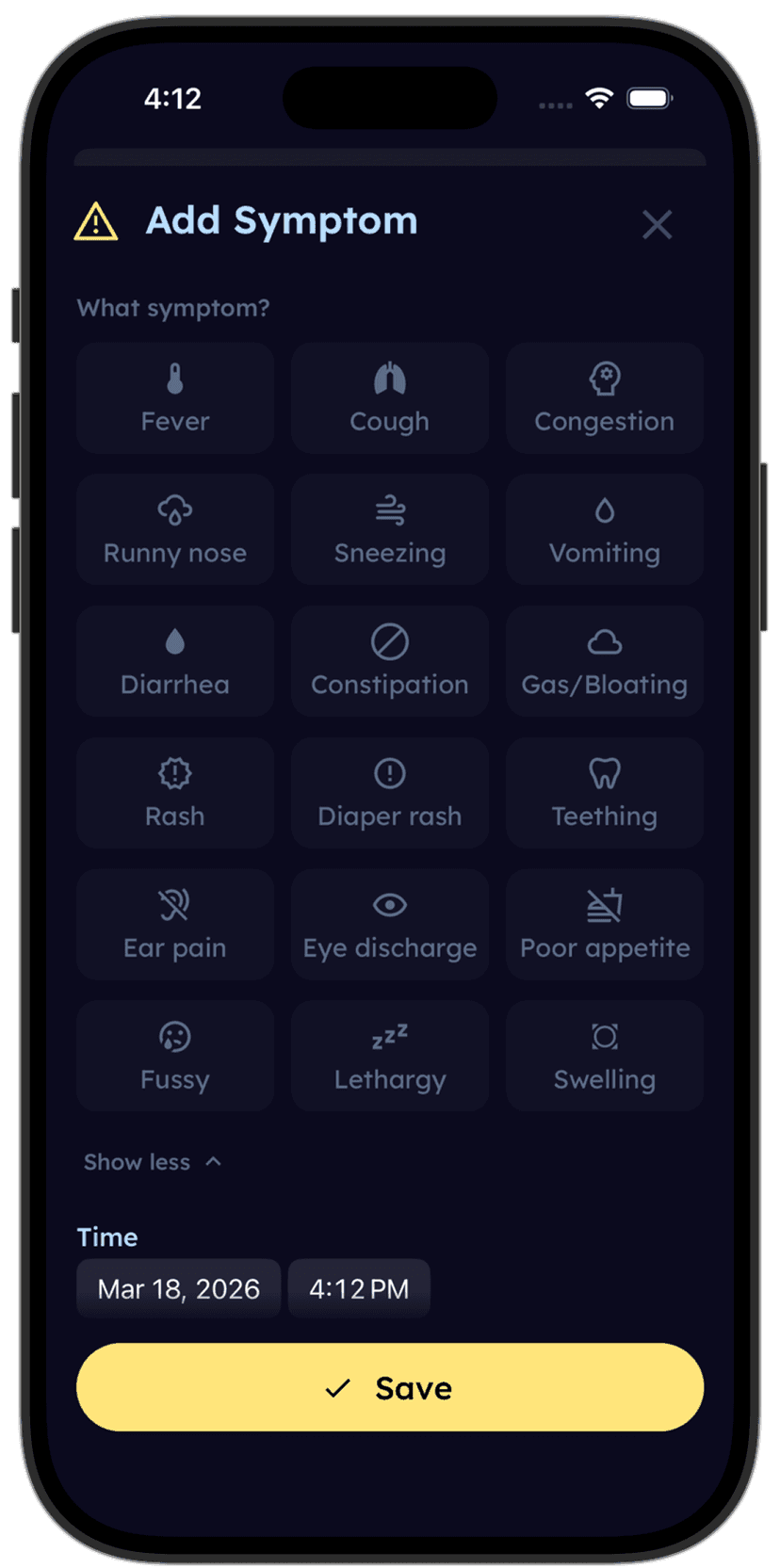
Tinylog tracks feedings so you can spot patterns.
Log bottle feeds, note spit-up and gas, track ounces over days and weeks. Bring the data to your next pediatrician visit.


Cleaning: The Unsexy Factor That Matters Most
You will wash baby bottles thousands of times in the first year. Cleaning ease matters more than almost any other feature.
Dr. Brown's Options+ has five parts when using the vent system: bottle, nipple, collar, vent insert, and vent reservoir. Each piece needs to be washed and dried thoroughly to prevent mold and milk residue buildup. Dr. Brown's sells a specialized cleaning brush set for the vent components. Many parents describe the cleaning routine as the single biggest frustration with this bottle.
Chicco Duo has three parts: bottle, nipple, and collar. The wider bottle opening makes it easy to scrub the inside with a standard bottle brush. No extra inserts, no tiny tubes, no specialized tools needed.
If you are using Dr. Brown's and finding the cleaning burdensome, remember that the Options+ line lets you remove the vent once your baby no longer needs it. At that point, it becomes a three-part bottle just like the Chicco.
| Product | Typical Price | Cost Per Bottle | Notes |
|---|---|---|---|
| Dr. Brown's Options+ Wide-Neck (4 oz, 2-pack) | $10–$13 | ~$5.00–$6.50 | Best for newborns. Includes Level 1 nipples. |
| Chicco Duo Hybrid (5 oz, 2-pack) | $13–$17 | ~$6.50–$8.50 | Invinci-Glass version runs higher. |
| Dr. Brown's Options+ Wide-Neck (8 oz, 3-pack) | $16–$20 | ~$5.33–$6.67 | Best value per bottle for older babies. |
| Chicco Duo Hybrid (9 oz, 2-pack) | $15–$19 | ~$7.50–$9.50 | Fewer pack-size options than Dr. Brown's. |
Price: Dr. Brown's Has the Edge
Dr. Brown's bottles are generally $1–$3 cheaper per bottle than the Chicco Duo, and they come in more pack-size options. Replacement nipples are comparably priced for both brands.
Where cost adds up:
- Replacement nipples. You will need to size up nipples as your baby grows. Budget for 2–3 nipple upgrades in the first year. Both brands charge roughly $4–$7 per 2-pack.
- Bottle brushes. Dr. Brown's cleaning brushes are a separate purchase (~$6 for a set). Standard bottle brushes work fine for Chicco Duo.
- How many bottles you need. Most parents need 6–8 bottles in rotation. At that volume, the per-bottle price difference adds up to roughly $10–$20 total.
Neither bottle will break the bank. The cost difference is modest enough that it should not drive your decision.
Choose Dr. Brown's Options+ If
- Your baby has significant gas, colic, or spit-up issues
- You want the most clinically tested anti-colic vent system available
- You prefer a true glass bottle option
- You need a preemie-sized nipple or very granular flow rate control
- You want smaller bottle sizes (2 oz and 4 oz) for the newborn stage
- You don't mind washing extra parts
Choose Chicco Duo Hybrid If
- Ease of cleaning is a top priority for you
- You want the flexibility of angled and straight configurations in one bottle
- Your baby latches better on a wide, breast-shaped nipple
- You prefer a simpler bottle with fewer parts to assemble
- Your baby has mild gas but not severe colic
- You value convenience and straightforward daily use
Where to Buy
If gas and colic are your primary concern, the Dr. Brown's Natural Flow Anti-Colic Options+ (~$5.50/bottle in multi-packs) is the most trusted anti-colic bottle on the market. The internal vent system is backed by years of clinical use and parent feedback. Start with the 4 oz wide-neck version for newborns and size up as your baby grows.
If you want a more convenient, flexible bottle that still reduces gas, the Chicco Duo Hybrid Baby Bottle (~$7.50/bottle) is an excellent choice — fewer parts, easier cleaning, and that angled-to-straight conversion gives you real versatility. The wide nipple is also worth trying if your baby is switching between breast and bottle.
Our honest advice: if your baby has serious gas or colic, start with Dr. Brown's. If your baby is generally comfortable and you want an easy-to-use bottle with some anti-gas features, the Chicco Duo is the better daily driver.
Tinylog earns a small commission on purchases made through these links, at no cost to you.
Want to save a few bucks? promo.new is worth a quick look. It won't always have your product, but when it does, the savings are real.
The Bottom Line
Dr. Brown's Natural Flow Anti-Colic Options+ and the Chicco Duo Hybrid are both well-designed bottles that serve different priorities.
Dr. Brown's Options+ is the better choice for babies with significant gas, colic, or reflux. The internal vent system is the most effective air-reduction mechanism on the market. The trade-off is more parts and more cleaning.
Chicco Duo Hybrid is the better choice for parents who want a simple, versatile bottle that reduces gas without the complexity. The angled-to-straight conversion is genuinely useful, and the three-part design makes daily cleaning painless.
For most families, the deciding factor is how much your baby struggles with gas. Severe gas and colic point toward Dr. Brown's. Mild gas or general ease-of-use priorities point toward Chicco Duo.
If you are tracking feeds — which is especially helpful in the early weeks to ensure your baby is eating enough — Tinylog makes it easy to log bottles, track ounces, and note gas or spit-up patterns over time.
Related Guides
- Baby Feeding Chart — How much your baby should eat by age
- Baby Spitting Up — Normal spit-up vs. reflux and when to call your doctor
- Baby Gas — Causes, relief, and when to worry
- Breastfeeding to Bottle — How to introduce a bottle to a breastfed baby
Sources
- Dr. Brown's. "How the Internal Vent System Works." drbrownsbaby.com. 2026.
- Chicco. "Duo Hybrid Baby Bottle — Product Information." chiccousa.com. 2026.
- BabyGearLab. "Best Baby Bottles of 2026." babygearlab.com.
- What to Expect. "Best Anti-Colic Bottles." whattoexpect.com, 2026.
- American Academy of Pediatrics. "Bottle Feeding Basics." healthychildren.org.
- Wirecutter (New York Times). "The Best Baby Bottles." nytimes.com/wirecutter, 2026.
- Consumer Reports. "Best Baby Bottles From Our Tests." consumerreports.org, 2026.
This guide is for informational purposes only. Bottle choice is a personal preference based on your baby's individual needs. If your baby has persistent feeding difficulties, excessive gas, or signs of reflux, consult your pediatrician.
Frequently asked questions
- Does Dr. Brown's actually reduce colic and gas?
- Clinical studies and widespread parent feedback support that the internal vent system reduces air ingestion during feeding. Less swallowed air means less gas and fussiness. The vent system is the most studied anti-colic mechanism on the market. That said, colic has multiple causes and no single bottle will solve every case.
- Can you use Dr. Brown's Options+ without the internal vent?
- Yes. The Options+ line is designed so you can remove the internal vent system once your baby's feeding matures and gas issues improve. Without the vent, it functions like a standard bottle and is easier to clean.
- What makes the Chicco Duo a hybrid bottle?
- The Chicco Duo can switch between an angled configuration and a straight bottle. The angled shape promotes upright feeding and reduces air intake. The straight shape is easier to fill, clean, and store. You get both options in one bottle.
- Which bottle is easier to clean?
- The Chicco Duo is easier to clean overall because it has fewer parts. Dr. Brown's internal vent system adds extra components — a vent insert, vent reservoir, and travel disk — that all need to be washed and dried separately. Many parents find the Dr. Brown's cleaning routine tedious, especially at 3 AM.
- Are Dr. Brown's and Chicco Duo nipples interchangeable?
- No. Each brand uses proprietary nipple shapes and attachment systems. Dr. Brown's nipples are not compatible with Chicco bottles, and vice versa. You will need to buy replacement nipples from the same brand as your bottle.
- Which bottle is better for breastfed babies?
- Both brands design their nipples for a wide, breast-like latch. The Chicco Duo's Invinci-Glass silicone sleeve and angled design can help with paced feeding. Dr. Brown's slow-flow nipple with the vent system provides a very consistent, paced flow. Neither has a clear advantage — try both and see which your baby latches onto more easily.