
GUIDE
Dr. Brown's Anti-Colic Options+ vs. MAM Easy Start Anti-Colic
Published on
Both are excellent anti-colic bottles backed by clinical evidence. Dr. Brown's excels with its internal vent system that virtually eliminates air ingestion. MAM stands out for self-sterilizing convenience and a flat, skin-like nipple that breastfed babies often accept more easily.
Dr. Brown's Natural Flow Anti-Colic Options+ and MAM Easy Start Anti-Colic are two of the most recommended bottles for gassy, fussy babies. They take fundamentally different approaches to reducing colic symptoms — Dr. Brown's uses an internal vent system while MAM uses a vented base design. Both work, but the right pick depends on your baby's feeding style, your tolerance for washing parts, and whether you're combining breast and bottle.
Log bottles, spit-ups, and gas patterns
Two Different Approaches to the Same Problem
Dr. Brown's Natural Flow Anti-Colic Options+ and MAM Easy Start Anti-Colic are both designed to solve the same problem: air in the milk that causes gas, fussiness, and colic symptoms. But they solve it in very different ways.
Dr. Brown's uses an internal vent system — a tube and reservoir inside the bottle that channels air completely away from the milk. It's the most engineered solution on the market and has the clinical data to back it up. The tradeoff is more parts to wash.
MAM uses a vented base with micro-perforations that let air into the bottle without passing through the milk. It's a simpler design with fewer parts, and the self-sterilizing feature is genuinely useful. MAM also puts heavy emphasis on nipple design for breastfed babies.
Both work. The right choice depends on how severe your baby's symptoms are and how much cleaning you're willing to do.
For more on feeding amounts by age, see our baby feeding chart.
| Feature | Dr. Brown's Options+ | MAM Easy Start | What It Means |
|---|---|---|---|
| Manufacturer | Handi-Craft Company | MAM Babyartikel GmbH | Dr. Brown's is US-based; MAM is an Austrian company with a strong European following. |
| Anti-colic system | Internal vent system channels air through a tube, bypassing the milk entirely | Vented base with tiny holes that allow air into the bottle without mixing with milk | Both reduce air ingestion. Dr. Brown's is more aggressive; MAM is simpler in design. |
| Clinical evidence | Clinically proven to reduce colic — peer-reviewed studies | Clinically tested; 80% of parents report less colic | Dr. Brown's has stronger published clinical data. MAM relies more on parent-reported outcomes. |
| Number of parts | 5 parts (with vent), 3 parts (without vent) | 3 parts | MAM wins on simplicity. Fewer parts means faster cleaning and less to lose in the dish rack. |
| Nipple design | Standard silicone nipple, multiple flow levels | SkinSoftTM flat silicone nipple, textured surface | MAM's nipple is designed to feel more like skin. Better for breast-to-bottle transition. |
| Nipple acceptance rate | No specific claim published | 94% acceptance rate (MAM-reported) | MAM markets heavily on nipple acceptance. Helpful for bottle-refusing breastfed babies. |
| Self-sterilizing | No — requires separate sterilizer or boiling | Yes — microwave self-sterilizing in 3 minutes | MAM wins. Built-in sterilizing is a real convenience, especially for travel. |
| Bottle material options | Polypropylene plastic or glass | Polypropylene plastic only | Dr. Brown's offers a glass option for parents who prefer to avoid plastic entirely. |
| Sizes available | 2 oz, 4 oz, 8 oz, 9 oz (narrow and wide neck) | 5 oz, 9 oz | Dr. Brown's has more size variety, including a 2 oz preemie size and narrow-neck options. |
| Nutrient preservation | Vent system proven to preserve vitamins C, A, and E in breast milk | No specific nutrient preservation claim | Dr. Brown's has an edge here — the vent reduces oxidation that can break down nutrients. |
| BPA/BPS free | Yes | Yes | Tie. Both are free of BPA, BPS, and phthalates. |
The Vent System: Engineering vs. Simplicity
This is the core difference between these two bottles, and it matters.
Dr. Brown's internal vent is a two-piece system (a vent insert and a reservoir tube) that creates a completely air-free milk flow. As your baby drinks, air enters through the nipple collar, travels down the vent tube, and fills the back of the bottle — never touching the milk. This means zero air bubbles in the liquid your baby swallows.
The clinical result is meaningful: studies published in peer-reviewed journals show that babies using Dr. Brown's bottles experienced significantly less colic, spit-up, and gas compared to conventional bottles. The vent also reduces the vacuum effect that can cause ear infections and nipple collapse.
MAM's vented base takes a less aggressive approach. Tiny perforations in the bottom of the bottle allow air to enter as the baby drinks, equalizing pressure without creating bubbles in the milk. It works well for mild to moderate colic, and parents consistently report reduced fussiness.
If your baby has severe colic or reflux, Dr. Brown's more thorough air elimination system may make a bigger difference. For mild gassiness, MAM's simpler system is often enough — and you'll thank yourself at the sink.
The Cleaning Reality: Be Honest With Yourself
This is where most parents make their final decision, and for good reason.
Dr. Brown's with the vent has five separate parts: bottle, nipple, collar, vent insert, and reservoir tube. The vent insert and reservoir require a thin brush to clean properly. You'll be doing this multiple times a day. It's not difficult, but it adds up — especially at 3 AM.
The good news: the Options+ line lets you remove the vent entirely once your baby's feeding matures (usually around 4 months). Without the vent, it becomes a simple three-part bottle.
MAM has three parts regardless: bottle, nipple, and collar. The wide bottle opening makes hand-washing easy, and the self-sterilizing base means you can sterilize in the microwave in three minutes without extra equipment.
Be honest about your patience for bottle maintenance. If you're exclusively bottle-feeding (8–12 bottles per day), the extra parts in Dr. Brown's add real time to your daily routine.
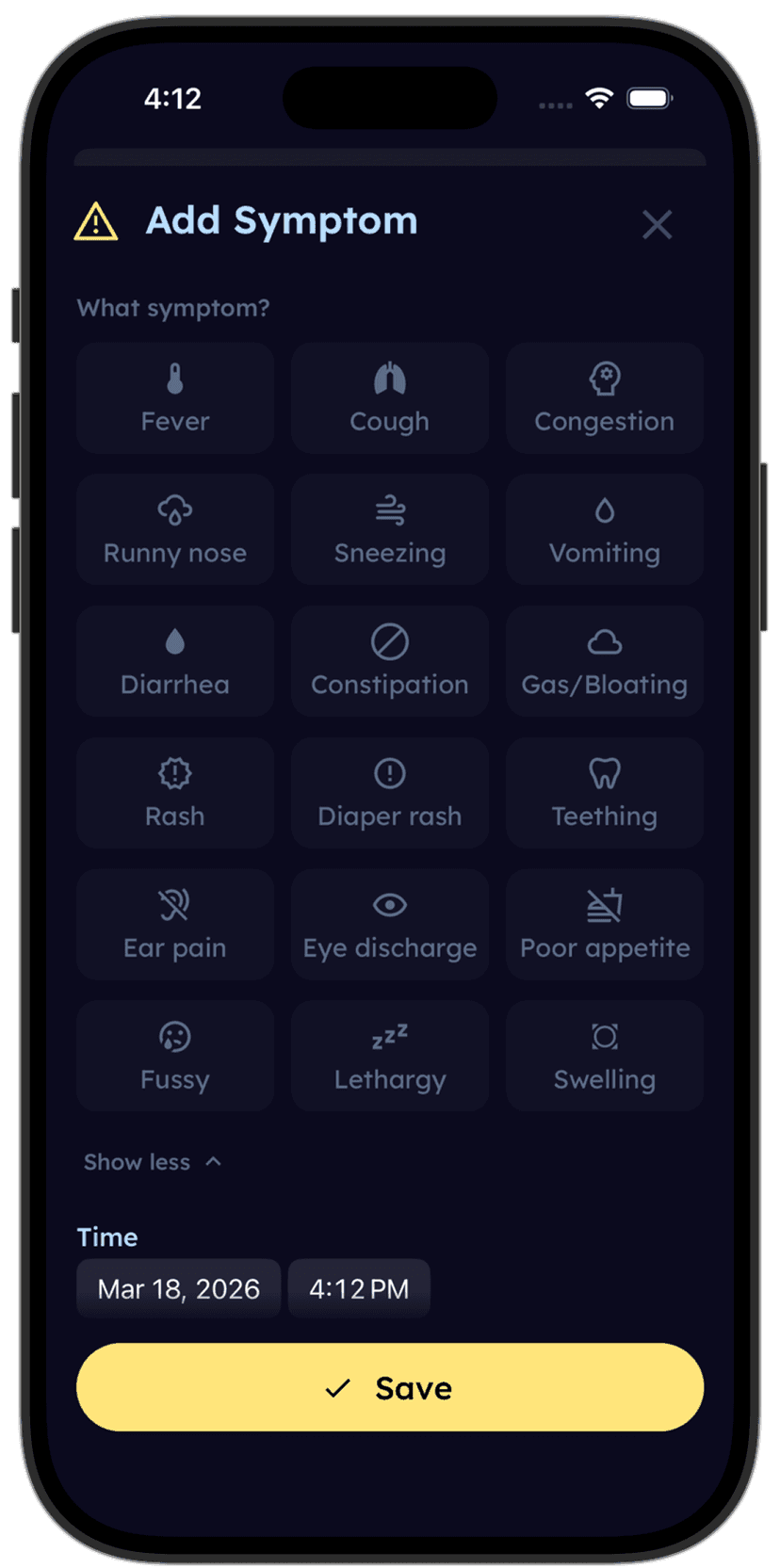
Tinylog tracks bottles so you can spot feeding patterns.
Log bottle feeds, note spit-ups and gas, track ounces over days and weeks. Bring the data to your next pediatrician visit.


Nipple Design and Breast-to-Bottle Transition
If you're breastfeeding and introducing a bottle, nipple acceptance is a real concern. Some babies refuse bottles entirely, and the nipple shape matters.
MAM's SkinSoftTM nipple is flat and wide with a textured surface designed to feel like skin. MAM reports that 94% of babies accept it — an unusually high claim, but one that lines up with parent reviews. The flat shape is closer to how a breast compresses in a baby's mouth during nursing.
Dr. Brown's nipples are more traditionally shaped — narrower and more elongated. They come in a wide range of flow levels (preemie, Level 1 through Level 4, and Y-cut). The wide-neck version is broader but still more conventional in shape than MAM's.
If your breastfed baby is rejecting bottles, MAM is worth trying first. If your baby is primarily bottle-fed or takes bottles easily, nipple shape is less of a deciding factor.
| Product | Typical Price | Cost Per Bottle | Notes |
|---|---|---|---|
| Dr. Brown's Options+ Wide-Neck 8 oz (3-pack) | $18–$24 | ~$6.00–$8.00 | Replacement vents ~$5 per 2-pack |
| MAM Easy Start Anti-Colic 9 oz (3-pack) | $22–$28 | ~$7.33–$9.33 | No replacement parts needed |
| Dr. Brown's Options+ Wide-Neck 4 oz (4-pack) | $20–$26 | ~$5.00–$6.50 | Best starter size for newborns |
| MAM Easy Start Anti-Colic 5 oz (3-pack) | $20–$26 | ~$6.67–$8.67 | Good starter size; self-sterilizing included |
Price: Similar, With a Hidden Cost
Upfront, Dr. Brown's bottles are slightly cheaper per unit. But there's a hidden ongoing cost: replacement vent inserts. The vent system wears over time and needs periodic replacement. Budget an extra $5–$10 over six months of use.
MAM bottles cost a bit more per bottle but have no additional parts to replace. The self-sterilizing feature also saves you the cost of a separate microwave or electric sterilizer ($15–$30).
Over a full year of bottle-feeding, total cost is roughly comparable. Neither bottle will strain your budget compared to the other. Buy whichever your baby prefers — that's the real cost saver, since a rejected bottle is the most expensive bottle of all.
Choose Dr. Brown's Options+ If
- Your baby has significant gas, reflux, or diagnosed colic symptoms
- You want the strongest clinical evidence behind your anti-colic bottle
- Preserving breast milk nutrients matters to you (the vent reduces oxidation)
- You prefer a glass bottle option
- You need a very small bottle size (2 oz for preemies or supplementing)
- You don't mind washing extra parts — at least for the first few months
Choose MAM Easy Start If
- Your breastfed baby is refusing other bottles (MAM's nipple acceptance rate is high)
- You want the fewest parts to wash and assemble
- Built-in microwave sterilizing is appealing (especially for travel)
- Your baby's colic is mild to moderate and you want a simpler anti-colic system
- You prefer a wider, flatter nipple shape that mimics the breast
- You value modern design — MAM bottles look good and come in fun patterns
Where to Buy
If gas and colic are your primary concern, the Dr. Brown's Natural Flow Anti-Colic Options+ (~$6–$8/bottle in multi-packs) is the gold standard for air-free feeding. The internal vent system has the strongest clinical backing of any anti-colic bottle, and the Options+ design lets you remove the vent later when your baby outgrows it. Start with the 4 oz wide-neck for newborns.
If you want a bottle that's easy to clean, self-sterilizes, and gives you the best shot at nipple acceptance with a breastfed baby, the MAM Easy Start Anti-Colic (~$7–$9/bottle in multi-packs) is hard to beat. Three parts, microwave sterilizing, and that SkinSoftTM nipple make daily life simpler. Start with the 5 oz size for newborns.
Our honest advice: if possible, buy one pack of each. Babies are opinionated, and the "best" anti-colic bottle is whichever one your baby will drink from without fussing.
Tinylog earns a small commission on purchases made through these links, at no cost to you.
We've found promo.new handy for finding discounts on baby gear. Doesn't always have what you need, but it's worth a shot.
The Bottom Line
Both Dr. Brown's Options+ and MAM Easy Start are well-designed anti-colic bottles that genuinely reduce gas and fussiness. The differences are real but come down to tradeoffs:
Dr. Brown's Natural Flow Anti-Colic Options+ wins on clinical evidence, air elimination thoroughness, nutrient preservation, glass bottle availability, and size variety. It's the better choice for severe colic or reflux.
MAM Easy Start Anti-Colic wins on cleaning simplicity, self-sterilizing convenience, nipple acceptance for breastfed babies, and fewer daily parts to manage. It's the better choice for families who want effective anti-colic performance with less maintenance.
For most families, either bottle will meaningfully reduce colic symptoms compared to a standard bottle. Try both if you can. Your baby will tell you which one wins.
If you're tracking feedings — which is especially helpful when working through colic patterns — Tinylog makes it easy to log bottles, note fussiness, and share feeding data with your pediatrician.
Related Guides
- Baby Feeding Chart — How much your baby should eat by age
- Baby Gas Relief — Causes, remedies, and when to call your doctor
- Baby Spit-Up — Normal spit-up vs. reflux and when to worry
- Breastfeeding vs. Formula — An honest look at both options
Sources
- Dr. Brown's. "Natural Flow Anti-Colic Options+ Bottle — Product Information." drbrownsbaby.com, 2026.
- MAM. "Easy Start Anti-Colic Bottle — Product Information." mambaby.com, 2026.
- Journal of the American Board of Family Medicine. "Infant Colic: Recognition and Treatment." jabfm.org.
- Brown CF, et al. "Reduction in Colic Symptoms Using an Internal Venting Bottle System." Pediatric Research, 2012.
- Consumer Reports. "Best Baby Bottles From Our Tests." consumerreports.org, 2026.
- BabyList. "Best Anti-Colic Bottles of 2026." babylist.com.
- What to Expect. "Best Bottles for Breastfed Babies." whattoexpect.com, 2026.
This guide is for informational purposes only. Bottle choice is a personal preference based on your baby's individual needs. If your baby has persistent colic, excessive spit-up, or refuses to feed, consult your pediatrician.
Frequently asked questions
- Do Dr. Brown's bottles really help with colic?
- Yes. Dr. Brown's internal vent system is clinically shown to reduce colic symptoms by channeling air through the vent rather than into the milk. In peer-reviewed studies, babies using Dr. Brown's bottles showed significant reduction in fussiness and gas compared to conventional bottles. The vent system also preserves nutrients like vitamins C, A, and E by minimizing oxidation.
- Are MAM bottles good for breastfed babies?
- MAM bottles are one of the most popular choices for breastfed babies transitioning to a bottle. The SkinSoftTM silicone nipple has a flat, wide shape and textured surface designed to mimic the breast. MAM reports that 94% of babies accept the nipple, which can reduce nipple confusion when switching between breast and bottle.
- Which anti-colic bottle is easier to clean?
- MAM is significantly easier to clean. MAM bottles have only three parts and a wide opening, making hand-washing straightforward. Dr. Brown's bottles with the internal vent system have five parts including a narrow vent insert and reservoir that require a small brush. Dr. Brown's Options+ line does allow you to remove the vent as your baby grows, which simplifies cleaning later.
- Can you use Dr. Brown's bottles without the vent?
- Yes. The Options+ line is specifically designed to let you remove the internal vent system once your baby's feeding matures — typically around 4+ months. Without the vent, the bottle functions like a standard wide-neck bottle with fewer parts to wash.
- Do MAM bottles self-sterilize?
- Yes. MAM bottles come with a built-in self-sterilizing function. You disassemble the bottle, add water to the base, and microwave for three minutes. No separate sterilizer is needed. This is a genuine convenience advantage, especially for travel or when counter space is limited.
- Which anti-colic bottle is cheaper?
- MAM bottles are generally less expensive per bottle than Dr. Brown's, especially in multi-packs. A 3-pack of MAM 9 oz bottles typically runs $22–$28, while a 3-pack of Dr. Brown's Options+ 8 oz wide-neck bottles runs $18–$24. However, Dr. Brown's replacement vent inserts add ongoing cost. Over six months of use, total cost is similar.