
GUIDE
Dr. Brown's HappyPaci vs. Bibs Colour Pacifier
Published on
These two pacifiers are built from completely different materials for different priorities. The HappyPaci is a one-piece silicone pacifier designed for easy cleaning and orthodontic support. The Bibs Colour is a natural rubber latex pacifier with a classic round nipple and that unmistakable Danish design.
Dr. Brown's HappyPaci and Bibs Colour are two of the most gifted and recommended pacifiers among new parents in 2026. They look different, feel different, and are made from different materials — silicone vs. natural rubber. The HappyPaci prioritizes hygiene and orthodontic shape. The Bibs Colour prioritizes a soft, breast-like feel and timeless aesthetic. Your baby's preference will likely come down to which material and nipple shape they accept.
Log feeds, sleep, and soothing
Silicone vs. Natural Rubber — Two Totally Different Pacifiers
The Dr. Brown's HappyPaci and Bibs Colour look nothing alike, and that is because they are built on entirely different philosophies. The HappyPaci is a modern, one-piece silicone pacifier with an orthodontic nipple. The Bibs Colour is a classic natural rubber latex pacifier with a round nipple and retro Scandinavian design that has taken over every baby registry on the planet.
This is not a "which one is slightly better" comparison. These pacifiers are made from different materials with different nipple shapes for babies who want different things. The real question is which material and shape your baby prefers — and you will only find that out by trying.
We broke down material, shape, cleaning, durability, and cost so you can make a quick decision instead of reading fifty Amazon reviews at 3 AM.
One thing worth knowing: babies who are exclusively breastfed sometimes lean toward the Bibs Colour because natural rubber feels closer to skin. Babies who are bottle-fed or combo-fed often do well with either. There is no rule here — just tendencies.
For more on soothing a fussy baby, check out our baby colic guide.
| Feature | Dr. Brown's HappyPaci | Bibs Colour | What It Means |
|---|---|---|---|
| Manufacturer | Dr. Brown's | Bibs (Danish brand) | Both are well-established baby brands. Dr. Brown's is a US staple; Bibs is a Scandinavian design favorite. |
| Material | 100% medical-grade silicone | 100% natural rubber latex | Fundamentally different materials. Silicone is synthetic and hypoallergenic. Natural rubber is softer but carries a small latex allergy risk. |
| Nipple shape | Contoured, orthodontic (flattened) | Round, cherry-shaped (traditional) | Different philosophies. The HappyPaci flattens against the palate; the Bibs nipple is symmetrical like a breast. |
| Construction | One-piece silicone | Two-piece (rubber nipple + plastic shield) | One-piece is easier to sterilize and has no joints. Two-piece means the nipple and shield meet at a seam. |
| Flexibility | Soft, flexible silicone | Very soft, flexible natural rubber | The Bibs Colour nipple is noticeably softer and squishier. Breastfed babies sometimes prefer the latex feel. |
| Shield design | Round shield with multiple vent holes | Lightweight round shield with vent holes | Both have ventilated shields. The Bibs shield is larger and sits more gently against the face. |
| Size range | 0-6 months, 6-12 months | 0-6 months, 6-18 months | Similar newborn sizes. Bibs offers a slightly older range with the 6-18 month option. |
| Dishwasher safe | Yes — top rack | No — hand wash or boil only | HappyPaci wins on cleaning convenience. Natural rubber does not hold up well in dishwashers or steam sterilizers. |
| Durability | Good — silicone resists heat and degradation | Moderate — natural rubber breaks down faster | Silicone lasts longer with repeated sterilization. You will replace Bibs pacifiers more often. |
| Color options | Several colors and prints | 30+ muted, earthy colors | Bibs wins on aesthetics by a mile. The color range is the reason half of Instagram owns them. |
| Latex-free | Yes | No — contains natural rubber latex | Important distinction for families with latex allergies. The HappyPaci is the safe choice if this applies to you. |
Material: This Is the Big One
The single biggest difference between these pacifiers is what they are made of, and it affects everything — feel, cleaning, durability, and allergy risk.
Dr. Brown's HappyPaci is made from 100% medical-grade silicone. Silicone is synthetic, tasteless, odorless, and hypoallergenic. It does not break down easily with heat, which means you can boil it, steam it, dishwasher it, and it still looks the same a month later. The one-piece construction means there are zero joints or seams where bacteria can hide.
Bibs Colour is made from 100% natural rubber latex. Natural rubber is harvested from rubber trees and has been used in pacifiers for generations. It is softer, warmer to the touch, and more flexible than silicone. Many breastfed babies prefer the feel of latex because it compresses more like breast tissue. The trade-off: natural rubber degrades faster, can develop a slight smell or taste over time, and poses a risk for babies with latex allergies.
If anyone in your family has a latex allergy, this decision is already made — go with the HappyPaci. If allergies are not a concern, the material choice comes down to which feel your baby prefers.
Nipple Shape: Orthodontic vs. Traditional Round
The HappyPaci uses a flattened, contoured orthodontic nipple that sits low in baby's mouth and distributes suction pressure across the palate. Dr. Brown's designed it to support natural oral development, and some pediatric dentists prefer this shape.
The Bibs Colour uses a classic cherry-shaped round nipple that is symmetrical — it does not matter which direction baby puts it in their mouth. This shape closely mimics the breast, and some lactation consultants recommend it for breastfed babies to reduce any confusion between pacifier and breast.
Here is what the research actually says: the American Academy of Pediatric Dentistry notes that non-nutritive sucking habits (pacifiers included) generally do not cause lasting orthodontic issues if stopped by age two. The nipple shape debate matters far less than most marketing suggests. Your baby's comfort is the deciding factor.
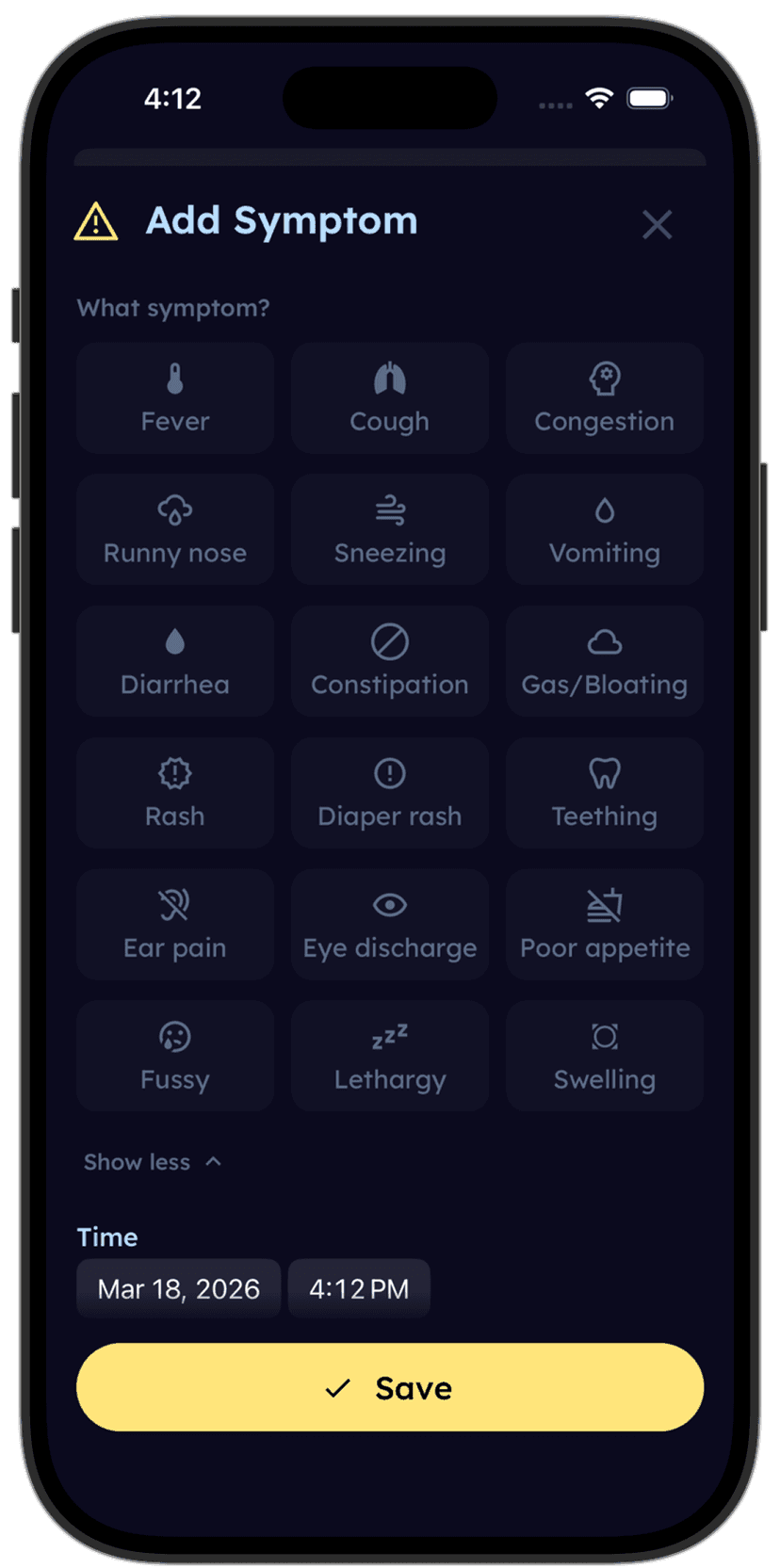
Tinylog tracks feedings so you can spot patterns.
Log pacifier use, feeds, naps, and fussy periods in one place. See trends over time and share data with your pediatrician at the next visit.


Cleaning and Maintenance: Silicone Wins Here
This is where the one-piece silicone design of the HappyPaci has a clear advantage.
HappyPaci cleaning options:
- Boil for 5 minutes
- Steam sterilize (microwave bags or countertop unit)
- Top rack of the dishwasher
- Warm soapy water
Bibs Colour cleaning options:
- Boil for 5 minutes before first use
- Hand wash with warm soapy water for daily cleaning
- Boil occasionally for deep sterilization
Bibs specifically recommends against using steam sterilizers and dishwashers with their natural rubber pacifiers. The intense, repeated heat breaks down latex faster than silicone. You will also notice that natural rubber pacifiers can become slightly sticky or swollen over time — that is the material degrading, and it means it is time to replace the pacifier immediately.
If convenience and low-maintenance cleaning are high on your list, the HappyPaci is the easier pick. If you do not mind hand-washing and replacing pacifiers a bit more frequently, the Bibs Colour works fine with basic care.
| Product | Typical Price | Cost Per Pacifier | Replacement Cost |
|---|---|---|---|
| Dr. Brown's HappyPaci (2-pack) | $5–$7 | ~$2.50–$3.50 | ~$5–$7 every 4–6 weeks |
| Bibs Colour (2-pack) | $8–$12 | ~$4.00–$6.00 | ~$8–$12 every 4–6 weeks |
| Bibs Colour (single) | $5–$6 | ~$5.00–$6.00 | ~$5–$6 per pacifier every 4–6 weeks |
Price: The HappyPaci Is the Budget-Friendly Pick
The Dr. Brown's HappyPaci runs roughly $2.50–$3.50 per pacifier in a standard 2-pack. The Bibs Colour runs $4.00–$6.00 per pacifier depending on whether you buy singles or 2-packs. That is nearly double the price per unit.
And because natural rubber degrades faster than silicone, you are also replacing Bibs pacifiers more often. Over six months of pacifier use, the cost difference adds up — maybe an extra $15–$25 total, which is not huge but it is real.
That said, plenty of parents happily pay the Bibs premium because they love the aesthetic, the softer feel, or because their baby simply refused everything else. A pacifier that your baby actually uses is worth more than a cheaper one they spit across the room.
A few tips to keep costs down:
- Buy multi-packs of whichever brand your baby accepts
- Check for bundle deals on Amazon and Target — both brands run them
- Do not stock up before you know which one your baby likes. Buy one pack of each, test, then bulk-order the winner
Choose Dr. Brown's HappyPaci If
- You want a one-piece design that is dead simple to sterilize in any method
- Anyone in your household has a latex allergy or sensitivity
- You prefer an orthodontic nipple shape for your baby
- You like throwing pacifiers in the dishwasher and not thinking about it
- You want a pacifier that holds up well to frequent boiling and steam sterilizing
Choose the Bibs Colour Pacifier If
- Your breastfed baby prefers a soft, round nipple that mimics the breast
- You want the softest possible nipple material for a newborn with a gentle suck
- You care about aesthetics and want pacifiers that match your nursery palette
- Your baby rejected silicone pacifiers and you want to try natural rubber
- You prefer products made from natural materials over synthetic ones
- You are looking for a lightweight pacifier that stays in baby's mouth easily
Where to Buy
The Dr. Brown's HappyPaci (~$3.00/pacifier) is the practical, no-fuss option. One-piece silicone, orthodontic nipple, dishwasher-safe, and latex-free. If you want a pacifier you can sterilize any way you want without worrying about material breakdown, this is the one.
The Bibs Colour Pacifier (~$5.00/pacifier) is the soft, natural-feel option with the best color range on the market. If your baby prefers the squishier texture of natural rubber and a traditional round nipple — or if your breastfed baby keeps rejecting silicone — Bibs is worth every penny of the premium.
Buy one pack of each to start. Your baby will tell you which one wins.
Tinylog earns a small commission on purchases made through these links, at no cost to you.
Looking for a discount? Try checking promo.new. It doesn't always find what you're looking for, but when it does, it works like a charm.
The Bottom Line
The Dr. Brown's HappyPaci and Bibs Colour Pacifier are built for different babies with different preferences. They are not interchangeable — the material, nipple shape, and maintenance are all different.
Dr. Brown's HappyPaci wins on easy cleaning, durability, allergen safety (no latex), orthodontic nipple design, and lower price per pacifier.
Bibs Colour wins on nipple softness, natural material, breast-like round shape, lightweight feel, and the widest color selection of any pacifier brand.
Your baby does not care about aesthetics, brand reputation, or Instagram appeal. They care about how the nipple feels in their mouth. Buy one of each, try them out, and go with whatever gets accepted. At these prices, testing both is the obvious move.
If you are keeping track of feeds, sleep, and fussiness — Tinylog makes it simple to log everything and share reports with your pediatrician.
Related Guides
- Baby Colic — What causes it, what helps, and when it ends
- Baby Feeding Chart — How much your baby should eat by age
- Newborn Sleep — What to expect in the first weeks
- Baby Teething — Timeline, symptoms, and relief options
Sources
- Dr. Brown's. "HappyPaci Silicone Pacifier — Product Information." drbrownsbaby.com, 2026.
- Bibs. "Colour Natural Rubber Latex Pacifier — Product Information." bibsworld.com, 2026.
- American Academy of Pediatrics. "Pacifiers: Satisfying Your Baby's Needs." healthychildren.org, 2025.
- American Academy of Pediatric Dentistry. "Policy on Non-nutritive Sucking Habits." aapd.org, 2024.
- La Leche League International. "Breastfeeding and Pacifier Use." llli.org, 2025.
- BabyGearLab. "Best Pacifiers of 2026, Tested & Reviewed." babygearlab.com.
- Consumer Reports. "Best Pacifiers for Babies." consumerreports.org, 2026.
This guide is for informational purposes only. Pacifier preference varies from baby to baby. If your baby has a latex allergy or you suspect one, avoid natural rubber pacifiers and consult your pediatrician. Not all babies want or need a pacifier — that is completely normal.
Frequently asked questions
- Is the Dr. Brown's HappyPaci or Bibs Colour better for newborns?
- The HappyPaci is available in a 0-6 month size and is made from one-piece silicone, making it very easy to sterilize for newborns. The Bibs Colour starts at 0-6 months as well but is made from natural rubber latex, which requires more careful cleaning. Either can work for newborns, but the HappyPaci's one-piece silicone may be simpler for the earliest weeks.
- Is natural rubber latex safe for babies?
- Yes. Natural rubber latex has been used in baby pacifiers for decades and is considered safe. However, a small number of babies (and adults) have latex allergies. If your family has a history of latex sensitivity, stick with silicone pacifiers like the HappyPaci. Always check with your pediatrician if you are unsure.
- Why do Bibs pacifiers have a round nipple instead of an orthodontic one?
- Bibs uses a traditional cherry-shaped round nipple that mimics the shape of the breast during feeding. Some lactation consultants prefer this shape for breastfed babies. Orthodontic nipples like the HappyPaci's are flattened to distribute pressure across the palate. Neither shape has been proven definitively better for dental development under age two.
- How do you clean Bibs Colour pacifiers?
- Bibs recommends sterilizing by placing the pacifier in boiling water for 5 minutes before first use and periodically after. Natural rubber degrades faster than silicone with repeated boiling, so Bibs advises against steam sterilizers and dishwashers. Hand-wash with warm soapy water for daily cleaning.
- Do Bibs pacifiers have air holes in the shield?
- Yes. The Bibs Colour shield has ventilation holes to allow airflow against baby's skin. The shield is also lightweight and rounded, which helps prevent pressure marks on baby's face.
- How often should I replace a Bibs Colour pacifier vs. a HappyPaci?
- Natural rubber latex breaks down faster than silicone. Replace Bibs Colour pacifiers every 4-6 weeks or sooner if the rubber becomes sticky, swollen, or discolored. The HappyPaci can also last 4-6 weeks, but silicone generally holds up longer with frequent sterilization.