GUIDE

Hospital Bag Essentials vs. Minimalist Hospital Bag

Most parents overpack. The hospital provides gowns, diapers, wipes, and blankets. A minimalist bag with 10-15 items covers your actual needs. The full essentials approach adds comfort items that can genuinely improve your stay.

Your hospital bag matters less than you think — but packing the right things matters more than packing everything.

Get Tinylog ready before delivery

Start tracking from the first hour

It's a good idea to pack your bag a month or two before your due date.
Jenna Plas, MSN, RN, Nurse Manager, Cleveland Clinic

The Hospital Bag Anxiety Is Real — And Mostly Unnecessary

If you've been scrolling through hospital bag checklists with 47 items and feeling panicked, take a breath. The hospital bag has become one of the most over-optimized aspects of birth preparation, generating anxiety that's disproportionate to its actual importance.

Here's what most experienced parents will tell you: they used maybe 30% of what they packed. The beautiful robe stayed in the bag because the hospital gown was easier for monitoring and breastfeeding. The five baby outfits stayed folded because the hospital provided onesies. The essential oil diffuser never got plugged in because labor was more consuming than they imagined.

That said, a few items genuinely improve your hospital experience. Your own pillow. A long phone charger. Comfortable going-home clothes that fit a postpartum body. Good snacks. The question isn't whether to pack — it's whether to pack for every contingency or just the things you'll actually use.

Full Essentials vs. Minimalist Hospital Bag — Side by Side
Bag size
Full EssentialsLarge duffel or suitcase. Separate bags for labor, recovery, and baby.
MinimalistOne carry-on sized bag or large tote. Everything in one place.
Clothing
Full EssentialsMultiple outfit changes, robe, slippers, nursing bras, going-home outfit, pajamas.
MinimalistOne comfortable outfit for going home, one nursing bra. Use hospital gown otherwise.
Toiletries
Full EssentialsFull-size shampoo, conditioner, body wash, face wash, makeup, hair dryer, skincare routine.
MinimalistTravel-size basics: toothbrush, toothpaste, deodorant, lip balm, dry shampoo.
Baby items
Full EssentialsMultiple outfits, swaddles, going-home outfit, socks, mittens, blanket, own diapers.
MinimalistOne going-home outfit and car seat. Hospital provides everything else.
Comfort items
Full EssentialsOwn pillow, blanket, essential oil diffuser, Bluetooth speaker, snacks, drinks, focal point for labor.
MinimalistPhone, charger, one snack. Hospital provides pillows and blankets.
Entertainment
Full EssentialsBooks, tablet, headphones, card games, journal, camera.
MinimalistPhone with charger. That's it.
Documents
Full EssentialsBirth plan (multiple copies), insurance cards, ID, pre-registration forms, pediatrician info.
MinimalistID, insurance card, phone (with birth plan stored digitally).
What hospitals provide varies. Call your labor and delivery unit to confirm what's included.

Full Essentials — Advantages

  • Prepared for any scenario — long labor, extended stay, unexpected C-section
  • Comfort items from home can genuinely improve your birth experience (your own pillow, robe, music)
  • Having your own toiletries makes the postpartum shower — the best shower of your life — even better
  • Multiple outfit options for baby photos that matter to you
  • Snacks and drinks during labor can sustain your energy when the hospital cafeteria is closed

Comfort items are the strongest case for a fuller bag. Medical essentials are provided.

Full Essentials — Challenges

  • Overpacking creates clutter in a small hospital room that your partner has to manage
  • Most items go unused — the beautiful robe stays in the bag, the hospital gown wins
  • Hauling a large bag in and out adds stress when you're already exhausted and recovering
  • Valuable items (jewelry, electronics, nice clothes) can get lost or damaged in the shuffle

If you overpack, consider leaving the extra bag in the car rather than bringing everything to the room.

Minimalist — Advantages

  • Less to carry, less to manage, less to lose — simplicity reduces stress
  • Everything you actually need fits in one bag that's easy to grab when labor starts
  • Hospital provides medical essentials — gown, pads, mesh underwear, diapers, wipes, blankets
  • Faster pack-up when you're discharged and just want to go home
  • Partner doesn't spend labor rummaging through three bags looking for the chapstick

The minimalist approach works especially well for uncomplicated vaginal births with short hospital stays.

Minimalist — Challenges

  • If your stay extends beyond expected (C-section, complications), you may wish you had more
  • Hospital pillows and blankets are functional but not comfortable — your own pillow is worth bringing
  • Limited snack options if the cafeteria is closed and labor is long
  • No backup outfit if baby's going-home outfit gets dirty before discharge

Your partner can always make a run home for forgotten items. It's not the end of the world.

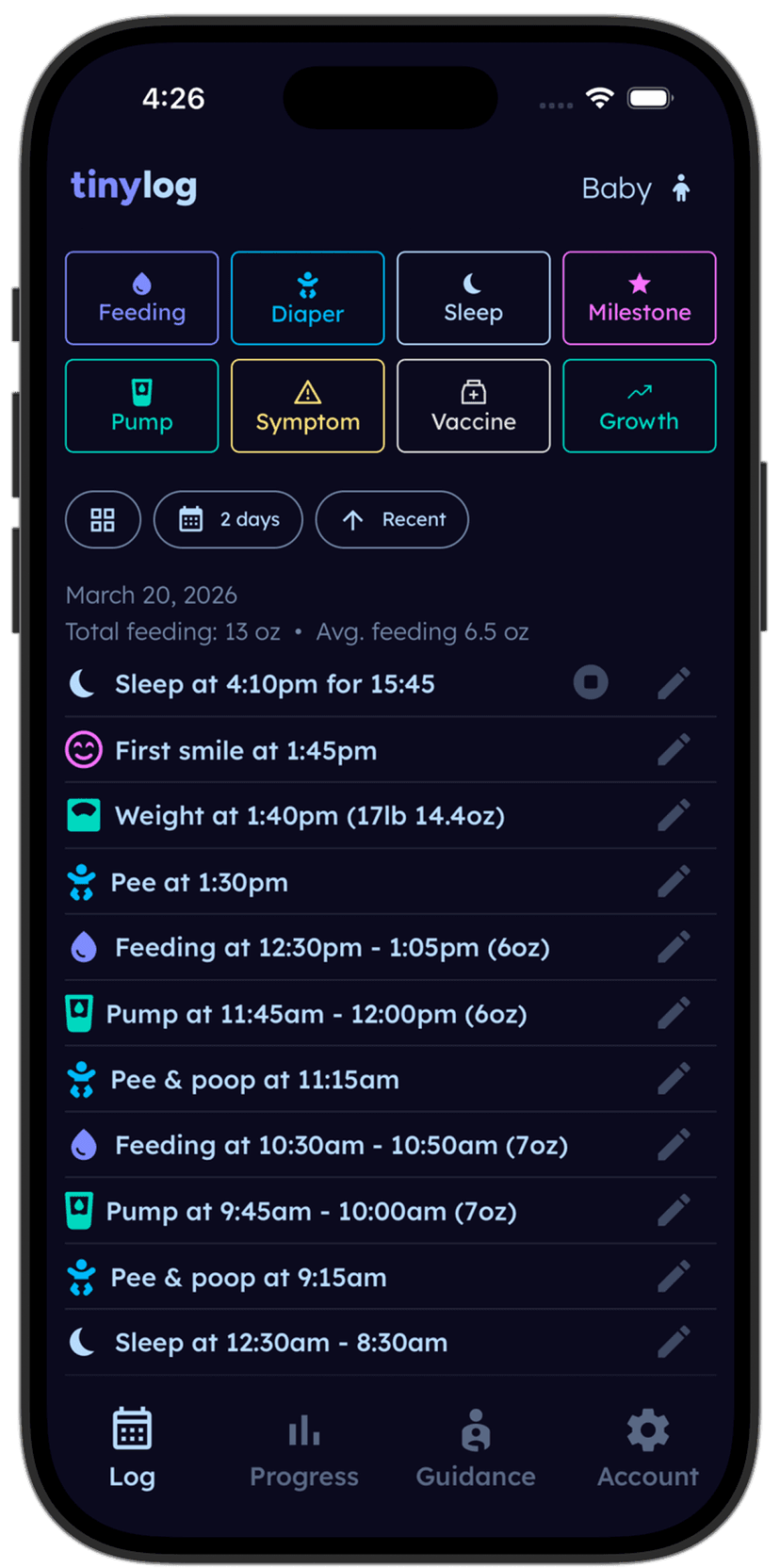
Tinylog baby tracker ready for logging first feeds and diapers in the hospital

Your baby tracker should be ready before you pack the bag.

Download Tinylog before your due date so it's ready to go. Logging that first feed, first diaper, and first nap from the hospital means you start with data — not guessing — from day one.

Download on the App StoreGet It On Google Play

The Minimalist Hospital Bag: What Actually Makes the Cut

If you want to pack light, here's what experienced parents consistently say they actually used. A long phone charger. Their own pillow. Lip balm (hospitals are dry). A comfortable going-home outfit that fits over a postpartum belly — think loose sweats, not pre-pregnancy jeans. A nursing bra if breastfeeding. Toiletry basics: toothbrush, deodorant, dry shampoo. Snacks that don't need refrigeration. One going-home outfit for baby. The car seat (installed before labor starts).

That's roughly 10 items. Everything else — the hospital gown, mesh underwear, pads, diapers, wipes, blankets, formula, peri bottle — the hospital provides. You can add comfort items from there based on what matters to you, but this core list covers functional needs.

The one category worth investing in: good postpartum underwear and a comfortable nursing bra. Hospital mesh underwear works fine for the first day, but if you're staying 2-4 days after a C-section, having your own comfortable, high-waisted underwear makes a difference.


How to Decide Your Approach

Your packing strategy should match your birth plan and personality. If you're planning an unmedicated birth at a hospital and expect a short stay, minimalist makes sense — you'll be focused on labor, not your luggage. If you're scheduling a C-section with a 3-4 day stay, a fuller bag with comfort items is practical.

Consider the middle ground: pack a minimalist bag for the labor room and leave a fuller backup bag in the car. If you want your robe, your partner can grab it. If you don't need it, it stays in the trunk. This approach gives you simplicity during labor and options during recovery.

The honest truth: your hospital bag will matter far less than you think it will. What matters is the car seat being installed, your insurance card being accessible, your phone being charged, and your support person being present. If your partner is packing their own bag, our hospital bag for partners guide covers what they actually need. Everything else is a nice-to-have.

Tips That Apply Either Way

Pack the charger first

A long phone charger (10 feet) is the single most universally needed hospital bag item. Your phone is your camera, your clock, your communication with family, your entertainment during recovery, and your baby tracking app. Don't let it die.

Call your hospital

Hospital policies on what they provide vary. A 5-minute call to labor and delivery will tell you exactly what's supplied (gowns, diapers, formula, pads) so you don't pack what's already waiting for you.

Pack for going home, not for labor

During labor, you'll wear a hospital gown. During recovery, you'll wear a hospital gown or your one comfortable outfit. The going-home outfit and the car seat are the only things you truly need to bring for your baby.

Related Guides

Sources

  • American College of Obstetricians and Gynecologists (ACOG). (2024). Preparing for Labor and Delivery. acog.org.
  • Mayo Clinic. (2024). Labor and Delivery: What to Pack for the Hospital. mayoclinic.org.
  • Cleveland Clinic. (2024). Hospital Bag Checklist for Labor and Delivery. clevelandclinic.org.
  • What to Expect. (2025). Hospital Bag Checklist: What to Pack. whattoexpect.com.

This guide is for informational purposes only and is not a substitute for professional medical advice. Consult your healthcare provider for guidance specific to your situation.

Get this comparison in your inbox.
We'll send you this packing comparison so you can finalize your bag before the big day.
One thing that definitely belongs in your hospital bag? A plan.
Download Tinylog — have your baby tracker ready so you can start logging feeds and diapers from the first hour.
Download on the App StoreGet It On Google Play