
GUIDE
Huggies Little Movers vs. Pampers Cruisers
Published on
Both are top-tier diapers for active babies. Huggies Little Movers offer a snugger, more contoured fit with a Double Grip Strip waistband. Pampers Cruisers provide a stretchy 3-Way Fit design and slightly better absorbency at high volumes. Cost is nearly identical.
Once your baby starts crawling, rolling, and pulling up on furniture, newborn diapers stop cutting it. Huggies Little Movers and Pampers Cruisers are specifically engineered for babies on the move — typically Size 3 and up. Both prioritize flexibility and stay-put fit over the ultra-soft cocooning of their newborn lines. The real differences come down to waistband design, fit shape, and how each handles movement-related leaks.
Log changes, blowouts, and rashes
Your Baby Started Moving — Now the Leaks Start Too
Here's what nobody warns you about: the diaper that worked perfectly for your newborn will probably start failing once your baby learns to crawl. All that twisting, rolling, and scooting creates gaps that newborn diapers aren't built to handle.
That's exactly why Huggies Little Movers and Pampers Cruisers exist. Both are engineered from scratch for babies in motion — typically starting around 6–8 months when crawling kicks in and lasting through the toddler years.
The short version: both are really good. But they take fundamentally different approaches to solving the same problem. Huggies grips tighter with a contoured fit. Pampers stretches more with flexible panels. Which works better depends on your baby's body and how they move.
For guidance on how many diapers your baby goes through at this stage, check our baby feeding chart.
| Feature | Huggies Little Movers | Pampers Cruisers | What It Means |
|---|---|---|---|
| Manufacturer | Kimberly-Clark | Procter & Gamble | Same two diaper giants, different product lines. |
| Designed For | Active babies — crawling, walking, climbing | Active babies — crawling, walking, climbing | Both are mobility-focused diapers starting at Size 3. |
| Size Range | Sizes 3–7 (16–41+ lbs) | Sizes 3–7 (16–41+ lbs) | Tie. Identical size range. |
| Fragrance | Fragrance-free | Light fragrance added | Huggies wins for sensitive skin. Pampers masks odor but adds a potential irritant. |
| Waistband Design | Double Grip Strips — two adhesive strips hold diaper in place | 3-Way Fit — stretchy waistband, sides, and legs | Different approaches. Huggies grips tighter; Pampers stretches more. |
| Shape | Contoured, body-hugging shape | Wider, more traditional shape | Huggies fits closer to the body. Pampers accommodates rounder builds. |
| Leg Cuffs | Snug leak-guard leg cuffs | Dual Leak-Guard Barriers with extra stretch | Both prevent leg leaks. Pampers has slightly more stretch at the thighs. |
| Absorbent Core | Standard absorbent core with Leak Lock system | Extra Absorb Channels that distribute moisture | Pampers edges out on high-volume absorption. Huggies holds up well for average wetters. |
| Wetness Indicator | Yes — color-changing line | No (removed in larger sizes) | Huggies wins. Having a wetness indicator in Sizes 3+ is genuinely useful. |
| Hypoallergenic | Yes — dermatologist-tested, fragrance-free | Yes — dermatologist-tested (contains fragrance) | Both are hypoallergenic by label, but Huggies' fragrance-free formula has fewer potential irritants. |
| Overnight Performance | Adequate — designed for daytime use | Adequate — designed for daytime use | Tie. Neither is purpose-built for overnight. Use dedicated overnight diapers for 12-hour stretches. |
The Fit Question: Grip vs. Stretch
This is the core difference between these two diapers, and it matters more than anything else on the spec sheet.
Huggies Little Movers use what they call Double Grip Strips — two adhesive-like strips inside the waistband that literally grip your baby's skin to keep the diaper from sliding down. Combined with a contoured, body-hugging shape, the result is a diaper that stays put during aggressive crawling, climbing, and the weird half-squat thing babies do before they figure out walking.
Pampers Cruisers take the opposite approach with their 3-Way Fit system. Instead of gripping tighter, they stretch more — at the waist, sides, and legs. The idea is that a diaper that moves with your baby won't shift out of place. It's a more flexible, accommodating fit.
In practice? Huggies tend to work better on leaner babies because the contoured shape doesn't leave gaps at the waist or thighs. Pampers tend to work better on chunkier babies because the stretchy panels accommodate bigger thighs and round bellies without digging in.
If you're not sure which body type fits your baby — honestly, try one pack of each. You'll know within a day.
Fragrance: Still a Thing to Think About
Same story as the newborn lines: Huggies Little Movers are fragrance-free. Pampers Cruisers contain a light fragrance.
By the time your baby is in Size 3+, you probably already know if they have sensitive skin. If they don't, fragrance is a personal preference. If they do — or if they've had eczema, contact dermatitis, or unexplained rashes — fragrance-free is the safer default. The American Academy of Dermatology recommends fragrance-free products for babies with reactive skin.
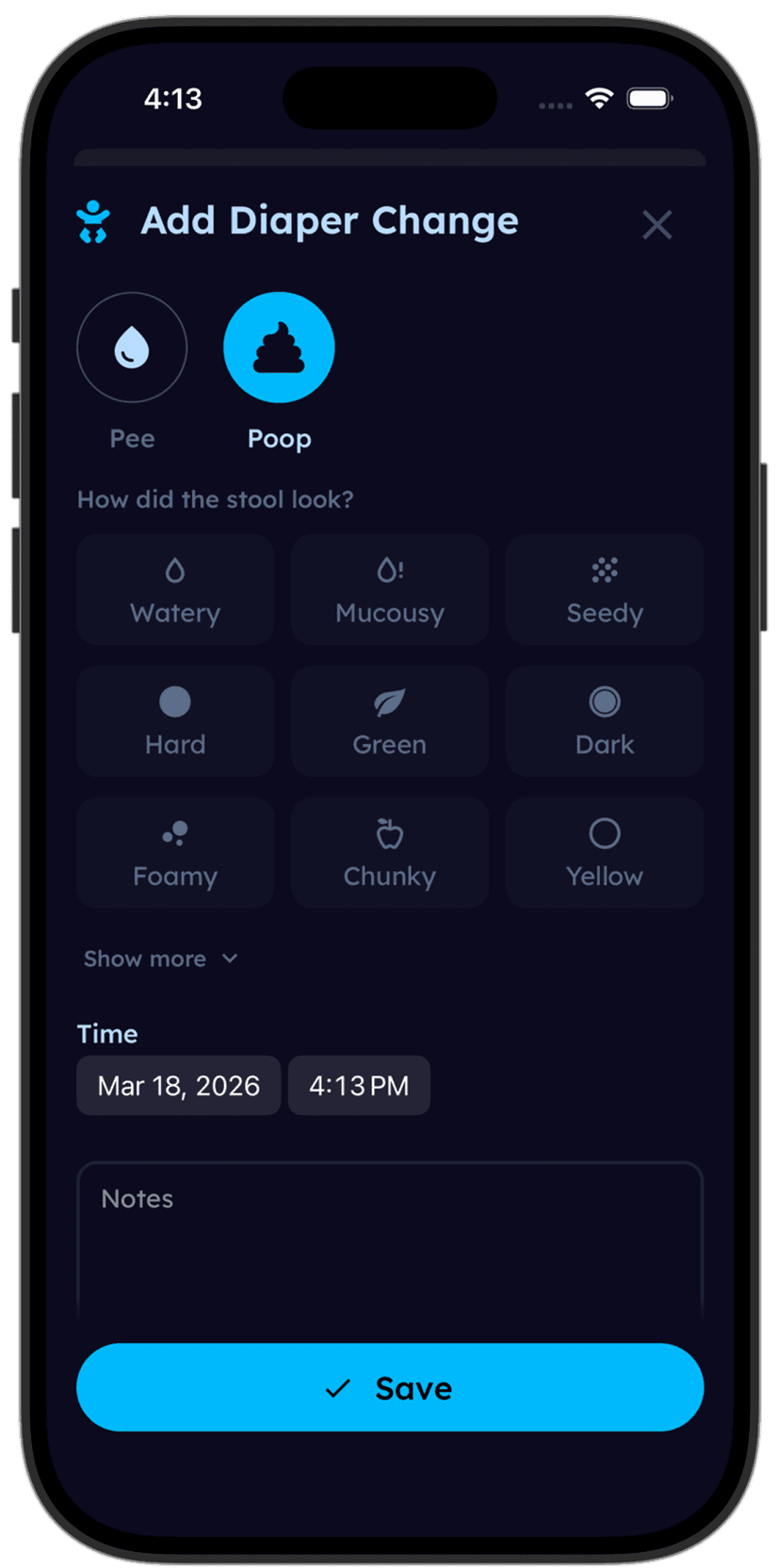
Tinylog tracks diapers so you can spot patterns.
Log wet and dirty diapers, note blowouts and rashes, track output over days and weeks. Bring the data to your next pediatrician visit.


Absorbency: Pampers Has a Slight Edge
Pampers Cruisers use Extra Absorb Channels — raised channels inside the diaper that distribute liquid across a wider area instead of letting it pool in one spot. This means the diaper can handle higher volumes before it feels heavy or starts to sag.
Huggies Little Movers use a solid Leak Lock absorbent core without the channeling. It's effective for average wetters but can get heavy faster with very high-output babies.
For most babies in the Size 3–5 range, this difference is marginal — you're changing them every 2–3 hours during the day anyway. Where it matters is during nap time or car rides when you can't change immediately. If your baby is a particularly heavy wetter, Pampers has a small but real advantage here.
That said, neither diaper is designed for 12-hour overnight stretches. If nighttime leaks are your main problem, you want dedicated overnight diapers — Huggies Overnites or Pampers Swaddlers Overnights.
The Wetness Indicator Advantage
This is a surprisingly practical difference: Huggies Little Movers keep the wetness indicator through their full size range. Pampers Cruisers drop it in larger sizes.
If you've relied on that color-changing line to know when to change, losing it is annoying. Yes, you can just check. But at 6 AM when you're half-asleep and trying to decide if the diaper is wet enough to warrant a full change — that little blue line is genuinely helpful. Point to Huggies.
| Product | Typical Price | Cost Per Diaper | Monthly Estimate |
|---|---|---|---|
| Huggies Little Movers (Size 3, 144-ct box) | $40–$48 | ~$0.28–$0.33 | ~$50–$66 |
| Pampers Cruisers (Size 3, 140-ct box) | $42–$50 | ~$0.30–$0.36 | ~$54–$72 |
| Huggies Little Movers (Size 5, 104-ct box) | $40–$48 | ~$0.38–$0.46 | ~$57–$74 |
| Pampers Cruisers (Size 5, 100-ct box) | $42–$50 | ~$0.42–$0.50 | ~$63–$80 |
Price: A Few Cents Apart
The cost difference between Huggies Little Movers and Pampers Cruisers is typically 2–4 cents per diaper. Over a month, that's roughly $5–$15 depending on size and how many changes you're doing.
Ways to actually save money on diapers:
- Buy the big box. Warehouse clubs (Costco, Sam's Club) and Amazon's large-count boxes drop per-diaper cost significantly.
- Stack coupons with subscriptions. Amazon Subscribe & Save plus manufacturer coupons can knock 20–30% off.
- Don't oversize. A well-fitting diaper in the correct size leaks less and lasts longer than one that's too big. You'll actually use fewer diapers.
- Buy whichever is on sale. If your baby tolerates both brands, the cheapest diaper that week is the best diaper that week.
Choose Huggies Little Movers If
- Your baby is a fast crawler or early walker who needs a diaper that stays put
- You want a completely fragrance-free diaper
- Your baby runs lean — the contoured shape prevents gapping
- You want a wetness indicator in Size 3 and up
- Your baby has sensitive skin or eczema
- You prefer a snugger, tighter fit around the waist
Choose Pampers Cruisers If
- Your baby is on the chunkier side — the stretchy 3-Way Fit accommodates rounder builds
- Your baby is a heavy wetter who needs high-volume absorption
- You prefer a more flexible, give-and-stretch fit during movement
- You don't mind a light fragrance
- You want the Extra Absorb Channels for moisture distribution
Where to Buy
For a snug, stay-put fit on active babies, Huggies Little Movers (~$0.30/diaper in bulk) are hard to beat — the Double Grip Strips and contoured shape keep the diaper in place through crawling, climbing, and everything else your baby throws at you. Fragrance-free and with a wetness indicator through all sizes.
If your baby runs chunky or you want maximum absorbency for heavy wetters, Pampers Cruisers (~$0.33/diaper in bulk) are the way to go — the 3-Way Fit stretch panels accommodate bigger builds and the Extra Absorb Channels handle high volumes without sagging.
Same advice as always: buy a small pack of each before committing to a big box. The right diaper is the one that doesn't leak on your specific baby.
Tinylog earns a small commission on purchases made through these links, at no cost to you.
Tip: check promo.new before purchasing. It's hit or miss depending on the product, but when it hits, you'll be glad you checked.
The Bottom Line
Huggies Little Movers and Pampers Cruisers are both excellent diapers for active babies. The differences are real but manageable:
Huggies Little Movers edge out on stay-put fit, fragrance-free formulation, contoured body shape, and having a wetness indicator in all sizes. Better for lean babies and parents who want a tighter, more secure fit.
Pampers Cruisers edge out on stretch and flexibility, high-volume absorbency, thigh accommodation, and fit on rounder babies. Better for chunkier babies and heavy wetters.
For most families, either will work well. The best strategy is to try both, see which fits your baby's body better, and then buy whichever is on sale. Your baby does not care about brand loyalty, and neither should you.
If you are tracking diaper output and want to spot patterns — how many changes per day, when blowouts happen, rash triggers — Tinylog makes it easy to log everything and share the data with your pediatrician.
Related Guides
- Baby Diaper Rash — Causes, treatment, and when to call your doctor
- Pampers Swaddlers vs. Huggies Little Snugglers — The newborn diaper showdown
- Baby Feeding Chart — How much your baby should eat by age
- Baby Constipation — What's normal and when to worry
Sources
- Huggies.com. "Huggies Little Movers — Product Information." 2026.
- Pampers.com. "Pampers Cruisers Diapers — Product Information." 2026.
- Consumer Reports. "19 Best Diapers From Our Tests." consumerreports.org, 2026.
- BabyGearLab. "Best Disposable Diapers of 2026." babygearlab.com.
- Mommyhood101. "Huggies Little Movers vs. Pampers Cruisers." mommyhood101.com.
- American Academy of Dermatology. "How to Care for Your Baby's Skin." aad.org.
- WeHaveKids. "Huggies vs. Pampers: Active Baby Diaper Comparison." wehavekids.com.
This guide is for informational purposes only. Diaper choice is a personal preference based on your baby's individual needs. If your baby develops persistent rash or skin irritation with any diaper brand, consult your pediatrician.
Frequently asked questions
- Are Huggies Little Movers or Pampers Cruisers better for crawling babies?
- Both are designed specifically for active babies. Huggies Little Movers use a contoured shape and Double Grip Strips at the waist to keep the diaper in place during crawling. Pampers Cruisers use a 3-Way Fit system with stretchy sides, waist, and legs. Either will outperform a standard diaper on a mobile baby.
- Do Huggies Little Movers have fragrance?
- No. Huggies Little Movers are fragrance-free. Pampers Cruisers contain a light fragrance. If your baby has sensitive skin or you prefer scent-free products, Huggies is the safer pick.
- Which diaper stays in place better during movement?
- Huggies Little Movers tend to stay put better on babies who are very active crawlers and climbers, thanks to the Double Grip Strip waistband and contoured shape. Pampers Cruisers flex more with movement due to the 3-Way Fit stretch panels but may shift slightly more on very lean babies.
- What sizes do Huggies Little Movers and Pampers Cruisers come in?
- Huggies Little Movers are available in Sizes 3–7 (16–41+ lbs). Pampers Cruisers are available in Sizes 3–7 (16–41+ lbs). Both start at Size 3 because they are designed for babies who have outgrown the newborn phase.
- Are Huggies Little Movers good for overnight?
- They can work for overnight but are primarily designed for daytime active use. For heavy overnight wetters, Huggies Overnites or Pampers Swaddlers Overnights are better choices, as they have higher absorbent capacity specifically for 12-hour stretches.
- Can I switch between Huggies Little Movers and Pampers Cruisers?
- Absolutely. There is no medical reason to stick with one brand. Many parents buy whichever is on sale. The only reason to avoid a specific brand is if your baby's skin reacts to it.