
GUIDE
Love to Dream Swaddle Up vs. Kyte Baby Sleep Bag
Published on
These serve different sleep stages. The Love to Dream Swaddle Up is a wings-up swaddle for newborns who want their arms near their face. The Kyte Baby Sleep Bag is a wearable blanket for older babies who've outgrown swaddling. If your baby is under 3–4 months, start with the Swaddle Up. After that, transition to the Sleep Bag.
Love to Dream and Kyte Baby both make premium baby sleepwear, but they solve different problems. The Swaddle Up keeps newborns snug with a unique arms-up design that mimics the fetal position. The Kyte Baby Sleep Bag replaces loose blankets for babies who no longer need swaddling. Many families end up buying both — one for the newborn phase and the other for months 4 through toddlerhood.
Log naps, night sleep, and wake windows
A Swaddle and a Sleep Sack Walk Into a Nursery
Love to Dream Swaddle Up and Kyte Baby Sleep Bag are both premium baby sleepwear — but they are not direct competitors. They solve different problems at different stages of your baby's first year.
The Love to Dream Swaddle Up is a swaddle designed for newborns from birth to roughly 4 months. Its signature feature is the arms-up design, which lets babies keep their hands near their face in a natural self-soothing position. No origami-style wrapping required — just zip and go.
The Kyte Baby Sleep Bag is a wearable blanket for babies who have outgrown swaddling. Made from buttery-soft bamboo rayon, it replaces loose blankets in the crib and works from the newborn stage all the way through age 3.
Many families use both — the Swaddle Up for the first few months, then transition to the Sleep Bag once the startle reflex fades and rolling begins. This guide breaks down where each product shines so you can figure out what your baby needs right now.
For more on building healthy sleep habits, see our baby sleep schedule guide.
| Feature | Love to Dream Swaddle Up | Kyte Baby Sleep Bag | What It Means |
|---|---|---|---|
| Product type | Arms-up swaddle | Wearable blanket (sleep sack) | Different categories. The Swaddle Up contains arms; the Sleep Bag leaves arms free. |
| Age range | Newborn to ~4 months (pre-rolling) | Newborn through 36 months | The Sleep Bag covers a much wider age range. The Swaddle Up is newborn-specific. |
| Primary fabric | Cotton/elastane blend (Original); bamboo rayon (Lite) | Bamboo rayon (97% bamboo, 3% spandex) | Kyte Baby's bamboo is exceptionally soft and breathable. Love to Dream offers multiple fabric options. |
| Arm position | Arms up — hands near face in self-soothing position | Arms out — completely free | Arms-up is great for startle reflex. Arms-out is required once baby starts rolling. |
| TOG options | 0.2 (Lite), 1.0 (Original), 2.5 (Warm) | 0.5, 1.0, 2.5 | Both offer temperature-appropriate options. Check your nursery temperature and pick accordingly. |
| Zipper design | Dual zipper (top-down and bottom-up) | Two-way zipper from bottom for easy diaper changes | Both allow diaper changes without fully removing the garment. Practical design on both. |
| Hip safety | International Hip Dysplasia Institute certified | Roomy bottom allows natural leg movement | Both support healthy hip development. The Swaddle Up has formal certification. |
| Transition path | Transition Bag version with zip-off wings available | No transition needed — it's the destination product | Love to Dream thought ahead here. The zip-off wings make the swaddle-to-sack transition smoother. |
| Washing | Machine wash cold, tumble dry low | Machine wash cold, tumble dry low | Tie. Both are easy care. Kyte Baby's bamboo gets softer with each wash. |
| Pattern/color selection | Moderate — mostly solid colors and simple prints | Extensive — seasonal collections, limited editions, rich palette | Kyte Baby wins on aesthetics. Their color drops have a genuine following among parents. |
| Certifications | Hip Dysplasia Institute certified | OEKO-TEX Standard 100 certified | Different certifications addressing different concerns. Both provide reassurance on safety and materials. |
Why the Arms-Up Design Matters
Most traditional swaddles pin a baby's arms down at their sides or across their chest. The Love to Dream Swaddle Up does the opposite — it holds the arms up in a butterfly-wing position near the face.
Why? Because that is how babies naturally position themselves in the womb. Ultrasound studies show that fetuses spend most of their time with hands near their face. The arms-up position allows babies to self-soothe by sucking on their fingers or touching their cheeks, even while swaddled.
For babies who constantly fight out of traditional swaddles, this is often the fix. The stretchy fabric provides enough resistance to dampen the startle reflex without locking the arms down. Parents who have tried three or four different swaddles and given up frequently report that the Swaddle Up is the one that finally worked.
The downside: once your baby starts rolling (typically around 3–4 months), any swaddle with arms contained needs to stop. That is when you transition out — and a sleep sack like the Kyte Baby is the natural next step.
Bamboo Rayon: What Makes Kyte Baby Feel Different
Kyte Baby built their entire brand around bamboo rayon fabric, and the difference is noticeable the moment you touch it. The material is silky, cool to the touch, and gets softer with every wash.
Beyond the feel, bamboo rayon has practical benefits for baby sleep:
- Temperature regulation. Bamboo fibers are naturally thermo-regulating, wicking moisture away from skin and allowing airflow. This helps prevent overheating, which is both a comfort issue and a safe-sleep concern.
- Hypoallergenic. Bamboo rayon is gentle on sensitive skin and naturally resistant to bacteria and odor.
- Durability. Despite feeling delicate, Kyte Baby's fabric holds up well through repeated washing. Many parents report their sleep bags still look good after 100+ washes.
The tradeoff is price. Kyte Baby Sleep Bags run $36–$42 per bag, which is roughly 30–50% more than basic cotton or polyester sleep sacks from other brands. You are paying a genuine premium for the fabric quality.
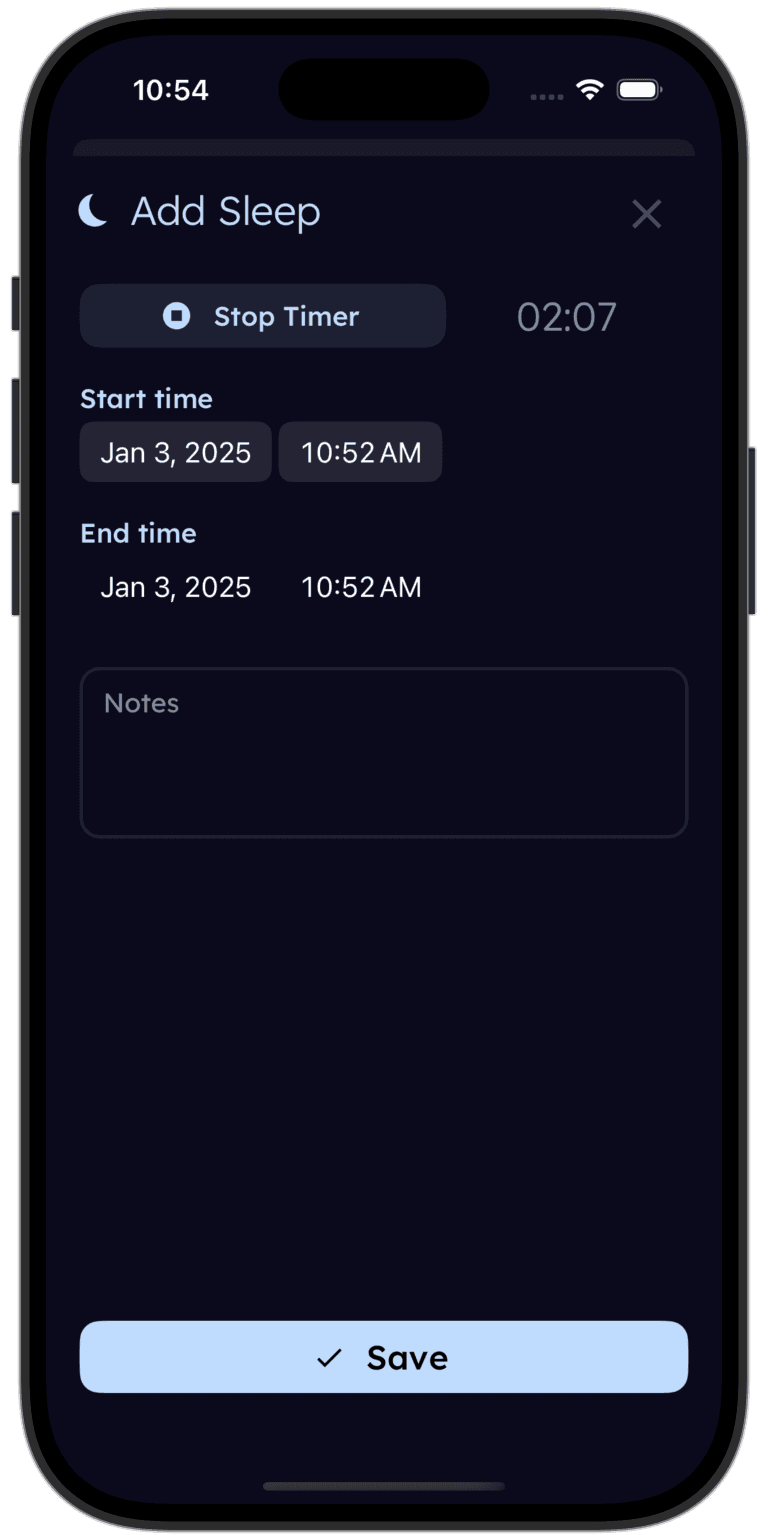
Tinylog tracks sleep so you can see what's working.
Log naps, night stretches, and wake windows. Note when you changed sleep gear. See patterns over days and weeks — and bring the data to your pediatrician.


The Transition Question: Swaddle to Sleep Sack
The single most stressful sleepwear moment for new parents is the swaddle-to-sack transition. Your baby has been sleeping well in a swaddle, and now you have to take it away because they are starting to roll. It feels like throwing away the one thing that works.
Love to Dream anticipated this and created the Swaddle Up Transition Bag. It looks like the regular Swaddle Up, but the wing sections zip off independently. You can remove one wing at a time, giving your baby a gradual adjustment period — one arm free for a few nights, then both arms free.
Once both wings are off, the Transition Bag essentially becomes a sleep sack. From there, moving to a dedicated sleep sack like the Kyte Baby Sleep Bag is a smoother jump because your baby is already used to having arms free.
If you are planning ahead, the path looks like this: Swaddle Up Original (0–3 months) → Swaddle Up Transition Bag (3–4 months) → Kyte Baby Sleep Bag (4+ months through toddlerhood). It is not cheap, but it is the smoothest ride through the first year of sleep.
| Product | Typical Price | Cost Per Month of Use | Notes |
|---|---|---|---|
| Love to Dream Swaddle Up Original (Stage 1) | $28–$34 | ~$7–$9 (used for ~4 months) | You may need 2–3 for rotation. Budget $60–$100 total. |
| Love to Dream Swaddle Up Transition Bag (Stage 2) | $32–$38 | ~$11–$13 (used for ~3 months) | Optional — bridges the gap between swaddle and sleep sack. |
| Kyte Baby Sleep Bag 1.0 TOG | $36–$42 | ~$3–$4 (used for 6–12 months per size) | Higher upfront cost but longer use per size. Budget $72–$126 for 2–3. |
Price: Short-Term vs. Long-Term Value
At first glance, the Kyte Baby Sleep Bag looks more expensive — and it is, per unit. But the math shifts when you factor in how long each product gets used.
The Love to Dream Swaddle Up has a useful window of roughly 3–4 months. After that, your baby is rolling and you are done with it. If you buy two for rotation plus the Transition Bag, you are looking at $90–$105 for about 4 months of use.
The Kyte Baby Sleep Bag covers a much longer stretch. Each size typically lasts 6–12 months, and the product line extends through age 3. Two bags in rotation at $36–$42 each gives you $72–$84 for 6–12 months of use — a lower cost per month despite the higher sticker price.
The real budget play: buy Love to Dream secondhand (they hold up well and resell actively on Mercari and Facebook Marketplace), then invest in new Kyte Baby bags for the longer haul.
Choose the Love to Dream Swaddle Up If
- Your baby is a newborn who still has a strong startle (Moro) reflex
- Your baby likes having their hands near their face while sleeping
- Traditional swaddles keep coming undone or your baby busts out of them
- You want a swaddle that doesn't require any complicated wrapping technique
- You need a clear transition path from swaddle to sleep sack (the zip-off wing version)
Choose the Kyte Baby Sleep Bag If
- Your baby is 3+ months old and starting to roll or has already rolled
- You want a single sleepwear product that lasts through toddlerhood
- Fabric softness and breathability are top priorities for you
- Your baby runs warm and you need reliable temperature regulation
- You care about aesthetics — Kyte Baby's colors and prints are genuinely beautiful
- You want OEKO-TEX certified fabric free of harmful substances
Where to Buy
For newborns who need containment and self-soothing access, the Love to Dream Swaddle Up (~$30 for the Original) is the gold standard arms-up swaddle. The zip-on, zip-off design means no wrapping skills required, and the transition version with removable wings makes graduating to a sleep sack much less painful.
For babies past the swaddle stage (or parents who want sleepwear that lasts through toddlerhood), the Kyte Baby Sleep Bag (~$39 for the 1.0 TOG) delivers genuinely premium bamboo fabric, excellent temperature regulation, and a fit that grows with your baby. The softness is not marketing fluff — it really is that buttery.
If your baby is under 3 months, start with the Swaddle Up. If your baby is 4+ months and rolling, go straight to the Sleep Bag. If you are planning ahead, budget for both.
Tinylog earns a small commission on purchases made through these links, at no cost to you.
Before you buy, it's worth checking promo.new for a deal. It doesn't cover everything, but we've had good luck with it.
The Bottom Line
The Love to Dream Swaddle Up and Kyte Baby Sleep Bag are not an either/or decision for most families — they are a sequential one.
Love to Dream Swaddle Up is the best option for newborns who want their hands near their face, fight traditional swaddles, and still have the startle reflex. It works from birth through the pre-rolling stage and has a smart transition product that bridges the gap.
Kyte Baby Sleep Bag is the best option once swaddling ends. The bamboo rayon fabric is in a different league from standard sleep sacks, the temperature regulation is reliable, and one bag lasts many months per size.
The practical move: start with the Swaddle Up, transition when rolling begins, and land on the Kyte Baby Sleep Bag for the long stretch through toddlerhood. Your baby sleeps roughly 14–17 hours a day in the first year — investing in good sleepwear is investing in good sleep for everyone in the house.
If you are tracking sleep patterns — which helps you see what is working and what is not — Tinylog lets you log naps, night stretches, and notes about sleep gear changes so you have real data instead of guesswork.
Related Guides
- Baby Sleep Schedule — Age-by-age sleep needs and sample routines
- Baby Sleep Regression — Why sleep falls apart at 4, 8, and 12 months
- Swaddling a Newborn — Safe swaddling techniques and when to stop
- Baby Feeding Chart — How much your baby should eat by age
Sources
- Love to Dream. "Swaddle Up Original — Product Information." lovetodream.com, 2026.
- Kyte Baby. "Sleep Bag 1.0 TOG — Product Information." kytebaby.com, 2026.
- International Hip Dysplasia Institute. "Hip-Healthy Swaddling." hipdysplasia.org.
- American Academy of Pediatrics. "Safe Sleep Recommendations." aap.org, 2024.
- Mommyhood101. "Best Swaddles and Sleep Sacks of 2026, Tested & Reviewed." mommyhood101.com.
- BabyGearLab. "Best Baby Sleep Sacks." babygearlab.com, 2026.
This guide is for informational purposes only and does not constitute medical advice. Always follow the AAP's safe sleep guidelines. If you have concerns about your baby's sleep, consult your pediatrician.
Frequently asked questions
- Can I use the Love to Dream Swaddle Up and Kyte Baby Sleep Bag at the same time?
- Not simultaneously, but many families use them sequentially. The Love to Dream Swaddle Up is designed for newborns (roughly 0–4 months) who still have the startle reflex. Once your baby starts showing signs of rolling, you transition out of the swaddle and into a sleep sack like the Kyte Baby Sleep Bag.
- Is the Love to Dream Swaddle Up safe for newborns?
- Yes. The Love to Dream Swaddle Up is hip-healthy certified by the International Hip Dysplasia Institute. The arms-up design keeps your baby's hands near their face, which is a natural self-soothing position. Always follow safe sleep guidelines — place baby on their back, on a firm flat surface, with no loose bedding.
- What makes Kyte Baby Sleep Bags so expensive?
- Kyte Baby uses bamboo rayon fabric, which is softer and more breathable than standard cotton or polyester. The fabric is also OEKO-TEX certified. You are paying for premium material, buttery softness, and temperature regulation. Whether that premium is worth it depends on your budget and priorities.
- What TOG rating should I choose for the Kyte Baby Sleep Bag?
- Kyte Baby offers 0.5 TOG (summer/warm rooms), 1.0 TOG (year-round/moderate rooms), and 2.5 TOG (winter/cool rooms). For most homes kept at 68–72°F, the 1.0 TOG is a solid all-purpose pick. If your nursery runs warm, go with 0.5 TOG.
- When should I stop using the Love to Dream Swaddle Up?
- Stop swaddling when your baby shows signs of rolling over, which typically happens around 3–4 months. Love to Dream makes a transitional version (Swaddle Up Transition Bag) with zip-off wings so you can free one arm at a time before moving to a regular sleep sack.
- Can the Kyte Baby Sleep Bag be used from birth?
- Yes, Kyte Baby makes sleep bags starting at newborn size. However, most newborns prefer the contained feeling of a swaddle over the looser fit of a sleep sack. If your baby hates being swaddled or you prefer not to swaddle, a newborn sleep sack is a safe alternative.