
GUIDE
Love to Dream Swaddle Up vs. Nested Bean Zen Sack
Published on
These two products solve different sleep problems. The Love to Dream Swaddle Up is a swaddle for newborns who want their arms up. The Nested Bean Zen Sack is a weighted sleep sack that mimics a parent's hand on baby's chest. Pick based on your baby's age, startle reflex status, and sleep struggles.
The Love to Dream Swaddle Up and Nested Bean Zen Sack are both wildly popular — but they are not the same type of product. One is a swaddle (arms contained), the other is a sleep sack (arms free) with a gently weighted pad. Understanding that distinction is the key to picking the right one for your baby's current sleep stage.
Log naps, nighttime stretches, and wake windows
A Swaddle and a Sleep Sack Walk Into a Nursery
Before we compare these two products feature by feature, let's get something straight: the Love to Dream Swaddle Up and the Nested Bean Zen Sack are not the same type of product. One is a swaddle. The other is a sleep sack. They solve different problems at different stages.
The Love to Dream Swaddle Up is designed for newborns who still have a strong startle reflex. It keeps arms contained — but in an upward position, which is where most babies naturally want their hands. It is a swaddle with a twist (literally).
The Nested Bean Zen Sack is a sleep sack with a gently weighted pad on the chest and sides. The weight mimics the feeling of a parent's hand resting on baby's chest. Arms are completely free. It works from newborn through toddlerhood.
So why are parents comparing them? Because both promise better sleep, both are premium-priced, and at 3 AM when nothing is working, parents want to know which one to throw their money at. Fair enough. Let's break it down.
| Feature | Love to Dream Swaddle Up | Nested Bean Zen Sack | What It Means |
|---|---|---|---|
| Product type | Swaddle (arms contained, raised position) | Weighted sleep sack (arms free) | Different categories. Swaddle Up contains the startle reflex. Zen Sack soothes with gentle weight. |
| Age range | Newborn to ~6 months (Stage 1 and Stage 2) | Newborn to 24 months (multiple sizes) | Zen Sack has a longer usable life since it works well past the swaddle stage. |
| Arm position | Arms up, enclosed in wing-shaped pouches | Arms free, out of the sack | Key difference. Swaddle Up is for babies who still need startle reflex dampening. |
| Weighted element | None | Lightly weighted pad on chest and sides (about 3–5 oz) | Zen Sack's weighted pad mimics a parent's hand. Swaddle Up relies on snug containment instead. |
| Startle reflex control | Excellent — arms are enclosed so the Moro reflex is dampened | Minimal — arms are free, weight provides some calming effect | Swaddle Up wins here. If your baby still has a strong startle reflex, a swaddle is the move. |
| Material | 93% cotton, 7% elastane (Original); also available in bamboo and Lite versions | 100% cotton muslin or cotton outer; polyester fill in weighted pad | Both use quality cotton. Love to Dream offers more fabric options for temperature regulation. |
| TOG options | Lite (0.2 TOG), Original (1.0 TOG), Warm (2.5 TOG) | Classic (0.5 TOG), Cotton (1.0 TOG), Winter (2.5 TOG) | Both brands cover warm, moderate, and cool nurseries. Check your room temperature and pick accordingly. |
| Zipper design | Dual zipper (top-down and bottom-up) | Inverted zipper (bottom-up for easy diaper changes) | Both allow diaper changes without fully removing the garment. Practical on both sides. |
| Transition path | Stage 2 has removable arm wings for gradual transition | No transition needed — already arms-free | Swaddle Up requires a transition step. Zen Sack can be used straight through to toddlerhood. |
| Hip safety | International Hip Dysplasia Institute certified | Hip-healthy design with room for leg movement | Both allow healthy hip positioning. The Swaddle Up's wide bottom and Zen Sack's roomy shape both pass the test. |
| Machine washable | Yes — wash and dry safe | Yes — wash and dry safe | Tie. Both hold up well through many wash cycles. |
The Core Design Difference
Everything about this comparison comes back to one question: does your baby still need their startle reflex contained?
The Moro reflex (startle reflex) causes newborns to fling their arms out suddenly, which wakes them up. It is strongest from birth to about 3–4 months and typically fades by 5–6 months. During that window, a swaddle is the standard solution.
The Love to Dream Swaddle Up handles this by enclosing baby's arms in padded wing-shaped pouches. Unlike a traditional swaddle that pins arms down at the sides, the Swaddle Up lets babies keep their arms raised — the natural fetal position many babies prefer. The result is startle reflex control without fighting your baby's instinct to have hands near their face.
The Nested Bean Zen Sack takes a completely different approach. Arms are free, so it does almost nothing for the startle reflex. Instead, it uses a lightly weighted pad (about the weight of two golf balls) positioned on baby's chest. The idea is that this gentle, steady pressure mimics the reassuring sensation of a parent's hand, helping baby self-soothe back to sleep when they stir.
Both approaches have passionate fans. Neither is universally better — it depends on your baby's age and specific sleep challenges.
When Each Product Makes Sense
Here is the simplest way to think about it:
Birth to ~4 months (pre-rolling): If your baby is waking from startle reflexes, the Love to Dream Swaddle Up is likely your best bet. It directly addresses the root cause. The Zen Sack can work during this period too, but it will not dampen the startle reflex the way a swaddle does.
3–5 months (transition period): Your baby is starting to show signs of rolling. Time to move out of the swaddle. The Love to Dream Stage 2 has removable arm wings — you can unzip one arm at a time over a few nights. After the transition, a sleep sack like the Zen Sack becomes the go-to.
5–24 months (post-swaddle): Swaddling is off the table (rolling babies must have free arms for safety). The Nested Bean Zen Sack shines here as a long-term sleep sack with the added benefit of gentle weighted pressure.
Some parents use the Swaddle Up first, then graduate to the Zen Sack. That is a perfectly solid approach and probably the most common progression among parents who end up buying both.
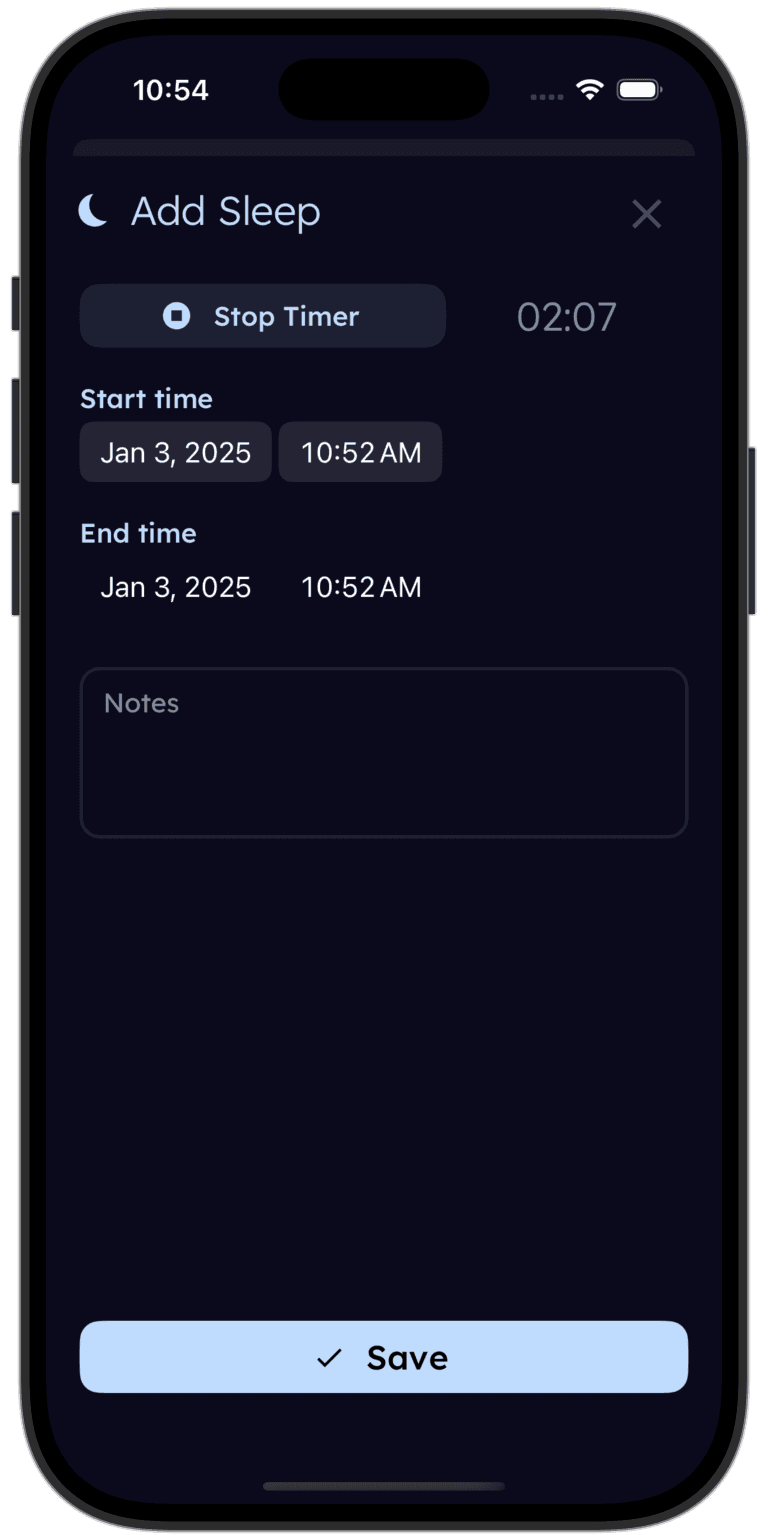
Tinylog tracks sleep so you can see what's actually working.
Log naps, nighttime stretches, and wake windows. See whether that new swaddle or sleep sack is actually making a difference — or if you're just having a good night.


Comfort and Fabric
Both products use quality materials, but the options differ.
Love to Dream offers three fabric weights: Lite (0.2 TOG for warm rooms), Original (1.0 TOG for standard rooms), and Warm (2.5 TOG for cooler rooms). They also have a bamboo-blend version that is silky soft and naturally temperature-regulating. The fabric has a snug, stretchy feel — think fitted activewear for babies.
Nested Bean offers a Classic muslin (0.5 TOG), a Cotton version (1.0 TOG), and a Winter weight (2.5 TOG). The fabric is softer and more relaxed — less compression, more like a cozy wearable blanket. The weighted pad is filled with non-toxic polyester beads and is sewn in securely.
If your nursery runs warm, the Love to Dream Lite and the Nested Bean Classic are both good lightweight options. For cold-weather nurseries, both brands offer heavier-weight versions that work well.
| Product | Typical Price | Cost Per Diaper | Monthly Estimate |
|---|---|---|---|
| Love to Dream Swaddle Up Original (Stage 1) | $28–$34 | — | One-time purchase |
| Love to Dream Swaddle Up Stage 2 (transition) | $32–$38 | — | One-time purchase |
| Nested Bean Zen Sack (Classic, single) | $36–$42 | — | One-time purchase |
| Nested Bean Zen Sack (2-pack bundle) | $58–$68 | — | One-time purchase; saves ~$10–$15 vs. buying two singles |
Price: Not Cheap, But Not Recurring
Unlike diapers or formula, swaddles and sleep sacks are one-time purchases per size. That takes some of the sting out of the price tag.
The Love to Dream Swaddle Up runs about $28–$38 depending on the stage and fabric. If you buy Stage 1 and Stage 2 separately, you are looking at roughly $60–$70 total for the full swaddle journey. Most parents buy at least two (one to wear, one in the wash), so budget closer to $55–$75 for a pair.
The Nested Bean Zen Sack is slightly more expensive per unit at $36–$42 for a single sack. The 2-pack bundle brings the per-sack cost down. You will likely need to size up once during the first year, so plan on buying 2–3 sacks total, running about $70–$100 over the full sleep-sack period.
Worth it? If either product buys you even one extra hour of sleep per night, most parents would say the cost pays for itself many times over.
Choose the Love to Dream Swaddle Up If
- Your baby is under 4 months and still has a strong Moro (startle) reflex
- Your baby fights traditional arms-down swaddles and prefers hands near their face
- You need maximum startle reflex dampening for longer sleep stretches
- Your baby self-soothes by touching their face or sucking their hands through fabric
- You want a clear transition path (Stage 1 to Stage 2 with removable wings)
Choose the Nested Bean Zen Sack If
- Your baby is past the swaddle stage (rolling or close to it) and needs a sleep sack
- Your baby sleeps better with gentle pressure on their chest — similar to a parent's hand
- You want a single product that works from newborn through toddlerhood
- Your baby wakes frequently and you want to try the weighted soothing approach
- You are transitioning out of a swaddle and need the next step
- Your baby already sleeps arms-free but still needs extra comfort cues
Where to Buy
If your baby is in the newborn swaddle stage and fights traditional wraps, the Love to Dream Swaddle Up (~$30 for Original) is one of the most popular arms-up swaddles on the market. The dual zipper makes middle-of-the-night diaper changes painless, and the transition to Stage 2 is smoother than going cold turkey on swaddling.
If your baby is past the swaddle stage or you want a longer-lasting sleep sack with gentle weighted soothing, the Nested Bean Zen Sack (~$38 for a single, less per unit in the 2-pack) is a strong choice. The lightly weighted chest pad genuinely helps some babies settle faster, and the sack grows with your child through toddlerhood.
Many families end up buying both — Swaddle Up for the early months, Zen Sack for after the swaddle transition. That is not a marketing trick; it is actually a logical progression.
Tinylog earns a small commission on purchases made through these links, at no cost to you.
Before you buy, it's worth checking promo.new for a deal. It doesn't cover everything, but we've had good luck with it.
The Bottom Line
The Love to Dream Swaddle Up and Nested Bean Zen Sack are both well-made, thoughtfully designed sleep products — but they serve different purposes at different stages.
Love to Dream Swaddle Up is the pick for newborns who need startle reflex control and prefer an arms-up position. It does one thing extremely well: keeping tiny arms contained in a natural position so babies stop waking themselves up.
Nested Bean Zen Sack is the pick for babies who are past swaddling or who respond well to gentle weighted pressure on their chest. It has a longer useful life and works as a year-round sleep sack with the added comfort of simulated touch.
If your baby is under 4 months with a strong startle reflex, start with the Swaddle Up. If your baby is older or already sleeping arms-free, go with the Zen Sack. And if you are in that messy transition period between 3–5 months, you might end up grateful to have both.
If you are tracking your baby's sleep — which is genuinely helpful for figuring out whether a new product is making a difference — Tinylog makes it easy to log naps, nighttime stretches, and wake windows over time.
Related Guides
- Baby Sleep Schedule — How much sleep your baby needs by age
- Sleep Regression — What to expect and how to survive it
- Baby Feeding Chart — How much your baby should eat by age
- Newborn Essentials — What you actually need vs. what the registry says
Sources
- LoveToDeam.com. "Swaddle Up Original — Product Information." 2026.
- NestedBean.com. "Zen Sack Classic — Product Information and Clinical Study." 2026.
- International Hip Dysplasia Institute. "Hip-Healthy Swaddling." hipdysplasia.org.
- American Academy of Pediatrics. "Safe Sleep Recommendations." aap.org, 2025.
- Consumer Reports. "Best Swaddles and Sleep Sacks." consumerreports.org, 2026.
- BabyGearLab. "Best Baby Swaddles of 2026." babygearlab.com.
- WhatToExpect.com. "When to Stop Swaddling Your Baby." whattoexpect.com, 2025.
This guide is for informational purposes only. Always follow the American Academy of Pediatrics safe sleep guidelines. If your baby is rolling, stop swaddling immediately and transition to an arms-free sleep sack. Consult your pediatrician with any questions about your baby's sleep safety.
Frequently asked questions
- Can I use the Love to Dream Swaddle Up and the Nested Bean Zen Sack at the same time?
- No. You should not layer a weighted sleep sack over a swaddle. Use one or the other based on your baby's developmental stage. Once your baby shows signs of rolling and you need to transition out of the swaddle, that is the natural time to move to a sleep sack like the Zen Sack.
- When should I switch from the Love to Dream Swaddle Up to the Nested Bean Zen Sack?
- Most babies transition out of swaddling between 3 and 5 months, once they start showing signs of rolling. The Love to Dream Swaddle Up Stage 2 has removable wings for gradual transition. After that, a sleep sack like the Nested Bean Zen Sack is a solid next step.
- Is the Nested Bean Zen Sack safe for newborns?
- Yes. Nested Bean markets the Zen Sack from newborn size. The weighted pad (about 3–5 oz depending on size) sits on the chest and meets Consumer Product Safety Commission guidelines. Always follow safe sleep practices and place baby on their back.
- Why does the Love to Dream Swaddle Up keep arms up instead of down?
- Many newborns naturally sleep with their arms raised beside their head. The Swaddle Up works with that instinct rather than against it, which can help babies who fight traditional arms-down swaddles. The contained arms still dampen the Moro (startle) reflex.
- Does the weighted pad on the Nested Bean Zen Sack actually help babies sleep longer?
- Nested Bean cites a clinical study showing babies in the Zen Sack fell asleep faster and had fewer nighttime wakings. Individual results vary. Some parents see a dramatic improvement, others notice little difference. The weight is very gentle — think of it as a light, steady pressure rather than a heavy blanket.
- Are both products machine washable?
- Yes. Both the Love to Dream Swaddle Up and the Nested Bean Zen Sack are machine washable and dryer safe, which is important because you will be washing them constantly.