
GUIDE
Lovevery The Play Gym vs. Skip Hop Grow-with-Me Activity Center
Published on
These are genuinely different products solving different problems. Lovevery is a premium floor-play gym for newborns through 12 months focused on Montessori-style sensory development. Skip Hop is a multi-stage activity center that converts from bouncer to toddler table, lasting from 4 months to 4 years. Your pick depends on your baby's age and what kind of play you want to encourage.
Comparing a play gym to an activity center is a bit like comparing a yoga mat to a treadmill — both are exercise, but they serve different purposes. Lovevery focuses on open-ended, baby-led floor play during the first year. Skip Hop gives your baby a supported standing station with 360-degree toy access that later converts into furniture. Many families end up wanting both at different stages.
Log tummy time, play sessions, and developmental milestones
Okay So These Are Totally Different Products
Real talk. Comparing Lovevery The Play Gym to the Skip Hop Grow-with-Me Activity Center is a little bit like comparing a library to a playground. Both are great for your kid. Both support development. But they do it in completely different ways.
Lovevery The Play Gym is a floor-based play mat with a wooden arch, designed from birth through 12 months. It is built around Montessori principles — think high-contrast cards, organic teethers, batting toys, and a hidden-object flap system that changes as your baby grows. The whole thing is gorgeous and Instagram-friendly, and it comes with a play guide that actually tells you what to do with it at each stage.
Skip Hop Grow-with-Me Activity Center is a 360-degree rotating activity station where your baby sits upright (supported) and plays with attached toys. Starting at 4 months, it converts into a pull-up cruiser and eventually a toddler activity table that can last until age 4.
Most families who are comparing these two are really asking: what does my baby need right now, and what will get the most use over time?
| Feature | Lovevery The Play Gym | Skip Hop Activity Center | What It Means |
|---|---|---|---|
| Manufacturer | Lovevery | Skip Hop (Carter's / Hanes) | Lovevery is a developmental toy company. Skip Hop is a baby gear brand owned by Carter's. |
| Product type | Floor play gym with wooden arch | 3-in-1 upright activity center | Fundamentally different designs. Floor play vs. supported standing play. |
| Age range | 0–12 months | 4 months – 4 years | Skip Hop covers a much wider age range thanks to its 3-stage conversion. |
| Price | ~$140 | ~$100 | Lovevery costs more upfront. Skip Hop offers more years of use per dollar. |
| Materials | Organic cotton, sustainably sourced wood, baby-safe silicone | BPA-free plastic, fabric seat, plastic toys | Lovevery wins on material quality. Skip Hop is standard baby-gear plastic — safe but not premium. |
| Developmental approach | Montessori-inspired, 5 learning zones, open-ended play | Interactive toys, 360-degree rotating seat, cause-and-effect play | Different philosophies. Lovevery is hands-off exploration. Skip Hop is stimulation-forward. |
| Portability | Lightweight — easy to move between rooms or take to grandma's | Bulky — stays in one spot once assembled | Lovevery is significantly more portable. Skip Hop is furniture-sized. |
| Tummy time support | Yes — includes tummy time pillow and mirror | No — baby is upright | Lovevery actively supports tummy time. Skip Hop is a different kind of play entirely. |
| Convertibility | Play mat continues as general-purpose floor mat | Converts from activity center → cruiser → toddler table | Skip Hop has a clear edge. Three distinct products in one. |
| Included play guides | Yes — stage-by-stage guide with activity ideas | No | Lovevery's included guides are genuinely useful for first-time parents. |
| Floor space needed | ~24" × 38" mat footprint | ~32" diameter (circular base) | Both need a decent chunk of floor real estate. Skip Hop is bulkier in 3D. |
| Cleanup | Machine-washable mat and accessories | Wipe-down plastic frame, machine-washable seat pad | Both are reasonably easy to clean. Lovevery goes in the wash. Skip Hop wipes down. |
The Developmental Philosophy Gap
This is where things get interesting and also where parents get into heated debates in the comments section of every parenting blog.
Lovevery is designed around the idea that babies learn best through open-ended, self-directed play on the floor. The five developmental zones on the mat are intentionally minimal — a crinkle sound here, a mirror there, a teether attached to the arch. The goal is for your baby to discover things at their own pace without overstimulation. The included play guide walks you through what to introduce and when, based on developmental research.
Skip Hop takes a more stimulation-forward approach. The activity center has lights, spinning toys, a piano, a bead maze, and a bouncy seat. Your baby is surrounded by things to grab, press, spin, and bang. This is cause-and-effect play — your baby does a thing, the toy responds.
Neither approach is wrong. Montessori folks will tell you that too much stimulation can be overwhelming. Mainstream pediatric occupational therapists will tell you that cause-and-effect toys build important cognitive connections. The research supports both styles of play as beneficial.
The real question is what your baby responds to. Some babies are deeply content exploring a wooden ring for twenty minutes. Others lose their minds with boredom on a play mat and light up the second they are in an activity center. You know your kid.
The Age Gap Problem
Here is the thing nobody mentions in most comparison articles: these products do not even overlap much in age range.
Lovevery starts at birth. Skip Hop starts at 4 months (your baby needs head and neck control to sit in it safely). So for the first four months of your baby's life, the Skip Hop is not even an option.
And here is the flip side: by 12 months, most babies have outgrown the Lovevery gym. They are cruising, pulling up, maybe walking. A floor mat with dangling toys is no longer the main event. Meanwhile, the Skip Hop is converting into a pull-up cruiser and then a toddler table that stays useful for years.
So the overlap window is really just 4–12 months. That is the only period where you are genuinely choosing between them. Before 4 months, you need something like Lovevery. After 12 months, you need something like Skip Hop.
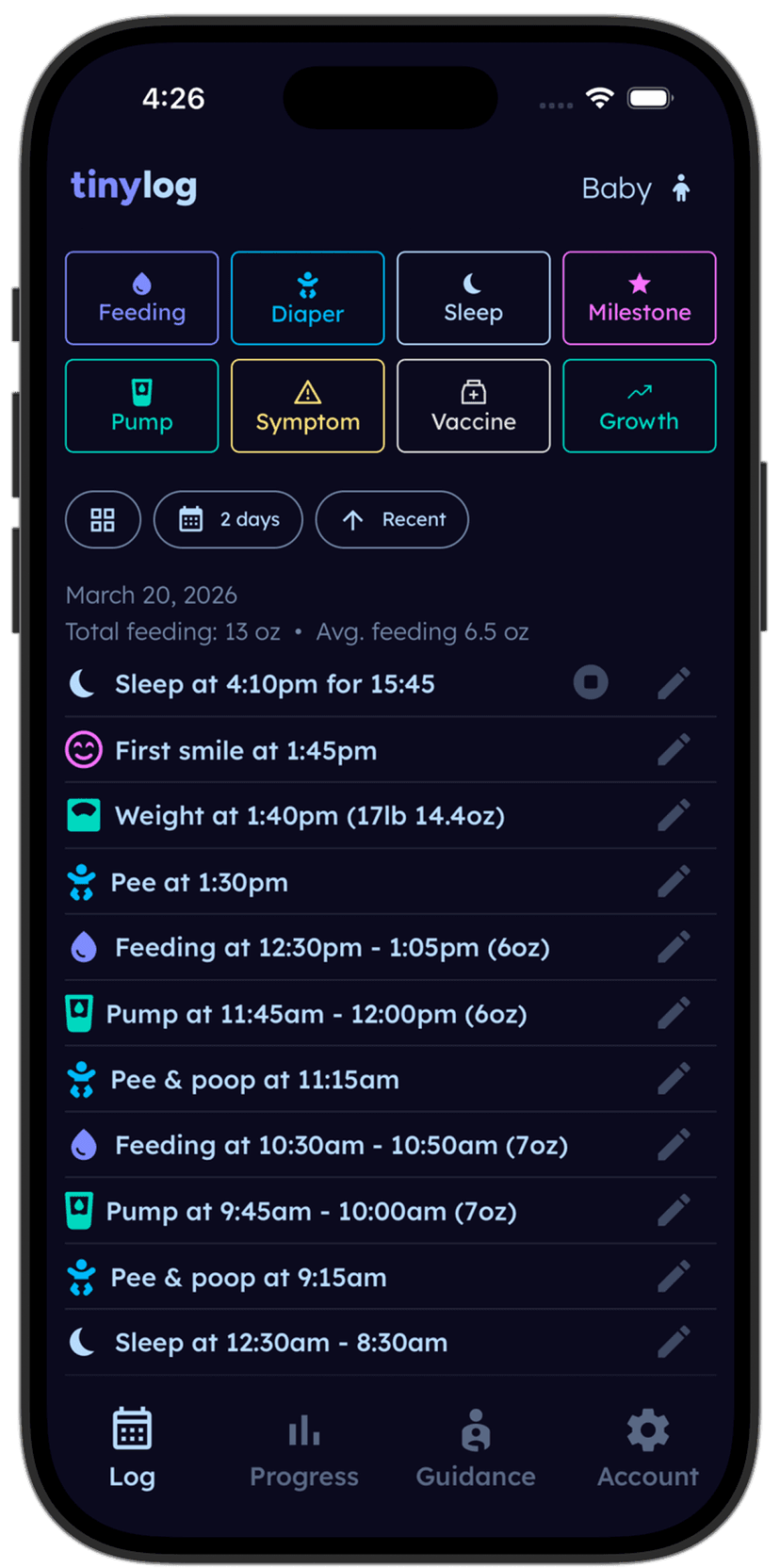
Tinylog tracks milestones so you can see the big picture.
Log tummy time, play sessions, and developmental milestones. See patterns over weeks and months. Share progress with your pediatrician.


Materials: Where Lovevery Pulls Ahead
If you care about what your baby is putting in their mouth (and they will put everything in their mouth), Lovevery wins this category hands down.
The Play Gym uses organic cotton for the mat and play accessories, sustainably sourced wood for the arch, and baby-safe silicone for the teether. Everything is OEKO-TEX certified and designed with a no-toxic-chemicals-ever mentality. The mat is machine washable, which you will appreciate the first time your baby spits up on it (so, day one).
Skip Hop uses standard BPA-free plastic for the frame and toys, with a fabric seat pad that is machine washable. The materials are perfectly safe and meet all US safety standards. But they are not organic, not sustainably sourced, and not the kind of thing you feel great about your baby gnawing on for an hour.
This matters more to some families than others. If non-toxic and organic materials are high on your priority list, Lovevery charges a premium for a reason.
| Product | Typical Price | Cost Per Day of Use | Monthly Cost (Amortized) |
|---|---|---|---|
| Lovevery The Play Gym | $130–$150 | ~$0.36–$0.41/day | ~$11–$13/month over 12 months |
| Skip Hop Grow-with-Me Activity Center | $85–$110 | ~$0.06–$0.08/day | ~$2–$2.50/month over 4 years |
The Real Cost Conversation
Lovevery costs about $140. Skip Hop costs about $100. But sticker price is not the full story.
When you break it down by cost per month of actual use, Skip Hop is dramatically cheaper:
- Lovevery: ~$140 spread over 12 months = roughly $12/month
- Skip Hop: ~$100 spread over 42 months = roughly $2.40/month
That is a five-to-one difference in long-term value. The Skip Hop gives you a bouncy activity center, a pull-up cruiser, and a toddler table — three products for the price of one.
But here is the counterargument: Lovevery resells incredibly well. A used Lovevery Play Gym in good condition goes for $80–$100 on Facebook Marketplace and Mercari. That brings your effective cost down to $40–$60 for a year of use. Skip Hop resale value is lower — usually $30–$50 used.
So the gap narrows if you plan to resell. Factor that in.
Choose Lovevery The Play Gym If
- Your baby is under 4 months and you need something right now
- You want to encourage tummy time and floor-based sensory exploration
- Organic, non-toxic materials are a priority for you
- You like having a guided, research-backed play framework
- You want something portable you can toss in the car for trips
Choose Skip Hop Grow-with-Me Activity Center If
- Your baby is 4+ months and has solid head control
- You want something that lasts well into toddlerhood
- You need a safe spot to put baby down while you cook or take a breath
- You like the idea of one product converting through three stages
- Budget matters — more months of use per dollar spent
- Your baby loves being upright and hates being on the floor (you know the type)
Where to Buy
If Montessori-style floor play and premium materials speak to you, the Lovevery The Play Gym (~$140) is one of the most thoughtfully designed baby products on the market. The organic cotton, wooden arch, and included play guides make it a standout for the first year. It also photographs ridiculously well, if that matters to you (no judgment, it matters to everyone).
If you want something that grows with your baby for years and gives you a safe contained spot for upright play, the Skip Hop Grow-with-Me Activity Center (~$100) is hard to beat on value. Three stages, four years of use, and a price point that does not require a deep breath before clicking buy.
Honestly though? If your budget allows it, these two products complement each other perfectly. Lovevery for the early months of floor play and tummy time. Skip Hop once your baby wants to be upright and bouncing. That combo covers you from birth through preschool.
Tinylog earns a small commission on purchases made through these links, at no cost to you.
Want to save a few bucks? promo.new is worth a quick look. It won't always have your product, but when it does, the savings are real.
The Bottom Line
Lovevery The Play Gym and the Skip Hop Grow-with-Me Activity Center are not really competitors. They are complementary products that serve different developmental stages and play styles.
Lovevery The Play Gym is the better choice for newborns through 12 months — premium materials, Montessori-aligned design, tummy time support, and a beautiful, portable play mat that comes with a genuinely helpful stage-by-stage guide.
Skip Hop Grow-with-Me Activity Center is the better choice for babies 4 months and up who want to be upright — three-stage conversion, years of use, contained play that gives you five minutes to drink coffee while it is still warm, and a price tag that respects your bank account.
If you can only pick one and your baby is under 4 months, get the Lovevery. If your baby is over 4 months and you want maximum longevity, get the Skip Hop. If you can swing both, get both — they solve different problems and your baby will love them for different reasons.
If you are tracking tummy time and play milestones — which is genuinely useful for spotting developmental progress — Tinylog makes it simple to log sessions and share the data with your pediatrician.
Related Guides
- Tummy Time Guide — When to start, how long, and what to do when your baby hates it
- Baby Milestones — Month-by-month developmental milestones in the first year
- Baby Feeding Chart — How much your baby should eat by age
- Best Baby Play Mats — Top play mats compared for safety, comfort, and value
Sources
- Lovevery.com. "The Play Gym — Product Information." 2026.
- SkipHop.com. "Grow-with-Me Activity Center — Product Information." 2026.
- American Academy of Pediatrics. "Back to Sleep, Tummy to Play." healthychildren.org, 2025.
- Montessori, Maria. "The Absorbent Mind." Originally published 1949; referenced for developmental play principles.
- Consumer Reports. "Best Baby Activity Centers and Play Gyms." consumerreports.org, 2026.
- BabyGearLab.com. "Best Baby Gyms and Activity Centers of 2026." babygearlab.com.
- WhatToExpect.com. "Best Baby Play Mats and Gyms." whattoexpect.com, 2026.
This guide is for informational purposes only. Product recommendations are based on publicly available features and pricing. Always supervise your baby during play and follow manufacturer guidelines for age and weight limits. Consult your pediatrician if you have questions about your baby's developmental milestones.
Frequently asked questions
- Can I use Lovevery The Play Gym from birth?
- Yes. Lovevery The Play Gym is designed for newborns from day one through about 12 months. It includes a batting gym, card holder, and play zones specifically designed for each developmental stage in the first year.
- What age is the Skip Hop Grow-with-Me Activity Center for?
- Skip Hop recommends starting at 4 months (when baby has head control) through about 4 years. Stage 1 is a supported activity center, Stage 2 is a pull-up cruiser, and Stage 3 converts to a toddler play table.
- Is Lovevery The Play Gym worth $140?
- If you value Montessori-aligned design, organic cotton materials, and a research-backed approach to sensory development, many parents say yes. The included play guides for each stage add real value. If you want something your child will use past 12 months, the Skip Hop offers longer total use.
- Can a baby sleep in the Skip Hop activity center?
- No. The Skip Hop Grow-with-Me Activity Center is not designed or safe for sleep. It is an upright activity station. Babies should always sleep on a firm, flat surface following AAP safe sleep guidelines.
- Do I need both a play gym and an activity center?
- Many families find value in both because they serve different developmental purposes. Play gyms support floor-based sensory exploration and tummy time (best for 0–12 months). Activity centers support upright play, standing, and bouncing (best from 4+ months). They are complementary, not competing products.
- Is the Lovevery play mat machine washable?
- The Lovevery Play Gym mat and organic cotton play accessories are machine washable. The wooden arch frame wipes clean. Always check the care label for current washing instructions.