
GUIDE
Philips Avent Natural vs. Chicco Duo Hybrid
Published on
Both are solid baby bottles with anti-colic features. The Philips Avent Natural excels in breast-to-bottle transition with its wide nipple and Natural Response flow system. The Chicco Duo Hybrid stands out with its inverted nipple design and the flexibility to switch between plastic and glass shells.
Choosing a baby bottle feels like it should be simple, but any parent who has dealt with a baby refusing a bottle knows better. The Philips Avent Natural and Chicco Duo Hybrid take different approaches to solving the same problems — reducing colic, mimicking breastfeeding, and making cleanup manageable. The best bottle is the one your baby actually accepts.
Log bottles, nursing, and pumping
Two Popular Bottles — One Real Question
The Philips Avent Natural and Chicco Duo Hybrid are both well-regarded baby bottles, but they solve the feeding puzzle differently. The Avent Natural focuses on mimicking the breast with a wide, natural-shaped nipple and a flow system that only releases milk when your baby actively sucks. The Chicco Duo Hybrid bets on material flexibility — letting you swap between glass and plastic shells within the same bottle system.
Here is what actually matters: your baby decides. Some babies latch onto one bottle shape immediately and refuse everything else. Others are not picky at all. No amount of marketing copy changes the fact that you may need to try both before you know which one works.
We broke down the design, materials, anti-colic features, and real costs so you can make a more informed first purchase — and waste less money on bottles that collect dust.
| Feature | Philips Avent Natural | Chicco Duo Hybrid | What It Means |
|---|---|---|---|
| Manufacturer | Philips (Philips Avent line) | Chicco (Artsana Group) | Both are well-established baby product brands with decades of market presence. |
| Bottle material | Polypropylene (BPA-free plastic) | Hybrid — silicone sleeve with interchangeable plastic or glass inner shell | Chicco wins on flexibility. You can swap between glass (at home) and plastic (on the go). |
| Nipple design | Wide, breast-shaped with Natural Response system | Inverted nipple that mimics breast shape during feeding | Different approaches to the same goal. Avent's is wider; Chicco's inverts to sit closer to a natural latch. |
| Anti-colic system | Integrated AirFree vent | Anti-colic valve at nipple base | Both reduce air intake. Avent's AirFree vent is more prominent in design; Chicco's is simpler. |
| Flow rates available | Newborn, 1M+, 3M+, 6M+, variable flow | Slow, medium, fast flow | Avent offers more granular flow stages. Chicco keeps it simpler with three options. |
| Capacity options | 4 oz and 9 oz | 5 oz and 8 oz | Similar range. Avent's 9 oz is slightly larger for older babies who take bigger feeds. |
| Number of parts | 3 pieces + nipple | 4–5 pieces (shell, sleeve, nipple, collar, cap) | Avent is simpler to assemble and clean. Chicco has more parts due to its dual-shell system. |
| Dishwasher-safe | Yes — top rack | Yes — top rack (both plastic and glass shells) | Tie. Both are dishwasher-safe. |
| Glass option | Separate Avent Natural Glass bottle available | Built into the Duo Hybrid system (swappable shell) | Chicco's approach is more elegant — same bottle, swap the shell. Avent requires buying a different bottle. |
| Wide-neck design | Yes — wide neck for easy filling and cleaning | Yes — wide neck | Tie. Both are easy to fill, mix formula in, and scrub with a bottle brush. |
| Compatibility with breast pumps | Compatible with Philips Avent breast pumps (direct attach) | No direct breast pump compatibility | Avent wins if you use a Philips Avent pump — pump directly into the bottle with no transfer needed. |
Nipple Design: The Most Important Difference
The nipple is the part your baby actually interacts with, so this is where the real comparison starts.
Philips Avent Natural uses a wide, breast-shaped nipple with what Philips calls the Natural Response system. The nipple only releases milk when the baby actively compresses it — similar to how breastfeeding works. This means the baby controls the pace, which can reduce overfeeding and excess air intake. The wide shape also encourages a wide latch, which lactation consultants generally prefer for babies switching between breast and bottle.
Chicco Duo Hybrid uses an inverted nipple design that elongates during feeding to mimic the shape of the breast inside the baby's mouth. The idea is that the nipple shape during active feeding more closely resembles what happens during breastfeeding, even though the resting shape looks different from a traditional bottle nipple.
Both designs aim to reduce nipple confusion. Neither is guaranteed to work for your specific baby. If you are breastfeeding and introducing a bottle, buy one of each before committing to a full set.
The Glass vs. Plastic Question
This is where the Chicco Duo Hybrid has a genuine advantage over most competitors, including the Avent Natural.
The Duo Hybrid's silicone sleeve accepts both a plastic inner shell and a glass inner shell. You buy the shells separately and swap them depending on the situation. Glass at home where weight does not matter and you want the easiest-to-clean, most chemically inert option. Plastic at daycare, in the diaper bag, or anywhere you worry about breakage.
Philips Avent does offer a separate Natural Glass bottle, but it is a completely different product — different shape, different weight, and your baby may or may not accept it the same way. The Chicco system keeps everything consistent for the baby regardless of which shell you use.
If you care about using glass bottles but also need the practicality of plastic, the Chicco Duo Hybrid is the more thoughtful design.
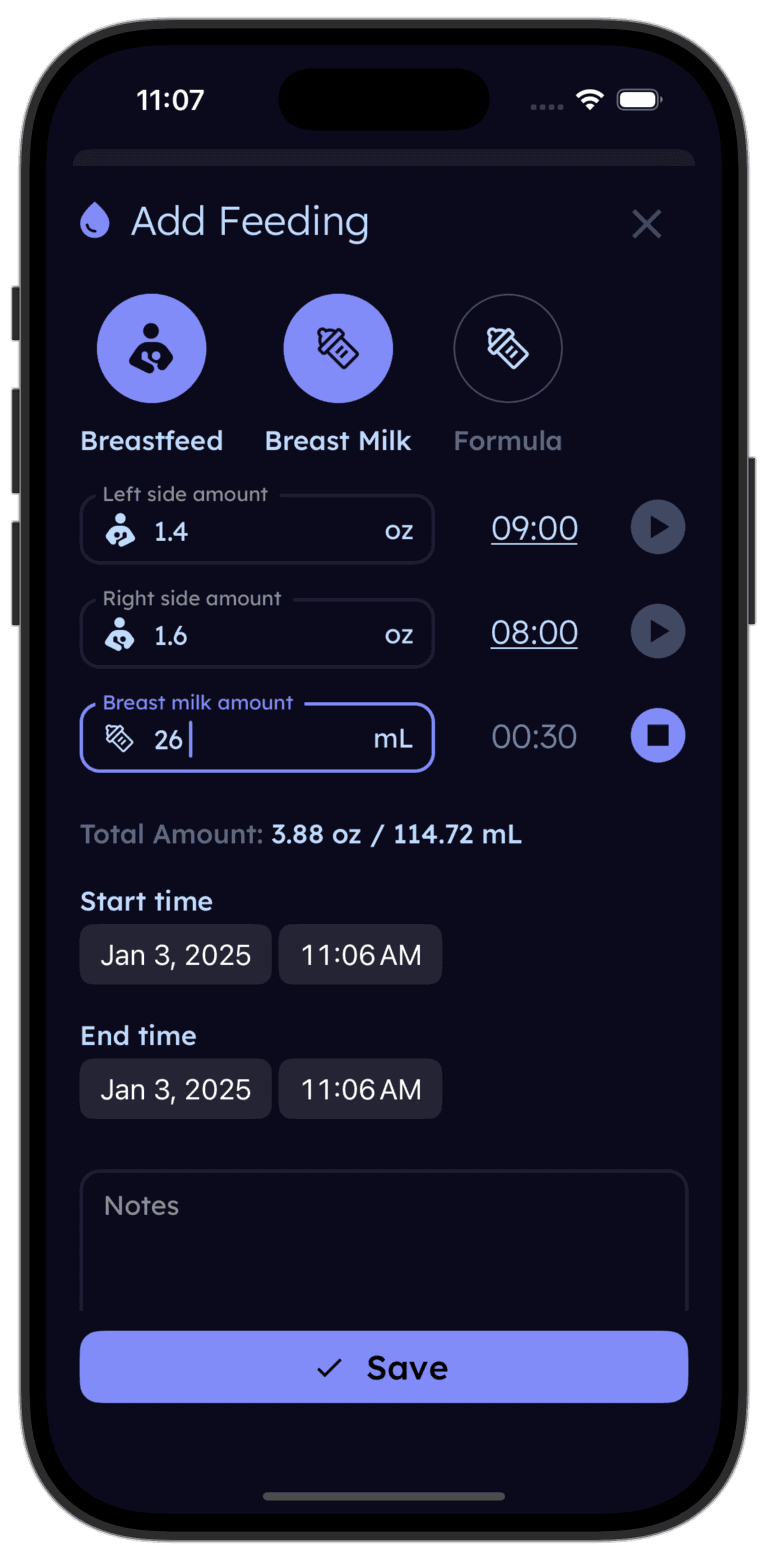
Tinylog tracks bottle feedings so you can spot patterns.
Log bottle size, formula type, intake amounts, and feeding times. See trends over days and weeks. Bring the data to your next pediatrician visit.


Anti-Colic: Both Try, Results Vary
Gas, spit-up, and general fussiness after feeding are among the top concerns for new parents. Both bottles include anti-colic features, but the engineering is different.
Philips Avent Natural has an AirFree vent built into the nipple assembly. When the bottle is held at an angle, the vent keeps the nipple full of milk rather than air. This reduces the amount of air your baby swallows during feeding. Philips claims this reduces colic, gas, and reflux — and many parents report real improvement.
Chicco Duo Hybrid uses a simpler anti-colic valve at the base of the nipple. It allows air into the bottle to prevent vacuum buildup (which causes nipple collapse and frustration) while directing air away from the milk flow.
The honest take: anti-colic bottle features help some babies and make no noticeable difference for others. If your baby has significant gas or reflux issues, the bottle design is only one factor. Feeding position, burping technique, and formula type all play a role. Talk to your pediatrician if colic symptoms persist regardless of which bottle you use.
| Product | Typical Price | Cost Per Bottle | Replacement Nipples |
|---|---|---|---|
| Philips Avent Natural, 4 oz (3-pack) | $18–$24 | ~$6–$8 | ~$6–$8 (2-pack) |
| Philips Avent Natural, 9 oz (3-pack) | $20–$28 | ~$7–$9 | ~$6–$8 (2-pack) |
| Chicco Duo Hybrid, 5 oz starter | $13–$17 | ~$13–$17 (single) | ~$7–$9 (2-pack) |
| Chicco Duo Hybrid, glass shell add-on | $10–$14 | ~$10–$14 (single shell) | N/A — uses same nipple |
Cost: Avent Wins on Value, Chicco Wins on Longevity
The Philips Avent Natural is the more budget-friendly option, especially in multi-packs. A three-pack of 9 oz bottles runs $20–$28, putting each bottle at roughly $7–$9. Replacement nipples are affordable and widely available.
The Chicco Duo Hybrid costs more upfront — $13–$17 for a single bottle — and the glass shells are an additional $10–$14 each. If you outfit a full feeding rotation (4–6 bottles) with both plastic and glass shells, the total cost adds up quickly.
However, the Chicco's glass shells are extremely durable and can realistically last through multiple children. Plastic bottles from any brand should be replaced every 4–6 months as they develop micro-scratches that harbor bacteria. Glass does not have this problem.
If budget is tight right now, go with the Avent Natural multi-packs. If you are thinking long-term and plan to have more than one child, the Chicco Duo's glass shells may save money over several years.
Choose Philips Avent Natural If
- Your baby is transitioning from breast to bottle and you want a wide, breast-shaped nipple
- You use a Philips Avent breast pump and want direct pump-to-bottle compatibility
- You prefer fewer parts to wash and reassemble
- You want a wider range of flow rate options as your baby grows
- Budget matters — Avent's multi-packs bring the per-bottle cost down
Choose Chicco Duo Hybrid If
- You want the option to switch between glass and plastic in the same bottle system
- Your baby responds better to an inverted nipple design
- You like using glass bottles at home but need lighter plastic for daycare or travel
- You want a bottle system that can last through multiple children (glass shells are durable)
- You prefer a more compact bottle shape that fits standard cup holders
Where to Buy
If you want the most popular option for breast-to-bottle transition, the Philips Avent Natural (~$7–$9/bottle in multi-packs) is a trusted choice — the Natural Response nipple, AirFree vent, and direct compatibility with Philips breast pumps make it a strong all-around bottle. The 3-pack on Amazon or at Target is the best value.
If material flexibility matters to you, the Chicco Duo Hybrid (~$13–$17/bottle) gives you something no other bottle does — a single system that works with both glass and plastic. The glass shells are worth the investment if you plan to use them across multiple children or simply prefer glass for home feedings.
Our honest advice: buy one of each before committing to a full set. Your baby's preference is the only review that matters.
Tinylog earns a small commission on purchases made through these links, at no cost to you.
Looking for a discount? Try checking promo.new. It doesn't always find what you're looking for, but when it does, it works like a charm.
The Bottom Line
The Philips Avent Natural and Chicco Duo Hybrid are both well-made bottles from trusted brands. The differences are meaningful but come down to priorities:
Philips Avent Natural wins on simplicity, cost, nipple flow options, breast pump compatibility, and ease of cleaning. It is the better starting point for most parents, especially those already using Philips Avent pumps.
Chicco Duo Hybrid wins on material flexibility, glass bottle integration, and long-term durability. It is the better choice for parents who want glass at home and plastic on the go without switching bottle systems entirely.
For most families, starting with the Avent Natural is the safer bet — it is more affordable, widely available, and has a strong track record with breastfed babies. But if your baby refuses it, the Chicco Duo is a worthy alternative with its own set of advantages.
If you are tracking feeds — which pediatricians recommend during the newborn period to ensure adequate intake — Tinylog makes it simple to log every bottle and see patterns over time.
Related Guides
- Baby Feeding Chart — How much your baby should eat by age
- Baby Gas — Causes, relief, and when to call your doctor
- Baby Spit-Up — Normal amounts vs. signs of reflux
- Breastfeeding Basics — Getting started with nursing and pumping
Sources
- Philips.com. "Philips Avent Natural Baby Bottle — Product Information." 2026.
- Chicco. "Chicco Duo Hybrid Baby Bottle — Product Details." chiccousa.com, 2026.
- Consumer Reports. "Best Baby Bottles From Our Tests." consumerreports.org, 2026.
- BabyGearLab. "Best Baby Bottles — Tested & Reviewed." babygearlab.com, 2026.
- WhatToExpect.com. "Best Baby Bottles for Breastfed Babies." 2026.
- American Academy of Pediatrics. "Bottle Feeding Basics." healthychildren.org, 2025.
- Mommyhood101. "Best Baby Bottles of 2026, Tested & Reviewed." mommyhood101.com.
This guide is for informational purposes only. Bottle preference varies by baby and is not a medical decision. If your baby has persistent feeding difficulties, excessive gas, or refuses to feed, consult your pediatrician or a lactation consultant.
Frequently asked questions
- Is the Philips Avent Natural or Chicco Duo better for breastfed babies?
- Both are designed for breast-to-bottle transition, but they use different approaches. The Philips Avent Natural has a wide, breast-shaped nipple with a Natural Response system that only releases milk when the baby actively drinks. The Chicco Duo has an inverted nipple that stays closer to a natural latch shape. Many breastfed babies accept the Avent Natural more readily, but some prefer the Chicco. Trial and error is unavoidable.
- Does the Chicco Duo Hybrid really work with both plastic and glass?
- Yes. The Chicco Duo Hybrid has a silicone sleeve system that accepts both a plastic inner shell and a glass inner shell. You buy the shells separately or in combo packs. This lets you use glass at home and lighter plastic when traveling.
- Which bottle is easier to clean?
- The Philips Avent Natural has fewer parts — typically three pieces plus the nipple. The Chicco Duo has more components because of its dual-shell design, which means more pieces to wash and reassemble. Both are dishwasher-safe on the top rack.
- Do both bottles have anti-colic features?
- Yes. The Philips Avent Natural uses an integrated AirFree vent designed to reduce air ingestion during feeding. The Chicco Duo has a built-in anti-colic valve at the base of the nipple. Both aim to reduce gas, spit-up, and fussiness, though results vary by baby.
- Which bottle is cheaper in the long run?
- The Philips Avent Natural is more affordable upfront and for replacements. The Chicco Duo Hybrid costs more initially, especially if you buy both glass and plastic shells. However, the glass shells can last through multiple children, which may offset the higher initial cost over time.
- Can I mix and match nipple sizes between brands?
- No. Nipples are not interchangeable between Philips Avent and Chicco. Each brand uses proprietary sizing and threading. You need to buy replacement nipples from the same brand as your bottle.