
GUIDE
Philips Avent Natural vs. Tommee Tippee Natural Start
Published on
Both are well-designed bottles that mimic breastfeeding. Philips Avent Natural offers a wider nipple with a flexible spiral design for a natural latch. Tommee Tippee Natural Start has a breast-shaped nipple with built-in anti-colic valve. Cost is similar.
Philips Avent Natural and Tommee Tippee Natural Start Anti-Colic are two of the most popular baby bottles worldwide. Both are designed to ease the transition between breast and bottle. The real differences come down to nipple shape, anti-colic mechanism, and how your specific baby latches.
Log bottles, breastfeeding, and pumping
Two Popular Bottles — Here's What Actually Sets Them Apart
Philips Avent Natural and Tommee Tippee Natural Start Anti-Colic are two of the best-selling baby bottles on the market. Both promise a natural latch, easy switching between breast and bottle, and less fuss at feeding time.
The honest truth: both are good bottles. Most babies will take to either one. But the nipple shape, anti-colic approach, and material options are genuinely different — and those differences can matter depending on how your baby feeds.
We compared the design, materials, anti-colic features, and pricing so you can pick the right bottle or feel confident that either will work.
For more on how much your baby should eat at each feeding, see our baby feeding chart.
| Feature | Philips Avent Natural | Tommee Tippee Natural Start | What It Means |
|---|---|---|---|
| Manufacturer | Philips (Avent brand) | Mayborn Group (Tommee Tippee brand) | Both are established, globally trusted baby product companies. |
| Nipple shape | Wide, rounded, petal-textured with flexible spiral design | Breast-shaped, elongated, slightly narrower profile | Different approaches to mimicking the breast. Baby preference varies widely. |
| Anti-colic system | AirFree vent sold separately; no built-in valve in standard model | Built-in anti-colic valve in the nipple | Tommee Tippee includes anti-colic out of the box. Avent requires an add-on purchase. |
| Bottle material | Polypropylene (plastic) or borosilicate glass options | Polypropylene (plastic) only | Avent wins if you want a glass option. Both plastics are BPA-free. |
| Nipple material | Silicone | Silicone | Tie. Both use medical-grade silicone nipples. |
| Nipple flow rates | 5 flow rates (0, 1, 2, 3, 4) plus variable flow | 5 flow rates (Preemie, Slow, Medium, Fast, Variable) | Both offer a full range. Avent has a slightly wider selection with its numbered system. |
| Bottle neck width | Wide neck — easy to fill and clean | Medium-wide neck | Avent's wider opening is slightly easier to scoop formula into and scrub by hand. |
| Sizes available | 4 oz (125 mL) and 9 oz (260 mL) | 5 oz (150 mL) and 9 oz (260 mL) | Similar range. Avent's 4 oz is better for early newborn feeds; Tommee Tippee's 5 oz lasts slightly longer. |
| Breast pump compatibility | Direct fit with Philips Avent breast pumps | Direct fit with Tommee Tippee breast pumps | Both work seamlessly within their own ecosystems. Adapters exist for cross-brand use. |
| Number of parts | 4 parts (bottle, nipple, ring, cap) | 4 parts (bottle, nipple, ring, cap/lid) | Tie. Both are straightforward to assemble and clean. |
| Dishwasher safe | Yes — top rack | Yes — top rack | Tie. Both brands are dishwasher-safe on the top rack. |
Nipple Design: The Difference That Matters Most
The nipple is the most important part of any baby bottle. It determines whether your baby will accept the bottle, how well they latch, and how much air they swallow.
Philips Avent Natural uses a wide, rounded nipple with a unique petal-textured surface and flexible spiral design. The idea is that the wider shape mimics the breast's natural contour, and the spiral ridges allow the nipple to flex without collapsing. This design works well for babies who prefer a wide, shallow latch.
Tommee Tippee Natural Start uses a breast-shaped nipple that's more elongated and slightly narrower at the base. It's designed to feel more like a natural breast in the baby's mouth, encouraging a deep latch. The silicone is soft and stretchy, allowing it to flex as the baby sucks.
Which is better? It depends entirely on your baby. Some babies prefer the wide, round Avent shape. Others prefer the elongated Tommee Tippee shape. There's no way to predict this — you have to try both.
Anti-Colic: Built-In vs. Add-On
This is where the two bottles take meaningfully different approaches.
Tommee Tippee Natural Start includes a built-in anti-colic valve at the base of the nipple. As your baby drinks, the valve allows air into the bottle without mixing it into the milk. This reduces the amount of air your baby swallows, which can help with gas, spit-up, and colic symptoms. It works automatically — no extra parts to buy.
Philips Avent Natural does not include a built-in anti-colic valve in the standard model. Instead, Philips sells a separate AirFree vent (~$8–$10 per vent) that attaches inside the bottle. The AirFree vent is effective, but it's an additional purchase and adds another part to clean.
If your baby has gas or colic symptoms, Tommee Tippee's built-in valve is more convenient and costs nothing extra. If your baby feeds without gas issues, Avent's simpler design (fewer internal parts) may be preferable.
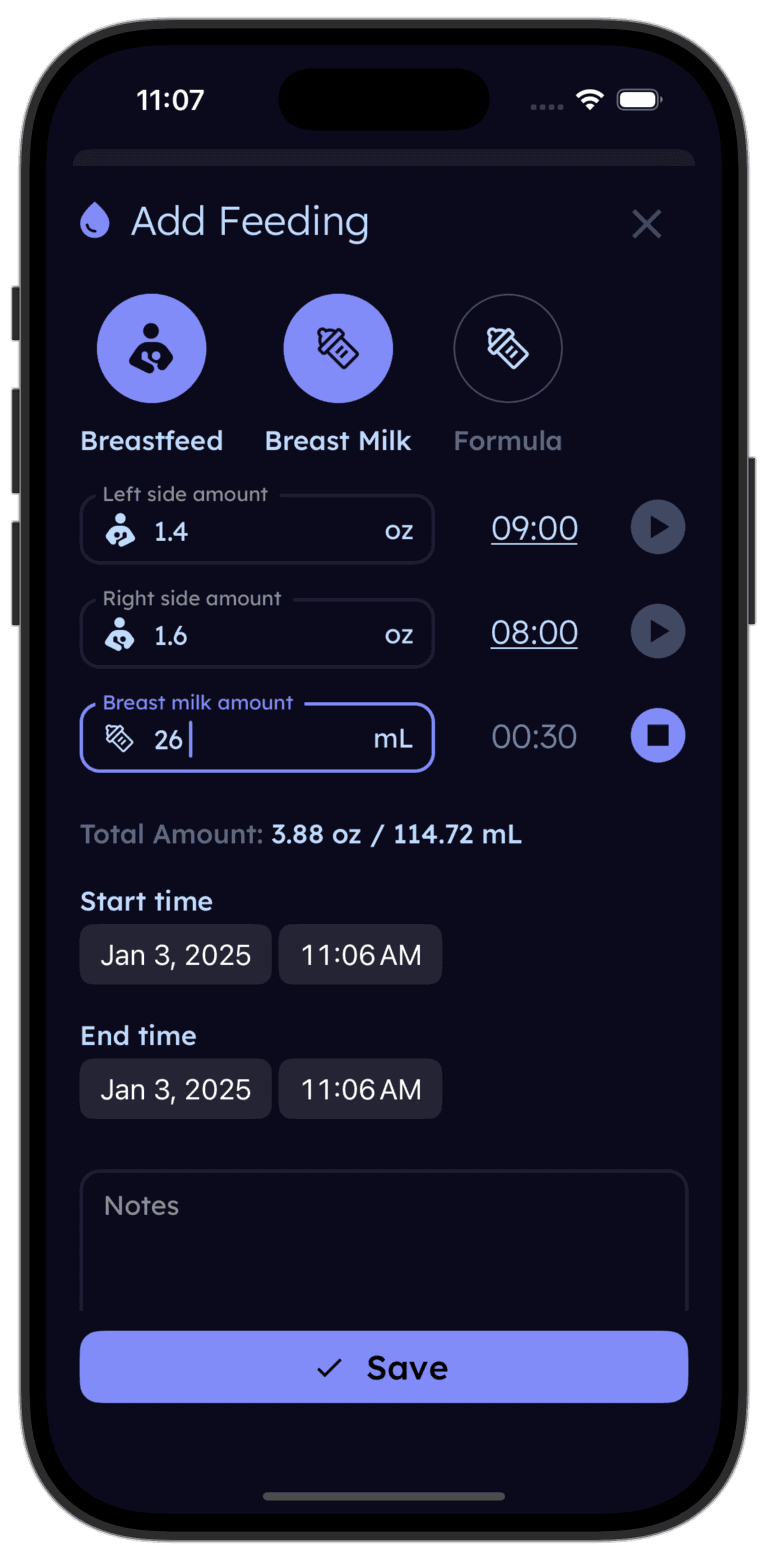
Tinylog tracks feedings so you can spot patterns.
Log bottle feeds, breastfeeding sessions, and pumping. Track volume, duration, and feeding issues over days and weeks. Bring the data to your next pediatrician visit.


Materials: Plastic, Glass, and What's Safe
Both bottles are BPA-free and use food-grade polypropylene plastic. But Philips Avent offers one thing Tommee Tippee doesn't: a glass option.
The Philips Avent Natural glass bottles are made from borosilicate glass — the same heat-resistant material used in lab equipment. Glass doesn't stain, doesn't absorb odors, and doesn't degrade over time. It's heavier, of course, and it can break if dropped. But for parents who prefer to minimize plastic use, it's a genuine advantage.
Tommee Tippee Natural Start bottles are only available in polypropylene plastic. The plastic is safe and durable, but it will eventually cloud, stain, and need replacing.
If glass matters to you, Avent is the clear winner here. If you're fine with plastic, both are equally safe.
Ease of Use: Cleaning, Assembly, and Daily Life
Both bottles have four main parts and are straightforward to assemble. But a few practical differences are worth noting.
Philips Avent Natural has a noticeably wider neck opening, making it easier to scoop formula powder into the bottle without spilling. It's also easier to get a bottle brush inside for hand-washing. The wider base sits stably on a countertop.
Tommee Tippee Natural Start has a medium-wide neck that's still easy to fill but slightly narrower than Avent. The bottle's shape is more rounded and compact, which some parents find easier to grip during feeds — especially middle-of-the-night feeds when coordination is limited.
Both are dishwasher-safe on the top rack. Both are compatible with standard microwave and electric steam sterilizers.
| Product | Typical Price | Cost Per Bottle | Replacement Nipples |
|---|---|---|---|
| Philips Avent Natural (9 oz, 3-pack) | $18–$24 | ~$6–$8 | ~$5–$7 per 2-pack |
| Tommee Tippee Natural Start (9 oz, 3-pack) | $16–$22 | ~$5–$7 | ~$5–$7 per 2-pack |
| Philips Avent Natural (4 oz, 4-pack) | $20–$26 | ~$5–$6.50 | ~$5–$7 per 2-pack |
| Tommee Tippee Natural Start (5 oz, 3-pack) | $14–$20 | ~$4.70–$6.70 | ~$5–$7 per 2-pack |
Price: Close Enough That It Shouldn't Decide
The per-bottle cost difference between Philips Avent Natural and Tommee Tippee Natural Start is typically $1–$2. Over a full set of bottles (most parents use 4–8), the total difference is under $15.
What matters more for your wallet:
- Buy multi-packs. Both brands offer value packs that reduce per-bottle cost.
- Use registry discounts. Amazon, Target, and BuyBuyBaby registries offer completion discounts of 10–15%.
- Replace nipples on schedule. Worn-out nipples flow too fast and can be a choking hazard. Budget for new nipples every 2–3 months.
- Don't stockpile before baby arrives. Buy 2–3 bottles of each brand first. Once you know which your baby prefers, stock up.
The honest answer on cost: it's nearly identical. Don't let price be the deciding factor.
Choose Philips Avent Natural If
- Your baby prefers a wider, rounder nipple shape
- You want the option of glass bottles
- You already own a Philips Avent breast pump
- You prefer a wider bottle neck for easy filling and hand-washing
- You want to buy the AirFree vent separately only if you need it
- Your baby does well without a built-in anti-colic valve
Choose Tommee Tippee Natural Start If
- Your baby prefers an elongated, breast-shaped nipple
- You want built-in anti-colic protection without buying add-ons
- Your baby struggles with gas or shows signs of colic
- You already own a Tommee Tippee breast pump
- You want a slightly lower upfront cost
- You prefer a bottle that comes colic-ready out of the box
Where to Buy
If you want the wider nipple and the option of glass, the Philips Avent Natural (~$6–$8 per bottle) is a strong choice — flexible spiral nipple, wide neck for easy cleaning, and compatibility with the Avent pump ecosystem. The glass version is worth the upgrade if you want to avoid plastic.
If built-in anti-colic protection matters most, the Tommee Tippee Natural Start Anti-Colic (~$5–$7 per bottle) delivers it without add-ons — breast-shaped nipple, integrated anti-colic valve, and a compact shape that's easy to hold during late-night feeds.
Our honest advice: buy 2–3 of each before baby arrives. The "right" bottle is whichever one your baby actually accepts, and you will not know until you try.
Tinylog earns a small commission on purchases made through these links, at no cost to you.
Want to save a few bucks? promo.new is worth a quick look. It won't always have your product, but when it does, the savings are real.
The Bottom Line
Both Philips Avent Natural and Tommee Tippee Natural Start Anti-Colic are well-made bottles designed to support breastfed and bottle-fed babies alike. The differences are real but moderate:
Philips Avent Natural edges out on nipple flexibility, wide-neck convenience, glass bottle availability, and a wider range of flow-rate options.
Tommee Tippee Natural Start edges out on built-in anti-colic protection, breast-shaped nipple profile, slightly lower price, and out-of-the-box colic readiness.
For most families, the best approach is to try both and let your baby decide. Babies are surprisingly opinionated about nipple shape, and no amount of research can substitute for a real feeding. Whichever bottle your baby latches onto calmly is the right bottle.
If you're tracking feedings — which is especially useful in the early weeks to ensure adequate intake — Tinylog makes it easy to log bottles and spot patterns over time.
Related Guides
- Baby Feeding Chart — How much your baby should eat by age
- Baby Spit-Up — What's normal and when it signals a problem
- Breastfeeding Tips — Practical advice for the first weeks
- Baby Gas — Causes, relief, and when to call your pediatrician
Sources
- Philips.com. "Philips Avent Natural Response Bottle — Product Information." 2026.
- TommeeTippee.com. "Natural Start Anti-Colic Bottles — Product Information." 2026.
- BabyGearLab. "Best Baby Bottles of 2026." babygearlab.com.
- WhatToExpect. "Best Bottles for Breastfed Babies." whattoexpect.com, 2026.
- Consumer Reports. "Best Baby Bottles From Our Tests." consumerreports.org, 2026.
- Wirecutter (NY Times). "The Best Baby Bottles." nytimes.com/wirecutter, 2026.
- HealthyChildren.org (AAP). "Bottle Feeding Basics." American Academy of Pediatrics, 2025.
This guide is for informational purposes only. Bottle choice is a personal preference based on your baby's individual needs. If your baby has persistent feeding difficulties, excessive gas, or refuses to eat, consult your pediatrician or a lactation consultant.
Frequently asked questions
- Which bottle is better for breastfed babies, Philips Avent Natural or Tommee Tippee?
- Both are designed to mimic breastfeeding, but they take different approaches. Philips Avent Natural uses a wider, petal-textured nipple with a flexible spiral design. Tommee Tippee Natural Start uses a breast-shaped nipple that's elongated and slightly narrower. Many lactation consultants recommend trying both — the 'better' bottle is whichever one your baby latches onto without fuss.
- Does the Tommee Tippee Natural Start really reduce colic?
- Tommee Tippee Natural Start bottles have a built-in anti-colic valve in the nipple that vents air away from milk. This can reduce the amount of air a baby swallows, which may help with gas and colic symptoms. However, no bottle can cure colic — it's a complex condition with multiple possible causes.
- Are Philips Avent Natural bottles BPA-free?
- Yes. Both Philips Avent Natural and Tommee Tippee Natural Start bottles are BPA-free. Philips Avent offers bottles in both polypropylene (plastic) and borosilicate glass. Tommee Tippee Natural Start bottles are made from polypropylene plastic.
- Which bottle is easier to clean?
- Philips Avent Natural bottles have fewer parts — typically just the bottle, nipple, ring, and cap. Tommee Tippee Natural Start bottles have a similar number of parts. Both are dishwasher-safe. Philips Avent's wider neck makes it slightly easier to scrub by hand.
- Can I mix and match nipples between Philips Avent and Tommee Tippee?
- No. The nipples are not interchangeable. Each brand uses a proprietary ring and nipple design. You'll need to buy replacement nipples from the same brand as your bottles.
- Which bottle is cheaper in the long run?
- Pricing is very close. Philips Avent Natural bottles tend to cost slightly more per bottle upfront, but replacement nipples are comparably priced. Tommee Tippee replacement nipples cost roughly the same. Over a year of bottle feeding, the total cost difference is minimal — usually under $15.