
GUIDE
Philips Avent Soothie vs. NUK Timeless Comfy Pacifier
Published on
Both are solid pacifiers backed by decades of use. The Avent Soothie is a hospital staple made from one piece of medical-grade silicone. The NUK Timeless Comfy uses an orthodontic nipple shape designed to support jaw development. Your baby's preference will likely be the deciding factor.
Pacifiers are one of those baby products where brand loyalty runs deep — mostly because your baby decides for you. The Philips Avent Soothie and NUK Timeless Comfy represent two fundamentally different design philosophies: round symmetrical nipple vs. orthodontic asymmetrical nipple. Understanding the differences helps you make a smarter first purchase.
Log feeds, sleep, and soothing habits
Two Very Different Pacifier Designs — One Goal
The Philips Avent Soothie and NUK Timeless Comfy are both wildly popular pacifiers, but they take completely different approaches to solving the same problem: keeping your baby calm and satisfied between feedings.
The Soothie is the one your hospital probably handed you. It is a single piece of medical-grade silicone with a round, symmetrical nipple. No plastic, no seams, no fuss. It has been a NICU workhorse for years.
The NUK Timeless Comfy uses an orthodontic nipple — flat on the bottom, rounded on top — designed to fit the natural shape of a baby's palate. It has a heart-shaped shield that tucks under the nose and comes in colors and patterns that actually look nice on your baby.
Both work. The question is which design your particular baby prefers, because at the end of the day, babies are the ultimate product reviewers.
For tips on how pacifier use relates to feeding schedules, see our baby feeding chart.
| Feature | Philips Avent Soothie | NUK Timeless Comfy | What It Means |
|---|---|---|---|
| Manufacturer | Philips (Avent line) | NUK (Jarden Corporation) | Both are well-established baby brands with decades in the pacifier market. |
| Nipple shape | Round, symmetrical | Orthodontic, asymmetrical (flat bottom, rounded top) | Different philosophies. Soothie goes symmetrical for easy placement. NUK mimics a natural latch shape. |
| Material | One-piece medical-grade silicone | Silicone nipple with BPA-free plastic shield | Soothie's one-piece design means fewer crevices for bacteria. NUK's two-piece allows a lighter, more ergonomic shield. |
| Hospital use | Widely used in US hospitals and NICUs | Not commonly distributed in hospitals | Soothie wins on hospital pedigree. Many babies first encounter it in the nursery. |
| Newborn sizing | 0–3 months size available | 0–6 months size available | Soothie offers a smaller newborn size. NUK's smallest covers a broader age range. |
| Shield design | Rounded, soft silicone — no hard edges | Heart-shaped plastic shield with ventilation holes | NUK's heart shape sits under the nose for easier breathing. Soothie's soft shield is gentler on skin. |
| Ease of cleaning | Dishwasher-safe, one-piece means no disassembly | Dishwasher-safe, but two-piece design has more crevices | Soothie is simpler to sterilize. NUK requires more attention around the nipple-shield joint. |
| Stays in mouth | Can fall out easily in younger babies | Orthodontic shape and shield contour help retention | NUK tends to stay put better once baby learns the shape. Soothie's round nipple is easier to push out. |
| Weight | Very light (~10 g) | Slightly heavier (~15 g) due to plastic shield | Minimal difference. Both are light enough for newborns to hold in their mouths comfortably. |
| BPA / BPS free | Yes — 100% silicone, no plastic components | Yes — BPA-free plastic shield, silicone nipple | Tie. Both are free of BPA. Soothie eliminates plastic entirely. |
| Color and style options | Limited — mostly green, blue, pink | Wide range of colors and printed designs | NUK wins on aesthetics. Soothie keeps it simple. |
The Nipple Shape Debate: Round vs. Orthodontic
This is the core difference between these two pacifiers, and it matters more than most parents realize.
The Soothie has a round, symmetrical nipple. You can pop it in your baby's mouth any which way and it works the same. This is especially handy at 3 AM when you are operating on fumes and do not want to think about which side is up. Lactation consultants sometimes prefer this shape for breastfed newborns because it does not train the baby to expect a specific nipple orientation.
The NUK Timeless Comfy has an asymmetrical, orthodontic nipple. The flat bottom rests on the tongue while the rounded top presses against the palate. NUK and several pediatric dental organizations argue this more closely mimics the breast during nursing and encourages healthy oral development.
Is there hard scientific proof that one shape is better than the other for long-term dental health? Not really — at least not for pacifier use under age two. The American Academy of Pediatric Dentistry recommends weaning off pacifiers by age three regardless of shape. For the time your baby actually uses a pacifier, both shapes are considered safe.
Material and Build: One Piece vs. Two Piece
The Soothie is made from a single piece of medical-grade silicone. There are no joints, no seams, and no spots where milk or saliva can hide and grow bacteria. You can boil it, microwave-sterilize it, or toss it in the dishwasher without worrying about parts separating.
The NUK Timeless Comfy uses a silicone nipple attached to a BPA-free plastic shield. The two-piece construction allows NUK to shape the shield ergonomically — the heart shape curves away from the nose — but it does create a joint between nipple and shield that needs a bit more attention during cleaning.
Neither design is unsafe. The Soothie is simply easier to keep perfectly clean, which is why NICUs tend to prefer it. For everyday home use, both hold up well with regular washing.
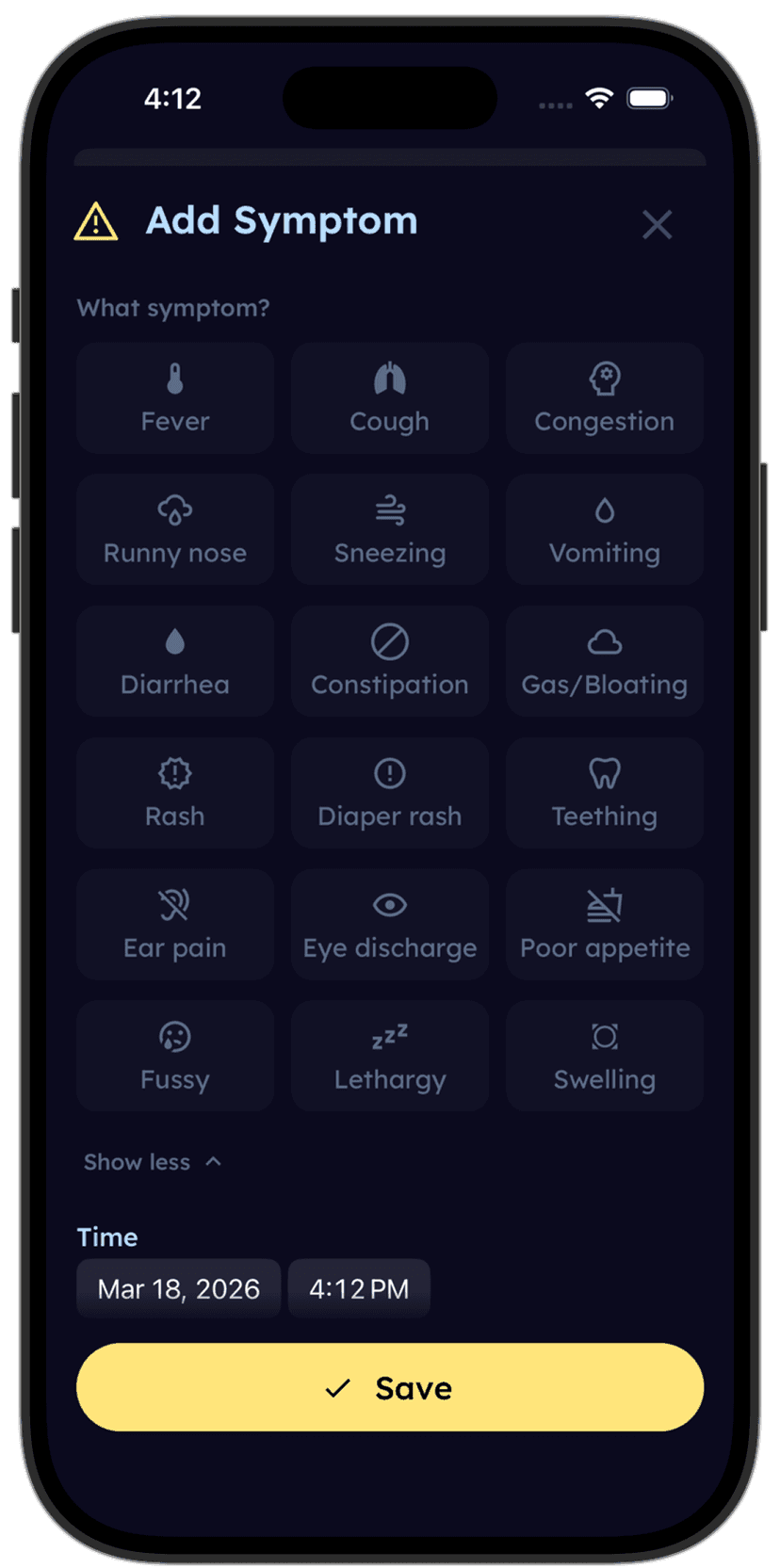
Tinylog helps you track feeding and soothing patterns.
Log feeds, pacifier use, sleep stretches, and fussy periods. Spot patterns over days and weeks, and bring the data to your next pediatrician visit.


Staying Power: Which One Actually Stays in the Mouth?
Parents who have tried both often report that the NUK Timeless Comfy stays in better once the baby gets used to the orthodontic shape. The flat-bottom nipple sits more securely against the tongue, and the contoured shield helps hold it in place.
The Soothie, on the other hand, has a perfectly round nipple that some babies push out easily — especially in the early weeks when their sucking reflex is still developing. You may find yourself reinserting it more often.
That said, plenty of babies latch onto the Soothie and refuse everything else. Newborns especially seem to accept it readily, probably because it is the first pacifier many encounter in the hospital. If your baby is already used to the Soothie shape, switching to an orthodontic nipple may be met with vocal protest.
One practical tip: if you are trying a new pacifier shape, offer it when your baby is calm and drowsy rather than mid-meltdown. A screaming baby is not going to give a fair trial to anything unfamiliar. Try it after a feeding when they are sleepy and content — that is when you will get an honest read on whether they accept the new shape.
| Product | Typical Price | Cost Per Pacifier | Replacement Cost |
|---|---|---|---|
| Philips Avent Soothie (2-pack, 0–3 months) | $4–$6 | ~$2.00–$3.00 | ~$4–$6 every 4–6 weeks |
| NUK Timeless Comfy (2-pack, 0–6 months) | $5–$8 | ~$2.50–$4.00 | ~$5–$8 every 4–6 weeks |
| Philips Avent Soothie (4-pack value) | $8–$11 | ~$2.00–$2.75 | Best value for stocking up on backups |
Price: Both Are Budget-Friendly
Pacifiers are one of the cheapest baby products you will buy, and neither of these will dent your budget. The Soothie typically runs $2–$3 per pacifier while the NUK Timeless Comfy comes in at $2.50–$4 per pacifier.
A few tips to save even more:
- Buy multi-packs. Both brands sell value packs that bring the per-unit cost down. You will want backups anyway.
- Stock several locations. Keep one in the diaper bag, one in the car, one in the crib area. Searching for a lost pacifier at 2 AM is nobody's idea of a good time.
- Replace on schedule. A degraded pacifier is a choking hazard. Spending $5 every month or so on fresh pacifiers is cheap insurance.
- Do not buy too many sizes in advance. Your baby may reject the brand entirely once they are older and more opinionated.
The cost difference between these two is about $1–$2 per purchase. It is not a factor worth stressing over.
Choose the Philips Avent Soothie If
- Your baby is a newborn and you want the same pacifier used in hospitals
- You prefer a one-piece silicone design with no plastic parts
- Easy sterilization matters to you — dishwasher, boil, or microwave with no disassembly
- Your baby is breastfed and you want a symmetrical nipple that goes in any direction
- You want the most affordable option for stocking up on backups
- Your baby has sensitive skin and you want to avoid hard plastic against their face
Choose the NUK Timeless Comfy If
- You prefer an orthodontic nipple shape designed to support jaw development
- Your baby tends to spit out round pacifiers and needs a shape that stays put
- You want a heart-shaped shield that curves away from the nose for easier breathing
- Style and color options matter to you — NUK has a much wider design range
- Your baby is past the newborn stage and you want a pacifier sized for 0–6 months
Where to Buy
The Philips Avent Soothie (~$2.50/pacifier in a multi-pack) is the go-to for newborns and the same pacifier trusted by hospitals across the country. Its one-piece silicone build makes sterilization dead simple, and the round nipple works in any orientation. Grab a 4-pack so you always have a backup ready.
The NUK Timeless Comfy (~$3.50/pacifier in a 2-pack) is a strong pick if you want an orthodontic design that supports natural jaw development. The heart-shaped shield is thoughtfully designed, and the wider range of colors and patterns is a nice bonus. It tends to stay in the mouth better once your baby adjusts to the shape.
Our honest take: buy a small pack of each. Babies are famously opinionated about pacifiers, and the only way to know which your baby prefers is to let them try both.
Tinylog earns a small commission on purchases made through these links, at no cost to you.
Tip: check promo.new before purchasing. It's hit or miss depending on the product, but when it hits, you'll be glad you checked.
The Bottom Line
The Philips Avent Soothie and NUK Timeless Comfy are both well-made, safe, affordable pacifiers. The differences are real but come down to design philosophy:
Philips Avent Soothie wins on simplicity — one-piece medical-grade silicone, no plastic, hospital-trusted, easy to clean, and works in any orientation. It is the default for newborns for good reason.
NUK Timeless Comfy wins on orthodontic design — the asymmetrical nipple supports palate development, the heart-shaped shield allows easier nose breathing, and it tends to stay in the mouth better. It also looks nicer, if that matters to you.
For most families, the winning move is to buy one pack of each and let your baby cast the deciding vote. Pacifiers are cheap, and your baby's preference will override every comparison chart on the internet.
If you are tracking feeding and soothing patterns — which is genuinely helpful in the first few months — Tinylog makes it easy to log everything in one place.
Related Guides
- Baby Feeding Chart — How much your baby should eat by age
- Newborn Feeding Schedule — What to expect in the first weeks
- Breastfeeding Latch — Getting a good latch from the start
- Baby Witching Hour — Why evenings are rough and what helps
Sources
- Philips.com. "Philips Avent Soothie Pacifier — Product Information." 2026.
- NUK-USA.com. "NUK Timeless Comfy Pacifier — Product Information." 2026.
- American Academy of Pediatric Dentistry. "Policy on Pacifiers." aapd.org, 2024.
- American Academy of Pediatrics. "Pacifiers: Satisfying Your Baby's Needs." healthychildren.org, 2025.
- Sexton S, Natale R. "Risks and Benefits of Pacifiers." American Family Physician. 2009;79(8):681-685.
- Mommyhood101. "Best Pacifiers of 2026, Tested & Reviewed." mommyhood101.com.
This guide is for informational purposes only. Pacifier choice is a personal preference based on your baby's individual needs. If your baby has difficulty latching or feeding, consult your pediatrician or a lactation consultant before introducing a pacifier.
Frequently asked questions
- Is the Philips Avent Soothie the same pacifier hospitals give out?
- Yes. The Philips Avent Soothie is one of the most commonly distributed pacifiers in US hospitals, particularly in NICUs. It is made from hospital-grade silicone and has been used with newborns for decades. The version you buy at the store is identical to the hospital version.
- What does orthodontic nipple shape mean on the NUK Timeless Comfy?
- An orthodontic nipple is flat on the bottom and rounded on top, designed to mimic the shape of a mother's nipple during breastfeeding. NUK claims this shape supports healthy jaw and palate development. The American Academy of Pediatric Dentistry generally considers orthodontic pacifiers preferable for long-term use.
- Can I switch between the Soothie and NUK Timeless Comfy?
- You can try, but many babies develop a strong preference for one nipple shape and refuse the other. If your baby is already used to one, switching may involve some fussiness. It is perfectly safe to alternate between them if your baby accepts both.
- Which pacifier is better for breastfed babies?
- The Soothie's round, symmetrical nipple is sometimes recommended for breastfed newborns because it does not create a strong preference for a specific orientation. However, NUK argues its orthodontic shape more closely mimics a natural latch. There is no strong clinical evidence that either causes nipple confusion in healthy, term infants.
- How often should I replace these pacifiers?
- Both manufacturers recommend replacing pacifiers every 4 to 6 weeks, or sooner if you notice any cracks, tears, sticky spots, or discoloration. Inspect the nipple before each use by pulling on it gently. Silicone degrades over time, especially with frequent sterilization.
- Are either of these pacifiers BPA-free?
- Yes. Both the Philips Avent Soothie and the NUK Timeless Comfy are BPA-free. The Soothie is made entirely of medical-grade silicone. The NUK Timeless Comfy uses a silicone nipple with a BPA-free plastic shield.