
GUIDE
Tommee Tippee Natural Start Anti-Colic vs. Chicco Duo Hybrid Baby Bottle
Published on
Both are solid mid-range bottles with anti-colic features. Tommee Tippee wins on breast-like nipple shape and ease of latching. Chicco Duo stands out with its hybrid design that transitions from a slow-flow newborn bottle to a faster-flow toddler cup. Price is close.
Choosing a baby bottle can feel overwhelming when every brand claims to be 'the closest to breastfeeding.' Tommee Tippee and Chicco are two of the most trusted names in baby feeding, and these two bottles represent their best mid-range options. The real differences come down to nipple shape, anti-colic valve design, and how long each bottle stays useful as your baby grows.
Log bottles, nursing, and pumping
Two Popular Bottles — Here's What Actually Sets Them Apart
The Tommee Tippee Natural Start Anti-Colic and the Chicco Duo Hybrid are two of the most frequently recommended mid-range baby bottles. Both show up on "best baby bottle" lists, both claim anti-colic benefits, and both sit in the $10–$13 per bottle price range.
The honest answer: both are good bottles. Most babies will feed happily from either one. But the differences in nipple design, anti-colic approach, and long-term versatility are real — and they can matter a lot depending on whether you're breastfeeding, how gassy your baby is, and whether you want a bottle that converts into a toddler cup later.
We broke down the materials, valve systems, nipple shapes, and pricing so you can pick the right bottle without buying six different brands first.
For more on how much your baby should be eating, see our baby feeding chart.
| Feature | Tommee Tippee Natural Start | Chicco Duo Hybrid | What It Means |
|---|---|---|---|
| Manufacturer | Mayborn Group (part of Jackel International) | Artsana Group (Chicco) | Both are established global baby brands with decades of product history. |
| Anti-colic system | Breast-like nipple with built-in venting valve at base | Angled anti-colic valve in the collar ring | Different approaches, similar goal. Tommee Tippee vents through the nipple; Chicco vents through the collar. |
| Nipple shape | Wide, rounded, breast-shaped silicone nipple | Angled, elongated silicone nipple with textured base | Tommee Tippee more closely mimics breast shape. Chicco's angled design promotes upright feeding. |
| Nipple flow rates | 6 flow rates (preemie through Y-cut) | 4 flow rates (slow through fast) | Tommee Tippee offers more granularity, which is useful for picky feeders or preemies. |
| Bottle material | BPA-free polypropylene (plastic) or glass | BPA-free polypropylene with Invinci-Glass hybrid option | Chicco's Invinci-Glass is a plastic-coated glass — the durability of plastic with the purity of glass. Unique option. |
| Capacity options | 5 oz and 9 oz | 5 oz and 9 oz | Tie. Both come in the standard two sizes. |
| Transition capability | Bottle only (no transition lids) | Converts to spout cup or straw cup with separate lids | Chicco wins here. The Duo body works from newborn through toddlerhood with swappable tops. |
| Number of parts | 4 parts (bottle, collar, nipple, anti-colic valve) | 3 parts in standard config (bottle, collar with valve, nipple) | Chicco is slightly simpler to assemble and clean with one fewer loose part. |
| Dishwasher safe | Yes — top rack | Yes — top rack | Tie. Both are fully dishwasher safe on the top rack. |
| Wide-neck design | Yes — wide neck for easy filling and cleaning | Yes — wide neck | Tie. Both use wide-neck openings that are easy to fill and scrub. |
| Color/design options | Wide range of colors and limited-edition prints | Neutral tones (clear, gray, soft colors) | Tommee Tippee offers more aesthetic variety if that matters to you. |
The Nipple Shape Difference That Matters Most
The single biggest difference between these two bottles is the nipple.
Tommee Tippee Natural Start uses a wide, rounded, breast-shaped silicone nipple. It's designed to encourage the same wide latch that babies use at the breast. The soft silicone flexes during feeding, and the shape fills the baby's mouth similarly to a natural breast. This is why lactation consultants often recommend it for babies who switch between breast and bottle.
Chicco Duo uses a more elongated, slightly angled silicone nipple with a textured base. The angle promotes a more upright feeding position, which can help reduce air swallowing. The texture gives babies something to grip, but the shape is more traditional and less breast-like.
If you're exclusively bottle feeding, either nipple works well. If you're combining breast and bottle, the Tommee Tippee nipple is the safer bet for reducing nipple confusion — though plenty of breastfed babies accept the Chicco without any trouble.
Anti-Colic Systems: Two Approaches to the Same Problem
Both bottles are marketed as anti-colic, but they use different valve designs.
Tommee Tippee places a small venting valve at the base of the nipple. As your baby feeds, air is channeled through the valve and away from the milk, reducing the amount of air your baby swallows. The valve is a separate piece that pops in and out for cleaning.
Chicco Duo integrates its anti-colic valve into the collar ring. The valve allows air to flow into the bottle to replace the milk being consumed, but routes it away from the liquid so it doesn't mix with the feed.
In practice, both systems work. Neither will cure true colic — which has multiple causes beyond air intake — but both can reduce gas, spit-up, and feeding discomfort for many babies. The Tommee Tippee valve adds one extra part to clean. The Chicco valve is integrated into the collar, making it simpler but slightly harder to deep-clean.
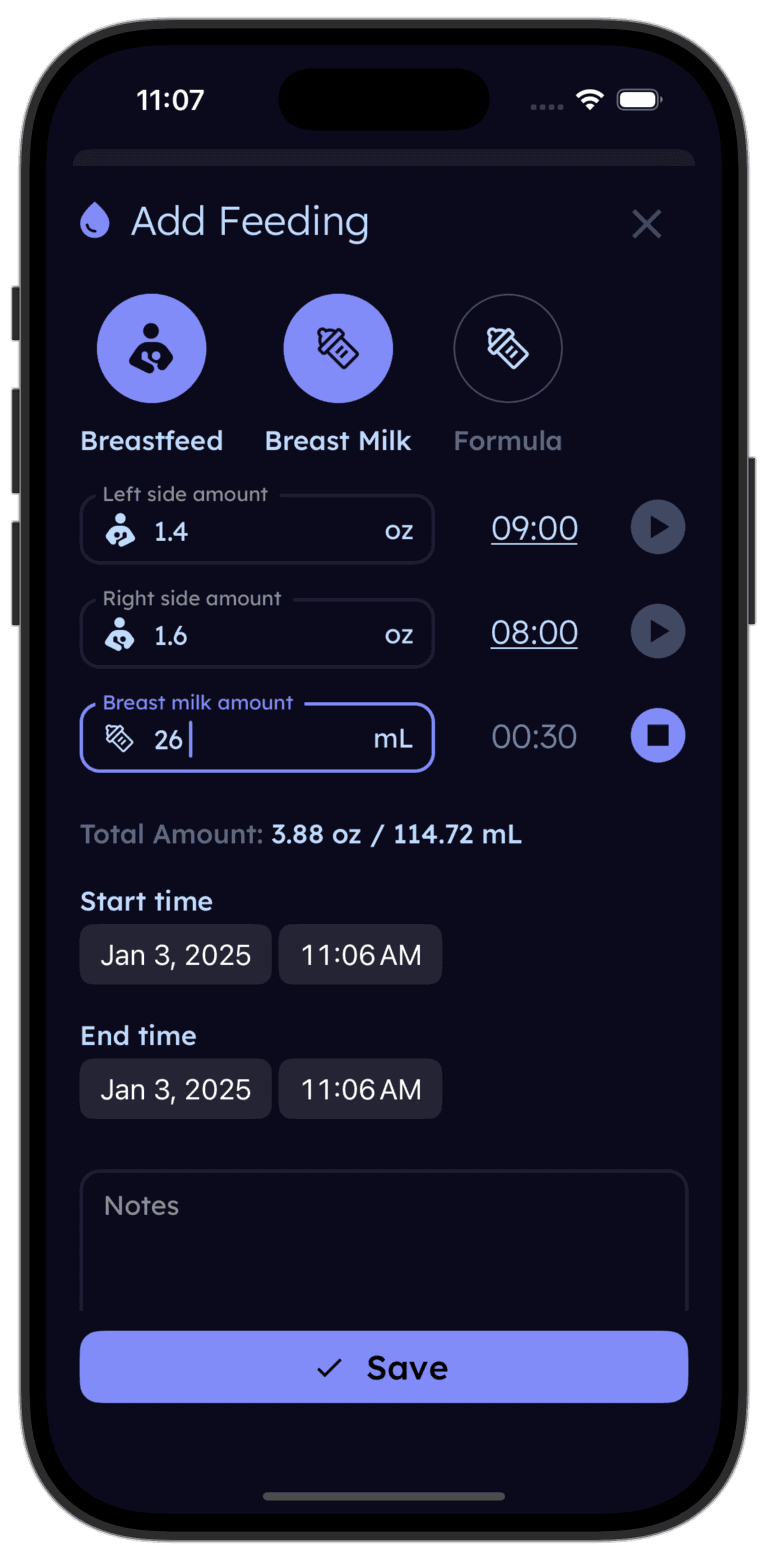
Tinylog tracks feedings so you can spot patterns.
Log bottle feeds, nursing sessions, and pumping. Track ounces, note spit-ups and gas, and see patterns over days and weeks. Bring the data to your next pediatrician visit.


The Transition Factor: Where Chicco Pulls Ahead
Here's where the Chicco Duo earns its "Hybrid" name. The bottle body is designed to work with multiple Chicco top systems:
- Newborn bottle nipple — standard slow-flow feeding
- Soft spout lid — for babies transitioning off bottles (around 6–9 months)
- Straw lid — for toddlers learning to use a straw cup (9–12+ months)
You buy one bottle body and swap the tops as your baby grows. The transition lids are sold separately ($6–$9 each), but the total cost is less than buying separate sippy cups and straw cups later.
Tommee Tippee Natural Start is a bottle and only a bottle. It does not convert into a cup. When your baby outgrows bottles, you'll need to buy a separate transition cup from Tommee Tippee or another brand.
If you want maximum long-term value from a single bottle purchase, the Chicco Duo is the smarter buy. If you only care about the bottle-feeding stage, this difference doesn't matter.
| Product | Typical Price | Cost Per Bottle | Starter Set Cost |
|---|---|---|---|
| Tommee Tippee Natural Start Anti-Colic (9 oz, single) | $9–$12 | ~$9–$12 | ~$30–$40 (3-pack) |
| Chicco Duo Hybrid (9 oz, single) | $10–$13 | ~$10–$13 | ~$28–$36 (3-pack) |
| Tommee Tippee Replacement Nipples (2-pack) | $5–$7 | ~$2.50–$3.50 each | — |
| Chicco Duo Replacement Nipples (2-pack) | $5–$8 | ~$2.50–$4.00 each | — |
Price: Nearly Identical Upfront, Different Long-Term
A single bottle from either brand costs roughly $9–$13. Multi-packs bring the per-bottle cost down slightly. Replacement nipples are similarly priced at $5–$8 for a two-pack.
Where cost starts to diverge is over time:
- Chicco Duo can save you $15–$25 long-term if you use the transition lids instead of buying separate sippy cups and straw cups.
- Tommee Tippee has six flow rates vs. Chicco's four, which means you may buy more replacement nipples over the first year — but the per-nipple cost is comparable.
For the first six months of bottle feeding, you'll spend roughly the same amount on either brand. The Chicco Duo's transition system provides modest savings for families who use it through the toddler years.
Choose Tommee Tippee Natural Start If
- You're combining breastfeeding and bottle feeding and want the easiest latch transition
- Your baby is a newborn or preemie who needs a very slow, controlled flow rate
- You prefer a breast-shaped nipple that encourages a wide latch
- You want more flow rate options (six levels vs. four)
- Aesthetic variety matters — you want fun colors and prints
Choose Chicco Duo Hybrid If
- You want a bottle that grows with your baby into a sippy cup and straw cup
- You prefer fewer parts to wash and assemble
- The Invinci-Glass hybrid material appeals to you (glass feel, plastic durability)
- Your baby feeds in a more upright position (the angled nipple supports this)
- You want to save money long-term by not buying separate transition cups
- Simplicity matters more to you than nipple shape variety
Where to Buy
If you're breastfeeding and bottle feeding, the Tommee Tippee Natural Start Anti-Colic (~$10/bottle) is a strong pick — the breast-shaped nipple makes switching between breast and bottle smoother for most babies, and the six flow rates give you room to grow. Grab the 3-pack for the best per-bottle price.
If you want a bottle that grows with your baby, the Chicco Duo Hybrid Baby Bottle (~$11/bottle) is the smarter long-term investment — fewer parts to wash, the Invinci-Glass option for parents who want glass without the breakage risk, and a transition system that takes you from newborn through toddlerhood with one bottle body.
Our honest advice: buy one of each first. Babies are notoriously opinionated about bottles, and the "best" bottle is whichever one your baby actually accepts.
Tinylog earns a small commission on purchases made through these links, at no cost to you.
Tip: check promo.new before purchasing. It's hit or miss depending on the product, but when it hits, you'll be glad you checked.
The Bottom Line
The Tommee Tippee Natural Start Anti-Colic and Chicco Duo Hybrid are both well-designed, mid-range bottles that will serve most families well. The differences are real but not dramatic:
Tommee Tippee Natural Start wins on breast-like nipple shape, flow rate variety (six options), and ease of latch for combo-fed babies.
Chicco Duo Hybrid wins on transition versatility (bottle to cup), fewer parts to clean, and the unique Invinci-Glass material option.
For most families, the deciding factor will be whether you're breastfeeding (lean toward Tommee Tippee) or want a bottle that converts into a toddler cup (lean toward Chicco Duo). Either way, you're getting a solid bottle from a trusted brand.
If you're tracking feedings — which is especially helpful in the early weeks to make sure your baby is eating enough — Tinylog makes it simple to log bottles, nursing sessions, and pumping all in one place.
Related Guides
- Baby Feeding Chart — How much your baby should eat by age
- Baby Gas — Causes, relief, and when to call your doctor
- Baby Spit-Up — What's normal and what's reflux
- Breastfeeding Basics — Latching, supply, and common questions
Sources
- Tommee Tippee. "Natural Start Anti-Colic Bottles — Product Information." tommeeTippee.com, 2026.
- Chicco. "Duo Hybrid Baby Bottle — Product Information." chiccousa.com, 2026.
- BabyGearLab. "Best Baby Bottles of 2026." babygearlab.com.
- WhatToExpect. "Best Baby Bottles for Breastfed Babies." whattoexpect.com, 2026.
- Mommyhood101. "The Best Baby Bottles of 2026, Tested & Reviewed." mommyhood101.com.
- Consumer Reports. "Best Baby Bottles From Our Tests." consumerreports.org, 2026.
- American Academy of Pediatrics. "Bottle Feeding Basics." healthychildren.org.
This guide is for informational purposes only. Bottle choice is a personal preference based on your baby's individual needs. If your baby has persistent feeding difficulties, excessive gas, or signs of reflux, consult your pediatrician.
Frequently asked questions
- Is the Tommee Tippee Natural Start Anti-Colic or Chicco Duo better for breastfed babies?
- Tommee Tippee's breast-shaped nipple is wider and more closely mimics the natural latch. Many lactation consultants recommend it for babies who switch between breast and bottle. The Chicco Duo has a more traditional angled nipple, which some babies also accept without issue.
- Do these bottles actually reduce colic and gas?
- Both bottles include anti-colic valve systems designed to reduce air ingestion during feeding. Tommee Tippee uses a venting valve at the base of the nipple. Chicco Duo uses an angled anti-colic valve in the collar. No bottle eliminates colic entirely, but both can reduce gas-related fussiness for many babies.
- Which bottle is easier to clean?
- The Chicco Duo has fewer parts overall — especially in its standard configuration — making it slightly easier to disassemble and clean. The Tommee Tippee anti-colic valve adds one extra small piece that needs to be removed and cleaned separately. Both are dishwasher safe (top rack).
- Can I use the Chicco Duo as a sippy cup later?
- Yes. The Chicco Duo Hybrid is designed to convert into a spout cup or straw cup with separate Chicco transition lids (sold separately). This is one of its main selling points — you buy one bottle body and swap the tops as your baby grows.
- Are replacement nipples expensive?
- Both brands sell replacement nipples in the $5–$8 range for a two-pack. Tommee Tippee nipples come in six flow rates. Chicco Duo nipples come in four flow rates. Both are widely available at Target, Walmart, and Amazon.
- Can I mix and match parts between the two brands?
- No. Tommee Tippee and Chicco use different threading, collar sizes, and nipple shapes. Parts are not interchangeable between brands. Stick with one system per bottle.