
GUIDE
Tommee Tippee Natural Start vs. Lansinoh Anti-Colic Bottles
Published on
Both are solid anti-colic bottles with breast-like nipples. Lansinoh edges out for breastfed babies transitioning to a bottle thanks to its wide, flexible NaturalWave nipple. Tommee Tippee wins on availability, aesthetic design, and a slightly simpler assembly.
Tommee Tippee Natural Start Anti-Colic and Lansinoh Anti-Colic bottles both aim to reduce gas and fussiness while mimicking the breast. They approach the problem differently — Tommee Tippee uses a built-in venting tube, while Lansinoh relies on integrated bottom venting with an Air Ventilation System. For most babies, either will work well. The real differences come down to nipple shape, venting design, and how easy they are to clean.
Log bottles, nursing, and pumping
Two Popular Anti-Colic Bottles — Here's What Actually Sets Them Apart
Tommee Tippee Natural Start Anti-Colic and Lansinoh Anti-Colic are two of the most commonly recommended bottles for gassy, fussy babies. Both claim to reduce air intake during feeds. Both feature breast-like nipples designed to ease the transition from nursing.
The honest truth: both are good bottles. Most babies will accept either one. But the differences in nipple flexibility, venting design, and ease of cleaning matter more than marketing suggests — especially if you're switching a breastfed baby to a bottle or dealing with a baby who struggles with gas.
We compared the nipple design, anti-colic mechanisms, assembly, cleaning, and price so you can pick the right bottle without buying six different brands first.
For guidance on how much to put in the bottle, see our baby feeding chart.
| Feature | Tommee Tippee Natural Start | Lansinoh Anti-Colic | What It Means |
|---|---|---|---|
| Manufacturer | Mayborn Group (part of Pigeon Corporation) | Lansinoh Laboratories | Mayborn is a UK-based baby product company. Lansinoh is best known for breastfeeding products and nipple cream. |
| Anti-colic system | Venting tube draws air away from milk | Bottom-vented AVS (Air Ventilation System) | Different approaches, same goal. Tommee Tippee vents through a straw-like tube. Lansinoh vents through the base. |
| Nipple shape | Wide, dome-shaped, breast-like | Wide, flat, flexible NaturalWave | Lansinoh's nipple flexes and stretches more like a real breast. Tommee Tippee's is rounder and firmer. |
| Nipple material | Silicone | Silicone | Tie. Both use soft, medical-grade silicone. |
| Bottle material | Polypropylene (PP) plastic | Polypropylene (PP) plastic | Tie. Both are BPA-free, BPS-free, and phthalate-free. |
| Bottle shape | Rounded, compact, wide-neck | Cylindrical, standard wide-neck | Tommee Tippee's rounded shape is easier for small hands to grip. Lansinoh's straight cylinder is easier to stack and store. |
| Sizes available | 5 oz and 9 oz | 5 oz and 8 oz | Tommee Tippee's larger bottle holds 1 oz more — a small edge for older babies taking bigger feeds. |
| Number of parts | 4 (bottle, nipple, collar, vent tube) | 4 (bottle, nipple, collar, AVS insert) | Tie on count, but the vent tube on Tommee Tippee is narrower and can be harder to clean thoroughly. |
| Dishwasher safe | Yes — top rack | Yes — top rack | Tie. Both brands recommend top-rack dishwasher placement for all parts. |
| Flow rates available | Slow, Medium, Fast, Variable | Size 2S, 2M, 3L, 4XL | Both offer a progression of flow rates. Tommee Tippee also offers a variable-flow nipple, which some parents find useful. |
| Wide-neck compatibility | Tommee Tippee-specific threading | Lansinoh-specific threading | Neither is cross-compatible with other brands. Replacement nipples must match the brand. |
The Nipple Difference That Matters Most
The nipple is the single most important part of any baby bottle. It determines whether your baby accepts the bottle, how much air they swallow, and whether breastfed babies develop a preference that makes nursing harder.
Tommee Tippee Natural Start uses a wide, dome-shaped silicone nipple. It's breast-like in appearance and feel, with a firm but flexible texture. The shape is symmetrical — baby can latch from any angle. It works well, but the nipple is firmer than a real breast and doesn't stretch as dynamically.
Lansinoh NaturalWave nipples were designed with input from lactation consultants. The nipple is wider, flatter, and significantly more flexible. It stretches and compresses in the baby's mouth much like breast tissue does, encouraging the same wave-like tongue motion babies use during nursing. Clinical testing has shown it helps maintain breastfeeding patterns.
If your baby is exclusively bottle-fed, either nipple will work fine. If you're combo-feeding or introducing a bottle to a breastfed baby, Lansinoh's NaturalWave nipple is the stronger choice for reducing nipple confusion.
Anti-Colic Venting: Two Different Approaches
Both bottles are designed to separate air from milk so your baby swallows less gas. They do it differently.
Tommee Tippee uses a venting tube — a thin straw-like piece that sits inside the bottle. As baby drinks, air travels up through the tube instead of mixing with the milk. It works well, but the tube is narrow and requires a small brush (included) to clean properly. Some parents find it fiddly.
Lansinoh uses an Air Ventilation System (AVS) — a vented insert that sits at the bottom of the bottle. Air enters through the base and stays separated from the milk above. There's no tube to scrub, but the AVS piece itself needs to be cleaned separately after each use.
Both systems reduce air intake effectively. The practical difference is in cleaning: Tommee Tippee's tube is harder to scrub but easy to assemble. Lansinoh's AVS is easier to clean but adds a bottom piece you need to seat properly to avoid leaks.
Neither system eliminates gas entirely. If your baby is still gassy after switching bottles, talk to your pediatrician — the issue may be feeding technique, flow rate, or something unrelated to the bottle.
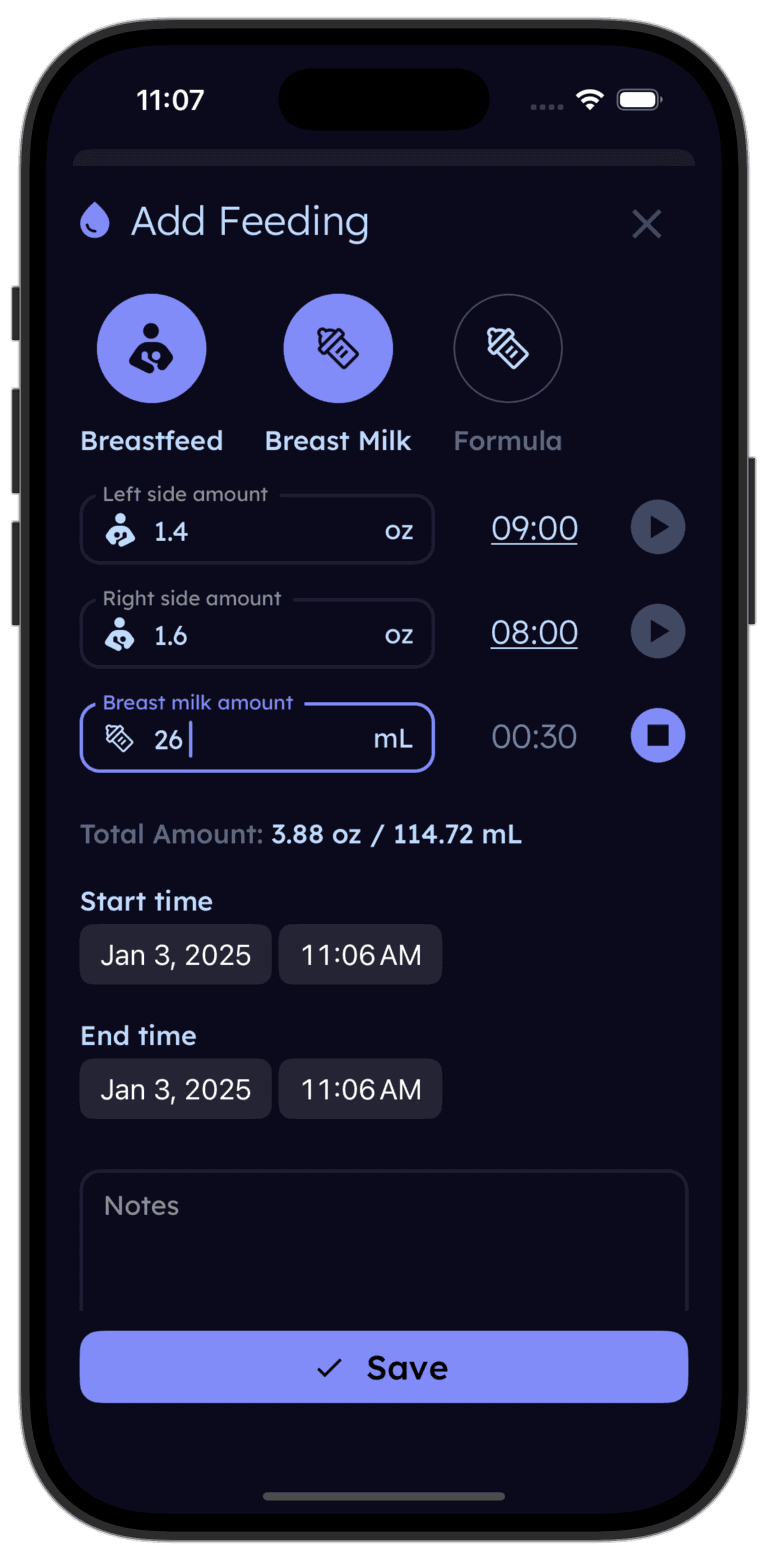
Tinylog tracks bottle feeds so you can spot patterns.
Log bottle size, formula type, spit-up, and gas. Track feeding volume over days and weeks. Bring the data to your next pediatrician visit.


Cleaning and Assembly: The Everyday Reality
You will wash baby bottles multiple times a day, every day, for months. Ease of cleaning matters more than any spec sheet.
Tommee Tippee Natural Start has four parts: bottle, nipple, collar, and venting tube. The bottle itself is easy to wash — the wide neck lets you get a brush inside without trouble. The venting tube is the weak spot. It's narrow, and milk residue can build up inside if you don't use the included tube brush. Some parents skip the tube entirely after the colic stage passes.
Lansinoh Anti-Colic also has four parts: bottle, nipple, collar, and the AVS base insert. The straight-walled bottle is simple to clean. The AVS piece is flat and easy to rinse — no tube brush needed. The trade-off is that you must seat the AVS piece correctly when reassembling, or the bottle may leak from the bottom.
Both are top-rack dishwasher safe. For sterilizing, both work with standard microwave steam sterilizer bags or electric sterilizers.
| Product | Typical Price | Cost Per Bottle | Notes |
|---|---|---|---|
| Tommee Tippee Natural Start 9 oz (3-pack) | $19–$24 | ~$6.30–$8.00 | Includes slow-flow nipples |
| Lansinoh Anti-Colic 8 oz (3-pack) | $16–$20 | ~$5.30–$6.70 | Includes medium-flow nipples |
| Tommee Tippee Natural Start 5 oz (3-pack) | $17–$22 | ~$5.70–$7.30 | Includes slow-flow nipples |
| Lansinoh Anti-Colic 5 oz (3-pack) | $14–$18 | ~$4.70–$6.00 | Includes slow-flow nipples |
Price: Lansinoh Is Slightly Cheaper
Lansinoh bottles run about $1–$2 less per bottle than Tommee Tippee across all sizes. Over a set of six to eight bottles — which is what most parents end up needing — that's a $6–$16 difference. Meaningful but not dramatic.
Where cost really adds up is in replacement nipples. As your baby grows, you'll need to move up in flow rate. Both brands charge $5–$8 for a two-pack of nipples. Since you can't swap between brands, you're locked into one nipple ecosystem once you pick a bottle.
Tips to save:
- Buy starter sets when available — both brands offer bundle packs with multiple sizes and flow rates.
- Watch for registry completion discounts at Target, Amazon, and Buy Buy Baby.
- Don't overbuy upfront. Start with two or three bottles to make sure your baby accepts them before stocking up.
Choose Tommee Tippee Natural Start If
- Your baby prefers a rounder, dome-shaped nipple
- You want a bottle that's easy for small hands to hold
- You prefer a compact, aesthetically pleasing bottle shape
- You want a variable-flow nipple option
- Wide retail availability matters (sold nearly everywhere)
- You like the straw-style venting over bottom venting
Choose Lansinoh Anti-Colic If
- You're transitioning a breastfed baby to a bottle
- Reducing nipple confusion is your top priority
- You want a slightly lower price point
- You prefer a clinically tested nipple designed by lactation experts
- You want a straight bottle shape that stacks easily in the fridge
- Bottom venting appeals to you (no tube to scrub)
Where to Buy
If you want a well-rounded anti-colic bottle with wide retail availability, the Tommee Tippee Natural Start Anti-Colic (~$7/bottle in a 3-pack) is a strong pick — compact shape, reliable venting tube, and easy to find at nearly any store. The variable-flow nipple option is a nice bonus as your baby grows.
If you're prioritizing a smooth breast-to-bottle transition, the Lansinoh Anti-Colic Bottles (~$6/bottle in a 3-pack) are hard to beat — the NaturalWave nipple is one of the most breast-like on the market, and the bottom-vented AVS system means no tube to scrub. Slightly cheaper, too.
Our honest advice: if your baby is exclusively breastfed and you're introducing a bottle, start with Lansinoh. If your baby is formula-fed or you want the widest availability, Tommee Tippee is a safe bet. Either way, buy a small pack first.
Tinylog earns a small commission on purchases made through these links, at no cost to you.
We've found promo.new handy for finding discounts on baby gear. Doesn't always have what you need, but it's worth a shot.
The Bottom Line
Both the Tommee Tippee Natural Start Anti-Colic and Lansinoh Anti-Colic are well-designed bottles that do what they promise — reduce air intake and offer a breast-like feeding experience.
Lansinoh Anti-Colic edges out for breastfed babies transitioning to a bottle, nipple flexibility, ease of cleaning (no tube), and price.
Tommee Tippee Natural Start edges out for retail availability, bottle grip and shape, variable-flow nipple option, and aesthetic design.
For most families, the deciding factor is nipple acceptance. Babies are particular, and the "best" bottle is whichever one your baby will actually drink from without a fight. Start small, test both if needed, and don't feel locked in.
If you're tracking feeding volumes — which is especially helpful when establishing bottle routines or combo-feeding — Tinylog makes it easy to log every feed and spot trends over time.
Related Guides
- Baby Feeding Chart — How much your baby should eat by age
- Baby Gas — Causes, remedies, and when to call your doctor
- Baby Spit-Up — What's normal and when to worry
- Breastfeeding Basics — Getting started and troubleshooting common issues
Sources
- Tommee Tippee. "Natural Start Anti-Colic Bottles — Product Information." tommeetippee.com, 2026.
- Lansinoh. "Anti-Colic Baby Bottles with NaturalWave Nipple — Product Information." lansinoh.com, 2026.
- BabyList. "Best Baby Bottles of 2026." babylist.com.
- What to Expect. "Best Anti-Colic Bottles to Help Reduce Gas." whattoexpect.com, 2025.
- Wirecutter (The New York Times). "The Best Baby Bottles." nytimes.com/wirecutter, 2025.
- Forbes Health. "Best Baby Bottles of 2026, Tested and Reviewed." forbes.com/health.
- Lansinoh Clinical Studies. "NaturalWave Nipple: Clinical Evidence for Breastfeeding Maintenance." lansinoh.com.
This guide is for informational purposes only. Bottle choice is a personal preference based on your baby's individual needs. If your baby has persistent feeding difficulties, excessive gas, or refuses bottles entirely, consult your pediatrician or a lactation consultant.
Frequently asked questions
- Which bottle is better for breastfed babies, Tommee Tippee or Lansinoh?
- Lansinoh is generally the better choice for breastfed babies. Its NaturalWave nipple is designed by breastfeeding experts to encourage the same tongue and jaw movements used during nursing, which helps reduce nipple confusion. Tommee Tippee's breast-shaped nipple also works well, but Lansinoh's flexible, stretchy nipple more closely mimics the breast.
- Do Tommee Tippee Natural Start bottles really reduce colic?
- Tommee Tippee Natural Start Anti-Colic bottles use a venting tube that channels air away from the milk, reducing the amount of air a baby swallows during feeding. Many parents report less gas and fussiness. No bottle can cure colic, but anti-colic venting systems can meaningfully reduce air intake.
- Are Lansinoh bottles hard to clean?
- Lansinoh bottles have more parts than some competitors — the bottle, nipple, collar, and the Air Ventilation System (AVS) insert at the bottom. The AVS piece requires separate cleaning. It adds a step, but most parents find it manageable. All parts are dishwasher-safe on the top rack.
- Can I use Tommee Tippee nipples on Lansinoh bottles or vice versa?
- No. Tommee Tippee and Lansinoh use different collar threading and nipple shapes. They are not interchangeable. You'll need to stay within the same brand for replacement nipples.
- Which anti-colic bottle is cheaper, Tommee Tippee or Lansinoh?
- Lansinoh bottles are typically $1–$2 less per bottle. A three-pack of Lansinoh 8 oz bottles runs around $16–$20, while a three-pack of Tommee Tippee 9 oz bottles runs around $19–$24. Both are mid-range priced compared to brands like Dr. Brown's or Comotomo.
- How do I know which flow nipple size to use?
- Both brands use numbered flow rates. Start with the slowest flow (Size 0 or 1) for newborns. Signs your baby needs a faster flow include collapsing the nipple while sucking, taking much longer than 20–30 minutes to finish a bottle, or showing frustration during feeds. Move up one size at a time.