
Hydration monitoring
The number of wet diapers per day is the simplest hydration check for babies. Tinylog shows your daily wet count front and center, so you'll notice immediately if it drops below the expected range for your baby's age.
FEATURE
Wet, dirty, or both — log every diaper change in under two seconds. Tinylog keeps a running count so you always know your baby is hydrated and healthy.
Your pediatrician will ask how many wet diapers per day. With Tinylog, you'll always have the answer.
It sounds tedious — and it is. But in the first weeks of life, wet diaper counts are one of the most reliable ways to know your baby is getting enough to eat. Pediatricians ask about diapers at every early visit for a reason: output tracks input.
A drop in wet diapers can signal dehydration. Changes in stool consistency can flag food sensitivities or digestive issues. And when you're sleep-deprived, there's no way you're keeping an accurate mental tally across 8–12 changes a day.
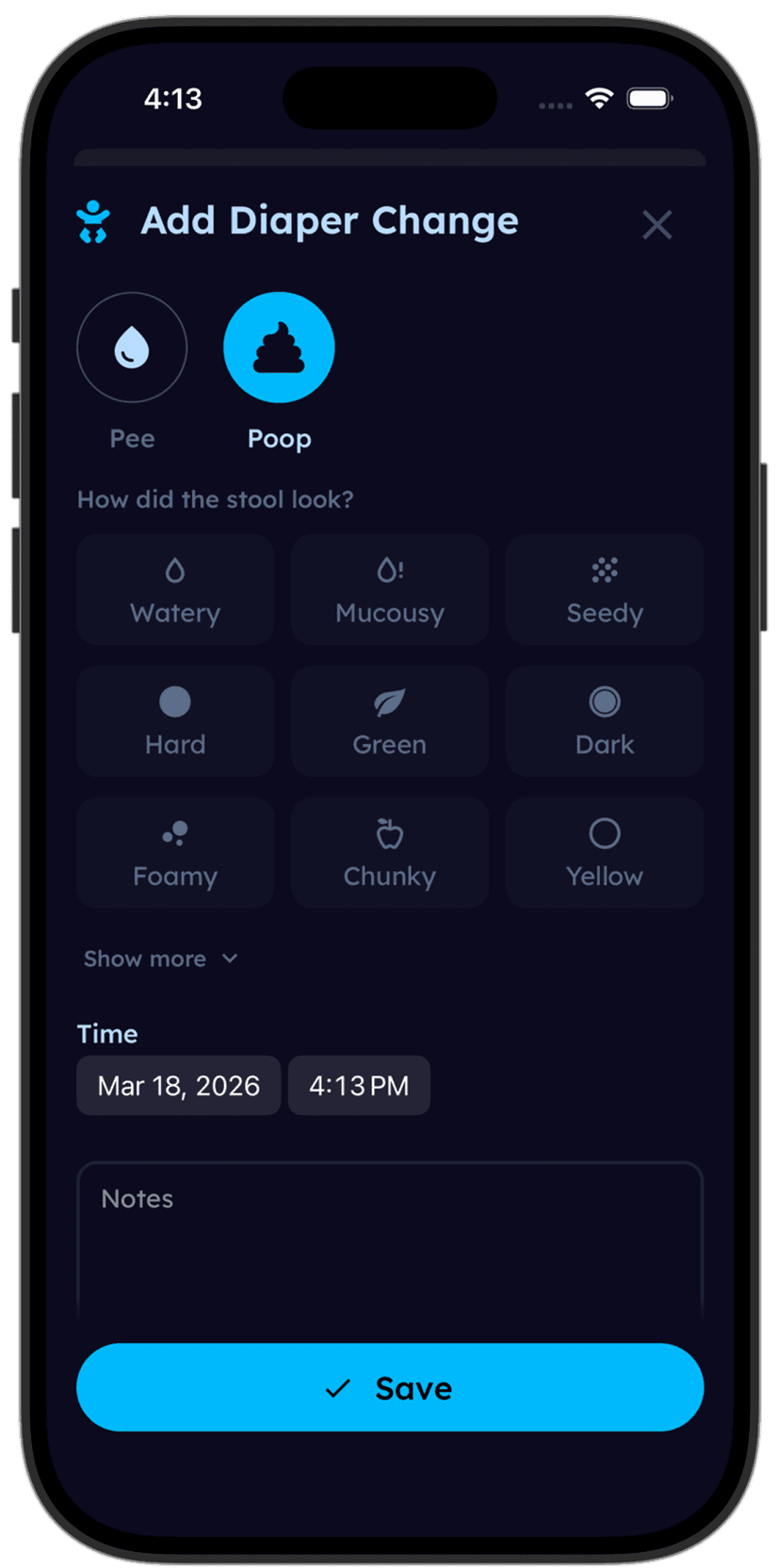
Wet, dirty, or mixed — Tinylog timestamps it and adds it to your daily count. No forms, no menus, just a single tap and you're done.


Speed matters when you're mid-diaper-change with a squirming baby.
One-tap logging: Open Tinylog, tap the diaper button, and select wet, dirty, or mixed. Done. The entry is timestamped and added to your daily count automatically.
Optional notes: Need to flag an unusual color or texture? Add a quick note. This is especially helpful when tracking reactions to new foods or medications.
Daily count dashboard: Your home screen shows today's diaper tally — broken down by wet and dirty — without any tapping or scrolling.
The number of wet diapers per day is the simplest hydration check for babies. Tinylog shows your daily wet count front and center, so you'll notice immediately if it drops below the expected range for your baby's age.
Stool frequency and consistency change as your baby grows and their diet evolves. With a log of dirty diapers over time, you can spot shifts — like increased frequency after starting solids — and share specifics with your pediatrician instead of vague descriptions.
At well visits, your doctor will ask about diaper output. Instead of saying "I think maybe six or seven?" you can show them exact counts for the past week. Better data means better medical advice.
Instead of guessing diaper counts, show your pediatrician exact numbers from Tinylog. Better data means better medical advice — and a shorter appointment.
You don't need to log the exact minute of every change. What matters is the daily count. If you miss logging one, add it later — an approximate time is fine. Your pediatrician cares about the total, not the timestamps.
Want to know what's normal in the diaper department? Check out our free guides: