GUIDE

2 Year Old Sleep Schedule

Two years old brings a potential regression, the big bed question, and an opinionated toddler who can negotiate bedtime like a lawyer.

The schedule is the same. The toddler is not. Here's how to manage the 2-year sleep challenges while keeping the one-nap rhythm intact.

Two Years Old: The Schedule Holds — The Toddler Has Opinions

Happy birthday to your toddler — and welcome to the most opinionated bedtime you've experienced yet. At 2 years old, your child has the vocabulary to argue, the emotional intensity to make their case passionately, and the cognitive sophistication to negotiate deals ("one more book, then I sleep, okay?"). Bedtime at 2 is less about the schedule and more about the relationship between structure and autonomy.

The schedule itself is unchanged: one midday nap, bedtime around 7:00 to 7:30, consistent wake windows. This routine has been running since 14 to 15 months and has at least another 6 to 12 months of life before the nap drops. If it's working, protect it fiercely. The stability of this routine is what gets you through the 2-year regression, the bed transition, potty training, and whatever else this year brings.

The 2-year regression is real, but it's different from earlier regressions. It's primarily behavioral and situational — driven by major life changes, language explosion, and intensifying nighttime fears. Unlike the 4-month regression (which was biological and inevitable), the 2-year regression responds directly to your approach. Consistent, warm boundaries are the throughline.


2 Year Old Sleep at a Glance
Total sleep (24 hrs)
11–14 hours
Nighttime sleep
10–12 hours
Number of naps
1
Nap duration
1–2.5 hours
Wake windows
5–6.5 hours
Wake windows may stretch slightly as your toddler approaches 2.5. Total sleep needs begin to decrease gradually.

Sample 2 Year Old Schedule

The one-nap schedule continues. Bedtime may shift slightly later as your child approaches 2.5.

Sample daily schedule

  1. Wake
  2. Breakfast
  3. Snack
  4. Lunch
  5. Nap (1–2.5 hrs)
  6. Wake + snack
  7. Dinner
  8. Bedtime routine
  9. Bedtime

This schedule will evolve over the next year as the nap shortens and eventually drops. But at 24 months, the full midday nap is still essential.

Wake Windows at 2 Years

Wake windows are 5 to 6.5 hours. Morning: about 5.5 to 6.5 hours before the nap. Afternoon: about 5 to 5.5 hours after. Slightly longer than at 18 to 21 months as your toddler's sleep needs gradually decrease. If the nap is shifting later (starting at 1:00 PM instead of 12:30), this is normal age-appropriate stretching. Adjust bedtime accordingly.

Naps at 2 Years

One nap, 1 to 2.5 hours. The nap may be slightly shorter than at 18 months — this is normal gradual shortening as your toddler's total sleep needs decrease. The nap is still essential and shouldn't be dropped. Most children aren't ready to drop the nap until 2.5 to 3.5 years. Signs the nap is still needed: your toddler falls asleep within 15 minutes, sleeps for 1+ hours, and doesn't have difficulty falling asleep at bedtime. If the nap causes bedtime resistance, try shortening it by 30 minutes before dropping it entirely.

Nighttime Sleep at 2 Years

Nighttime sleep is 10 to 12 hours. The 2-year regression may temporarily disrupt this with increased bedtime resistance, night wakings, or early mornings. Nighttime fears often intensify around the second birthday — darkness, shadows, and "monsters" are common themes. A comfort object, nightlight, and consistent reassurance are your tools. For the bed transition, expect 1 to 3 weeks of adjustment as your toddler tests the new freedom. Walk them back to bed with minimal interaction every time.

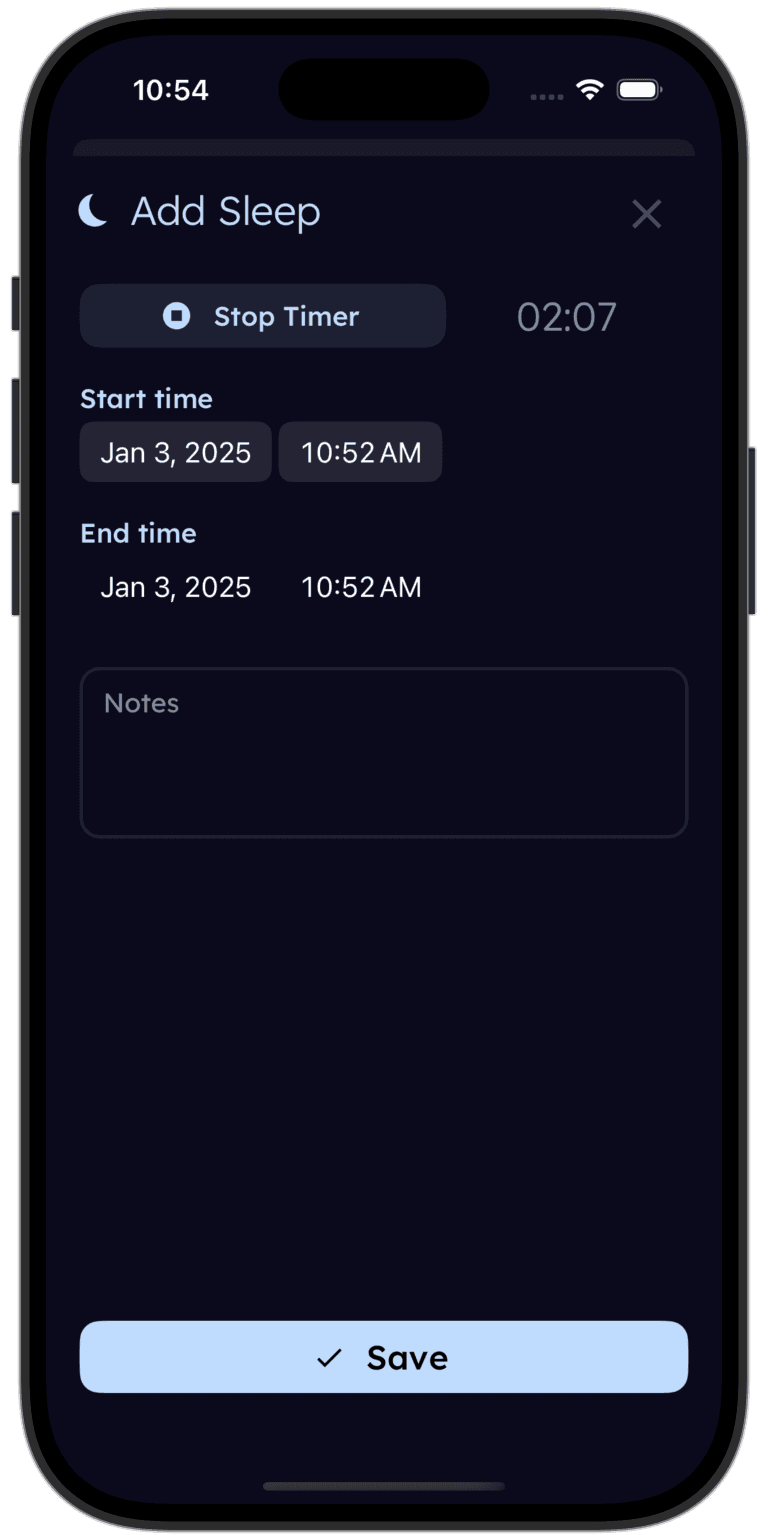
tinylog showing 2 year old sleep schedule data

Two years of sleep data — the perspective is powerful.

If you've been tracking since infancy, you now have an incredible longitudinal view of your child's sleep development. The evolution from newborn chaos to the stable one-nap rhythm is visible in the data. This perspective helps you navigate disruptions with confidence — you've seen your child's sleep mature before.

Download on the App StoreGet It On Google Play

What's Happening Developmentally

At 2 years old, your toddler has 200 to 1,000+ words, is forming multi-word sentences, running and jumping, climbing stairs, scribbling with crayons, and engaging in elaborate pretend play. They're beginning to understand concepts like "mine," "yours," "now," and "later." Tantrums peak between 18 months and 3 years as emotional intensity outpaces emotional regulation.

The cognitive leaps are enormous: your toddler can remember events from weeks ago, anticipate future events, understand basic cause and effect, and engage in rudimentary problem-solving. This cognitive sophistication directly impacts sleep — they can anticipate bedtime and start resisting before the routine even begins. They can plan their stalling tactics. They can remember what worked yesterday and try it again today. Your consistency must be as sophisticated as their strategies.

Common Problems at 2 Years

The 2-year regression

The 2-year regression is driven by a perfect storm: language explosion (your toddler can now argue with you), major life transitions (new sibling, potty training, bed change), nighttime fears intensifying, and a fierce drive for independence. This regression is more behavioral than biological — which means your response directly affects how long it lasts. Consistent boundaries delivered with empathy are the formula. Acknowledge feelings, hold the line, repeat. It typically resolves in 2 to 6 weeks.

The toddler bed transition (if it happens now)

If you're transitioning to a toddler bed at 2 — either because of crib climbing or because it feels like the right time — expect 1 to 3 weeks of adjustment. The biggest challenge: your toddler can now get out of bed. The novelty of freedom means they will get out of bed. Repeatedly. The strategy: boring consistency. Walk them back to bed every time with minimal interaction. No negotiation, no conversation, no anger. Just: 'It's bedtime' and back to bed. It takes 3 to 7 nights of this before they stop testing.

Potty training disrupting sleep

If you're potty training during the day, keep diapers or pull-ups for sleep. Nighttime bladder control is governed by the hormone vasopressin, which develops independently from daytime readiness. Most children aren't consistently dry at night until 3 to 5 years old. Nighttime potty training before the body is ready leads to unnecessary wake-ups, wet sheets, and disrupted sleep for everyone. When your toddler starts waking up dry most mornings on their own, that's the signal for nighttime transition.

What No One Tells You About Sleep at 2 Years

Nighttime dryness is hormonal — you can't train it

One of the most common sleep disruptions at this age is premature nighttime potty training. Parents assume that if their toddler is trained during the day, they should be dry at night too. They can't — nighttime dryness depends on the hormone vasopressin, which suppresses urine production during sleep. This hormone develops on its own timeline, typically between ages 3 and 5. You cannot speed this up with training, wake-up alarms, or fluid restriction. Keep the nighttime diaper until your toddler is consistently waking up dry.

The 2-year-old who negotiates bedtime has reached an impressive cognitive milestone

When your 2-year-old says 'One more book, then bed, I promise' — they're demonstrating negotiation, future planning, bargaining, and emotional persuasion. This is extraordinary cognition. It's also exhausting at 7:30 PM. The solution isn't to suppress the negotiation (that's like punishing intelligence) — it's to set the terms before the negotiation begins. 'Tonight we read two books. You pick which two.' The boundary is non-negotiable. The choice within the boundary satisfies their need for control.

When to Talk to Your Pediatrician

  • The regression persists beyond 6 weeks with no improvement
  • Frequent night terrors (multiple times per week)
  • Snoring, gasping, or mouth breathing during sleep
  • Excessive daytime sleepiness despite adequate sleep opportunity
  • Regression in language, motor skills, or toilet training
  • Any sudden behavioral change that concerns you

The 2-year well visit is the perfect time to discuss sleep, development, potty training, and the bed transition.

Related Guides

Sources

American Academy of Pediatrics (AAP). (2022). Healthy Sleep Habits: How Many Hours Does Your Child Need?
Mindell, J. A., et al. (2017). Sleep and Social-Emotional Development in Infants and Toddlers. Journal of Clinical Child & Adolescent Psychology, 46(2), 236–246.
Galland, B. C., et al. (2012). Normal sleep patterns in infants and children: A systematic review. Sleep Medicine Reviews, 16(3), 213–222.
Baby Sleep Information Source (BASIS), Durham University. Normal Infant Sleep Development. https://www.basisonline.org.uk
National Sleep Foundation. (2020). How Much Sleep Do Babies and Kids Need? https://www.sleepfoundation.org

Medical Disclaimer

This guide is for informational purposes only and is not a substitute for professional medical advice. Always follow safe sleep guidelines as appropriate for your child's age. Consult your pediatrician with any concerns about your child's sleep.

Want this guide in your inbox?
We'll send you this 2-year sleep survival guide for bedtime reference.
Two is a big year — track the changes.
Download ${appName} free — see how sleep evolves through the second year.
Download on the App StoreGet It On Google Play