GUIDE

The 3-Year Sleep Regression

Big kid bed, big kid fears, big kid opinions about bedtime. This regression is all about the massive emotional and cognitive growth happening at three.

Night fears, curtain calls, nap dropping, and maybe preschool on top of it all. Here's how to get through it.

First, a Reality Check: This Is Real, and It's a Lot.

If your three-year-old has suddenly decided that bedtime is a negotiation, the dark is terrifying, and they need to visit your room four times a night — you're not imagining things and you haven't broken anything. The 3-year sleep regression is a real, well-documented disruption, and it's driven by some of the biggest developmental changes your child has gone through since infancy.

The difference between this regression and the baby sleep regressions? Your child can now talk, walk, open doors, climb out of bed, and deliver devastatingly effective arguments for why they need one more story. The sleep disruption is temporary — typically 2 to 4 weeks for the worst of it — but it can feel relentless because your child now has tools to keep you engaged.

You're going to get through this. Here's what's actually going on and what you can do about it.

What's Happening Developmentally

There's a lot converging at age three, and almost all of it can affect sleep. Understanding why this is happening makes it a lot easier to respond with patience instead of panic.

The imagination switch flipped. Your child's brain has developed the ability to create vivid mental imagery — which means they can now imagine things that aren't there. Monsters in the closet, something under the bed, a scary face in the shadows. These fears are not manipulative. They feel absolutely real to your three-year-old, because the part of the brain that distinguishes imagination from reality is still under construction.

The big kid bed changes everything. If you've recently moved from crib to bed (or your child figured out how to climb out of the crib), there's no longer a physical boundary keeping them in their sleep space. Every impulse to come find you, every worry, every need for water — they can now act on it immediately. The novelty of this freedom is genuinely exciting to a three-year-old, and they will test it thoroughly.

Nap dropping is in progress. Most children drop their daytime nap somewhere between 3 and 4 years old, and the transition is rarely smooth. You'll get days where they desperately need the nap and days where napping means they're wired until 9 PM. This inconsistency alone can destabilize nighttime sleep.

Preschool may have just started. The social and emotional demands of preschool are enormous. Your child is learning to share, wait, follow group instructions, manage conflicts, and be away from you for hours at a time. That's exhausting even for adults. All that accumulated stress tends to surface at bedtime, when they finally feel safe enough to fall apart.

Potty training adds another layer. If nighttime dryness is part of the equation, your child now has a legitimate reason to get out of bed and a new source of anxiety (what if I have an accident?). It's one more variable in an already complicated picture.

Signs You're in the 3-Year Sleep Regression

  • New fear of the dark, monsters, or being alone — seemingly out of nowhere
  • Getting out of bed repeatedly after being put down (the classic 'curtain call')
  • Nightmares that wake them up scared and needing comfort
  • Stalling at bedtime — one more story, one more drink of water, one more hug
  • Resisting or fully skipping the daytime nap
  • Taking much longer to fall asleep at bedtime than they used to
  • Waking in the middle of the night and coming to your room
  • Increased clinginess or anxiety around separation at bedtime

If several of these showed up around the same time and your child is roughly 2.5 to 3.5 years old, you're almost certainly dealing with this regression. The acute phase typically lasts 2 to 4 weeks.

Nightmares vs. Night Terrors: An Important Distinction

These two things look very different but get confused constantly. Knowing which one you're dealing with changes what you should do.

Nightmares happen during REM sleep, usually in the second half of the night. Your child wakes up, is aware of you, and can tell you (in three-year-old terms) what scared them. They want comfort and may be afraid to go back to sleep. Go to them, keep the lights low, offer brief reassurance. "You're safe. It was a dream. I'm right here." Stay until they're calm, then settle them back to sleep. They'll likely remember the nightmare the next day, and brief daytime reassurance can help — "remember, dreams can't hurt you."

Night terrors happen during deep sleep transitions, usually in the first few hours after bedtime. Your child may scream, thrash, sit up, look terrified — but they're actually still asleep. They won't recognize you, won't respond to comfort, and won't remember it in the morning. As alarming as this looks, the best response is to not wake them. Stay nearby, make sure they're physically safe, and let the episode pass. It usually lasts 5 to 15 minutes. Night terrors are more common when children are overtired, which is worth noting if the nap is in the process of disappearing.

If you're not sure which one you're seeing, note the timing. First third of the night with a child who seems asleep and doesn't recognize you? Probably a night terror. Second half of the night with a child who wakes up and seeks your comfort? Nightmare.

What to Do Tonight

You don't need a complete overhaul of your child's sleep situation right now. You need a few things that can help tonight and a plan you can stick to consistently. Here's where to start.

Address the fears without dismissing them

Your three-year-old's brain is now capable of imagining things that aren't there — which is actually a cognitive milestone, even though it's inconvenient at bedtime. Don't say 'there's nothing to be scared of.' Instead, try 'I can see you're scared. You're safe. I'm right here.' Acknowledge the feeling, then calmly reassure. A quick closet check or a spray bottle of 'monster spray' (water with lavender) can give them a sense of control.

Add a nightlight — it's not a crutch

A dim, warm-toned nightlight can make a real difference for a child whose imagination has just come online. Red or amber tones are best because they don't suppress melatonin the way blue or white light does. Put it where it eliminates the scariest shadows without lighting up the whole room.

Make the bedtime routine a runway, not a runway extension

At three, your child is a world-class negotiator. Set the routine and stick to it: bath, pajamas, teeth, two books, one song, lights out. Use a visual chart if it helps — they can see what comes next and what's already done. When they ask for 'one more,' the chart is the bad guy, not you.

Handle curtain calls with calm, boring consistency

When your child gets out of bed for the fifth time, walk them back with minimal eye contact, minimal conversation, and maximum boredom. Say the same short phrase every time: 'It's bedtime. I love you. Back to bed.' The less interesting you are, the less rewarding it is to come find you. This is a marathon, not a sprint — but consistency wins.

Give them one sanctioned 'pass'

Some families have great success with a bedtime pass — one physical card your child can trade in for one extra thing (a hug, a drink of water, one more trip to the bathroom). Once the pass is used, that's it. It sounds almost too simple, but research actually backs this up. It gives your child a sense of control, which is often what they're really seeking.

Protect quiet time even if the nap is dying

If your child is dropping the nap, don't just eliminate the rest period entirely. Replace it with quiet time in their room — books, puzzles, soft music. They still need that midday reset, even if they don't sleep. And on days they do nap, push bedtime a little later so they're actually tired when you want them to sleep.

Consistency is the thing that matters most here. Your three-year-old is testing boundaries because that's developmentally what they're supposed to be doing. If the boundary holds — lovingly, boringly, predictably — they'll eventually stop testing it. If it moves, they'll push harder to find out where it actually is.

For a comprehensive look at sleep strategies across every age, our baby sleep playbook covers schedules, wake windows, and regression help from newborn through toddlerhood.


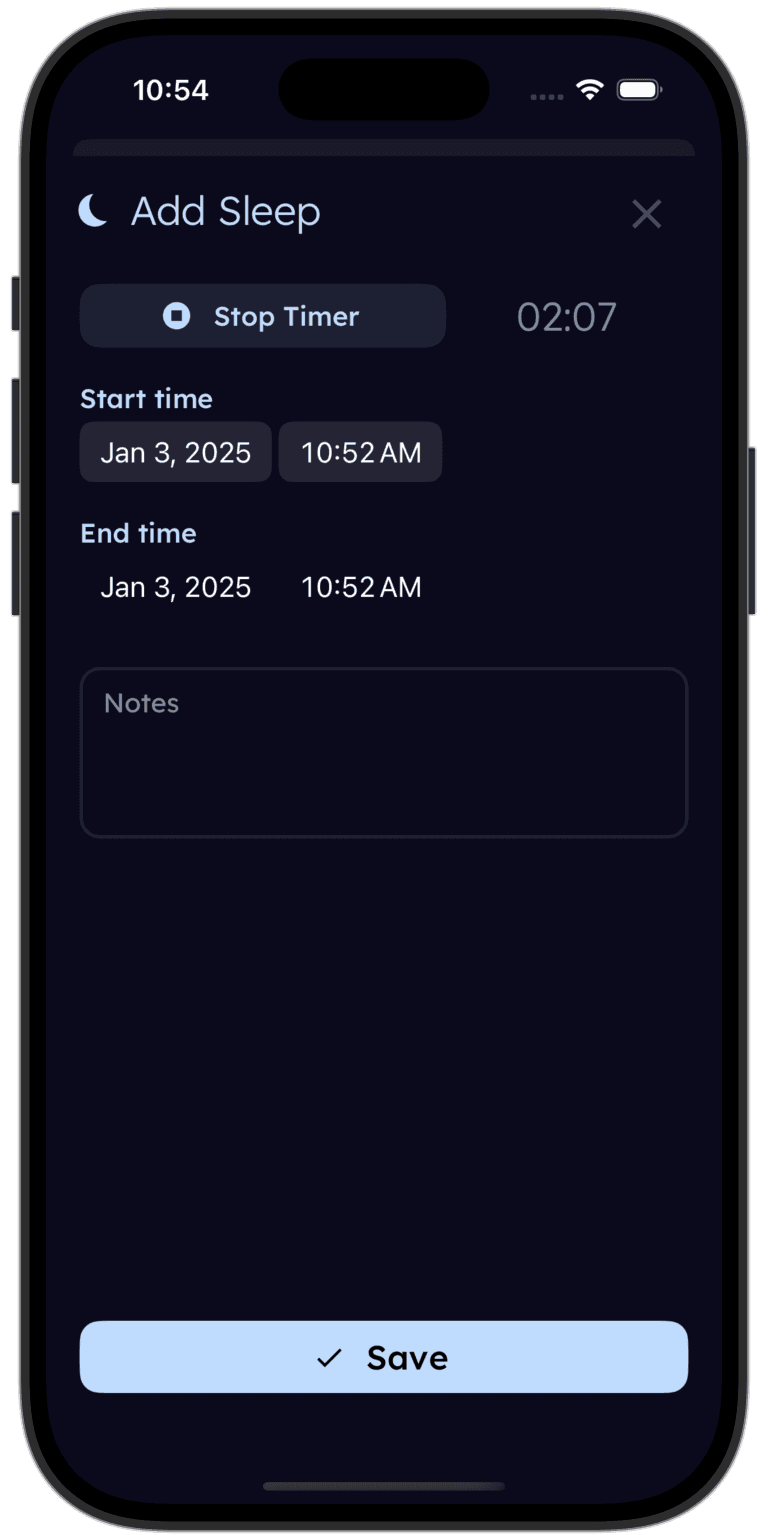
tinylog sleep tracker showing bedtime and wake-up patterns for a toddler

When bedtime is a battle, it helps to see the bigger picture.

Log sleep and bedtime behaviors in a couple taps and start spotting patterns — which nights go smoothly, what helps, and whether the regression is actually improving (even when it doesn't feel like it).

Download on the App StoreGet It On Google Play

What No One Tells You

The imagination that causes bedtime fears is a sign of healthy development

It's genuinely frustrating when your child is terrified of something that doesn't exist. But the ability to imagine things that aren't physically present — including scary things — is a major cognitive leap. It means their brain is developing abstract thinking. You're not dealing with a problem. You're dealing with a milestone that happens to show up at 9 PM.

The big kid bed transition is a loss of containment, not just a furniture change

In a crib, your child physically couldn't leave. In a bed, they can. That's a massive shift in the sleep dynamic and it changes the entire negotiation. If your child just moved to a bed and sleep fell apart, the bed is probably a bigger factor than any developmental regression. Some families find that making the switch and riding out the regression simultaneously is too much — and that's worth knowing.

Preschool can blow up bedtime even if your child loves it

Starting preschool is emotionally and socially exhausting, even for kids who run in happily every morning. All that stimulation, all that regulation, all that being brave — it has to come out somewhere. Bedtime is often where it lands. If sleep went sideways right around preschool starting, that's probably not a coincidence.

Nighttime potty training can make everything worse for a while

If you're working on nighttime dryness at the same time, your child now has one more reason to wake up and one more reason to call for you. It's okay to pause nighttime potty training during a rough sleep stretch. Nighttime bladder control is largely developmental — most kids aren't reliably dry at night until 4 or 5, and some not until later. There's no rush.

This regression typically lasts 2 to 4 weeks for the acute phase

The worst of it — the nightly battles, the frequent wake-ups, the epic curtain calls — usually peaks and starts to ease within 2 to 4 weeks, assuming you're staying consistent with your approach. Some residual fear or testing may linger longer, but the intense disruption does end. If it's been more than 6 weeks with no improvement, that's worth a conversation with your pediatrician.

When to Talk to Your Pediatrician

  • Night terrors are happening frequently (more than once a week) or lasting longer than 15 minutes
  • Your child's fears seem extreme or are significantly affecting daytime behavior
  • Snoring, mouth breathing, or pauses in breathing during sleep
  • The sleep disruption is severe and has lasted more than 4 to 6 weeks with no improvement
  • Your child seems excessively sleepy during the day despite adequate nighttime sleep
  • Bedwetting has started after being dry for 6+ months (secondary enuresis)
  • Your own mental health is suffering — parental burnout is real, and you deserve support too

You never need a 'good enough' reason to call your pediatrician. 'Something doesn't feel right' is always sufficient. That's what they're there for.

You Will Get to the Other Side of This

The 3-year sleep regression can feel uniquely exhausting because your child is old enough to argue, stall, negotiate, and show up in your bedroom at 2 AM with a detailed explanation of why they need to sleep in your bed. It's physically and emotionally draining in a way that's different from the baby regressions.

But here's what's true: your child is growing. The fears, the boundary testing, the big feelings at bedtime — these are all signs of a brain that's developing exactly the way it should. The imagination that creates the monsters also creates the stories, the pretend play, the empathy, the creativity. It's the same hardware.

The acute phase is usually 2 to 4 weeks. Stay consistent, stay boring at bedtime, keep showing up with the same calm reassurance, and it will pass. Your three-year-old doesn't need you to fix everything. They need to know that you're there, that the boundary is the boundary, and that morning always comes.

If you've been through earlier regressions, you already know this part: it ends. And when you look back, this stretch will feel much shorter than it does right now.

For more context on how all the sleep regressions connect, check out our sleep regression timeline. If you recently navigated the 2-year regression, our 2-year sleep regression guide has background that pairs well with this one. And if you're wondering what's normal and what's not at this age, is my baby's sleep normal covers the full picture.

Related Guides

Sources

  • Mindell, J. A., & Owens, J. A. (2015). A Clinical Guide to Pediatric Sleep: Diagnosis and Management of Sleep Problems (3rd ed.). Wolters Kluwer.
  • American Academy of Pediatrics (AAP). (2016). Brush, Book, Bed: How to Structure Your Child's Nighttime Routine. https://www.healthychildren.org
  • Mindell, J. A., Li, A. M., Sadeh, A., Kwon, R., & Goh, D. Y. T. (2015). Bedtime routines for young children: A dose-dependent association with sleep outcomes. Sleep, 38(5), 717–722.
  • Moore, B. A., Friman, P. C., Fruzzetti, A. E., & MacAleese, K. (2007). Brief report: Evaluating the bedtime pass program for child resistance to bedtime — a randomized, controlled trial. Journal of Pediatric Psychology, 32(3), 283–287.
  • Galland, B. C., Taylor, B. J., Elder, D. E., & Herbison, P. (2012). Normal sleep patterns in infants and children: A systematic review of observational studies. Sleep Medicine Reviews, 16(3), 213–222.
  • Zero to Three. Toddlers and Sleep. https://www.zerotothree.org
  • National Sleep Foundation. Children and Sleep. https://www.sleepfoundation.org

Medical Disclaimer

This guide is for informational purposes only and is not a substitute for professional medical advice. If you have concerns about your child's sleep or health, please consult your pediatrician.

Want this guide in your inbox?
We'll send you this guide for reference during the big kid sleep transitions.
Track bedtime patterns to find what's working.
Download tinylog free — log sleep and behaviors to see the trend.
Download on the App StoreGet It On Google Play