
GUIDE
Aquaphor Baby Wash & Shampoo vs. Aquaphor Baby Healing Ointment
Published on
Aquaphor Baby Wash & Shampoo is a gentle, tear-free cleanser for bath time that lifts away dirt and oil while lightly conditioning with provitamin B5 and chamomile. Aquaphor Baby Healing Ointment is a petrolatum-based skin protectant that locks in moisture and shields irritated skin between baths. They serve completely different purposes, and most families with a baby under one end up reaching for both.
These two products sit on the same shelf in the baby aisle, but they do very different jobs. The wash is a rinse-off cleanser designed for the tub — it gets your baby clean without stripping their skin. The ointment is a leave-on skin protectant designed for after the bath, during diaper changes, and any time your baby's skin needs a moisture barrier. Understanding what each one does (and does not do) helps you build a simple, effective skincare routine without overbuying.
Same Brand, Different Jobs — Here Is What Each One Actually Does
If you have spent any time in the baby aisle, you have seen both of these products sitting side by side in the Aquaphor section. The packaging looks similar, the brand name is the same, and it is completely fair to wonder whether you need one, the other, or both. The short answer: they do very different things, and understanding that difference saves you from buying products you do not need — or skipping one that could make your baby more comfortable.
Aquaphor Baby Wash & Shampoo is a rinse-off cleanser. You use it in the tub during bath time. It contains mild surfactants that lift away dirt, milk residue, and oil, along with provitamin B5 (panthenol) and chamomile essence that lightly condition the skin while you wash. It rinses clean, leaves skin feeling soft, and does not strip away moisture the way harsher soaps can. It is tear-free, so if some suds drift toward your baby's eyes, there should not be any stinging.
Aquaphor Baby Healing Ointment is a leave-on skin protectant. You use it after the bath, during diaper changes, and any time your baby's skin needs help. Its base is 41% petrolatum, which creates a thick, occlusive barrier on the skin surface. That barrier locks in the moisture your baby's skin already has and keeps irritants — like urine, stool, saliva, and wind — from making contact with raw or sensitive areas.
One cleans. The other protects. They are designed to work at different points in your baby's day, and they complement each other well.
| Feature | Baby Wash & Shampoo | Healing Ointment | What It Means |
|---|---|---|---|
| Product Type | Rinse-off cleanser (body wash and shampoo) | Leave-on skin protectant (ointment / balm) | Completely different product categories. The wash cleans, the ointment protects. |
| Primary Purpose | Gently removes dirt, oil, milk residue, and sweat during bath time | Creates a moisture barrier that locks in hydration and shields irritated skin | One is for the tub, the other is for after the tub (and between baths). |
| Key Ingredients | Provitamin B5 (panthenol), chamomile essence, mild surfactants | 41% petrolatum, mineral oil, ceresin, lanolin alcohol, panthenol, bisabolol | Both contain panthenol. The wash uses gentle cleansers; the ointment uses occlusive petroleum to seal moisture in. |
| Fragrance | Light chamomile scent | Fragrance-free | The wash has a mild botanical smell. The ointment has no scent at all. |
| Texture | Thin, pourable liquid that lathers into soft suds | Thick, greasy, occlusive balm that sits on the skin surface | Very different feel — the wash rinses away clean, the ointment stays put by design. |
| When to Use | During bath time (2–3 times per week for newborns, more as baby grows) | After baths, during diaper changes, or any time skin needs a moisture barrier | The wash is event-based (bath time). The ointment is need-based (dry skin, rash, irritation). |
| Safe for Newborns | Yes — tear-free and soap-free from first bath | Yes — fragrance-free and preservative-free from birth | Both are safe from day one. |
| NEA Seal of Acceptance | Yes | Yes | Tie. Both carry the National Eczema Association Seal of Acceptance. |
| Paraben-Free / Dye-Free | Yes — free of parabens, dyes, and preservatives | Yes — fragrance-free, dye-free, preservative-free | Both keep their formulas clean and gentle. |
| Common Use Cases | Bath time cleansing, gentle shampooing, light conditioning | Diaper rash, chapped cheeks, drool rash, windburn, dry patches, minor cuts | The wash handles one job well. The ointment is a multi-purpose workhorse between baths. |
| Bottle Sizes | 16.9 oz, 25.4 oz | 3 oz tube, 7 oz tube, 14 oz jar | Both offer size options. The ointment tube is great for the diaper bag; the wash comes in larger pump bottles for the tub. |
| Availability | Amazon, Target, Walmart, CVS, Walgreens, grocery stores | Amazon, Target, Walmart, CVS, Walgreens, grocery stores | Tie. Both are widely available at the same retailers. |
What the Ingredients Tell You
Even though these products share a brand name, their ingredient lists look nothing alike — and that is by design.
Aquaphor Baby Wash & Shampoo uses a base of gentle surfactants (the cleansing agents that create a mild lather) combined with provitamin B5 (panthenol) and chamomile essence. Panthenol is a humectant that helps the skin hold onto water, giving the wash a light conditioning benefit that you can feel after rinsing. Chamomile essence adds mild soothing properties. The formula skips sulfates (SLS and SLES), parabens, and dyes. It is designed to clean without disrupting your baby's skin barrier — which is thinner and more permeable than adult skin.
Aquaphor Baby Healing Ointment is built on 41% petrolatum — one of the most studied and recommended skin protectants in dermatology. The formula also includes mineral oil, ceresin, lanolin alcohol, panthenol, and bisabolol (a chamomile-derived anti-inflammatory). Petrolatum works by forming an occlusive layer on the skin that reduces transepidermal water loss by up to 98%. That means the moisture already in your baby's skin stays there instead of evaporating. It is fragrance-free, dye-free, and preservative-free.
The shared ingredient between them is panthenol. In the wash, it provides light conditioning during a brief encounter with the skin. In the ointment, it adds a layer of ongoing hydration support under the petrolatum barrier. Same ingredient, different delivery method, different result.
When to Use the Wash (and How Often)
Bath time frequency depends on your baby's age and skin. For newborns, most pediatricians recommend two to three baths per week — overbathing can dry out a newborn's already-delicate skin. As your baby starts crawling, eating solids, and getting into things, you may bump up to daily baths or near-daily baths.
Here is how the wash fits into the routine:
- Pump a small amount into your hand or a soft washcloth — a little goes a long way
- Lather gently over your baby's body and scalp — the tear-free formula handles both
- Rinse thoroughly with warm water — the wash rinses clean without leaving a film
- Pat dry gently with a soft towel rather than rubbing
The wash is doing its job during those few minutes in the tub. Once you rinse it away, its work is done. Any conditioning benefit from the provitamin B5 is subtle — it leaves skin feeling a touch softer, but it is not a moisturizer. If your baby has dry skin or eczema, the wash alone will not be enough to keep their skin hydrated between baths.
That is where the ointment steps in.
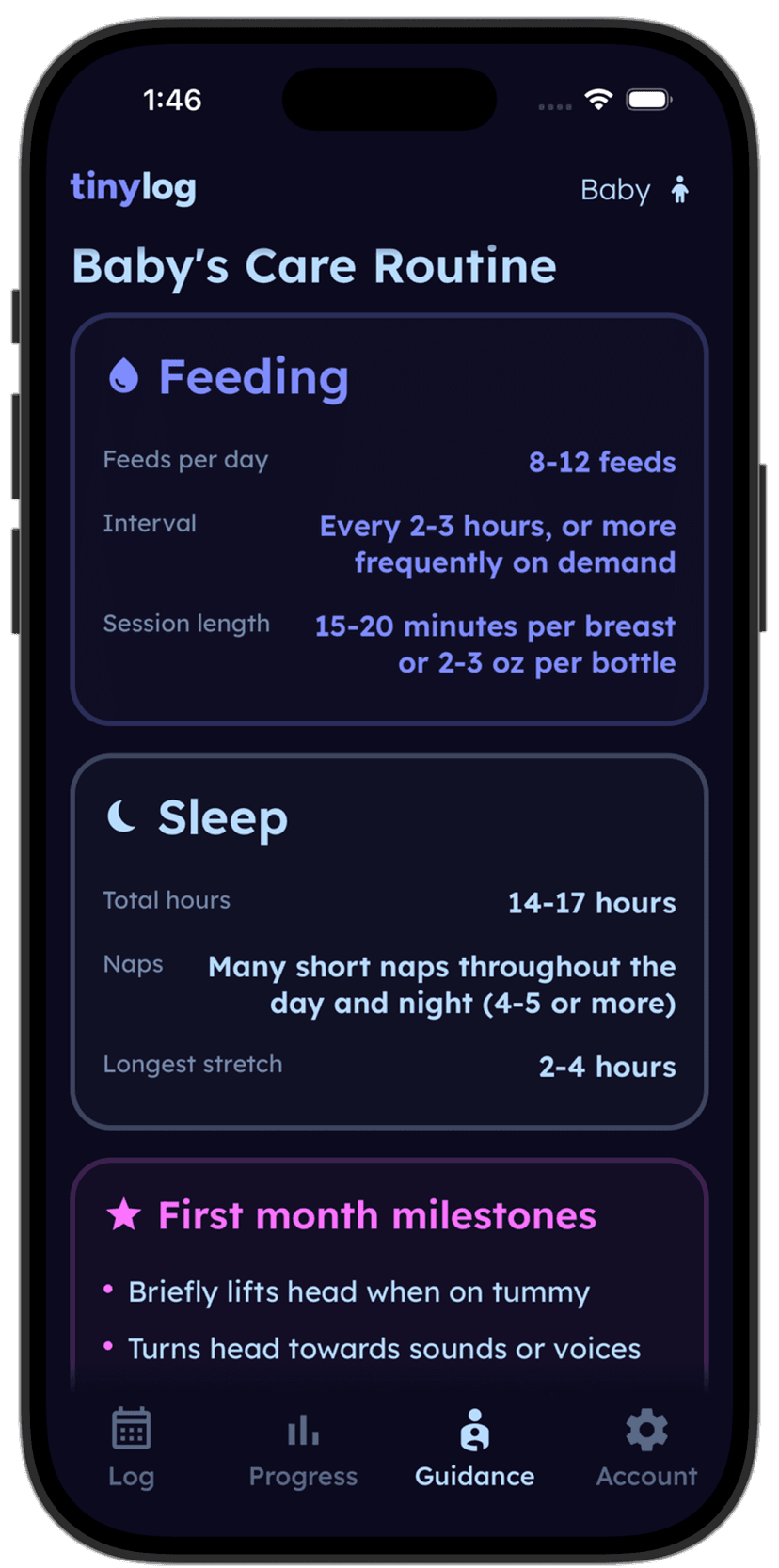
Tinylog tracks feedings so you can spot patterns.
Log breast, bottle, and solid feedings alongside bath time and skin notes. See trends over days and weeks. Bring the data to your next pediatrician visit.


When to Use the Ointment (and Where)
Aquaphor Baby Healing Ointment earns its keep between baths. For many families, it becomes the single most-used item in the nursery.
After bath time: Apply a thin layer to damp skin right after patting your baby dry. The petrolatum seals in moisture from the bath and prevents it from evaporating — the classic "soak and seal" approach that pediatricians recommend for dry and eczema-prone skin.
During diaper changes: A layer of ointment on clean, dry skin creates a barrier between your baby's skin and the moisture, urine, and enzymes in stool that cause diaper rash. You do not need a thick coat — just enough to create a visible, slightly shiny layer.
For drool rash and chapped cheeks: Babies who drool heavily (especially during teething) develop red, irritated patches on their cheeks, chin, and neck folds. A thin layer before naps or bedtime protects those areas while your baby sleeps. The same goes for windburn and cold-weather chapping — apply lightly to exposed skin before heading outside.
For minor cuts and scrapes: Pediatricians often recommend Aquaphor as a gentle wound protectant for small nicks — it keeps the area moist, which supports healing.
The ointment is thick and greasy by design. It sits on top of the skin as a physical shield rather than absorbing like a lotion. That greasiness is what makes it effective, even if it means keeping an old burp cloth nearby.
Do You Actually Need Both?
For most families with a baby under one, the honest answer is yes — having both products in your routine makes sense. They fill different roles at different times, and one cannot replace the other.
Here is why:
The wash cannot do what the ointment does. It rinses away after a few minutes in the tub. It does not create a moisture barrier, it does not protect against diaper rash, and it does not sit on chapped skin to help it heal. Expecting a wash to moisturize your baby's skin throughout the day is asking it to do a job it was never designed for.
The ointment cannot do what the wash does. It does not clean. Applying ointment on top of dirty skin traps bacteria and debris against the surface, which can lead to irritation or clogged pores. Your baby needs a gentle cleanser to start with a clean slate before the ointment can do its job properly.
That said, not every baby needs the ointment every day. If your baby has naturally well-hydrated skin with no dryness, eczema, or rash, you might use the ointment only occasionally — a dab on chapped cheeks in winter, a layer during a diaper rash flare. The wash, on the other hand, is part of every bath regardless of skin type.
The best routine for most babies is simple: Wash with Aquaphor Baby Wash in the tub, pat dry gently, then apply a thin layer of Aquaphor Healing Ointment to damp skin. That combination gives you a clean, protected baby without a complicated multi-step process.
| Product | Typical Price | Cost Per Ounce |
|---|---|---|
| Aquaphor Baby Wash & Shampoo (16.9 oz) | $9–$12 | ~$0.53–$0.71 |
| Aquaphor Baby Wash & Shampoo (25.4 oz) | $12–$15 | ~$0.47–$0.59 |
| Aquaphor Baby Healing Ointment (3 oz tube) | $5–$8 | ~$1.67–$2.67 |
| Aquaphor Baby Healing Ointment (14 oz jar) | $14–$18 | ~$1.00–$1.29 |
Price: Both Are Affordable by Baby Product Standards
One of the best things about the Aquaphor Baby line is that neither product will strain your budget.
The wash runs about $9 to $15 depending on bottle size, with the 25.4-ounce bottle offering the best per-ounce value at around $0.47 to $0.59. A large bottle lasts most families six to eight weeks at two to three baths per week.
The ointment ranges from about $5 to $18 depending on whether you buy the 3-ounce tube or the 14-ounce jar. The travel tube is perfect for the diaper bag, while the large jar is the better value for the changing station at home. At about $1.00 to $1.29 per ounce for the jar, it is one of the most affordable ointments on the market — and you use less per application than you might think.
A few ways to save:
- Subscribe and save on Amazon for 5 to 15 percent off recurring deliveries
- Buy the larger sizes (25.4-ounce wash, 14-ounce ointment jar) for the best per-ounce cost
- Watch for Target Circle, Walmart Rollback, and CVS ExtraBucks deals — Aquaphor products go on sale frequently
- Stock up during holiday sales — baby product bundles often appear around Prime Day and end-of-year sales
Eczema-Prone Skin: How They Work Together
If your baby has eczema or very dry skin, using both products together is not just convenient — it is close to what many pediatricians and dermatologists recommend as a baseline care routine.
The "soak and seal" method is one of the most widely endorsed approaches for infant eczema:
- Soak — Give your baby a lukewarm bath (5 to 10 minutes) using a gentle, fragrance-light wash like Aquaphor Baby Wash & Shampoo
- Pat dry — Gently pat (do not rub) the skin with a soft towel, leaving it slightly damp
- Seal — Apply Aquaphor Baby Healing Ointment to the damp skin within three minutes of leaving the tub
The wash handles the soak step without introducing harsh ingredients that could trigger a flare. The ointment handles the seal step by trapping the water from the bath inside the skin. Together, they form a two-step routine that takes less than fifteen minutes and can meaningfully reduce dryness and irritation over time.
Both products carry the National Eczema Association Seal of Acceptance, which means they have been reviewed and deemed suitable for eczema-prone skin. That dual endorsement gives parents peace of mind when building a routine around products their baby's sensitive skin can tolerate.
For moderate to severe eczema, your pediatrician may add a medicated cream or prescription ointment between the wash and the sealing step. But for mild eczema and general dryness, the Aquaphor wash-and-ointment combination is a strong starting point.
Reach for Aquaphor Baby Wash & Shampoo When
- Your baby needs a gentle cleanser for bath time that will not strip their skin
- You want a tear-free wash and shampoo in one bottle to keep bath time simple
- Your baby's skin feels dry or tight after baths with other washes
- You want provitamin B5 conditioning built into the cleansing step
- You are looking for a National Eczema Association accepted wash for eczema-prone skin
Reach for Aquaphor Baby Healing Ointment When
- Your baby has diaper rash and needs a thick moisture barrier during changes
- You want a fragrance-free ointment to protect chapped cheeks, drool rash, or windburn
- Your baby has dry patches or mild eczema that needs daily protection between baths
- You need a multi-purpose product for minor cuts, scrapes, and everyday skin irritation
- Your pediatrician recommended a petrolatum-based ointment for your baby's skin
- You want something that stays in the diaper bag for on-the-go skin protection
Where to Buy
For bath time, the Aquaphor Baby Wash & Shampoo (~$9–$15 depending on size) is a gentle, tear-free cleanser with provitamin B5 and chamomile that lightly conditions while it cleans. It is one of the most accessible baby washes on the market — grab it at any drugstore, grocery store, or big-box retailer.
For skin protection between baths, the Aquaphor Baby Healing Ointment (~$5–$18 depending on size) is a petrolatum-based workhorse that handles diaper rash, chapped cheeks, drool rash, dry patches, and minor cuts. Keep a tube in the diaper bag and a jar at the changing station.
Our honest take: if you are building your baby's skincare routine from scratch and want to keep it simple, starting with both of these covers the two jobs that matter most — gentle cleansing and reliable moisture protection. They are from the same trusted brand, they are both NEA accepted, and they work well together.
Tinylog earns a small commission on purchases made through these links, at no cost to you.
We've found promo.new handy for finding discounts on baby gear. Doesn't always have what you need, but it's worth a shot.
The Bottom Line
Aquaphor Baby Wash & Shampoo and Aquaphor Baby Healing Ointment are not competing products — they are teammates. The wash handles bath time. The ointment handles everything between baths. Trying to use one without the other is like washing your hands and never drying them, or drying your hands without washing them first.
The wash is best for gentle cleansing two to seven times per week (depending on your baby's age and activity level). Provitamin B5 and chamomile give it a light conditioning benefit, and the tear-free formula makes bath time calm and fuss-free. It is not a moisturizer, and it is not meant to treat skin conditions on its own.
The ointment is best for daily moisture protection, diaper rash prevention, and targeted care for chapped, dry, or irritated skin. The 41% petrolatum base is one of the most effective moisture barriers available, and decades of pediatrician recommendations back it up. It is not a cleanser, and it works best when applied to clean, damp skin.
For most families, buying both is a straightforward decision that simplifies your baby's skincare routine rather than complicating it. Two products, two jobs, one brand you already trust.
If you are tracking your baby's feeding schedule, diaper changes, and skin reactions, Tinylog helps you log everything in one place. Patterns in feeding and skin health often go hand in hand — and having that data ready for your pediatrician makes every visit more productive.
Sources
- Aquaphor.com. "Aquaphor Baby Wash & Shampoo — Product Information." 2026.
- Aquaphor.com. "Aquaphor Baby Healing Ointment — Product Information." 2026.
- National Eczema Association. "Seal of Acceptance — Aquaphor Baby Products." nationaleczema.org.
- American Academy of Dermatology. "How to Bathe Your Newborn." aad.org, 2025.
- HealthyChildren.org (AAP). "Diaper Rash." healthychildren.org, 2025.
- Proksch, E. et al. "Bathing and Cleansing in Newborns from Day 1 to First Year of Life." European Journal of Pediatrics, 2011.
- Sethi, A. et al. "Moisturizers: The Slippery Road." Indian Journal of Dermatology, 2016.
- Gunt, H.B. et al. "Petrolatum: Barrier Repair and Antimicrobial Responses Underlying This 'Inert' Moisturizer." Journal of Allergy and Clinical Immunology, 2016.
Related Guides
This guide is for informational purposes only and should not replace advice from your pediatrician or dermatologist. Every baby's skin is different — what works well for one child may not work for another. Always patch-test new products and consult your doctor if your baby has persistent skin concerns.
Frequently asked questions
- Can I use Aquaphor Baby Healing Ointment instead of baby wash?
- No. Aquaphor Baby Healing Ointment is a leave-on skin protectant, not a cleanser. It does not remove dirt, oil, or milk residue from your baby's skin. You still need a gentle wash for bath time. Using ointment without bathing first can trap debris against the skin and lead to irritation. Use the wash in the tub and the ointment afterward on damp skin for the best results.
- Is Aquaphor Baby Wash safe for newborns?
- Yes. Aquaphor Baby Wash & Shampoo is tear-free, soap-free, and free of parabens and dyes. It is gentle enough for a newborn's first bath. Most pediatricians recommend two to three baths per week for newborns in the early weeks. If your baby has a specific skin condition, check with your doctor before starting any new product.
- Can I use Aquaphor Baby Healing Ointment on my baby's face?
- Yes. Aquaphor Baby Healing Ointment is safe for the face, including cheeks, chin, and around the nose. Many parents use a thin layer to protect against drool rash and windburn. Avoid applying it directly near the eyes, and use a small amount — a little goes a long way on delicate facial skin.
- Do I need to apply Aquaphor Healing Ointment after every bath?
- You do not have to, but it helps. Bathing can temporarily reduce your baby's natural skin oils, and applying a thin layer of ointment to damp skin right after the bath locks in moisture before it evaporates. This is especially helpful for babies with dry or eczema-prone skin. For babies with healthy, well-hydrated skin, a lighter lotion may be enough on non-bath days.
- Is Aquaphor Baby Healing Ointment the same as regular Aquaphor?
- They are very similar but not identical. Aquaphor Baby Healing Ointment is specifically formulated for sensitive baby skin — it is fragrance-free, dye-free, and preservative-free. Regular Aquaphor Healing Ointment has a nearly identical petrolatum base but is marketed for general use. The baby version undergoes additional testing for infant skin safety.
- Can I use Aquaphor Baby Wash as a shampoo too?
- Yes. Aquaphor Baby Wash & Shampoo is a two-in-one product designed for both hair and body. The tear-free formula is gentle enough for your baby's scalp and can help with light flaking. For stubborn cradle cap, your pediatrician may recommend a different approach, but for everyday hair and body cleansing, the wash handles both jobs.