GUIDE

11-Month-Old Baby Development

So close to so many things. Every day feels like 'this is it' — and one of these days, it will be.

Eleven months is a month of refinement and practice. Your baby is polishing skills, testing boundaries, and quietly preparing for the enormous developmental leaps of toddlerhood. Their personality is unmistakable — favorite books, favorite songs, favorite everything.

Physical and Motor Development

Standing independently is becoming more stable — 5–10 seconds or more. Some babies take first steps this month. According to the WHO Motor Development Study, the range for independent walking is 8–18 months, with the median around 12 months. Cruising is expert-level: navigating corners, one-handed, transferring between furniture. Some babies push walking toys across the room.

Fine motor skills are advanced. According to Pathways.org, your baby can stack 2–3 blocks, put objects in containers with precision, turn pages, and operate simple mechanisms. Self-feeding with finger foods is manageable, and they're practicing with a spoon — loading it, getting it to their mouth, occasionally succeeding.

Milestones to Watch For

  • Standing independently for 5–10 seconds or more
  • Some babies take first steps this month
  • Expert-level cruising — navigating corners, one-handed
  • Fine motor: stacking 2–3 blocks, turning pages, operating simple mechanisms
  • 1–3 recognizable words, with 50+ words understood
  • Rich gestural vocabulary — pointing, waving, clapping, blowing kisses
  • Cooperative play emerging — rolling a ball back and forth, taking turns

The CDC milestones for 9–12 months include pulling up, walking along furniture, and using gestures like waving.

Cognitive, Sensory, and Social Development

Your baby follows complex sequences, tests hypotheses (dropping different objects to see if the same thing happens), and engages in early symbolic play — holding a block to their ear like a phone. They understand categories deeply: dogs and cats are different, spoons and forks are both for eating. This categorical thinking is scaffolding for language.

Separation anxiety may be easing or still strong — every baby is different. Cooperative play is emerging: rolling a ball back and forth, taking turns, simple games with rules. According to Zero to Three, limit-testing at this age is normal and a sign of cognitive and social development. They express affection deliberately — hugs, kisses, offering you a toy.

Most babies have 1–3 recognizable words. They understand 50+ words and can follow simple directions. Gestures are plentiful — according to the CDC, using several gestures by 12 months is expected. Proto-conversations are happening with clear communicative intent.


Feeding and Sleep

Feeding is approaching a transition point — three meals plus snacks, with a wide variety of foods and textures. If you're breastfeeding, the WHO recommends continuing alongside complementary foods through 2 years if mutually desired. Formula-feeding families will discuss transitioning to whole milk around 12 months.

Sleep at eleven months is typically 11–12 hours at night with 2 naps. Walking practice can disrupt sleep — your baby might pull to stand in the crib and not know how to get back down. This is temporary.

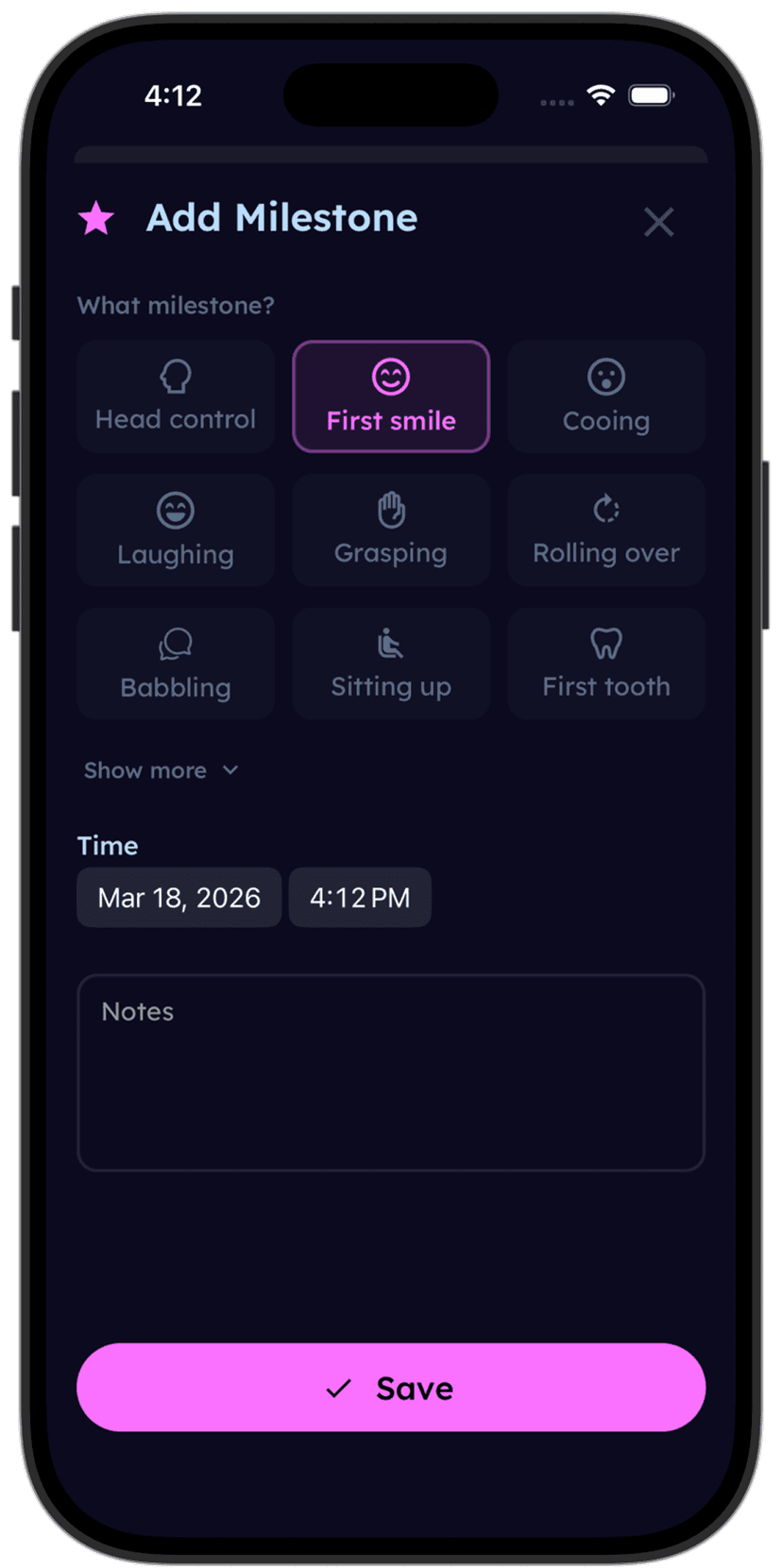
tinylog milestone history showing first year development

The first year is almost over. Having a record of it is something you'll treasure.

tinylog helps you look back at the whole first year — every milestone logged, every pattern tracked — and feel genuinely proud of how far you've both come.

Download on the App StoreGet It On Google Play

What You Might Not Expect

Your baby might become possessive

They might clutch toys to their chest when another baby approaches, cry when a toy is taken, or refuse to share food. This possessiveness is developmentally normal — understanding ownership is a cognitive milestone. True sharing develops over years, not weeks.

Random fears might pop up

The vacuum cleaner. A specific stuffed animal. The blender. Fears at this age are related to increasing awareness and memory — they remember something was loud or startling. Acknowledge the fear, don't force exposure, and it'll pass.

The 'almost walking' phase can last longer than you'd think

Your baby might cruise, stand alone, and even take a step or two — then not walk independently for another month or more. The build-up to walking is often longer than parents expect, and it's completely normal.

When to Talk to Your Pediatrician

  • Doesn't pull to stand
  • Doesn't search for objects you've hidden
  • Doesn't point to things
  • Doesn't learn new gestures (waving, clapping)
  • Doesn't say any words, not even mama or dada
  • Has lost skills they previously had

The 12-month well-child visit is imminent and includes developmental screening. Come prepared with your observations and questions.

Related Guides

Get this guide in your inbox.
We'll send it so you can reference it during the 'are they about to walk?' weeks.
Almost one. You're doing an incredible job.
Download tinylog free — capture the last weeks of babyhood before toddlerhood begins.
Download on the App StoreGet It On Google Play