GUIDE

12-Month-Old (1 Year) Baby Development

One year. From a newborn who couldn't lift their head to a person with opinions about dinner.

Twelve months marks the end of infancy and the beginning of toddlerhood. The range of 'normal' at 12 months is enormous. Your baby is exactly where they need to be.

Physical and Motor Development

Walking is the milestone everyone talks about. According to the WHO Motor Development Study, the median age is around 12 months, but the normal range extends from 8 to 18 months. The CDC's 2022 milestones expect walking by 18 months, not 12. If your baby isn't walking yet, don't worry. First steps typically look like a controlled fall forward — arms up, wide stance, 2–3 lurching steps.

Climbing is serious business — stairs on all fours, onto furniture, attempting things clearly too tall. Fine motor skills are impressive: stacking blocks, scribbling with a crayon, feeding themselves with increasing skill. According to Pathways.org, twelve months is when babies start using objects as tools — a stick to reach something, a spoon to bang a pot.


Milestones to Watch For

  • Walking — or close to it (normal range: 8–18 months)
  • Climbing stairs on all fours, getting onto low furniture
  • Fine motor: stacking blocks, scribbling, deliberate object placement
  • 1–5 recognizable words, with 50–100+ understood
  • Jargon babbling — long sequences that sound like real sentences
  • Symbolic play emerging — pretending to feed a doll, holding block to ear like a phone
  • Independence drive — wants to do things themselves

The CDC's 12-month milestones include putting things in a container, looking at the right picture when named, and following simple directions like 'sit down.'

Cognitive, Sensory, and Social Development

Symbolic understanding is emerging — your baby might pretend to feed a doll or hold a block to their ear like a phone. This is a massive cognitive milestone: they can think about things that aren't physically present. They follow your gaze and your point, understand routines, and remember where things were left yesterday.

Independence is emerging — your baby wants to do things themselves. Separation anxiety may be improving. According to Zero to Three, one-year-olds are beginning truly reciprocal play. They show a range of emotions clearly and want your approval — checking your reaction after doing something.

Most babies have 1–5 words. Comprehension far exceeds production — probably 50–100+ words understood. According to the CDC, using gestures to communicate is an expected 12-month milestone. Jargon babbling is in full swing — long sequences with real intonation and pauses that sound exactly like a foreign language.

Feeding and Sleep

The AAP recommends transitioning from formula to whole milk around 12 months (16–24 oz per day). Breastfeeding can continue as long as mutually desired. Your baby should be eating three meals plus snacks of family foods. Self-feeding with fingers and utensils is the norm. Most pediatricians recommend weaning from the bottle by 12–15 months.

Sleep at one year is typically 11–14 hours total, including 1–2 naps. Many babies are still on 2 naps. The transition to 1 nap usually happens between 12–18 months — don't rush it.

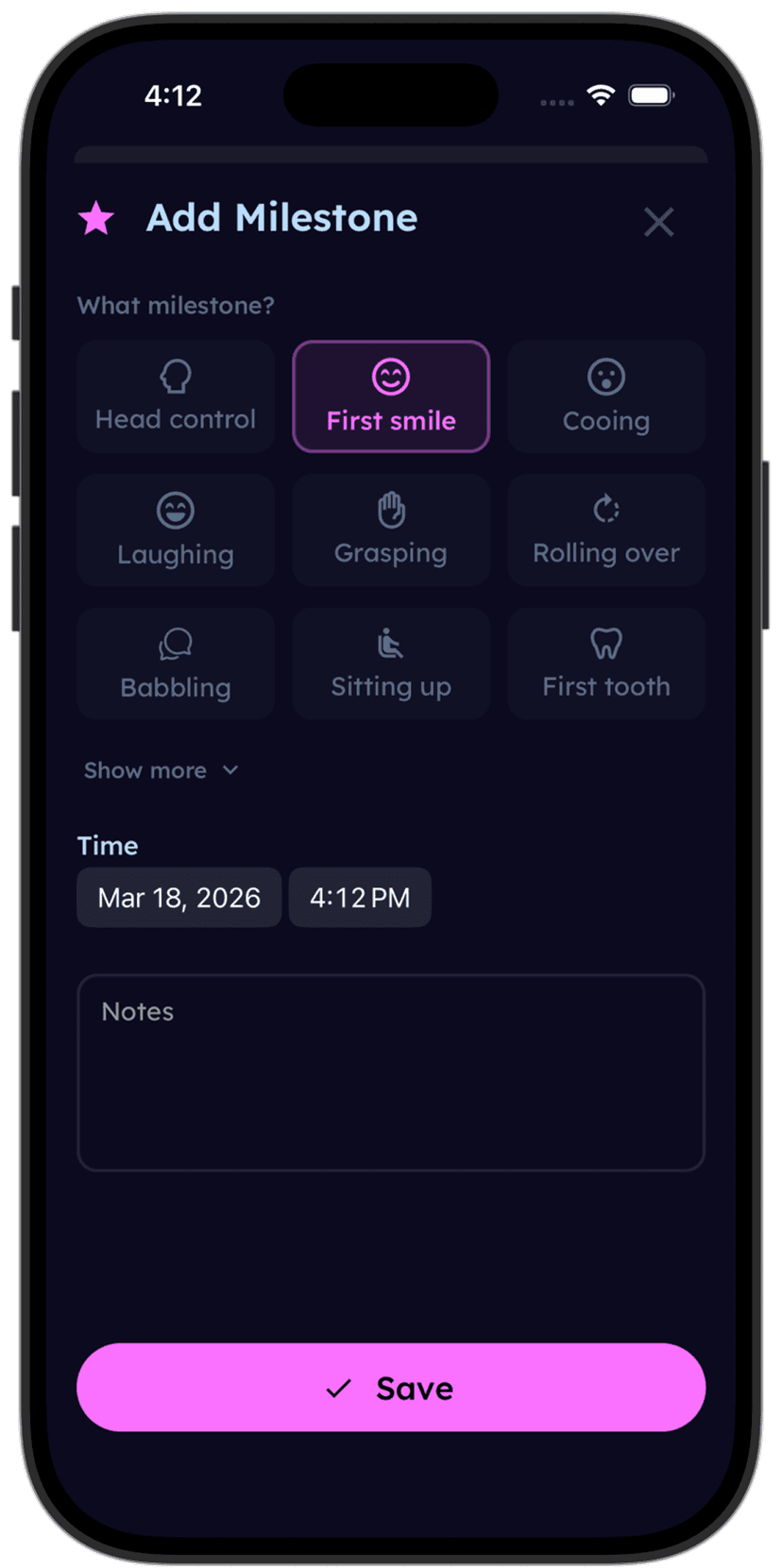
tinylog milestone tracking showing first year developmental journey

One year of data tells a story that's bigger than any single day.

tinylog helps you track the transition from baby to toddler — new milestones, changing sleep patterns, and the evolution of feeding — so you never lose track of how far you've both come.

Download on the App StoreGet It On Google Play

What You Might Not Expect

First birthday emotions can hit you harder than expected

Looking at newborn photos, remembering how tiny they were, feeling the weight of a year that flew by — it can bring up unexpected grief alongside the celebration. Big milestones for your baby are big milestones for you, too.

Your baby might suddenly refuse foods they loved

Food neophobia often emerges around 12–18 months. It's evolutionary — as babies become mobile enough to forage, wariness of new foods protects them. Keep offering variety without pressure. Most kids come out the other side with a reasonable palate.

The gap between wanting and doing creates epic frustration

They want to build a tower but blocks keep falling. They want to communicate but don't have the words. This frustration can lead to tantrums, which are completely age-appropriate and will increase over the next year.

When to Talk to Your Pediatrician

  • Doesn't crawl or use some form of movement
  • Can't stand with support
  • Doesn't search for things they see you hide
  • Doesn't say any words like mama or dada
  • Doesn't learn gestures like waving or shaking head
  • Doesn't point to things
  • Has lost skills they used to have

The 12-month well-child visit is comprehensive — growth check, developmental screening, and vaccines. Early intervention is most effective when started early.

Related Guides

Get this guide before the birthday checkup.
We'll send it so you can reference it before the 12-month well-child visit — the comprehensive one.
One year of showing up. You built this.
Download tinylog free — track the transition from baby to toddler so you never lose sight of how far you've come.
Download on the App StoreGet It On Google Play