GUIDE

Baby Poop After Starting Solids

Solids change the color, consistency, smell, and frequency of your baby's poop — all at once.

That mild, inoffensive breastfed baby poop is about to become something else entirely. Here is a food-by-food breakdown of what to expect so you are not caught off guard by orange, green, or alarmingly red diapers.

The Great Diaper Transition: What's Coming

There is a moment during the first week of solid foods when you open a diaper and think something has gone terribly wrong. The poop is a completely different color than anything you have seen before, it is thicker, it smells dramatically different, and there might be actual recognizable pieces of food in it. This is the moment every parent of a newly solid-eating baby experiences, and it is completely normal.

Up until now, your baby's digestive system has processed exactly one thing: milk. Breast milk or formula, that is it. The gut bacteria have been optimized for milk digestion, the enzymes are tuned for milk proteins and fats, and the resulting poop has been relatively predictable — soft, mild-smelling, and some shade of yellow or tan. Starting solids changes all of that, and it changes it fast.

Within the first few days of eating solid food, you will notice firmer stools, different colors corresponding to what was eaten, and a smell that is — let us be direct — going to be a significant upgrade in intensity. That mild, almost sweet breastfed-baby-poop smell is gone. In its place is something that smells like, well, actual poop. This is the price of diversified nutrition, and there is no way around it.

The good news is that almost everything you are going to see in those diapers is normal. The bad news is that "normal" is going to look very different from what you have been used to. This guide will walk you through what each common first food does to your baby's poop so you can tell the difference between "that is just the sweet potatoes" and "we should call the pediatrician."

Food-by-Food Poop Chart
Sweet potatoes / Carrots
Poop ColorOrange to deep orange
ConsistencyThicker, sometimes slightly grainy
SmellMildly sweet, earthier than milk-only poop
NotesBeta-carotene is the pigment responsible — completely harmless
Peas
Poop ColorGreen, may have visible green chunks
ConsistencySlightly chunkier; pea skins often pass through whole
SmellStronger than milk-only poop
NotesUndigested pea skins are normal — they are high in fiber
Beets
Poop ColorRed to dark pink
ConsistencyCan look alarming — may also tint urine pink
SmellEarthy
NotesBetanin (the red pigment) passes through and can look like blood. If you fed beets in the last 48 hours, this is almost certainly the cause.
Blueberries
Poop ColorDark blue, dark purple, or almost black
ConsistencyMay have visible skin fragments
SmellSlightly fruity, stronger overall
NotesAnthocyanins create the dark color. Can look alarming if you forget you served blueberries.
Bananas
Poop ColorBrown, may have dark threads or specks
ConsistencyFirmer, may become constipating in some babies
SmellMild to moderate
NotesThe dark threads are oxidized banana fibers, not worms. Bananas can contribute to constipation.
Spinach / Kale
Poop ColorDark green
ConsistencyMay have visible leaf fragments
SmellStronger, earthier
NotesChlorophyll is the green pigment. Dark green poop from greens is normal.
Prunes / Plums
Poop ColorDark brown to very dark
ConsistencyLooser, softer — prunes have a natural laxative effect
SmellStronger, sweeter
NotesSorbitol in prunes draws water into the intestines. Good for constipation relief.
Rice cereal
Poop ColorTan, brown, or slightly grayish
ConsistencyFirmer and thicker than milk-only stool
SmellMore noticeable but mild
NotesIron-fortified cereal may darken stool slightly. Rice cereal can be constipating for some babies.
Avocado
Poop ColorGreenish-brown
ConsistencySmooth, may be slightly looser
SmellMild
NotesHigh fat content is generally well-tolerated and produces relatively unremarkable stool
Meat (chicken, beef, turkey)
Poop ColorDarker brown
ConsistencyFirmer, thicker, more formed
SmellNoticeably stronger — this is when poop starts smelling like real poop
NotesProtein digestion produces more sulfur compounds. The smell increase is dramatic.
Tomatoes
Poop ColorMay have red flecks or skin pieces
ConsistencySlightly looser for some babies (acidic)
SmellModerate
NotesTomato skins pass through largely intact. Red flecks are food, not blood.
Corn
Poop ColorYellow flecks in stool
ConsistencyNormal; visible corn kernel pieces
SmellModerate
NotesCorn has an indigestible cellulose hull. Visible kernels in poop are universal — even in adults.
Colors typically appear 12-48 hours after eating the food and fade as the food moves through the system. If a color persists after the food is no longer being served, mention it to your pediatrician.

What's Happening Inside: The Gut Microbiome Shift

The changes you are seeing in the diaper are a visible reflection of a massive invisible transformation happening inside your baby's gut. When your baby starts eating solid food, their gut microbiome — the community of trillions of bacteria living in the intestines — undergoes one of the most dramatic shifts it will ever experience.

During exclusive milk feeding, the gut microbiome is relatively simple. Breastfed babies are dominated by Bifidobacterium species, which thrive on the special sugars (oligosaccharides) found in breast milk. Formula-fed babies have a more diverse but still relatively limited bacterial community. Either way, the microbiome is optimized for processing a single food source.

When solids arrive, the gut bacteria have to rapidly diversify to handle new substrates — plant fibers, animal proteins, complex carbohydrates, and fats that were never present before. New bacterial species move in to handle these new foods. Bacteroides species show up to break down plant fibers. Different Clostridium and Ruminococcus species appear to process complex starches. The entire ecosystem restructures itself over a matter of weeks.

This microbial upheaval is why the poop changes so dramatically. Different bacteria produce different metabolic byproducts, which change the color, consistency, and smell of stool. The increased bacterial diversity also means more gas production — so if your baby seems gassier after starting solids, the microbiome shift is why.

By about twelve months of age, your baby's gut microbiome will have transitioned from its simple milk-optimized state to something that closely resembles an adult composition. The journey from point A to point B is messy, smelly, and sometimes alarming — but it is one of the most important developmental processes happening in your baby's body.


The Gut Microbiome Transition
Exclusively milk-fed (0-4/6 months)
Dominant BacteriaBifidobacterium (breastfed) or more diverse mix (formula-fed)
Stool CharacterSoft, seedy, mild smell (breastfed); paste-like, slightly stronger smell (formula)
NotesBreast milk oligosaccharides selectively feed Bifidobacterium
Early solids introduction (4/6-8 months)
Dominant BacteriaIncreasing Bacteroides, Clostridium, and Ruminococcus species
Stool CharacterTransitioning — firmer, more colorful, developing stronger odor
NotesThe gut microbiome is diversifying rapidly as new substrates arrive
Established solids (8-12 months)
Dominant BacteriaApproaching adult-like diversity with Firmicutes and Bacteroidetes
Stool CharacterFormed, darker, unmistakably smellier
NotesBy 12 months, the microbiome has shifted dramatically from the milk-only composition
Full family diet (12+ months)
Dominant BacteriaNear adult composition
Stool CharacterFormed, brown, adult-like odor
NotesThe major microbiome transition is largely complete
Based on current microbiome research. Individual variation is significant — the timeline and specifics differ from baby to baby.

The Smell: Let's Talk About It

Nobody warns you adequately about this part. Parenting books mention that poop will "change" when solids start, but they tend to undersell the magnitude of that change when it comes to smell.

Breastfed baby poop smells mildly sour or yeasty — some parents describe it as almost sweet. Formula-fed poop has a slightly stronger odor but is still relatively tolerable. When solids arrive, the smell goes from "I can change this diaper without breathing through my mouth" to "I need to open a window and possibly leave the room for a moment."

The reason is bacterial fermentation. Your baby's newly diversified gut bacteria are now processing proteins, fibers, and fats that produce sulfur compounds, volatile fatty acids, and other aromatic byproducts. Meat proteins tend to produce the strongest-smelling stools — the first time you change a diaper after your baby has eaten chicken or beef is a memorable experience. Eggs are another potent contributor.

This is normal. The smell will vary from food to food, but it will never go back to the mild milk-poop days. If poop has a particularly foul, sour, or unusual smell AND is accompanied by other symptoms like diarrhea, blood, or mucus, that is worth mentioning to your pediatrician. But a strong smell by itself is just the new reality of a diversified diet.

tinylog diaper and feeding tracking screen

Log feeds and diapers together to see which foods cause what.

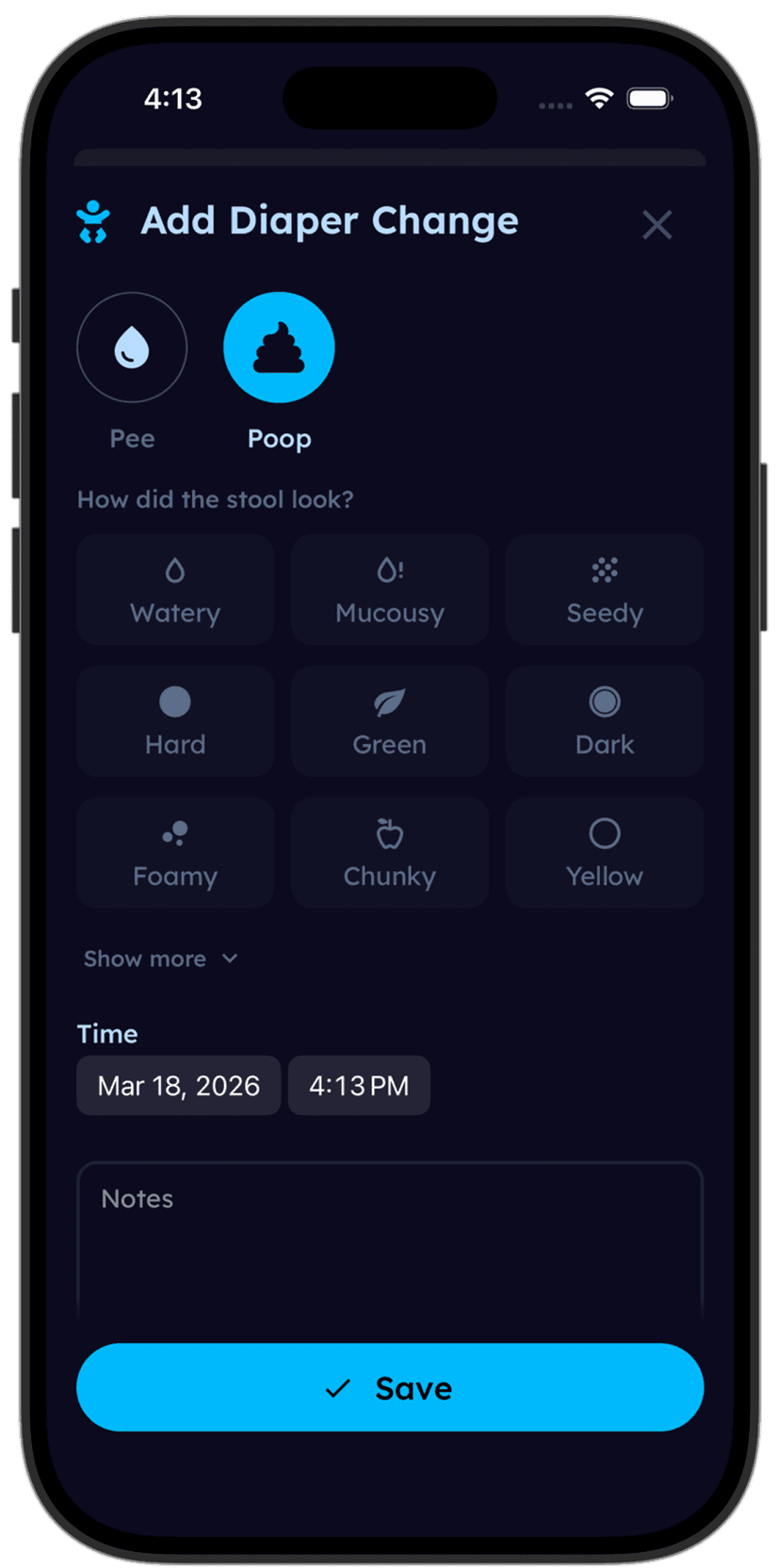
When you track both meals and diaper changes in tinylog, you can see exactly which foods are producing which results. Orange diaper this morning? Check yesterday's food log — sweet potatoes for dinner. This data helps you identify constipating foods, loosening foods, and anything your baby's gut might be struggling with.

Download on the App StoreGet It On Google Play

Normal Changes to Expect

  • Poop color changes matching the food served — orange from carrots, green from peas, dark from blueberries
  • Firmer, thicker consistency compared to milk-only stools
  • Undigested food pieces — pea skins, corn kernels, blueberry skins, bean hulls
  • Stronger smell (significantly stronger — this is not subtle)
  • Slight decrease in frequency for some babies as stool becomes more formed
  • Temporary loose stools when a new food is first introduced, resolving within a few days

All of these are signs that your baby's digestive system is doing exactly what it should — adapting to a more complex diet.

Warning Signs — When to Contact Your Pediatrician

  • White, pale, or clay-colored stool — this is never food-related and requires immediate medical attention
  • Persistent black stool that is NOT linked to iron-fortified cereal or dark foods like blueberries
  • Bright red in stool when no red foods (beets, tomatoes) have been given in the last 48 hours
  • Severe diarrhea lasting more than 3 days after introducing a new food
  • Hives, facial swelling, or difficulty breathing after eating a new food (this is a potential allergic reaction — call 911)
  • Baby refuses solids entirely and shows signs of pain during or after eating
  • Significant constipation that does not resolve with dietary adjustments after several days
  • Mucus in stool that persists beyond the first few days of a new food

Most of the alarming things you will see in diapers after starting solids are food-related and harmless. But the signs above warrant attention, especially white or clay-colored stool, which always requires immediate evaluation.

Tips for the Solid Food Transition

Introduce one new food at a time

The classic advice still holds: introduce one new food every 3-5 days. This is primarily for allergy identification, but it also helps you figure out which food is causing which poop change. If you introduce sweet potatoes, peas, and chicken all in the same day and the next diaper is alarming, you have no idea which food is responsible.

Take photos of concerning diapers

This sounds unpleasant. It is. Do it anyway. If you see a diaper that worries you, snap a photo before you change it. Pediatricians are not squeamish, and a photo is infinitely more useful than trying to describe 'sort of reddish-brown with some chunks' over the phone.

Do not confuse food pigment with blood

Beets and tomatoes are the biggest culprits for false alarms. If your baby ate beets within the last 48 hours, red or pink stool (and even pinkish urine) is almost certainly beet pigment, not blood. Same with tomato skins looking like blood flecks. If you are unsure, a simple rule: did they eat something red recently?

Balance constipating and loosening foods

Some foods tend to firm up stool (bananas, rice cereal, applesauce) while others soften it (prunes, pears, peaches, peas). If your baby is getting constipated on solids, increase the softeners and decrease the firmers. The 'P' fruits — prunes, pears, peaches — are your go-to constipation relievers.

Related Guides

Sources

  • American Academy of Pediatrics (AAP). (2024). Starting Solid Foods. HealthyChildren.org.
  • Centers for Disease Control and Prevention. (2024). When, What, and How to Introduce Solid Foods. CDC.gov.
  • Koenig, J. E., et al. (2011). Succession of microbial consortia in the developing infant gut microbiome. Proceedings of the National Academy of Sciences, 108, 4578-4585.
  • World Health Organization. (2023). Complementary Feeding. WHO.int.
  • Bäckhed, F., et al. (2015). Dynamics and Stabilization of the Human Gut Microbiome during the First Year of Life. Cell Host & Microbe, 17(5), 690-703.

Medical Disclaimer

This guide is for informational purposes only and is not a substitute for professional medical advice. If you have concerns about your baby's stool, feeding, or a potential allergic reaction, please consult your pediatrician.

Get this guide in your inbox.
We'll email you the food-by-food poop chart so you can reference it as you introduce new foods.
Track feeds and diapers together — see which foods change what.
Download tinylog free — track diapers with a single tap.
Download on the App StoreGet It On Google Play