GUIDE

Green Baby Poop

It's almost always normal. The shade, consistency, and your baby's behavior tell the real story.

Green poop in babies is one of the most common reasons parents hit the search bar at 2 AM. The good news? Most green stool is completely harmless. Here's why it happens, what each shade means, and when it actually warrants a call to your doctor.

Why Baby Poop Turns Green

Baby poop gets its color from bile — a digestive fluid produced by the liver and stored in the gallbladder. When bile enters the intestines, it starts out green. As it travels through the digestive tract, bacteria break it down, gradually changing its color from green to yellow to brown. The longer stool takes to move through the intestines, the browner it gets.

This is why the most common cause of green poop is simply speed. When food moves through the intestines faster than usual — because of a growth spurt, a mild virus, teething, or just your baby's individual digestive rhythm — bile doesn't have as much time to break down. The result is green stool. It's biology, not a malfunction.

Green poop is one of the most searched topics among new parents, right up there with "how much should my baby eat" and "why won't my baby sleep." The answer is almost always the same: it's normal. But knowing why it's green can help you tell the difference between a normal variation and something that actually needs attention. So let's walk through every common cause.

Shades of Green — What Each One Means
Dark Green / Black-Green
What It Looks LikeTar-like, very sticky
Common CauseMeconium (first 2-3 days) or iron-fortified formula
Level of ConcernNormal in newborns and with iron supplements
Forest Green
What It Looks LikeDark green, paste-like consistency
Common CauseIron-fortified formula, transitional stool in newborns
Level of ConcernNormal — the iron is just passing through
Army / Olive Green
What It Looks LikeDarker green-brown, sometimes seedy
Common CauseNormal variation in breastfed or formula-fed babies
Level of ConcernNormal — bile pigment variation
Bright / Lime Green
What It Looks LikeVivid green, may be frothy or watery
Common CauseForemilk-hindmilk imbalance, fast letdown, virus
Level of ConcernUsually normal — monitor if frothy and persistent
Green with Mucus
What It Looks LikeGreen with slimy, stringy strands
Common CauseTeething drool, mild virus, possible food sensitivity
Level of ConcernMonitor for 2-3 days — call doctor if blood appears or baby is unwell
Pea Soup Green
What It Looks LikeGreen, thicker, may have food chunks
Common CauseGreen vegetables in diet (peas, spinach, broccoli)
Level of ConcernNormal — diet-related, will change with meals
Green is a normal stool color at every age. The shade, consistency, and accompanying symptoms matter more than the color alone.

Foremilk-Hindmilk Imbalance (Breastfed Babies)

If you're breastfeeding and your baby is consistently producing bright green, frothy poop, the most likely culprit is a foremilk-hindmilk imbalance. Here's what that means.

Breast milk composition changes during a feeding. The milk at the beginning of a session — foremilk — is thinner, more watery, and higher in lactose. The milk toward the end — hindmilk — is thicker, creamier, and higher in fat. Both are important, but if baby fills up on foremilk without getting enough hindmilk, the excess lactose can ferment in the gut, producing gas and green, frothy stool.

This isn't dangerous, and it doesn't mean anything is wrong with your milk. It's a mechanics issue, not a supply issue. The most common scenarios where this happens are:

  • Fast letdown: Your milk comes out so quickly that baby fills up before reaching the hindmilk
  • Oversupply: You produce more milk than baby needs, so they never fully drain one breast
  • Short feeds on both sides: Switching breasts too early means baby gets foremilk from both sides but hindmilk from neither
  • Very frequent feeding during a growth spurt: Baby may be snacking rather than doing full feeds

The fix is usually straightforward: let baby finish one breast completely before offering the other. If they only want one side per feed, that's fine. The goal is to let them get to the fattier hindmilk, which is what helps produce that classic mustard-yellow poop.

Green Poop Is Probably Fine If...

  • Baby is gaining weight at a healthy rate
  • Baby feeds well and seems satisfied after eating
  • No blood, mucus, or unusually foul odor
  • Baby is alert, active, and meeting developmental milestones
  • Stool consistency is normal for baby's age and diet
  • Adequate wet diapers (6+ per day after day 5)

If your baby checks these boxes, green poop is almost certainly a normal variation. Relax.

Iron-Fortified Formula and Green Stool

If your baby is on iron-fortified formula — and nearly all standard infant formulas are iron-fortified — you may notice dark green or greenish-black stool. This is one of the most common and most harmless causes of green poop in babies.

Iron that isn't fully absorbed by the body gets excreted in stool, and oxidized iron is dark green to black in color. This is the same reason iron supplements can cause dark stool in adults. It looks alarming, but it's just chemistry.

Here's what's important: do not switch to a low-iron formula to change stool color. Iron is critical for your baby's brain development, especially in the first year of life. The AAP recommends iron-fortified formula for all formula-fed infants. Dark green poop is a small cosmetic tradeoff for essential nutrition.

If your baby is on an iron-fortified formula and producing dark green stool with no other symptoms — no excessive fussiness, no blood, no mucus, no refusal to eat — there is nothing to fix. This is expected. For more on choosing the right formula, see our best baby formulas guide.

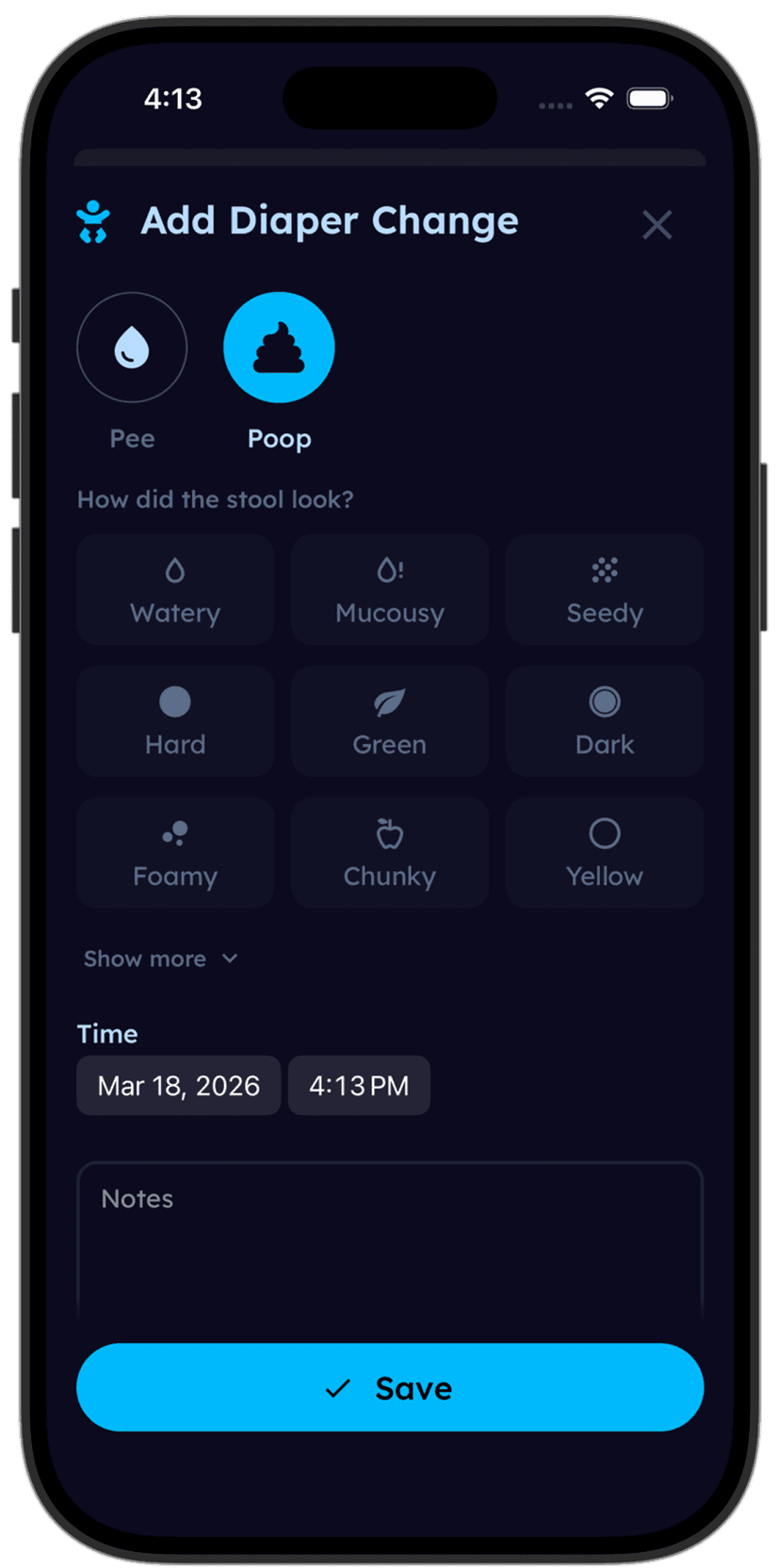
tinylog diaper tracking screen showing stool color logging over time

Is the green poop new, or has it been going on for a while? Your diaper log knows.

Track stool color and consistency over time in tinylog. When you can see a week of diaper data at a glance, you'll know whether you're looking at a one-off or a pattern — and your pediatrician will appreciate the data.

Download on the App StoreGet It On Google Play

Green Poop from Starting Solids

Once your baby starts eating solid foods — typically around six months — green poop takes on a whole new dimension. And it's usually the least interesting kind of green poop, because the explanation is sitting right there on the high chair tray.

Peas, green beans, spinach, broccoli, kale, avocado, and zucchini can all produce green stool. The green pigment (chlorophyll) in these foods passes through the digestive system and colors the stool on the way out. This is the dietary equivalent of "you are what you eat," and it's completely normal.

You might also see green chunks in the diaper — recognizable pieces of pea skin or spinach leaf that your baby's immature digestive system couldn't fully break down. This is also normal, especially in the early months of solid food introduction. Their gut will get better at processing fiber over time.

The rule of thumb: if your baby ate something green in the last 12-24 hours and their poop is green, you've solved the mystery. No action needed.

Green Poop and Illness

Sometimes green poop does signal that your baby isn't feeling well — but the green color itself isn't the problem. It's usually a side effect of faster-than-usual intestinal transit.

When babies have a stomach virus (gastroenteritis), a cold, or are teething heavily, their digestive system can speed up. Increased saliva from teething gets swallowed and can irritate the gut. A viral infection can inflame the intestinal lining. In both cases, food moves through faster, bile doesn't fully break down, and you get green stool.

Teething-related green poop is especially common and especially harmless. Babies produce enormous amounts of drool when teeth are coming in, and all that swallowed saliva can loosen stool and give it a greenish tint. If your baby is drooling buckets, chewing on everything, and has green poop, teething is the most likely explanation.

A stomach bug is a different story. If green poop is accompanied by vomiting, fever, refusal to eat, or very watery diarrhea (significantly more liquid than your baby's normal stool), call your pediatrician. The concern here isn't the color — it's the risk of dehydration from fluid loss. Keep offering breast milk or formula frequently, and watch for signs of dehydration: fewer wet diapers, dry mouth, no tears when crying, or a sunken soft spot.


When Green Poop Needs a Doctor

  • Blood streaks or red flecks mixed into green stool
  • Thick mucus in every diaper for more than 2-3 days
  • Very watery, explosive diarrhea (more than baby's usual loose stool)
  • Baby is refusing feeds, seems lethargic, or has a fever
  • Green stool with a foul, unusually strong odor
  • Persistent green stool with excessive crying, arching, or skin rashes
  • White, pale, or chalky stool — this is never normal and needs immediate attention

Most green poop is normal. But if you're seeing these signs, it's worth a call. And remember — white, pale, or chalky stool is always an emergency regardless of other symptoms.

Foremilk Fix: Tips for Breastfeeding Moms

Let baby finish one side before switching

The hindmilk — the fattier, creamier milk that comes toward the end of a feed — is what helps stool turn that classic mustard yellow. If you switch breasts too early, baby may get more of the watery, lactose-rich foremilk. Let them drain one side before offering the other.

Don't time your feeds

Some older advice suggests limiting feeds to a set number of minutes per side. Ignore that. Let your baby decide when they're done with one breast. They're the only ones who know when they've gotten to the good stuff.

Watch for a fast letdown

If your milk comes out fast and forcefully — baby gulping, coughing, or pulling off — they may be filling up on foremilk before they can get to the hindmilk. Try leaning back while nursing (laid-back breastfeeding) to slow the flow, or hand-express a little before latching.

Oversupply is a real thing

If you have a significant oversupply, baby may fill up quickly on foremilk from one breast and never reach the hindmilk. Block feeding — offering the same breast for a set period (usually 3-4 hours) before switching — can help regulate supply. Talk to a lactation consultant before trying this.

Practical Tips

Green poop from solids is the most boring kind

If your baby ate peas, spinach, kale, or broccoli and then produced green poop, congratulations — their digestive system is working exactly as expected. Pea soup green after a pea lunch is a non-event.

Track what they eat and what comes out

When you notice a new color, think back 12-24 hours to what baby ate. Most diet-related color changes appear within that window. If you're logging feeds and diapers in the same app, the connection becomes obvious pretty quickly.

A virus can temporarily turn things green

When babies have a stomach bug or cold, food can move through the intestines faster than normal. Faster transit means less time for bile to break down, which means greener poop. This is temporary and should resolve as baby gets better.

Don't switch formula just because of green poop

Green stool from iron-fortified formula is not a reason to change formulas. Your baby needs iron — it's essential for brain development. The green color is harmless. If you're concerned about formula tolerance, talk to your pediatrician about actual symptoms like excessive gas, spitting up, or constipation — not stool color alone.

Related Guides

Sources

- American Academy of Pediatrics (AAP). "The Many Colors of Poop." HealthyChildren.org, 2024.
- American Academy of Pediatrics (AAP). "Infant Food and Feeding." Bright Futures Guidelines, 4th Edition.
- Centers for Disease Control and Prevention (CDC). "Breastfeeding: Frequently Asked Questions." CDC.gov, 2023.
- North American Society for Pediatric Gastroenterology, Hepatology, and Nutrition (NASPGHAN). "Common GI Problems in Infants." 2022.
- World Health Organization (WHO). "Infant and Young Child Feeding: Model Chapter for Textbooks." WHO, 2009.

This guide is for informational purposes only and is not a substitute for professional medical advice, diagnosis, or treatment. Always consult your pediatrician or healthcare provider with any questions about your baby's health. If you see white, pale, or chalky stool at any time, seek immediate medical attention.

Get this guide in your inbox.
We'll send you this reference so you can check it calmly next time you open a diaper and see green.
Track diaper color changes over time.
Download tinylog free and note stool color with every diaper log.
Download on the App StoreGet It On Google Play