GUIDE

Mucus in Baby's Poop

Small amounts of mucus in baby poop are often normal — the intestines naturally produce mucus to help stool pass.

Mucus becomes worth investigating when there is a lot of it, when it appears repeatedly, or when it comes with blood, diarrhea, or other symptoms. Here's how to tell the difference between normal intestinal mucus and something that needs your pediatrician's attention.

What Mucus in Baby Poop Actually Looks Like

Before we talk about causes, let us make sure we are talking about the same thing. Mucus in baby's poop does not always look like what you might expect. It is not necessarily a big, obvious glob — though it can be. More often, it shows up as a subtle change in the texture or appearance of the stool that makes you pause and think, "That looks different."

Intestinal mucus can appear as a slimy, translucent coating on the surface of the stool — like a thin layer of raw egg white or clear hair gel spread over the top. It may show up as stringy, clear or whitish threads woven through the stool, similar to thin rubber bands or strands of stretchy cheese. Sometimes it presents as greenish, gel-like clumps or blobs mixed into the diaper, resembling aloe vera gel. Other times, you might notice a glistening, wet sheen on the stool that looks distinctly different from the stool itself — shinier, slicker, and more transparent.

In more concerning cases, mucus may appear thick, opaque, and accompanied by streaks or flecks of blood. This combination — mucus plus blood — is what pediatricians pay the most attention to, as it can indicate inflammation in the intestinal lining from an allergy, infection, or other condition.

The key thing to know is that the intestines naturally produce mucus as a lubricant to help stool move through the digestive tract. A small amount of mucus in an occasional diaper is the digestive system working as designed. It becomes noteworthy when there is a lot of it, when it shows up repeatedly, or when it comes alongside other symptoms.


What Mucus Looks Like in a Diaper
Slimy, jelly-like coating on the stool
Real-World ComparisonLike a thin layer of raw egg white or hair gel spread over the stool
Clear or whitish stringy threads
Real-World ComparisonLike strands of raw egg white or thin rubber bands woven through the stool
Greenish gel-like clumps or blobs
Real-World ComparisonLike small dollops of aloe vera gel mixed into the diaper
Glistening, wet sheen on the stool surface
Real-World ComparisonLike the stool has been coated with a thin layer of cooking oil or petroleum jelly
Thick, sticky mucus with blood flecks
Real-World ComparisonLike nasal mucus with tiny red or dark specks — this combination warrants a pediatrician call
Taking a photo of a mucousy diaper before you clean it up is the single best thing you can do if you end up needing to show your pediatrician.

Common Causes of Mucus in Baby Poop

Mucus in baby stool has a wide range of causes, from completely benign to worth investigating. The most common causes are on the mild end of the spectrum, which is reassuring — but knowing the full picture helps you recognize when something deserves a closer look.

The most benign explanation is simply normal intestinal mucus. Your baby's gut lining continuously produces a thin layer of mucus that coats the inside of the intestines. This mucus serves as a protective barrier and lubricant, and small amounts of it naturally mix into the stool. Seeing an occasional glossy streak or thin strand is nothing more than this normal mucus showing up in the diaper. If your baby is otherwise well — eating, growing, and acting like their usual self — occasional mucus is not a cause for concern.

Teething is another extremely common trigger. Between 6 and 24 months, babies cycle through waves of teething that produce torrents of drool. That excess saliva gets swallowed constantly throughout the day, and what goes in must come out. The swallowed saliva increases the fluid and mucus content of the stool, often producing diapers that are looser, greener, and slimier than usual. While the connection between teething and stool changes has not been proven in rigorous clinical trials, it is one of the most consistently reported observations among parents and pediatricians alike. If mucousy diapers appear when your baby is drooling rivers and gnawing on everything in sight, teething is a reasonable explanation — especially if the mucus resolves once the tooth breaks through.

Mucus in Baby Poop: Causes and Context
Normal intestinal mucus
What's HappeningThe intestines produce mucus as a lubricant — small amounts in stool are part of normal digestion
How CommonOccasional
Level of ConcernLow — normal if infrequent and baby is well
Teething and excess saliva
What's HappeningBabies swallow large amounts of drool during teething, which can increase mucus in stool
How CommonCommon during teething episodes (6-24 months)
Level of ConcernLow — typically resolves when the tooth comes through
Mild viral infection (stomach bug)
What's HappeningViral gastroenteritis can irritate the intestinal lining, increasing mucus production
How CommonOccasional
Level of ConcernModerate — monitor hydration and watch for worsening symptoms
Cow's milk protein allergy (CMPA)
What's HappeningImmune reaction to cow's milk proteins causes intestinal inflammation and excess mucus
How CommonAffects ~2-3% of infants
Level of ConcernModerate — needs pediatrician evaluation and dietary changes
Bacterial infection
What's HappeningCertain bacterial infections (Salmonella, C. diff, etc.) cause inflammation and mucousy or bloody diarrhea
How CommonLess common
Level of ConcernHigher — especially with fever, blood, or severe diarrhea
Food sensitivity or intolerance
What's HappeningIntroduction of new foods can sometimes trigger temporary mucus as the gut adjusts
How CommonOccasional during solid food introduction
Level of ConcernLow to moderate — usually temporary; persistent mucus needs evaluation
Foremilk-hindmilk imbalance
What's HappeningIf a breastfed baby gets mostly foremilk (high in lactose), stool may be green, frothy, and mucousy
How CommonOccasional in breastfed babies
Level of ConcernLow — adjusting feeding technique usually resolves it
Most mucus in baby stool falls into the low-concern category. The causes that need attention — infections and allergies — usually come with additional symptoms beyond just mucus.

Mucus and Cow's Milk Protein Allergy (CMPA)

Cow's milk protein allergy is one of the more important causes of persistent mucus in infant stool, and it is the cause that pediatricians are most focused on ruling in or out when a parent reports mucousy diapers. CMPA affects approximately 2-3% of infants, according to the American Academy of Pediatrics, and it occurs in both formula-fed and breastfed babies.

In CMPA, the baby's immune system mounts a response against proteins in cow's milk. This immune reaction causes inflammation in the intestinal lining, which in turn triggers the gut to produce excess mucus as a protective response. The result is stool that is mucousy, often loose, and frequently contains small flecks or streaks of blood. The blood comes from the inflamed intestinal wall — tiny areas of irritation that seep small amounts of blood into the stool.

CMPA rarely presents as mucus alone. It usually comes as a cluster of symptoms: mucousy or bloody stool, eczema or persistent skin rashes, uncomfortable or fussy feeding, excessive gas, and sometimes vomiting or poor weight gain. If your baby has mucus in their stool and also has eczema and seems uncomfortable during or after feeds, the CMPA pattern is worth discussing with your pediatrician.

Diagnosis typically involves an elimination trial — removing cow's milk protein from the baby's diet (switching to a hydrolyzed formula for formula-fed babies, or eliminating dairy from the breastfeeding mother's diet) and watching for improvement over 2-4 weeks. If symptoms resolve, that confirms the diagnosis. If they do not, the mucus has a different cause.

Mucus from Infections

Viral and bacterial infections of the gastrointestinal tract can both cause mucus in stool. The mechanism is straightforward: when the intestinal lining is irritated or inflamed by an infection, it ramps up mucus production as a defensive response.

Viral gastroenteritis — the common stomach bug — is the most frequent infectious cause. Rotavirus, norovirus, and adenovirus can all cause a few days of watery, mucousy diarrhea, often accompanied by vomiting and sometimes a low-grade fever. The mucus typically resolves as the infection clears, usually within 3-7 days. The primary concern with stomach bugs in babies is dehydration, not the mucus itself. Make sure your baby is getting enough fluids (breast milk, formula, or an oral rehydration solution as directed by your pediatrician), and monitor for signs of dehydration: fewer wet diapers, dry mouth, no tears when crying, or unusual lethargy.

Bacterial infections are less common but can be more serious. Salmonella, Shigella, Campylobacter, and Clostridioides difficile (C. diff) can cause mucousy, bloody diarrhea with fever. If your baby has mucousy stool accompanied by high fever, blood in the stool, severe watery diarrhea, or appears ill, contact your pediatrician. A stool culture can identify the specific bacteria and guide treatment.

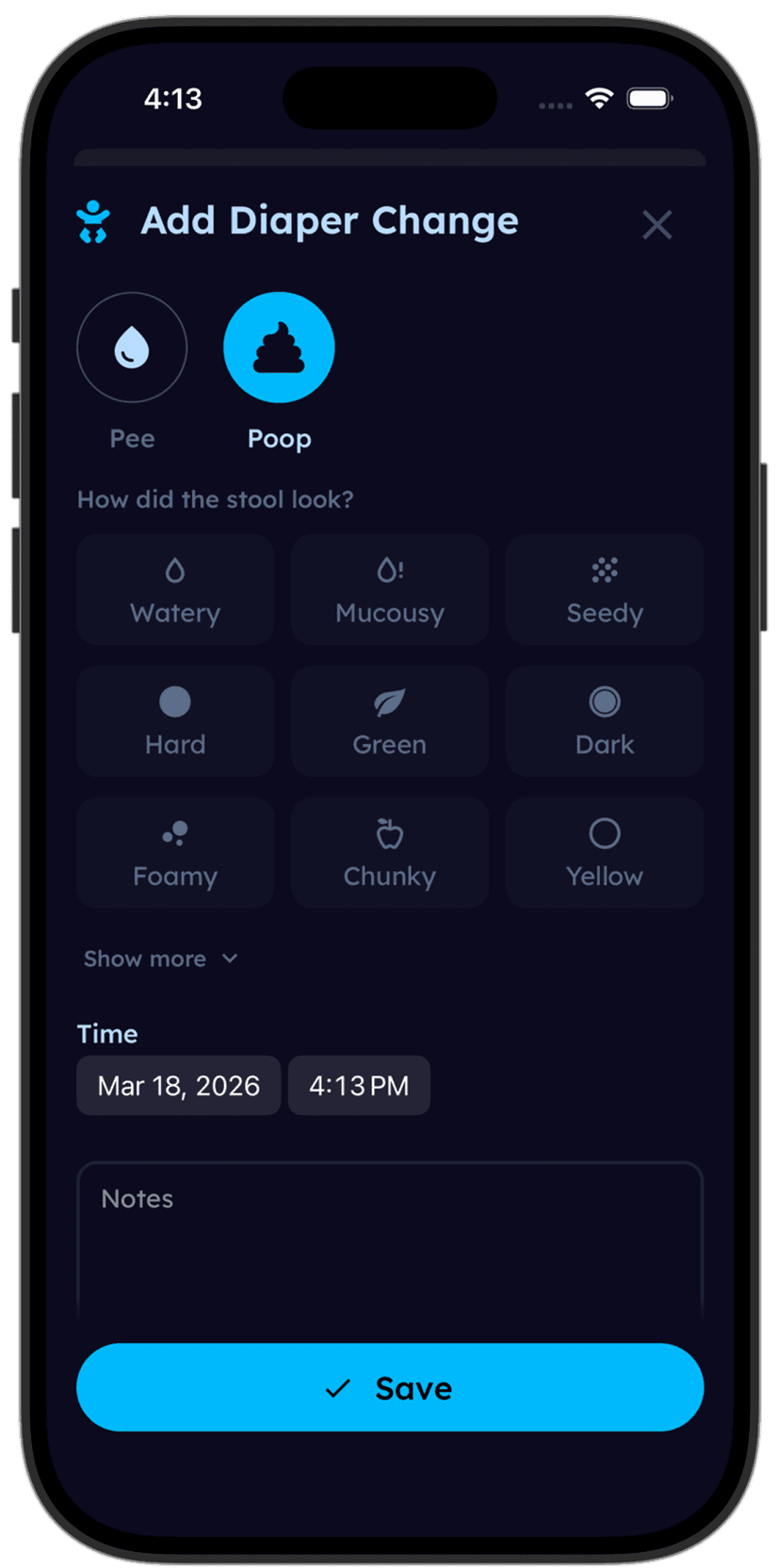
tinylog diaper tracking screen with notes on stool consistency

Is the mucus a one-time thing or a pattern? Your diaper log knows.

When you track diaper changes in tinylog, you can note mucus, color, and consistency each time. After a few days, you'll know whether it's an isolated diaper or a recurring theme — and if you call your pediatrician, you'll have the kind of detailed timeline that helps them figure out the cause faster.

Download on the App StoreGet It On Google Play

The Foremilk-Hindmilk Connection

Breastfed babies sometimes produce green, frothy, mucousy stool that is related to the balance of foremilk and hindmilk. Foremilk — the milk available at the beginning of a feeding — is thinner and higher in lactose. Hindmilk — the milk that comes later in the feeding — is fattier and richer. If a baby consistently gets more foremilk than hindmilk (which can happen if feeds are short or the baby switches breasts too quickly), the excess lactose can ferment in the gut, producing green, frothy, and sometimes mucousy stool.

This is not a serious medical condition. It is a feeding pattern issue that can often be resolved by allowing the baby to finish one breast more completely before offering the other, or by letting the baby nurse longer on each side. If you are seeing green, frothy, mucousy stool in a breastfed baby who is otherwise gaining weight and content, talk to a lactation consultant about feeding technique before assuming there is an allergy or infection at play.

When to Call Your Pediatrician

  • Mucus in most diapers for several days running — not just an occasional strand
  • Mucus accompanied by blood, even small flecks or threads
  • Persistent diarrhea (frequent, watery stools) with mucus
  • Fever along with mucousy or bloody stool
  • Baby is refusing feeds, seems to be in pain, or is losing weight
  • Foul-smelling mucus that is distinctly different from normal stool odor
  • Mucus that starts after introducing a new food or formula and does not resolve within a week
  • Baby has a combination of mucousy stool, eczema, and feeding difficulties (possible CMPA pattern)

When calling, describe the mucus (color, texture, amount), how many diapers have had it, and any other symptoms. A photo of the diaper is worth bringing to the appointment.

When Mucus Is Probably Fine

  • An occasional glossy sheen or small strand in an otherwise normal-looking diaper
  • Mucus that appears during a teething episode and resolves when the tooth breaks through
  • A single mucousy diaper with no blood, no fever, and a happy baby
  • Slightly mucousy stool for a day or two after starting a new food, then back to normal
  • Baby is eating well, gaining weight, and acting like their usual self

Occasional mucus in an otherwise normal diaper is one of those things that looks concerning but usually isn't. The intestines make mucus — sometimes you see it.

Practical Tips for Managing Mucousy Diapers

Describe what you see in plain terms

When you call or visit your pediatrician, skip the medical jargon and describe what you actually see. 'There's a jelly-like coating on the poop,' 'I see clear stringy threads mixed in,' or 'It looks like someone sneezed into the diaper' are all perfectly useful descriptions. Better yet, bring a photo.

Note what else is happening

Mucus by itself tells your pediatrician less than mucus in context. Is your baby teething? Did they just start a new food? Do they have a cold or runny nose? Is there also blood? Are they fussy during feeds? These details help your doctor narrow down the cause quickly.

Track it for a few days before panicking

A single mucousy diaper in a happy, well-fed baby is rarely urgent. But if you see mucus repeatedly over several days, that pattern is much more informative. Log each diaper change and note when mucus is present — a three-day log beats a three-second glance when it comes to diagnosis.

Don't confuse mucus with undigested food

Once babies start solids, their diapers become a showcase of partially digested food. Stringy banana fibers, slimy avocado remnants, and gelatinous fruit textures can all look surprisingly like mucus. If your baby recently ate something with a slimy texture, consider the menu before assuming it's mucus.

Remember: pale or white stool is always urgent

While you're assessing mucus, keep an eye on the underlying stool color. White, pale gray, or chalky stool — regardless of whether mucus is present — is never normal and requires immediate medical evaluation. This can indicate a bile duct or liver condition. Mucus on otherwise normal-colored stool is a completely different situation.

The Bottom Line

Mucus in baby poop is common, and in most cases, it is either normal intestinal mucus, a teething side effect, or a temporary response to a new food or mild illness. The intestines are supposed to produce mucus — it is part of how digestion works. Seeing a strand or a sheen in an occasional diaper does not mean something is wrong.

Mucus becomes worth investigating when it is persistent (showing up in most diapers over several days), accompanied by blood, paired with fever or diarrhea, or when your baby seems unwell. In those cases, your pediatrician can determine whether an allergy, infection, or other condition is driving the excess mucus.

The most helpful thing you can do is track what you are seeing. Note when mucus appears, what else is going on (teething? new food? illness in the house?), and whether it resolves on its own. Logging diapers in tinylog makes this easy — a quick note on consistency and appearance gives you the kind of timeline that turns guesswork into useful data.

And as always: white, pale, or chalky stool requires immediate medical attention, regardless of whether mucus is present. Keep that one rule in your back pocket, and you will be well-equipped to handle whatever your baby's diapers throw at you — sometimes literally.

Related Guides

Sources

  • American Academy of Pediatrics (AAP). (2023). Infant Stool Changes and What They Mean. HealthyChildren.org.
  • Vandenplas, Y., et al. (2019). Guidelines for the diagnosis and management of cow's milk protein allergy in infants. Archives of Disease in Childhood, 92(10), 902-908.
  • NASPGHAN. (2023). Approach to Chronic Diarrhea in Infancy. North American Society for Pediatric Gastroenterology, Hepatology and Nutrition.
  • Heine, R. G. (2018). Cow's milk protein allergy in infancy: A review of current concepts. Journal of Paediatrics and Child Health, 54(12).
  • CDC. (2024). Viral Gastroenteritis in Infants and Children. Centers for Disease Control and Prevention.
  • Massignan, C., et al. (2016). Signs and Symptoms of Primary Tooth Eruption: A Meta-analysis. Pediatrics, 137(3), e20153501.

Medical Disclaimer

This guide is for informational purposes only and is not a substitute for professional medical advice, diagnosis, or treatment. If your baby has persistent mucus in their stool, blood in their stool, or any symptoms that concern you, please consult your pediatrician for proper evaluation.

Get this guide in your inbox.
We'll email you this guide so you can reference it the next time you spot something slimy in the diaper.
Spot patterns that one diaper can't show you.
Download tinylog free — track every diaper change and note what you see.
Download on the App StoreGet It On Google Play