GUIDE
Burt's Bees Baby Bee Nourishing Lotion vs. Aquaphor Baby Healing Ointment
Published on
These two products serve different purposes. Burt's Bees Baby Lotion is a lightweight daily moisturizer made with natural ingredients. Aquaphor Baby Healing Ointment is a thick, petrolatum-based barrier cream designed to heal and protect irritated skin. Most families benefit from having both.
Burt's Bees Baby Bee Nourishing Lotion and Aquaphor Baby Healing Ointment are two of the most trusted names in baby skin care, but they are not direct substitutes. One is a daily moisturizer, the other is a healing barrier ointment. Choosing between them — or knowing when to reach for each — depends on what your baby's skin actually needs right now.
A Lotion and an Ointment: Two Different Jobs
Burt's Bees Baby Bee Nourishing Lotion and Aquaphor Baby Healing Ointment show up on every "baby skin care essentials" list, but they are not the same type of product. Comparing them head-to-head is a bit like comparing sunscreen to chapstick — related, but built for different situations.
Burt's Bees Baby Bee Nourishing Lotion is a lightweight daily moisturizer. It absorbs into the skin, delivers hydration from plant-based oils and buttermilk, and leaves skin soft without a greasy film. You use it head-to-toe after bath time or whenever skin feels dry.
Aquaphor Baby Healing Ointment is a thick, petrolatum-based barrier cream. It does not absorb — it sits on top of the skin and creates a protective seal that locks in moisture and keeps irritants out. You use it on targeted areas: dry patches, chapped cheeks, the diaper area, minor scrapes.
Most families end up keeping both on hand, using them for different situations. The question is which one your baby needs more right now.
| Feature | Burt's Bees Baby Lotion | Aquaphor Healing Ointment | What It Means |
|---|---|---|---|
| Product type | Lightweight daily moisturizing lotion | Thick healing ointment / barrier cream | Different categories. The lotion hydrates; the ointment protects and heals. |
| Manufacturer | Burt's Bees (Clorox Company) | Aquaphor (Beiersdorf / Eucerin) | Both are owned by large parent companies with long track records in skin care. |
| Key ingredients | Water, sunflower seed oil, shea butter, buttermilk, aloe | 41% petrolatum, mineral oil, ceresin, lanolin alcohol, panthenol | Burt's Bees uses plant-based ingredients. Aquaphor relies on petrolatum and mineral oil for barrier protection. |
| Fragrance | Light natural scent (from botanical ingredients) | Fragrance-free | Aquaphor wins for fragrance-sensitive babies. Burt's Bees has a mild, naturally derived scent. |
| Texture and absorption | Lightweight, absorbs quickly into skin | Thick, greasy, sits on top of skin | The lotion disappears into the skin. The ointment forms a visible protective layer. |
| Primary use | Daily full-body moisturizing after bath | Targeted healing — dry patches, chapped skin, diaper area, minor cuts | Burt's Bees is an everyday moisturizer. Aquaphor is a targeted treatment product. |
| Pediatrician recommended | Popular with parents; less commonly recommended clinically | Widely recommended by pediatricians and dermatologists | Aquaphor is the go-to clinical recommendation for dry, irritated, or broken skin in babies. |
| Preservatives | Contains mild preservatives (sodium benzoate, potassium sorbate) | Preservative-free | Aquaphor's ointment base does not require preservatives. Burt's Bees uses mild, common preservatives. |
| Parabens / phthalates / SLS | Free of all three | Free of all three | Tie. Neither contains parabens, phthalates, or SLS. |
| Best for eczema | Helpful for mild dryness and prevention | Recommended for active flare-ups and barrier repair | For active eczema, Aquaphor is the stronger choice. For daily maintenance, Burt's Bees can help. |
| Ease of application | Pump bottle, spreads easily, no residue | Squeeze tube, thick and sticky, leaves greasy film | Burt's Bees is easier and cleaner to apply. Aquaphor requires more effort and can stain clothes. |
| Shelf life once opened | 12 months (standard for lotions) | Long-lasting — ointment base is very stable | Both last well. Aquaphor's petrolatum base is exceptionally shelf-stable. |
Ingredients: Plant-Based Hydration vs. Petrolatum Barrier
The ingredient philosophies here could not be more different.
Burt's Bees Baby Bee Nourishing Lotion leads with water, followed by sunflower seed oil, coconut oil, shea butter, buttermilk powder, and aloe vera. The formula is marketed as 99% natural and skips petrolatum, parabens, phthalates, and SLS. The plant-based oils deliver moisture that absorbs into the top layers of skin.
Aquaphor Baby Healing Ointment is built on 41% petrolatum — a refined petroleum jelly that forms a semi-occlusive barrier on the skin surface. It also contains mineral oil, ceresin (a wax), lanolin alcohol (a moisturizer derived from wool), and panthenol (provitamin B5, which supports skin repair).
In practical terms, Burt's Bees hydrates from within. Aquaphor protects from the outside. One adds moisture to the skin; the other prevents moisture from escaping. This is why layering them — lotion first, ointment on top — is a strategy many pediatric dermatologists recommend for babies with dry or eczema-prone skin.
One consideration: babies with lanolin sensitivity should use caution with Aquaphor, which contains lanolin alcohol. And babies with sensitivities to botanical ingredients should patch-test Burt's Bees before full-body application.
When to Reach for Each Product
Knowing which product to grab at 2 AM makes a real difference. Here is a practical breakdown.
Use Burt's Bees Baby Lotion when:
- You have just finished bath time and want to moisturize your baby's whole body
- Your baby's skin is generally healthy but feels dry or rough
- You want a quick, non-greasy moisturizer for arms, legs, and torso
- The weather has turned dry or cold and your baby needs daily hydration
Use Aquaphor Baby Healing Ointment when:
- Your baby has a red, irritated diaper area
- Cheeks or lips are chapped from wind, cold, or drool
- Dry patches or eczema spots need a protective seal
- You want to protect skin around the nose during a cold (from frequent wiping)
- Minor scrapes, scratches, or cuts need a healing barrier
Use both together when:
- Your baby has eczema — apply lotion first to hydrate, then Aquaphor on top to lock it in
- Skin is extremely dry — the lotion-then-ointment layering technique is more effective than either product alone
- You want daily prevention (lotion) plus targeted treatment (ointment) for trouble spots
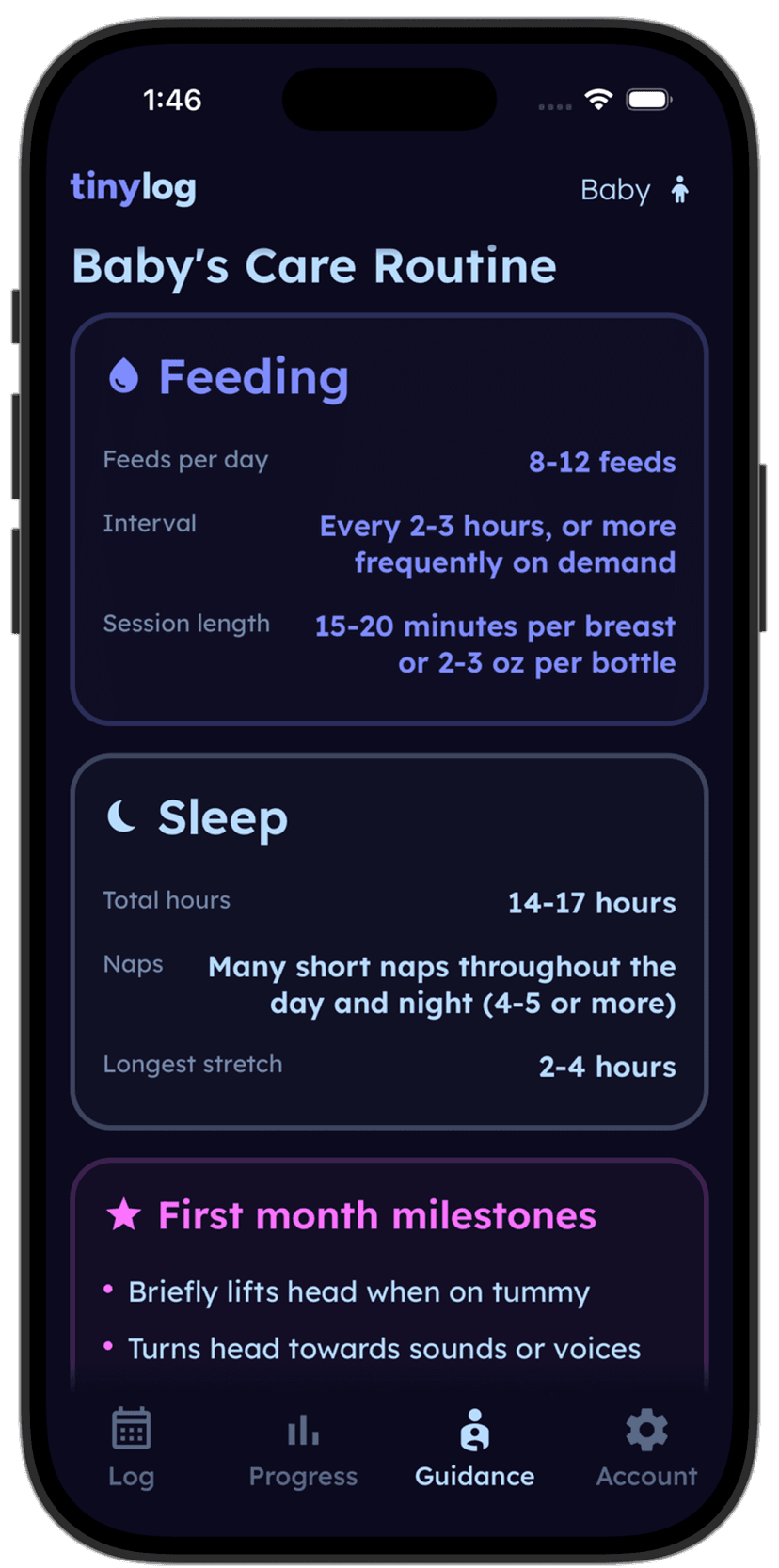
Tinylog tracks feedings so you can spot patterns.
Log every feeding, note skin changes and reactions, and track which products your baby tolerates. Bring the data to your next pediatrician visit.


| Product | Typical Price | Cost Per Oz | Monthly Estimate |
|---|---|---|---|
| Burt's Bees Baby Bee Nourishing Lotion (12 oz) | $8–$11 | ~$0.67–$0.92 | ~$8–$16 |
| Aquaphor Baby Healing Ointment (14 oz) | $14–$18 | ~$1.00–$1.29 | ~$7–$14 |
| Burt's Bees Baby Bee Nourishing Lotion (6 oz) | $6–$8 | ~$1.00–$1.33 | ~$12–$20 |
| Aquaphor Baby Healing Ointment (7 oz) | $9–$13 | ~$1.29–$1.86 | ~$9–$18 |
Price: Both Are Affordable, but You Use Them Differently
Straight cost comparison is tricky here because you go through these products at very different rates.
Burt's Bees Baby Lotion gets used liberally — a full-body application after every bath means a 12 oz bottle might last 3–6 weeks depending on how often you bathe your baby and how generously you apply.
Aquaphor Baby Healing Ointment gets used in small, targeted amounts — a pea-sized dab on each cheek, a thin layer on the diaper area. A 14 oz jar can last 2–4 months with typical use, making it surprisingly economical despite the higher per-ounce price.
Some ways to manage costs:
- Buy the larger sizes. The per-ounce cost drops meaningfully with the bigger bottle or jar.
- Use subscribe-and-save on Amazon or Target for 5–15% off recurring orders.
- Watch for BOGO deals. Both brands run frequent promotions at Target, Walmart, and Amazon.
- Consider the travel sizes for the diaper bag — the small Aquaphor tubes are handy and prevent waste.
Choose Burt's Bees Baby Bee Lotion If
- You need a daily all-over moisturizer for after bath time
- You prefer plant-based, naturally derived ingredients
- Your baby's skin is generally healthy but needs routine hydration
- You want something lightweight that absorbs quickly without greasy residue
- You are looking for a pump-bottle lotion that is easy to apply one-handed
Choose Aquaphor Baby Healing Ointment If
- Your baby has dry patches, chapped cheeks, or cracked skin that needs healing
- You need a diaper-area protectant to prevent or treat mild rash
- Your pediatrician has recommended a petrolatum-based barrier ointment
- Your baby has eczema and you need to seal in moisture after bathing
- You want a fragrance-free, preservative-free product with minimal ingredients
- You need a multi-purpose ointment for minor cuts, scrapes, and wind-chapped skin
Where to Buy
For everyday moisturizing, Burt's Bees Baby Bee Lotion (~$0.75/oz for the 12 oz bottle) is a gentle, plant-based daily lotion that absorbs quickly and leaves skin soft without greasy residue. The pump bottle makes one-handed application easy — helpful when you are holding a squirmy baby after bath time.
For targeted healing and barrier protection, Aquaphor Baby Healing Ointment (~$1.10/oz for the 14 oz jar) is the gold standard recommended by pediatricians and dermatologists for dry patches, chapped skin, diaper rash prevention, and eczema management. A little goes a long way, so the larger jar is excellent value.
Our honest advice: most families benefit from having both. Use the lotion daily for whole-body hydration and keep the ointment on hand for targeted trouble spots. They complement each other well.
Tinylog earns a small commission on purchases made through these links, at no cost to you.
Before you buy, it's worth checking promo.new for a deal. It doesn't cover everything, but we've had good luck with it.
The Bottom Line
Burt's Bees Baby Bee Nourishing Lotion and Aquaphor Baby Healing Ointment are not really competitors — they are teammates in your baby's skin care routine.
Burt's Bees Baby Lotion is the better choice for daily, full-body moisturizing. It is lightweight, plant-based, absorbs cleanly, and keeps healthy skin hydrated. It is your everyday product.
Aquaphor Baby Healing Ointment is the better choice for targeted healing and protection. It seals in moisture, protects irritated skin, and is the product pediatricians reach for when a baby's skin needs help recovering. It is your problem-solver.
For babies with dry or eczema-prone skin, using both together — lotion first, then ointment on trouble spots — is more effective than using either alone. For babies with generally healthy skin, the Burt's Bees lotion may be all you need day to day, with Aquaphor in the cabinet for when issues arise.
If you are tracking feeding patterns and skin changes — which helps you spot whether a new food or product is causing a reaction — Tinylog makes it easy to log everything and share data with your pediatrician.
Sources
- Burt's Bees. "Baby Bee Nourishing Lotion — Product Information and Ingredients." burtsbees.com, 2026.
- Beiersdorf / Aquaphor. "Aquaphor Baby Healing Ointment — Product Information." aquaphorus.com, 2026.
- American Academy of Dermatology. "How to Care for Your Baby's Skin." aad.org.
- National Eczema Association. "Eczema and Bathing — Moisturizing Best Practices." nationaleczema.org.
- Healthline Parenthood. "Best Baby Lotions and Moisturizers." healthline.com, 2026.
- BabyCenter. "Baby Skin Care Basics — Lotions, Ointments, and Creams." babycenter.com, 2026.
- What to Expect. "Best Baby Lotions and Ointments for Dry Skin." whattoexpect.com, 2026.
Related Guides
This guide is for informational purposes only and does not constitute medical advice. Every baby's skin is different. If your baby develops persistent dryness, rash, or skin irritation, consult your pediatrician or a pediatric dermatologist for personalized recommendations.
Frequently asked questions
- Can I use Burt's Bees Baby Lotion and Aquaphor together?
- Yes. Many parents use Burt's Bees Baby Lotion as a daily all-over moisturizer and then apply Aquaphor on top of specific trouble spots — dry patches, chapped cheeks, or diaper area. The lotion hydrates the skin, and the ointment seals in that moisture with a protective barrier. Layering them is a common pediatric recommendation.
- Is Aquaphor Baby Healing Ointment safe for newborns?
- Yes. Aquaphor Baby Healing Ointment is widely recommended by pediatricians and neonatal nurses for newborn skin. It is fragrance-free, dye-free, and preservative-free. Many hospitals use petrolatum-based ointments in their NICUs. It is safe for use on diaper rash, dry skin, and minor irritation from day one.
- Is Burt's Bees Baby Lotion truly natural?
- Burt's Bees markets the Baby Bee Nourishing Lotion as 99% natural. It contains buttermilk, sunflower seed oil, and shea butter among other plant-derived ingredients. It does not contain parabens, phthalates, petrolatum, or SLS. However, 'natural' is not a regulated term in skin care — always check the full ingredient list if your baby has specific sensitivities.
- Will Aquaphor clog my baby's pores?
- Aquaphor's petrolatum base is occlusive, meaning it sits on top of the skin rather than absorbing in. While it does not technically clog pores in the way comedogenic oils do, it can trap heat and moisture against the skin. Avoid using thick layers of Aquaphor on large areas during hot weather. For most babies, targeted application on dry patches or the diaper area is the best approach.
- Which product is better for baby eczema?
- Both can play a role in managing eczema, but they work differently. Burt's Bees Baby Lotion provides lightweight daily hydration that may help prevent flare-ups on mild eczema. Aquaphor provides heavy-duty barrier protection that locks in moisture during active flare-ups. Many dermatologists recommend applying a moisturizing lotion first, then sealing with Aquaphor on eczema-prone areas. For moderate to severe eczema, always follow your pediatrician's treatment plan.
- Can Burt's Bees Baby Lotion cause an allergic reaction?
- While uncommon, any product with botanical ingredients can cause a reaction in sensitive babies. Burt's Bees Baby Lotion contains plant-based ingredients like sunflower seed oil and shea butter. If your baby develops redness, bumps, or irritation after application, discontinue use and consult your pediatrician. Patch testing on a small area of skin before full-body use is a good practice with any new product.