GUIDE

Cradle Cap

Cradle cap is harmless infantile seborrheic dermatitis. It looks gross but doesn't bother your baby at all.

You noticed greasy, flaky scales on your baby's scalp and immediately worried something was wrong. Relax — this is one of the most common and least concerning conditions in infancy. It almost always clears on its own.

What Cradle Cap Actually Is

Cradle cap — technically infantile seborrheic dermatitis — is what happens when your newborn's oil glands go into overdrive. Maternal hormones still circulating in your baby's system after birth kick the sebaceous glands on the scalp into gear, producing way more oil than necessary. This excess oil traps dead skin cells on the surface instead of letting them shed normally, forming the characteristic thick, greasy, yellowish scales.

It is extremely common — some estimates suggest up to 70% of babies develop some degree of cradle cap in their first three months. It is not caused by poor hygiene, allergies, or anything you did wrong. It is a temporary consequence of your baby's body adjusting to life outside the womb.

The most important thing to know: cradle cap does not itch, does not hurt, and does not bother your baby in any way. It bothers you because it looks unpleasant, especially in photos. That is a completely valid reason to want to deal with it, but it helps to know that from your baby's perspective, nothing is wrong.


Cradle Cap vs. Baby Eczema
Texture
Cradle CapGreasy, oily, yellowish scales
EczemaDry, rough, flaky patches
Color
Cradle CapYellowish, waxy, sometimes brownish
EczemaRed, pink, or on darker skin — brown, gray, or purple
Itch
Cradle CapNot itchy — baby is unbothered
EczemaVery itchy — baby scratches, is fussy
Location (infant)
Cradle CapScalp primarily. May extend to eyebrows, behind ears.
EczemaCheeks, forehead, outer arms and legs
Oil vs. Dry
Cradle CapOily, greasy appearance
EczemaDry, moisture-depleted appearance
Age of onset
Cradle CapFirst 3 months of life typically
Eczema2-6 months, persists longer
Resolution
Cradle CapUsually clears by 6-12 months
EczemaChronic — may persist for years
The greasy vs. dry distinction is the quickest way to tell them apart. Cradle cap is oily; eczema is dry. If the scalp looks dry and flaky (not greasy and scaly), it is more likely eczema.

How to Remove Cradle Cap: Step by Step

The basic approach is oil → wait → brush → shampoo. You are softening the scales so they release from the scalp without force, then washing everything away. Do not skip the shampoo step — leaving oil on the scalp can actually make cradle cap worse by feeding the process that caused it.

This is a multi-session project. You will not get all the scales in one bath. Plan on doing this two to three times per week for a few weeks. Each session will remove more, and eventually you will reach clean scalp underneath.

Cradle Cap Removal Process
1. Apply oil
What to DoRub a small amount of mineral oil, baby oil, coconut oil, or petroleum jelly onto the scaly patches. Massage it gently into the scales.
When15-20 minutes before bath
2. Wait
What to DoLet the oil sit and soften the scales. You can put a soft cap on baby's head during this time if you want to keep the oil from getting everywhere.
When15-20 minutes
3. Brush gently
What to DoUse a soft-bristled baby brush or a fine-toothed comb to gently loosen the softened scales. Brush in one direction. Do not scrape or dig at stubborn scales.
WhenDuring the wait or in the bath
4. Shampoo
What to DoWash the scalp with a gentle baby shampoo. This removes the loosened scales and the excess oil. Lather and gently massage the scalp with your fingertips.
WhenBath time
5. Rinse and repeat
What to DoRinse thoroughly. You will not get all the scales in one session — and that is fine. Repeat this process 2-3 times per week. Gentle consistency beats aggressive one-time removal.
WhenEvery 2-3 days
Be patient. Gentle consistency works better than one aggressive session. If scales resist, leave them — they will come off more easily next time.
Products That Work for Cradle Cap
Mineral oil / baby oil
How to UseApply to scales, wait 15-20 min, brush and shampoo
ProsCheap, effective, widely available
ConsCan be messy. Needs thorough shampooing to remove.
Coconut oil
How to UseSame as mineral oil — apply, wait, brush, shampoo
ProsNatural option, antibacterial properties, smells nice
ConsCan cause irritation in some babies with coconut sensitivity. Patch test first.
Petroleum jelly (Vaseline)
How to UseApply to thick patches before bed, shampoo in the morning
ProsVery effective at softening thick, stubborn scales overnight
ConsGreasy — protect bedding. Harder to wash out than lighter oils.
Medicated shampoo (ketoconazole/selenium sulfide)
How to UseUse 2-3 times per week as directed. Lather, leave on 2-3 minutes, rinse.
ProsTargets the Malassezia yeast that may contribute to seborrheic dermatitis
ConsOnly use if recommended by your pediatrician. Not first-line for mild cradle cap.
Start with basic mineral oil or baby oil. Only escalate to medicated shampoo if regular treatment is not working after a few weeks.
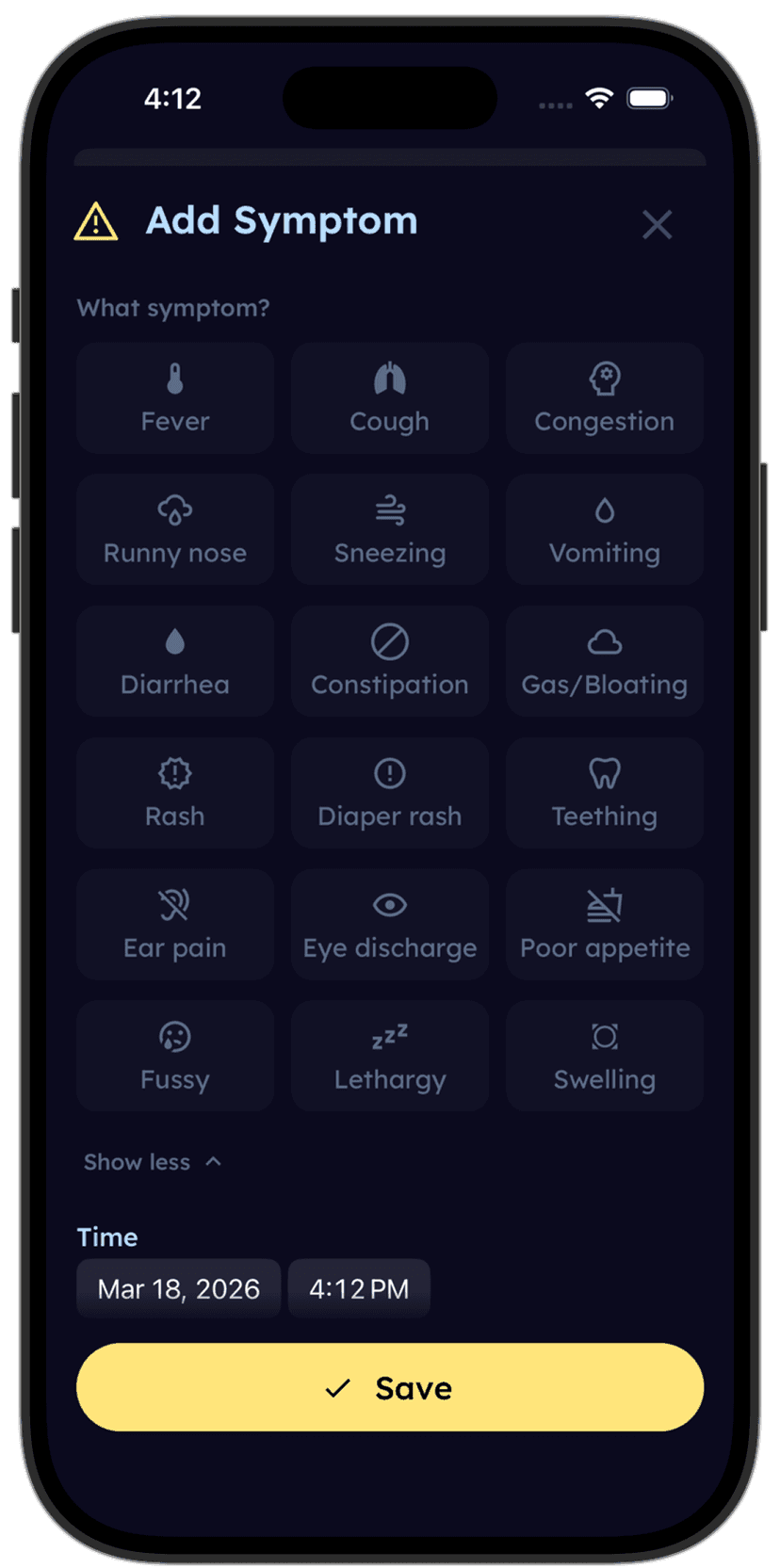
tinylog symptom tracking screen showing skin condition log

Is the cradle cap actually getting better? Track it.

When you're brushing and washing every few days, it can be hard to tell if things are improving. Log skin observations in tinylog and look back after two weeks — the progress will be obvious even when day-to-day changes feel invisible.

Download on the App StoreGet It On Google Play

Reassuring Signs — Normal Cradle Cap

  • Scales are limited to the scalp and maybe the eyebrows
  • Baby is completely unbothered — no itching, no fussiness, no scratching
  • Scales soften and come off easily with oil and gentle brushing
  • The scalp underneath looks pink and healthy, not red or inflamed
  • Scales are gradually decreasing with your regular washing routine

If your baby is unbothered and the scales are responding to gentle treatment, everything is on track.

Warning Signs — See Your Pediatrician

  • Scales are thick, spreading, and not improving after 2-3 weeks of regular brushing and washing
  • Scalp is red, inflamed, or weeping underneath the scales
  • Cradle cap is spreading to the face, neck, armpits, and diaper area extensively
  • Baby seems itchy or uncomfortable — scratching at the scalp, fussy during sleep
  • Scales are cracking and bleeding despite gentle treatment
  • Cradle cap persists beyond 12 months of age — may need re-evaluation
  • Rash does not look greasy or scaly — may be eczema, psoriasis, or a fungal infection instead

Stubborn or spreading seborrheic dermatitis may benefit from a medicated shampoo or topical treatment prescribed by your pediatrician.

Tips and Myth-Busting

It is cosmetic, not medical

Cradle cap bothers you way more than it bothers your baby. They cannot see it, they do not feel it, and it is not causing them any discomfort. The only reason to treat it is because you want it gone. There is zero medical urgency. If you do not feel like dealing with it, you can leave it alone and it will resolve on its own.

Gentle and consistent beats aggressive

The urge to pick off every scale in one sitting is strong. Resist it. Aggressive scraping irritates the scalp and can cause bleeding, which creates a real problem where there was only a cosmetic one. Soften, brush gently, get what comes off easily, and leave the rest for next time.

It is not a hygiene problem

You did not cause cradle cap by not washing your baby's head enough. You cannot prevent it by washing more. It is a hormonal and physiological process that most babies go through. Grandparents and strangers may imply otherwise. They are wrong.

Cradle cap that itches is probably not cradle cap

The hallmark of true cradle cap is that the baby does not care about it. If your baby is scratching at their scalp, seems itchy, or the skin is dry and rough rather than greasy and scaly, you may be looking at scalp eczema instead. The treatment is different — eczema needs moisturizer, not oil removal.

Related Guides

  • Baby Rash Types — Visual guide to every rash your baby might get
  • Baby Eczema — Atopic dermatitis, which can develop alongside or after cradle cap
  • Newborn Skin — All the normal skin changes in the first weeks of life
  • Baby Acne — Another common newborn skin condition
  • Diaper Rash — Seborrheic dermatitis can also appear in the diaper area

Sources

  • American Academy of Pediatrics (AAP). (2024). Cradle Cap. HealthyChildren.org.
  • Nobles, T., & Krishnamurthy, K. (2023). Cradle Cap. StatPearls. NCBI Bookshelf.
  • O'Connor, N. R., McLaughlin, M. R., & Ham, P. (2008). Newborn Skin: Part I. Common Rashes. American Family Physician, 77(1), 47-52.

Medical Disclaimer

This guide is for informational purposes only and is not a substitute for professional medical advice. If your baby's cradle cap is not improving, is spreading, or appears inflamed, please see your pediatrician.

Get this guide in your inbox.
We'll email you the step-by-step removal process so you can reference it at bath time.
Is it getting better or worse? Track it.
Download tinylog free — log skin changes with a few taps.
Download on the App StoreGet It On Google Play