
GUIDE
Cradlewise Smart Crib vs. Dream On Me Karley Bassinet
Published on
The Cradlewise (~$1,499–$1,799) is a smart crib with AI sleep tracking, a built-in baby monitor, and gentle auto-soothing that converts from bassinet to toddler bed. The Dream On Me Karley (~$65–$85) is an ultra-lightweight, foldable bassinet that does the basics well for a fraction of the cost. These products serve different needs and budgets — the right pick depends on how much tech you want and what you're willing to spend.
This is a cross-type comparison. One is a high-end smart crib that aims to be the only sleep product you buy. The other is one of the cheapest safe bassinets on the market. Comparing them head-to-head helps you figure out whether the smart features are worth 20x the price — or whether the basics are enough.
Log sleep, feeds, and diapers in seconds
A Smart Crib vs. a Budget Bassinet — Why Compare Them?
This is not a typical apples-to-apples comparison. The Cradlewise Smart Crib is a $1,500+ piece of technology designed to be the only sleep product you buy for the next three years. The Dream On Me Karley is a $75 bassinet designed to keep your baby safe and comfortable for a few months until you move to a crib.
So why put them side by side? Because plenty of parents staring at their registry are asking exactly this question: is a smart crib worth 20 times the price of a basic bassinet? The answer depends entirely on your priorities, your budget, and how much you value features like sleep tracking and auto-soothing.
Both products meet federal safety standards. Both provide a firm, flat sleep surface. Both will keep your baby safe when used correctly. Everything beyond that is about features, convenience, and how long you want the product to last.
For tracking your baby's sleep patterns with either setup — which helps you see the bigger picture beyond any single device — see our 1-month-old sleep schedule guide.
| Feature | Cradlewise Smart Crib | Dream On Me Karley | What It Means |
|---|---|---|---|
| Product type | Smart crib (birth to toddlerhood) | Traditional bassinet (birth to ~5 months) | Completely different categories. The Cradlewise is a long-term investment. The Karley is a short-term, budget-friendly sleep space. |
| Auto-soothing | Gentle bouncing — detects early wake signs and soothes preemptively | None — manual soothing only | Cradlewise wins. Automated soothing can extend sleep stretches without you getting out of bed. |
| Built-in baby monitor | Yes — HD camera, night vision, two-way audio, room temperature sensor | No | Cradlewise wins. This saves you $100–$250 on a separate monitor. |
| Sleep tracking | AI-powered — tracks sleep stages, breathing patterns, and trends over time | None | Cradlewise wins. Detailed sleep analytics without a wearable on baby. |
| Longevity | Birth through toddlerhood (2–3+ years with bassinet, crib, and toddler bed modes) | Birth to ~5 months (25 lbs or pushing up on hands and knees) | Cradlewise wins by a wide margin. One product vs. needing a crib after a few months. |
| Portability | Not portable — full-size crib that stays in the nursery | Very portable — ~10 lbs, folds flat, easy to carry one-handed | Karley wins easily. If you need a travel bassinet or something you can move between rooms, the Cradlewise doesn't compete here. |
| Weight limit | 50+ lbs (crib mode) | 25 lbs | Cradlewise supports a much higher weight, but the Karley's limit is fine for the bassinet phase. |
| Mesh airflow | Breathable crib design with airflow ventilation | Full mesh sides | Both provide good breathability. The Karley's full mesh design gives excellent visibility from your bed. |
| Assembly | Moderate — full crib assembly plus app setup and Wi-Fi pairing | Minimal — sets up in a few minutes with no tools | Karley wins. Unfold it and you're done. The Cradlewise requires real assembly time and a phone to configure. |
| Size and footprint | Full-size crib — needs dedicated nursery space | Compact bassinet — fits right next to your bed | Karley wins for bedroom use. The Cradlewise is meant for the nursery. |
| App and smart features | Full-featured app — live video, sleep analytics, milestone tips, soothing controls | No app, no electronics | Cradlewise wins if you want data and remote monitoring. The Karley wins if you want zero tech dependencies. |
Smart Features: What You're Actually Paying For
The Cradlewise packs a lot of technology into a crib. Here's what that premium buys you in practice:
Auto-soothing: The crib uses sensors to detect when your baby is stirring between sleep cycles and starts a gentle bouncing motion before baby fully wakes. This preemptive approach means fewer middle-of-the-night wake-ups that require you to get out of bed. It's not magic — some babies respond to it more than others — but when it works, it's genuinely useful.
Built-in monitor: An HD camera with night vision and two-way audio sits above the mattress. You get a live video feed on your phone, room temperature readings, and the ability to talk to your baby from another room. This alone saves you $100–$250 on a standalone baby monitor.
AI sleep tracking: The Cradlewise tracks your baby's sleep stages, breathing patterns, and movement without any wearable device. Over time, its app shows you trends — when baby sleeps deepest, how long stretches are getting, and when wake windows are shifting. This data is more detailed than what most parents get from manual logging.
The Dream On Me Karley has none of these features. It's mesh walls, a firm mattress, and a foldable frame. That's it. And honestly? For a lot of families, that's enough. The Karley does the core job of a bassinet — safe sleep surface within arm's reach of your bed — without a single battery or app download.
Longevity: Months vs. Years
This is where the cost math shifts. The Dream On Me Karley lasts about 4–6 months. Once your baby starts pushing up on hands and knees or hits 25 lbs, you're done. Then you need a crib.
The Cradlewise starts as a bassinet (with a raised insert for newborns), converts to a full crib, and later becomes a toddler bed. That's potentially 3+ years of use from one product. The smart features — camera, sleep tracking, gentle bouncing — work throughout.
Here's the honest math. If you buy the Karley ($75), then a mid-range crib ($300), then a decent baby monitor ($150), you've spent about $525 total. The Cradlewise at $1,499 still costs roughly $975 more — and that gap is paying for auto-soothing, AI sleep analytics, and the convenience of one integrated product.
Whether that's worth it depends on how much those smart features actually change your daily life. For some parents, the automated soothing and sleep data are a real sanity-saver. For others, a basic bassinet plus a standard crib does the job.
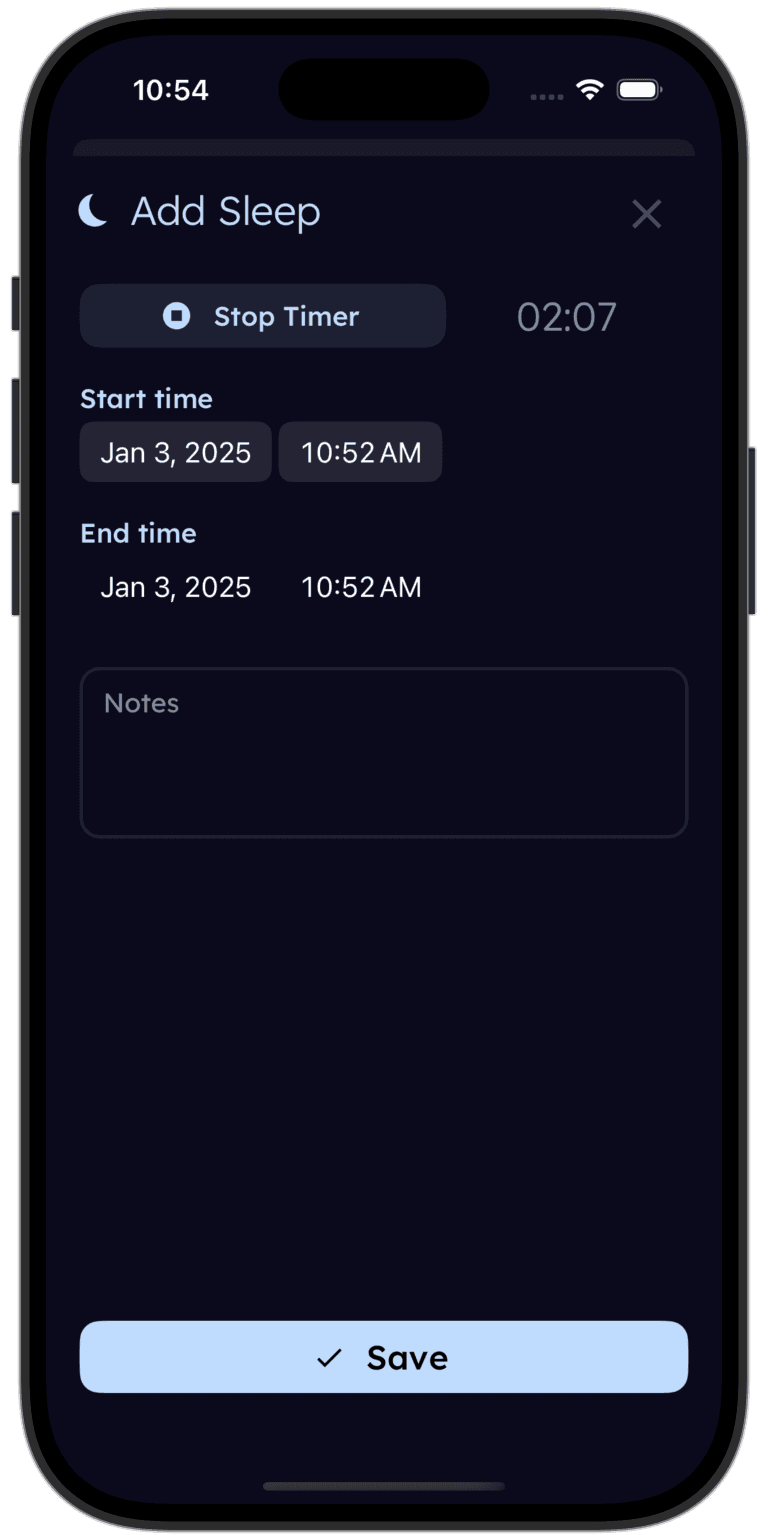
Whether your baby sleeps in a smart crib or a $75 bassinet, the sleep patterns are what matter. Track them and you'll see the progress.
Log sleep sessions in a few taps with Tinylog — watch patterns emerge over days and weeks, and bring the data to your pediatrician if anything looks off.


Portability and Bedroom Use: The Karley's Big Advantage
The AAP recommends room-sharing (not bed-sharing) for at least the first 6 months. That means having baby's sleep space in your bedroom. This is where the Karley shines and the Cradlewise struggles.
The Dream On Me Karley weighs about 10 lbs and fits right next to your bed. You can reach over and touch your baby without getting up. During the day, you can fold it up and carry it to the living room one-handed. It's genuinely portable — many parents use it as a travel bassinet at grandparents' houses or on road trips.
The Cradlewise is a full-size crib. It's designed to live in the nursery. It's not moving between rooms, and it's not fitting next to most beds. If you want baby in your bedroom for those early months (which, again, the AAP recommends), you'll either need a separate bassinet anyway or set up the Cradlewise in your room if you have space.
This is a real consideration. Some parents buy the Cradlewise for the nursery and a cheap bassinet like the Karley for the bedroom during the first few months. That's a legitimate strategy — and it means the Karley isn't necessarily competing with the Cradlewise. They might both end up on your registry.
Safety: Both Meet the Same Standards
Both the Cradlewise and Dream On Me Karley meet their respective ASTM safety standards (F1169 for cribs, F2194 for bassinets) and CPSC requirements. Both have firm, flat sleep surfaces. Both are designed for safe overnight sleep.
An affordable bassinet that meets federal safety standards is exactly as safe as an expensive smart crib that meets the same standards. The standards exist so that price doesn't determine safety.
The Cradlewise's smart features — gentle bouncing, sleep tracking — are convenience features, not safety features. They don't make the sleep surface safer. What makes any sleep space safe is following the basics: baby sleeps alone, on their back, on a firm flat surface, with nothing else in the sleep space.
One thing worth noting: the Cradlewise's built-in camera does let you monitor baby remotely, which some parents find reassuring. But video monitoring is not a substitute for safe sleep practices. No camera catches everything, and no alert system replaces following the AAP guidelines.
| Product | Typical Price | Notes |
|---|---|---|
| Dream On Me Karley Bassinet | $65–$85 | One of the cheapest name-brand bassinets available. Frequently under $75 on Amazon. You'll still need a crib later (~$200–$400) and probably a baby monitor (~$100–$200). |
| Cradlewise Smart Crib | $1,499–$1,799 | Replaces bassinet, crib, and baby monitor. Price depends on model and promotions. Occasionally runs sales. No rental option available. |
| Karley + standard crib + baby monitor (total) | $375–$675 | The budget path. Three separate products that cover the same ground as the Cradlewise — just without the smart features. |
Price: The Elephant in the Nursery
There's no way around it — the price gap here is enormous. The Karley costs $65–$85. The Cradlewise costs $1,499–$1,799. That's roughly a 20x difference.
Here's how to think about whether the Cradlewise premium makes sense:
- If your baby budget is tight, the Karley plus a standard crib later gives you everything you need for a fraction of the cost. The basics are the basics, and they work.
- If you can swing the Cradlewise, you're getting a single product that replaces a bassinet, a crib, and a baby monitor — plus smart features that a traditional setup doesn't offer. The per-year cost over 3 years of use comes out to roughly $500–$600/year.
- If you're in between, consider whether the smart features will actually change your daily experience. Auto-soothing that prevents one wake-up per night? That might be worth hundreds to a sleep-deprived parent. Sleep tracking graphs you look at once and forget? Probably not.
Neither choice is wrong. The Karley is not "settling" — it's a perfectly good bassinet. The Cradlewise is not "wasteful" — it delivers real functionality over multiple years. Your family's budget and priorities determine which one fits.
Choose the Cradlewise Smart Crib If
- You want one product that works from birth through toddlerhood — buy once, use for years
- AI sleep tracking and a built-in baby monitor are features you'll actually use, not just appreciate on a spec sheet
- Automated soothing matters to you — having the crib gently bounce baby back to sleep before a full wake-up sounds worth the investment
- You have nursery space ready and plan to have baby sleeping there relatively early
- You'd rather pay more upfront than buy a bassinet, then a crib, then a monitor separately
- You want detailed sleep data — stages, breathing patterns, trends — without putting a wearable on your baby
Choose the Dream On Me Karley If
- Budget is the top priority — you want the cheapest safe sleep space you can find
- You want baby sleeping in your bedroom for the first few months (the AAP recommends room-sharing for at least 6 months)
- You need something lightweight and portable — for travel, moving between rooms, or as a secondary sleep space
- You prefer zero tech dependencies — no apps, no Wi-Fi, no firmware updates, just a bassinet
- You already have a crib picked out (or plan to buy one later) and just need a short-term newborn solution
- You'd rather spread your spending across separate products and upgrade later if you want to
Where to Buy
The Cradlewise Smart Crib (~$1,499–$1,799) is the all-in-one smart sleep investment — bassinet, crib, toddler bed, baby monitor, and AI sleep tracker in one product. If you want the most feature-rich sleep setup and plan to use it for years, the Cradlewise delivers. Available directly from Cradlewise, and they occasionally run promotions worth watching for.
The Dream On Me Karley (~$65–$85) is one of the most affordable safe bassinets you can buy. Lightweight, foldable, full mesh sides, and it does the job without fuss. If budget matters, if you need a travel bassinet, or if you just want a simple bedside sleep space for the first few months, the Karley is hard to beat. Widely available on Amazon and Walmart.
Whichever you choose: follow the AAP safe sleep guidelines. Back to sleep, firm flat surface, nothing else in the sleep space. No amount of technology replaces the basics.
Tinylog earns a small commission on purchases made through these links, at no cost to you.
Tip: check promo.new before purchasing. It's hit or miss depending on the product, but when it hits, you'll be glad you checked.
The Bottom Line
The Cradlewise Smart Crib and Dream On Me Karley Bassinet are built for different families with different priorities. Comparing them is really about asking what you value most in your baby's sleep setup.
Cradlewise wins on longevity (birth through toddlerhood), smart features (auto-soothing, AI sleep tracking, built-in monitor), and long-term value if you use it for years. It's a significant upfront investment that replaces multiple products.
Dream On Me Karley wins on price (hard to find a cheaper safe bassinet), portability (10 lbs, folds flat, goes anywhere), bedroom convenience (fits right next to your bed), and simplicity (no app, no Wi-Fi, no learning curve).
For most families, the decision comes down to budget. If you can comfortably afford the Cradlewise and you value the smart features, it's a well-made product that earns its keep over time. If you'd rather spend less now — or if you want a bassinet for your bedroom and a separate crib later — the Karley does its job and saves you a lot of money for everything else on the baby shopping list.
Both products keep your baby safe. Both give your baby a place to sleep. The rest is about what makes your life easier during those first exhausting months.
If you're logging sleep sessions to see how your baby's patterns are developing — regardless of what they're sleeping in — Tinylog makes it easy to track in a few taps.
Related Guides
- Snoo vs. Cradlewise — How the Cradlewise compares to the other big smart sleep product
- Dream On Me Karley vs. Baby Delight Beside Me Dreamer — The Karley compared to another budget bassinet
- 1-Month-Old Sleep Schedule — What sleep actually looks like in the early weeks
- Baby Fighting Sleep — When your baby won't settle no matter what they're sleeping in
Sources
- Cradlewise. "Smart Crib — Product Details and Sleep Tracking Technology." cradlewise.com, 2026.
- Dream On Me. "Karley Bassinet — Product Specifications." dreamonme.com, 2026.
- ASTM International. "F1169 — Standard Consumer Safety Specification for Full-Size Baby Cribs." astm.org, 2024.
- ASTM International. "F2194 — Standard Consumer Safety Specification for Bassinets and Cradles." astm.org, 2024.
- U.S. Consumer Product Safety Commission. "Safe Sleep — Cribs and Bassinets." cpsc.gov, 2025.
- American Academy of Pediatrics. "Safe Sleep Recommendations." aap.org, 2024.
- BabyGearLab. "Cradlewise Smart Crib Review." babygearlab.com, 2025.
- BabyGearLab. "Dream On Me Karley Bassinet Review." babygearlab.com, 2025.
- Babylist. "Cradlewise Smart Crib Review." babylist.com, 2025.
- Wirecutter. "The Best Bassinets and Smart Cribs." nytimes.com/wirecutter, 2025.
This guide is for informational purposes only and is not a substitute for professional medical or safety advice. Product specifications, pricing, and features can change — always verify current details on the manufacturer's website before purchasing. Follow the American Academy of Pediatrics safe sleep guidelines regardless of which product you choose. If you have questions about safe sleep, talk to your pediatrician.
Frequently asked questions
- Is the Dream On Me Karley Bassinet safe for overnight sleep?
- Yes. The Dream On Me Karley meets ASTM F2194 bassinet safety standards and CPSC requirements. It has a firm, flat mattress pad and breathable mesh sides. It is designed for overnight sleep from birth until baby can push up on hands and knees, or reaches 25 lbs — whichever comes first.
- Can the Cradlewise replace both a bassinet and a crib?
- That is the idea. The Cradlewise includes a bassinet insert for newborns, converts to a full crib, and eventually becomes a toddler bed. Some parents still use a separate bassinet in the bedroom for the first few weeks since the Cradlewise is full crib-sized and lives in the nursery.
- Does the Cradlewise actually help babies sleep longer?
- Many parents report that the Cradlewise's preemptive bouncing — which detects early wake signs and gently soothes before baby fully wakes — helps extend sleep stretches. Results vary by baby. Some respond well to the gentle motion, others are less affected. It works best as part of a consistent sleep routine, not as a standalone fix.
- How long can a baby use each product?
- The Dream On Me Karley is rated up to 25 lbs or until baby pushes up on hands and knees — typically around 4–6 months. The Cradlewise works from birth through toddlerhood (2–3+ years), converting from bassinet mode to full crib to toddler bed.
- Do I need a separate baby monitor with either product?
- The Cradlewise has a built-in HD camera with night vision and two-way audio — no separate monitor needed. The Dream On Me Karley is a standard bassinet with no electronics, so you will need a separate baby monitor if you want video or audio monitoring.
- Is the Cradlewise worth the price compared to a cheap bassinet plus a regular crib?
- It depends on what you value. A Dream On Me Karley (~$75) plus a standard crib (~$200–$400) plus a baby monitor (~$100–$200) totals roughly $375–$675. The Cradlewise at $1,499–$1,799 replaces all three but costs 2–5x more. You're paying for smart features — AI sleep tracking, auto-soothing, and a built-in camera. If those features matter to you and you can afford it, the Cradlewise consolidates everything into one product. If they don't, the budget path works just fine.