GUIDE

Diaper Rash Cream vs. Ointment

Creams are lighter and absorb into skin — better for mild rash or prevention. Ointments are thicker and form a moisture barrier — better for active rash and protecting raw skin.

Most families end up using both, depending on the situation.

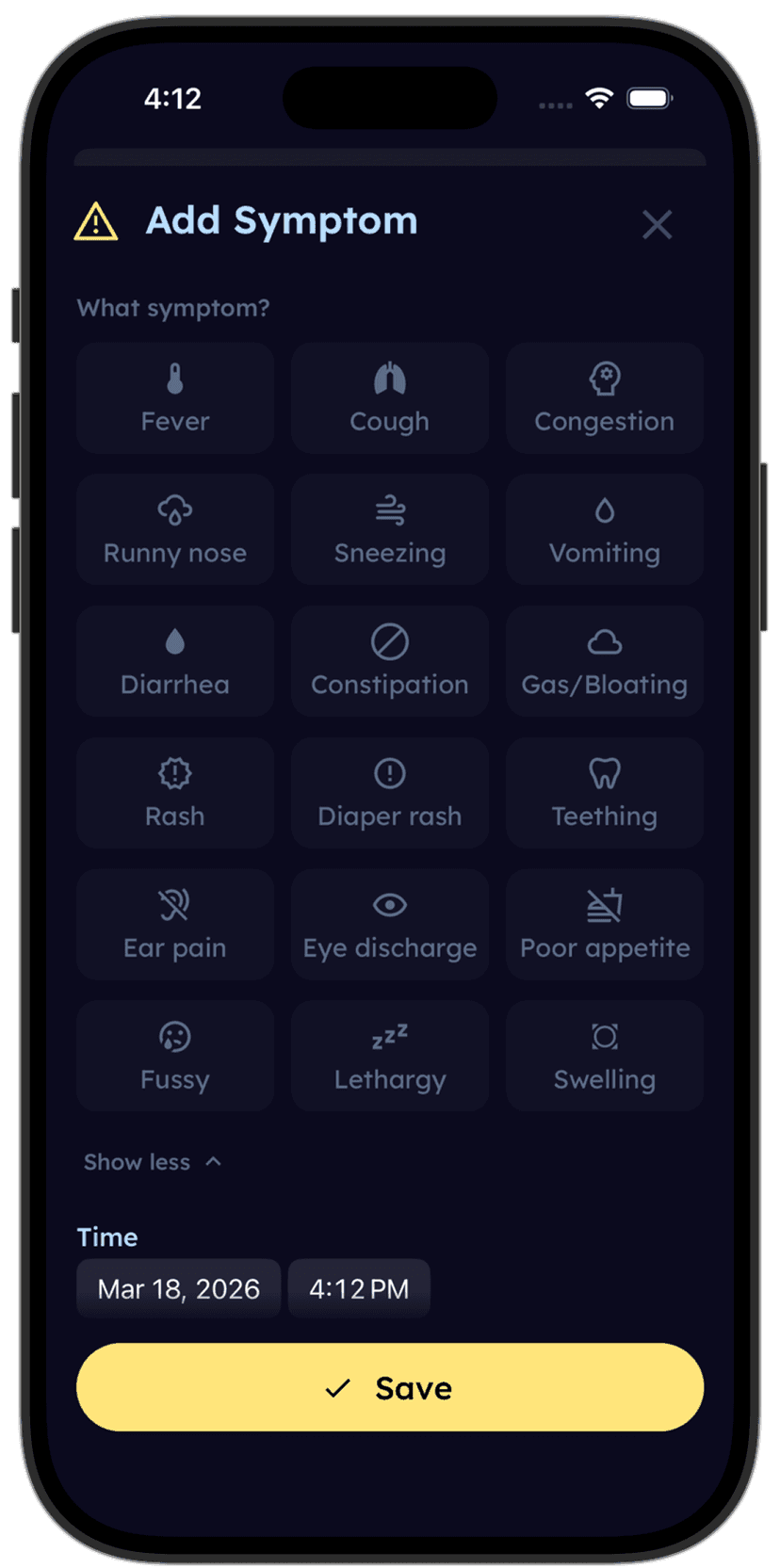
Log diaper rash symptoms

Track what works

If your child just seems to have a generalized diaper rash, it's best to keep the area clean using plain water and a soft cloth so that you don't irritate the skin even more. Allowing the air to reach that area can sometimes be really helpful.
Dr. Jacqueline KaariDr. Jacqueline Kaari, DO, Pediatrician, Cleveland Clinic

They Sound the Same — They Are Not

Walk down the diaper care aisle and you will see "cream" and "ointment" used almost interchangeably on packaging. They are different formulations designed for different situations. Understanding the difference helps you reach for the right product at the right time, instead of using whatever is closest when your baby has a red bottom.

Creams are emulsions — a mix of water and oil. They are lighter, absorb into the skin, and deliver active ingredients like zinc oxide directly to irritated tissue. They are your everyday product for mild redness and prevention. Ointments are oil-based (usually petrolatum). They do not absorb. Instead, they sit on top of the skin and create a thick, waterproof barrier that keeps moisture and irritants away from raw or inflamed skin. They are your heavy-duty product for active rash.

Most pediatric dermatologists recommend having both on hand. Use cream for prevention and mild redness. Switch to ointment when rash is active, especially if the skin is raw or broken. For severe rash, layer medicated cream under a thick ointment for maximum effect. If you are not sure whether what you see is diaper rash or something else, our guide to baby rash types can help you tell the difference.


Cream vs. Ointment Comparison
Consistency
Diaper Rash CreamLighter, semi-solid emulsion. Absorbs into skin more easily.
Diaper Rash OintmentThick, greasy, does not absorb. Sits on top of skin as a barrier.
Primary function
Diaper Rash CreamSoothes irritated skin and delivers active ingredients (zinc oxide). Some barrier protection.
Diaper Rash OintmentCreates a thick moisture barrier between skin and irritants. Stronger physical protection.
Best for
Diaper Rash CreamMild rash, daily prevention, and situations where you want the product to absorb.
Diaper Rash OintmentActive moderate-to-severe rash, raw or broken skin, and overnight protection.
Common active ingredient
Diaper Rash CreamZinc oxide (10-40%), sometimes with soothing additives like aloe or vitamin E.
Diaper Rash OintmentPetrolatum (petroleum jelly) or zinc oxide in a petrolatum base.
Application
Diaper Rash CreamSpreads easily, thin layer. Comfortable under clothes.
Diaper Rash OintmentThick application. Can be harder to spread on sore skin.
Examples
Diaper Rash CreamDesitin Daily Defense (13% zinc oxide), Boudreaux's Butt Paste (16% zinc oxide).
Diaper Rash OintmentAquaphor Healing Ointment (petrolatum-based), plain petroleum jelly, Desitin Maximum Strength (40% zinc oxide).
Many products blur the line between cream and ointment. Check the ingredients and consistency rather than relying on the label alone.

Cream Advantages

  • Absorbs into skin, delivering zinc oxide directly to irritated areas
  • Lighter feel — less greasy on baby's skin and inside the diaper
  • Easier to apply evenly, especially for prevention
  • Many formulations include soothing additives (aloe, calendula, vitamin E)
  • Works well for mild redness and daily preventive use

Creams with 13-16% zinc oxide are sufficient for most mild rashes and daily prevention.

Cream Limitations

  • Less effective as a physical barrier for moderate-to-severe rash
  • May not stay in place as long — reapplication may be needed more frequently
  • Some formulations contain fragrances or additives that can irritate sensitive skin
  • Lower zinc oxide concentrations may not resolve stubborn rash

If cream alone is not resolving the rash within 2-3 days, switch to or add an ointment.

Ointment Advantages

  • Superior moisture barrier — keeps wetness away from raw or broken skin
  • Stays in place longer between changes, providing sustained protection
  • Petroleum jelly is hypoallergenic and unlikely to cause reactions
  • Maximum strength zinc oxide ointments (40%) are the strongest OTC option for rash
  • Recommended by dermatologists for severe or persistent diaper rash

Plain petroleum jelly (Vaseline) is one of the most effective and cheapest barrier ointments available.

Ointment Limitations

  • Greasy and thick — can be difficult to apply to sore, crying baby
  • Can stain clothing and cloth diapers (petroleum is hard to wash out)
  • Does not absorb — purely a surface barrier
  • Some parents find the thick texture unpleasant or hard to clean up

The mess is a tradeoff for effectiveness. For cloth diaper users, use a liner to protect the diaper from petroleum stains.

Tinylog symptom tracking showing diaper rash episode and treatment

Log rash symptoms and track which products resolve them fastest.

Tinylog lets you log symptoms like diaper rash, note the severity and treatment, and track how quickly different products work — so you know exactly what to use next time.

Download on the App StoreGet It On Google Play

When to See the Doctor

Most diaper rash resolves within 2-3 days with frequent changes, air time, and barrier cream or ointment. See your pediatrician if: the rash does not improve after 3 days of treatment, the rash has bright red borders with satellite spots (possible yeast infection), there are blisters, pus, or open sores, or the rash spreads beyond the diaper area. If the irritation seems more widespread or does not respond to typical treatments, it may be baby eczema rather than standard diaper rash. These signs may indicate a yeast infection, bacterial infection, or another condition that requires prescription treatment.

A Simple Decision Framework

Is the skin slightly pink? Use cream. Is the skin red, raw, or broken? Use ointment. Is there an active rash that is not improving? Layer cream under ointment. Is the rash bright red with defined borders and satellite spots? See your pediatrician — it may be yeast. Your diaper type matters too — if you are deciding between cloth and disposable diapers, note that cloth requires more frequent changes. Is there no rash at all? You can use a thin layer of cream or ointment preventively, or skip it entirely. There is no rule that says you must use a product at every change.

Tips That Apply Either Way

Layer when rash is active

For active rash, apply any medicated cream first (antifungal or zinc oxide), then seal with a thick layer of ointment on top. The cream delivers the active ingredient; the ointment locks it in and protects the skin. This layering technique is what many dermatologists recommend.

Log rash episodes and what you used

When rash appears, note the severity, what product you used, and how long it took to resolve. Over time, this data shows you which product works fastest for your baby. Some babies respond better to zinc oxide; others do better with plain petroleum jelly.

Change the diaper, not just the product

The most effective diaper rash treatment is frequent diaper changes and air time. No cream or ointment can overcome a diaper that stays on too long. Change as soon as the diaper is wet or soiled, and let your baby go diaper-free for short periods when practical.

Related Guides

Sources

  • Blume-Peytavi, U., & Kanti, V. (2018). Prevention and Treatment of Diaper Dermatitis. Pediatric Dermatology, 35(s1), s19-s23.
  • Heimall, L. M., Storey, B., Stellar, J. J., & Davis, K. F. (2012). Beginning at the Bottom: Evidence-Based Care of Diaper Dermatitis. MCN: The American Journal of Maternal/Child Nursing, 37(1), 10-16.
  • AAP. (2023). Diaper Rash. HealthyChildren.org.
  • Boiko, S. (1999). Treatment of Diaper Dermatitis. Dermatologic Clinics, 17(1), 159-168.

This guide is for informational purposes only and is not a substitute for professional medical advice. Consult your pediatrician for guidance specific to your baby.

Get this comparison in your inbox.
We'll send you the breakdown so you know what to reach for when rash appears.
Tracking rash episodes helps you find what works fastest for your baby.
Download Tinylog to log symptoms and treatments so you can share data with your pediatrician.
Download on the App StoreGet It On Google Play