
GUIDE
Doona+ vs. Nuna TRVL LX
Published on
The Doona+ is unmatched for seamless car-to-stroller transitions. The Nuna TRVL LX offers a better strolling experience, longer usable lifespan, and more flexibility as your child grows. Both are premium products at premium prices.
The Doona+ and the Nuna TRVL LX represent two different philosophies for getting around with a baby. The Doona is an integrated car seat that becomes a stroller with the push of a button. The Nuna TRVL LX is a standalone compact stroller that clicks into a travel system with any Nuna PIPA car seat. Your lifestyle — urban vs. suburban, frequent flyer vs. daily walker — determines which makes more sense.
Log feeds, sleep, and diapers on the go
Two Very Different Approaches to the Same Problem
The Doona+ and the Nuna TRVL LX solve the same problem — getting your baby from point A to point B — but they take fundamentally different approaches.
The Doona+ is an infant car seat with retractable wheels built into the frame. Lift it out of the car, push a button, and the wheels drop down. You are strolling. No clicking a car seat onto a frame, no adapters, no separate pieces. It is brilliant in its simplicity.
The Nuna TRVL LX is a premium compact stroller that pairs with Nuna's PIPA series car seats to form a travel system. Two separate products, each optimized for its job. The stroller folds with one hand, has real suspension, and holds a child up to 50 lbs.
The right choice depends entirely on how you plan to use it — and for how long.
| Feature | Doona+ | Nuna TRVL LX | What It Means |
|---|---|---|---|
| Type | Integrated car seat + stroller (2-in-1) | Compact stroller (pairs with Nuna PIPA car seats) | Fundamentally different products. Doona combines both; Nuna separates them. |
| Weight (stroller mode) | 16.5 lbs | 17 lbs (with canopy and armbar) | Nearly identical. The Doona includes the car seat in that weight, which is impressive. |
| Fold | Wheels retract into car seat — no separate fold | One-hand fold, self-standing, includes carry bag | Doona is faster for car-to-stroller. TRVL LX folds smaller for storage and overhead bins. |
| Child weight limit | 4–35 lbs (rear-facing only) | Birth to 50 lbs | TRVL LX lasts years longer. Most babies outgrow the Doona by 12–18 months. |
| Car seat included | Yes — it IS the car seat | No — sold separately (PIPA series, ~$300–$450) | Doona is all-in-one. Nuna requires a separate car seat purchase. |
| Recline positions | Fixed recline angle | Multi-position recline, near-flat carriage mode | TRVL LX is significantly more adjustable. Near-flat recline is great for napping. |
| Handlebar | Fixed height, not adjustable | Leatherette-accented, adjustable height | TRVL LX is more comfortable for tall parents and extended pushing. |
| Suspension | None | Progressive front and rear-wheel suspension | TRVL LX provides a noticeably smoother ride on uneven surfaces. |
| Storage | Minimal — snap-on bag accessory sold separately | Underseat storage basket included | TRVL LX wins clearly. The Doona's lack of storage is a common parent complaint. |
| Sun protection | UPF 50+ canopy, water-repellent | UPF 50+ extendable canopy, water-repellent | Both offer strong sun protection. TRVL LX canopy extends further. |
| Airline approved | Yes — FAA approved as aircraft car seat | Stroller gate-checked; car seat is separate | Doona excels here — one device from curb to airplane seat to destination. |
| Safety certifications | US & EU car seat standards, FAA, TUV certified | GREENGUARD Gold (low chemical emissions), ASTM stroller standards | Both meet relevant safety standards. Different certifications reflect different product types. |
The Convenience Factor: Where the Doona Shines
There is nothing else on the market that matches the Doona+ for pure, frictionless convenience. You unbuckle the car seat, pull it out, and you are already strolling. No popping open a stroller frame. No clicking the car seat onto an adapter. No juggling two pieces of equipment while holding a diaper bag and a coffee.
For urban parents who take rideshares, hop in and out of taxis, or run quick errands, this seamless transition is genuinely useful. For frequent flyers, the Doona is FAA-approved — you can wheel it through the terminal, install it on the plane, and wheel it out at your destination.
But this convenience comes with trade-offs. The Doona has no storage basket, a fixed handlebar, no suspension, and small wheels. Extended walks are not its strength. One parent put it bluntly: it is designed for transitions, not for strolling.
The Longevity Question: Where the Nuna Wins
This is the most important practical difference between these two products.
The Doona+ is a rear-facing infant car seat rated for 4–35 lbs and up to 32 inches. Most babies hit one of those limits between 12 and 18 months. At that point, you need a new car seat and a stroller — the exact two things you thought you were avoiding by buying the Doona.
The Nuna TRVL LX holds children up to 50 lbs, which covers most kids through age 4 or 5. Paired with a Nuna PIPA car seat for the infant stage, the stroller continues to serve your family long after the car seat is outgrown.
In total cost-of-ownership terms, many families who buy the Doona end up spending more in the long run because they eventually need to buy a full-size stroller anyway.
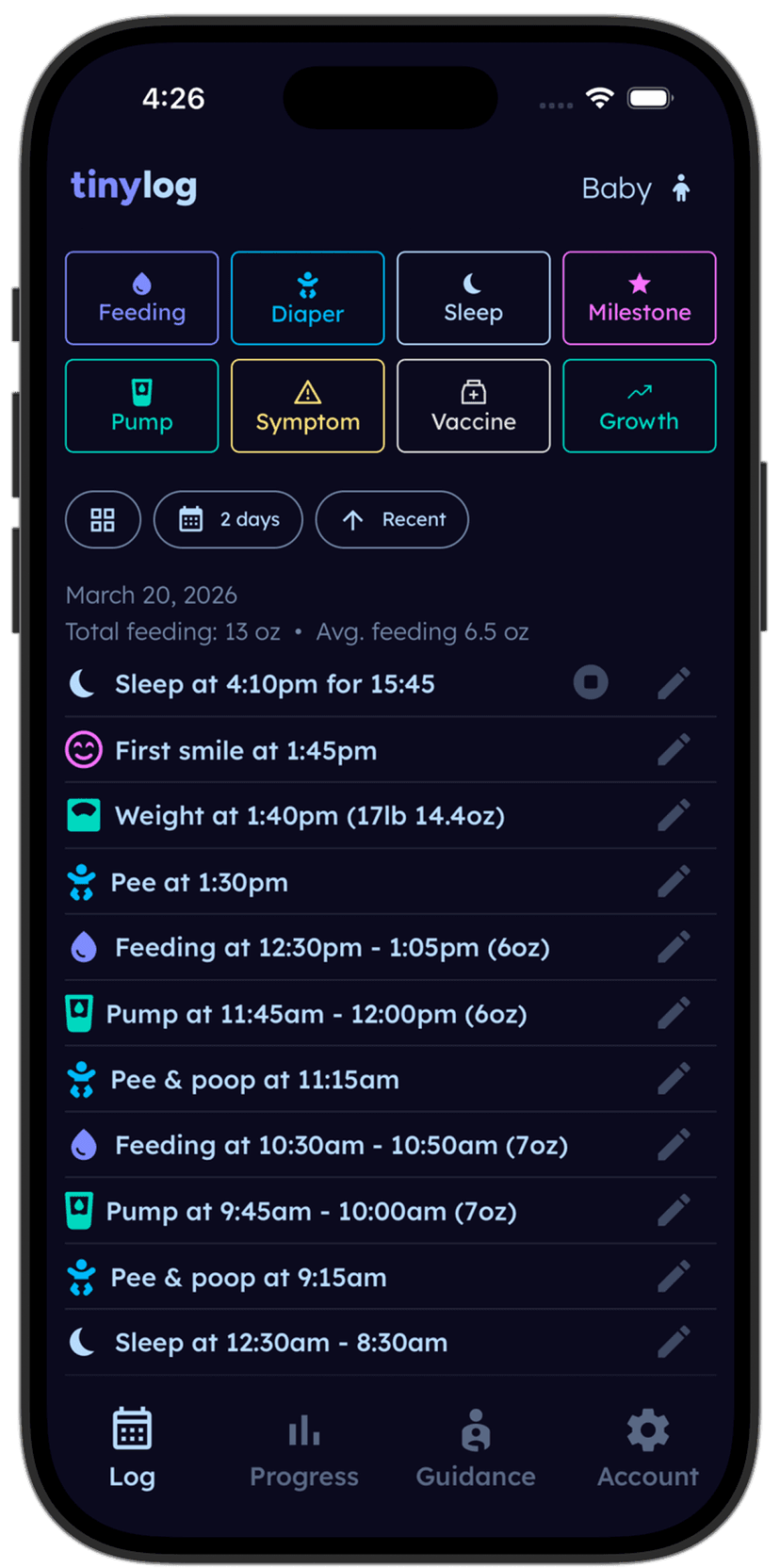
Tinylog keeps your baby's day organized — even on the go.
Log feeds, diapers, sleep, and milestones from your phone. Share with your partner in real time. Bring the data to your next pediatrician visit.


Ride Quality and Daily Use
If you plan to use your stroller for daily walks, park trips, or neighborhood strolls, the two products are not close.
The Nuna TRVL LX has progressive front and rear-wheel suspension, larger wheels, an adjustable handlebar, multiple recline positions (including near-flat for napping), and an underseat storage basket. It handles sidewalk cracks, grass, and gravel without jarring your baby awake.
The Doona+ has small, hard wheels with no suspension. The handlebar is fixed at one height. There is one recline position. The storage situation is essentially nonexistent without purchasing a separate snap-on bag. For a quick trip from the car into a restaurant or doctor's office, none of this matters. For a 45-minute walk through the park, it matters a lot.
| Product | Typical Price | Total System Cost | Notes |
|---|---|---|---|
| Doona+ Car Seat & Stroller (with LATCH base) | $550–$650 | $550–$650 | Complete system — nothing else to buy |
| Nuna TRVL LX Stroller only | $600 | $600 (stroller only) | Requires separate Nuna PIPA car seat |
| Nuna TRVL LX + PIPA urbn Travel System | $600 + $350 | $900–$950 | Full travel system — stroller + car seat |
| Nuna TRVL LX + PIPA lite rx Travel System | $600 + $450 | $1,000–$1,050 | Full travel system with premium car seat + base |
Price: Upfront vs. Total Cost of Ownership
On paper, the Doona+ looks like the better deal. For $550–$650, you get a complete car seat and stroller in one box. The Nuna TRVL LX stroller alone costs $600, and you still need a Nuna PIPA car seat ($300–$450) to complete the travel system — putting your total at $900–$1,050.
But factor in the Doona's shorter usable lifespan. When your baby outgrows the Doona (usually around 12–18 months), you will need to buy both a convertible car seat ($200–$400) and a stroller ($150–$500). Suddenly the total spend looks similar — or higher.
The Nuna TRVL LX stroller keeps working through toddlerhood and beyond. You will still need a convertible car seat eventually, but you will not need another stroller.
Bottom line on cost: the Doona costs less today. The Nuna system costs less over time.
Choose the Doona+ If
- You want one product that does everything — no clicking, no adapters, no assembly
- You live in a city and mostly take short trips from car or rideshare to destination
- You fly frequently and want an FAA-approved car seat you can stroll through the airport
- You are short on storage space and want to minimize the total amount of baby gear
- Your baby is under 6 months and you want the simplest possible newborn setup
Choose the Nuna TRVL LX If
- You want a stroller that grows with your child past the infant stage (up to 50 lbs)
- Daily walks and extended strolling are part of your routine
- You want suspension, a storage basket, and adjustable recline for real-world comfort
- You care about low-emission materials and GREENGUARD Gold certification
- You are willing to invest more upfront for a system that lasts 3+ years
- You want a one-hand fold that fits in overhead bins and stands on its own
Where to Buy
If seamless car-to-stroller convenience is your top priority, the Doona+ Infant Car Seat & Stroller ($550–$650) is genuinely one of a kind. Nothing else on the market matches that instant transition from car seat to stroller with zero assembly. It is best suited for urban parents, frequent travelers, and families who prioritize simplicity over versatility.
If you want a stroller that grows with your child and performs well on real-world terrain, the Nuna TRVL LX Stroller ($600) is one of the best compact strollers available — real suspension, one-hand fold, near-flat recline, and a usable storage basket. Pair it with a Nuna PIPA car seat for a full travel system that lasts years, not months.
Whichever direction you lean, try to see both in person at a baby gear store before buying. How a stroller feels in your hands — the push, the fold, the weight — matters more than any spec sheet.
Tinylog earns a small commission on purchases made through these links, at no cost to you.
Tip: check promo.new before purchasing. It's hit or miss depending on the product, but when it hits, you'll be glad you checked.
The Bottom Line
The Doona+ and the Nuna TRVL LX are both premium, well-built products. They just serve different needs.
The Doona+ is the right pick if you want the simplest possible newborn setup, you take lots of short trips, or you fly frequently. Its all-in-one design is uniquely convenient. Accept that you will outgrow it within 12–18 months and budget accordingly.
The Nuna TRVL LX is the right pick if you want a stroller that performs well as a daily driver, grows with your child to 50 lbs, and offers the comfort features (suspension, recline, storage) that make extended outings pleasant. It costs more upfront but saves money over time.
There is no wrong choice here — only a choice that fits your family's lifestyle better. If you are still undecided, ask yourself one question: will I use this mostly for quick transitions, or for actual strolling? Your answer will point you in the right direction.
If you are tracking feeds, diapers, and sleep during the newborn period — which your pediatrician will likely ask about — Tinylog makes it easy to log everything from your phone, even one-handed while pushing a stroller.
Related Guides
- Pampers Swaddlers vs. Huggies Little Snugglers — The two best-selling diapers compared
- Baby Feeding Chart — How much your baby should eat by age
- 1-Month-Old Sleep Schedule — What to expect and how to establish a routine
- Baby Diaper Rash — Causes, treatment, and when to call your doctor
Sources
- Doona.com. "Doona+ Car Seat & Stroller — Product Information." doona.com, 2026.
- NunaBaby.com. "Nuna TRVL lx Stroller — Compact & Luxe." nunababy.com, 2026.
- NunaBaby.com. "Nuna PIPA urbn & TRVL lx Travel System." nunababy.com, 2026.
- Strolleria.com. "Nuna TRVL vs. Nuna TRVL lx — In-Depth Stroller Comparison." strolleria.com, 2025.
- The Baby Cubby. "Doona vs. Nuna PIPA Urbn: The Best Travel Systems for City Life." babycubby.com, 2025.
- Kristin Pressley. "Doona vs. Nuna Stroller Review." kristincpressley.com, 2025.
- Orbit Baby. "5 Best Doona Stroller Alternatives (2026 Update)." orbitbaby.com, 2026.
This guide is for informational purposes only. Product specifications may change without notice. Always verify current specs, safety certifications, and compatibility on the manufacturer's website before purchasing. Install car seats according to manufacturer instructions and local regulations.
Frequently asked questions
- Can the Doona+ be used as a regular stroller without the car seat base?
- Yes. The Doona+ works as a stroller anywhere — no base required. The base is only needed for vehicle installation. You can use the Doona+ with just a seat belt in the car and then unfold the wheels to stroll. This is one of its biggest advantages for travel and quick errands.
- Does the Nuna TRVL LX work with non-Nuna car seats?
- No. The Nuna TRVL LX only accepts Nuna PIPA series car seats directly without adapters. There is no cross-brand compatibility. If you want a Nuna travel system, you need a Nuna car seat — typically the PIPA urbn or PIPA lite rx.
- Which one lasts longer as the baby grows?
- The Nuna TRVL LX holds children up to 50 lbs, making it usable well into toddlerhood. The Doona+ is rear-facing only and maxes out at 35 lbs and 32 inches — most babies outgrow it by 12–18 months. After that, you need a separate stroller and car seat anyway.
- Is the Doona+ safe to use on airplanes?
- Yes. The Doona+ is FAA-approved for aircraft use. You can install it rear-facing in an airplane seat using the seat belt. The integrated wheels fold away neatly. This makes it one of the most travel-friendly car seats available.
- How small does the Nuna TRVL LX fold?
- The TRVL LX folds to 27 x 14.25 x 21 inches — small enough to fit in most overhead bins and car trunks. It folds with one hand, stands upright when folded, and comes with a carry bag. The quick-release wheels can be removed for an even more compact package.
- Can I use the Doona+ for long walks or daily strolling?
- You can, but it is not ideal for that purpose. The Doona+ has small wheels, no suspension, a fixed handlebar, and virtually no storage basket. It is designed for short car-to-destination transitions, not extended walks. For daily strolling, a dedicated stroller like the TRVL LX will be far more comfortable for both parent and baby.