
GUIDE
Dr. Brown's HappyPaci vs. Itzy Ritzy Natural Rubber Newborn Pacifier
Published on
The Dr. Brown's HappyPaci is a one-piece silicone pacifier with a soft, rounded nipple and the same trusted name behind one of the most popular bottle lines in the US. The Itzy Ritzy is a natural rubber option with a cherry-shaped nipple and a look that belongs in a curated nursery flat-lay.
These two pacifiers take completely different paths to the same goal — keeping your baby calm and satisfied. The HappyPaci is medical-grade silicone, dishwasher-safe, and built for easy cleaning. The Itzy Ritzy is 100% natural rubber latex, softer to the touch, and a favorite among parents who want plant-based materials. Your baby will probably have a strong opinion about which one stays in their mouth.
Log feeds, sleep, and soothing
Same Goal, Very Different Pacifiers
The Dr. Brown's HappyPaci and the Itzy Ritzy Natural Rubber Pacifier both exist to do one thing: keep your baby calm. But they go about it in completely different ways.
The HappyPaci is made from medical-grade silicone — same material used in hospital equipment. It is a one-piece design with no seams, no joints, and nothing that can come apart. You can toss it in the dishwasher, boil it, or run it through a sterilizer. Dr. Brown's made their name with anti-colic bottles, and they brought that same practical, no-fuss energy to their pacifier line.
The Itzy Ritzy uses 100% natural rubber latex sourced from rubber trees. It is softer, more flexible, and has a warmer feel that some babies — especially breastfed ones — take to right away. The colors are also gorgeous, which should not matter but absolutely does at 2 AM when you are surrounded by beige baby gear and want something that sparks a tiny bit of joy.
We compared the materials, nipple shapes, cleaning routines, durability, and real costs so you can make the call without second-guessing yourself at the store.
For more on feeding schedules and timing pacifier introduction around breastfeeding, see our baby feeding chart.
| Feature | Dr. Brown's HappyPaci | Itzy Ritzy Natural Rubber | What It Means |
|---|---|---|---|
| Manufacturer | Dr. Brown's | Itzy Ritzy | Dr. Brown's is best known for their anti-colic bottles. Itzy Ritzy is a boutique baby brand with a strong design-forward identity. |
| Nipple material | Medical-grade silicone | 100% natural rubber latex | Silicone is more durable and hypoallergenic. Natural rubber is softer and has a warmer, skin-like feel. |
| Nipple shape | Rounded, bulb-shaped | Symmetrical cherry shape | Both are non-orthodontic. The Itzy Ritzy's cherry shape may feel closer to the breast for breastfed babies. |
| Construction | One-piece silicone (no seams) | One-piece natural rubber | Both are one-piece designs — no detachable parts, no choking hazard from separated pieces. |
| BPA/PVC/phthalate-free | Yes | Yes | Tie. Both are free of BPA, PVC, and phthalates. |
| Dishwasher safe | Yes (top rack) | No | HappyPaci wins on convenience. The Itzy Ritzy must be hand washed only. |
| Sterilizer / boil safe | Yes — boil, steam, or microwave sterilizer | Boil before first use only; hand wash after | Silicone handles repeated high-heat sterilization without breaking down. Rubber degrades with regular boiling. |
| Durability | 4–6 weeks before replacement | 3–4 weeks before replacement | Silicone lasts longer. Natural rubber gets sticky and breaks down faster, especially in heat or sunlight. |
| Taste and smell | Odorless and tasteless | Slight natural rubber scent | Some babies notice the rubber smell and reject it. Silicone is completely neutral. |
| Size options | 0–6 months and 6–12 months | 0–6 months and 6–18 months | Both cover newborn through older baby. Itzy Ritzy's second size spans a wider age range. |
| Color options | A few basics (blue, pink, green) | Wide range of trendy two-tone sets and seasonal drops | Itzy Ritzy wins here by a mile. The colors are genuinely beautiful. The HappyPaci is functional, not fashionable. |
Material Matters: Silicone vs. Natural Rubber
This is the single biggest difference between these two pacifiers, and everything else — cleaning, durability, cost, baby acceptance — flows from it.
Silicone (HappyPaci) is a synthetic polymer that is hypoallergenic, odorless, tasteless, and extremely easy to sterilize. It holds its shape through repeated boiling and dishwasher cycles. It does not stain, does not absorb smells, and does not degrade in sunlight. The downside: it is firmer than rubber and some babies find it less comfortable.
Natural rubber (Itzy Ritzy) is a plant-derived material that is softer, more pliable, and closer in texture to human skin. Many breastfed babies prefer it because the give and feel are more reminiscent of the breast. The trade-offs are real, though: rubber degrades faster, can get tacky or sticky over time, has a faint natural scent, and cannot handle repeated high-heat cleaning without breaking down.
For most families, both materials are perfectly safe. The choice usually comes down to whether you prioritize convenience and durability (silicone) or softness and natural materials (rubber). If there is any history of latex allergy in your family, skip the Itzy Ritzy entirely and go with the HappyPaci.
Nipple Shape and Baby Acceptance
Both the HappyPaci and the Itzy Ritzy use rounded, non-orthodontic nipple shapes — but they are not identical.
The HappyPaci has a rounded bulb-shaped nipple that is slightly wider at the base. It is a classic pacifier shape that most babies recognize and accept without much fuss. If your baby has used other standard pacifiers, the transition to a HappyPaci is usually seamless.
The Itzy Ritzy has a symmetrical cherry-shaped nipple — round from every angle, no flat side, no preferred orientation. This shape closely mimics the natural breast, which is why lactation consultants sometimes recommend cherry-shaped pacifiers for breastfed newborns. Because it is symmetrical, it goes in the mouth correctly no matter which way your baby grabs it. One less thing to worry about at 3 AM.
Here is the honest truth about nipple shape: you can read every comparison guide on the internet and your baby might still reject both. Babies are wildly opinionated about pacifiers in ways that no product spec can predict. If your budget allows, buy one of each and see which one your baby decides to keep.
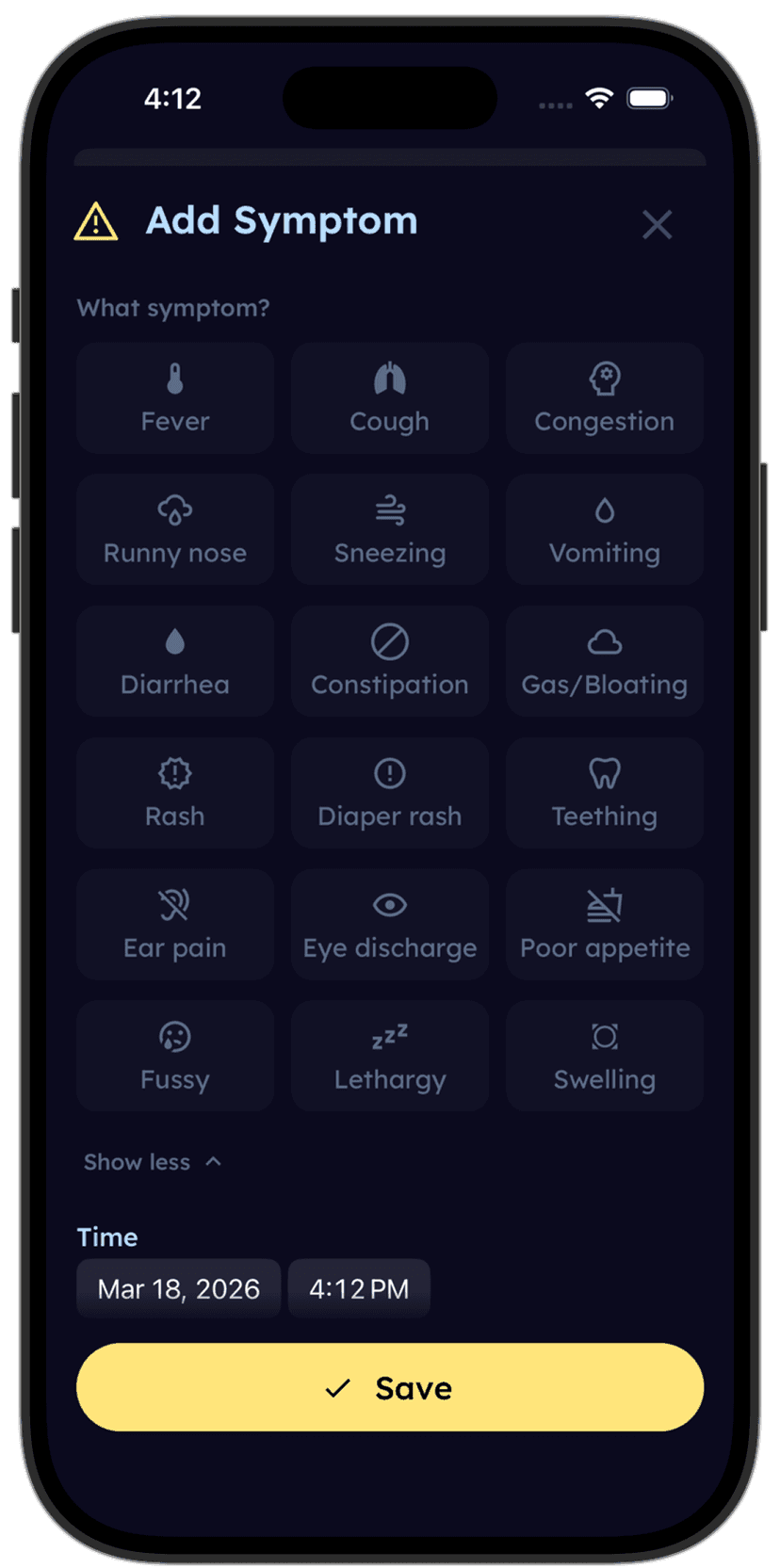
Tinylog tracks feedings so you can spot patterns.
Log nursing sessions, bottle feeds, and pacifier use. See patterns over days and weeks so you know what is actually working for your baby.


Cleaning and Day-to-Day Maintenance
Pacifiers end up on the floor approximately 47 times a day. How easy they are to clean is not a minor detail — it is a major quality-of-life thing.
Dr. Brown's HappyPaci is dishwasher-safe (top rack), can be boiled for 5 minutes, steamed in a microwave sterilizer, or simply washed with soap and hot water. The one-piece silicone construction means there are no crevices or joints where milk residue or bacteria can hide. Inspection takes about five seconds — just pull on the nipple, look for cracks, and you are good.
Itzy Ritzy Natural Rubber should be hand washed with warm water and mild soap. It is not dishwasher-safe. It is not microwave-safe for regular sterilizing. You boil it once before first use, and after that, gentle hand washing is the way to go. Natural rubber is more porous than silicone, which means bacteria can settle into micro-crevices over time — and that is exactly why you replace them every 3 to 4 weeks.
If you are the type who wants to throw everything in the dishwasher and move on, the HappyPaci fits your life better. If hand washing does not bother you, the Itzy Ritzy is fine — just stay on top of the replacement schedule.
Durability: Silicone Holds Up Longer
Silicone pacifiers simply last longer than natural rubber ones. That is not a knock on the Itzy Ritzy — it is just how the materials work.
The HappyPaci holds its shape and integrity for about 4 to 6 weeks of regular use. Silicone resists UV light, does not absorb flavors, and bounces back after sterilization.
The Itzy Ritzy starts showing wear around 3 to 4 weeks. Natural rubber can become sticky, develop slight discoloration, or lose its elasticity — especially if exposed to direct sunlight or oils. This is normal for the material, not a defect.
The practical takeaway: you will buy Itzy Ritzy replacements more often. Over a year of pacifier use, that adds up — both in cost and in the mental load of remembering to check and replace them on schedule.
| Product | Typical Price | Cost Per Pacifier | Monthly Replacement Cost |
|---|---|---|---|
| Dr. Brown's HappyPaci (2-pack, 0–6 months) | $5–$7 | ~$2.50–$3.50 | ~$5–$7/month |
| Itzy Ritzy Natural Rubber (2-pack, 0–6 months) | $7–$10 | ~$3.50–$5.00 | ~$7–$10/month |
| Dr. Brown's HappyPaci (4-pack value) | $9–$12 | ~$2.25–$3.00 | ~$5–$6/month |
Price Breakdown: HappyPaci Is the Budget-Friendly Pick
The Dr. Brown's HappyPaci costs roughly $2.25–$3.50 per pacifier depending on pack size. The Itzy Ritzy runs about $3.50–$5.00 per pacifier. That gap is noticeable but not dramatic — until you factor in how often you replace them.
Over six months, expect to spend roughly $30–$42 on HappyPaci replacements versus $42–$60 on Itzy Ritzy replacements. That is a real difference, especially when you multiply it by the number of pacifiers that get lost in car seats, between couch cushions, and in that mysterious void behind the crib.
A few tips to keep costs down with either brand:
- Buy multi-packs. The per-unit cost drops when you buy 4-packs instead of 2-packs.
- Use Subscribe & Save. Amazon knocks 5–15% off recurring pacifier orders.
- Stash spares everywhere. Keep one in the car, one in the diaper bag, one by the crib, one by the couch. Losing the only pacifier at midnight is a special kind of misery.
- Watch for sales. Both brands go on sale during Prime Day, Target Circle deals, and registry completion discounts.
Choose the Dr. Brown's HappyPaci If
- You want something dishwasher-safe that does not require special cleaning routines
- Anyone in your household has a latex allergy or sensitivity
- You already use Dr. Brown's bottles and like staying in the same brand ecosystem
- Budget matters — you will burn through a lot of pacifiers in year one
- You prefer a completely odorless, tasteless pacifier your baby is less likely to reject
Choose the Itzy Ritzy Natural Rubber Pacifier If
- You prefer natural, plant-based materials over synthetic silicone
- Your baby is breastfed and you want a nipple shape that mimics the breast
- Aesthetics matter to you — the color combos are legitimately cute
- Your baby has rejected firmer silicone pacifiers and needs something softer and more flexible
- You do not mind hand washing and replacing pacifiers more frequently
- You want a softer, squishier nipple with a texture closer to skin
Where to Buy
The Dr. Brown's HappyPaci (~$2.50/pacifier in a multi-pack) is the practical pick — one-piece silicone, dishwasher-safe, fully sterilizable, and made by a brand that has been solving baby feeding problems for years. Grab a 4-pack so you always have a clean one within reach.
If natural rubber is more your speed, the Itzy Ritzy Pacifier (~$4.50/pacifier in the 2-pack) is a well-made alternative with a softer feel, a breast-mimicking nipple shape, and color options that look great in your nursery and on your Instagram. Just budget for more frequent replacements.
Best move: buy one pack of each and let your baby make the final call. Their mouth, their rules.
Tinylog earns a small commission on purchases made through these links, at no cost to you.
Tip: check promo.new before purchasing. It's hit or miss depending on the product, but when it hits, you'll be glad you checked.
The Bottom Line
The Dr. Brown's HappyPaci and the Itzy Ritzy Natural Rubber Pacifier are both well-made, safe, and popular among new parents. They just prioritize different things.
The HappyPaci wins on durability, ease of cleaning, cost-effectiveness, and the peace of mind that comes with a hypoallergenic silicone design. It is the low-fuss, practical choice.
The Itzy Ritzy wins on material naturalness, nipple softness, aesthetic appeal, and a shape that breastfed babies often accept more easily. It is the thoughtful, plant-based choice.
The real answer, though, is that your baby gets the final say. Some babies latch onto the first pacifier they try and refuse everything else. Others spit out five different brands before settling on the one you bought on a whim at Target. Buy one of each, try both, and go with whatever your baby actually keeps in their mouth.
If you are tracking feeds and soothing patterns — which is incredibly useful in those foggy early weeks — Tinylog makes it easy to log pacifier use alongside nursing, bottles, and sleep so you can see what is actually working.
Related Guides
- Baby Feeding Chart — How much your baby should eat by age
- Breastfeeding Positions — Find the hold that works for you and your baby
- Baby Sleep Safety — Safe sleep guidelines including pacifier use at bedtime
- Newborn Essentials Checklist — Everything you actually need before baby arrives
Sources
- DrBrownsBaby.com. "HappyPaci Silicone Pacifier — Product Information." 2026.
- ItzyRitzy.com. "Natural Rubber Pacifier — Product Information." 2026.
- American Academy of Pediatrics. "Pacifiers: Satisfying Your Baby's Needs." healthychildren.org, 2025.
- Pediatric Dentistry Journal. "Pacifier Use and Orthodontic Considerations in Infancy." 2024.
- Consumer Reports. "Best Pacifiers for Babies." consumerreports.org, 2026.
- La Leche League International. "Pacifiers and Breastfeeding." llli.org, 2025.
This guide is for informational purposes only. Pacifier preference varies by baby. If your baby develops mouth irritation, a rash, or refuses to feed after pacifier introduction, consult your pediatrician.
Frequently asked questions
- Is the Dr. Brown's HappyPaci or Itzy Ritzy pacifier better for newborns?
- Both are designed for newborns. The HappyPaci uses medical-grade silicone and a one-piece design that is easy to sterilize. The Itzy Ritzy uses 100% natural rubber with a cherry-shaped nipple that mimics the breast. Most newborns will accept either — it really comes down to which material you prefer and which one your baby latches onto.
- Can my baby have an allergic reaction to the Itzy Ritzy pacifier?
- Latex allergies in infants are very rare, but they can happen. If anyone in your family has a known latex allergy, go with the silicone HappyPaci instead. Watch for redness, swelling, or a rash around the mouth after pacifier use. If you see any of those signs, stop using it and call your pediatrician.
- How often should I replace the Dr. Brown's HappyPaci?
- Dr. Brown's recommends replacing silicone pacifiers every 4–6 weeks, or sooner if you see any cracks, tears, or discoloration. Inspect it before every use by pulling on the nipple to check for weak spots.
- Is the Itzy Ritzy Natural Rubber Pacifier dishwasher safe?
- No. Natural rubber breaks down in high heat. Hand wash with warm water and mild soap before each use. You can boil it for 5 minutes before first use, but regular boiling will shorten its lifespan.
- Do pacifiers interfere with breastfeeding?
- Current evidence suggests pacifiers do not significantly harm breastfeeding once nursing is well established. Most lactation consultants suggest waiting 2–4 weeks until breastfeeding is going smoothly before introducing a pacifier. The AAP notes that pacifier use at sleep time may help reduce the risk of SIDS.
- Which pacifier is better for orthodontic development?
- Neither the HappyPaci nor the Itzy Ritzy uses a traditional orthodontic shape — both have rounded nipples. For newborns, the nipple shape has minimal impact on dental development. Prolonged pacifier use past age 2 is a much bigger factor in orthodontic outcomes than which brand you pick in the first few months.