GUIDE

Breastfeeding Positions

There's no single 'correct' position. The best one is whatever gets your baby latched deeply and keeps you comfortable enough to do it 8-12 times a day.

If the hold you're using isn't working — baby can't latch, your back is screaming, or you're dreading feeds — try a different position. Sometimes that's all it takes.

Why Position Matters More Than You Think

Here's a pattern lactation consultants see constantly: a parent comes in with sore nipples, a frustrated baby, and the belief that they have low supply. The IBCLC adjusts the breastfeeding position, the latch improves, pain decreases, and milk transfer increases. Same parent, same baby, same breasts — different angle.

Breastfeeding position determines latch angle, which determines how much breast tissue baby takes in, which determines whether feeding is comfortable and efficient or painful and frustrating. It sounds simple because it is. But when you're exhausted and holding a squirming baby, finding the right position feels anything but simple.

There's no universal "best" position. It depends on your body, your baby's size and age, whether you've had a C-section, the shape and size of your breasts, and frankly what time of day it is and how tired you are. The guide below covers the most common positions, when each one shines, and how to set them up.

The Five Main Breastfeeding Positions

Cradle Hold

**Best for:** After you and baby have some experience; comfortable for older babies **How:** Baby lies across your lap with their head in the crook of your arm on the nursing side. Their body faces yours, tummy to tummy. Support their back with your forearm. **Tips:** This is the 'classic' breastfeeding position, but it's actually harder for newborns because you have less head control. Many parents find it more comfortable once baby has better head control around 4-6 weeks. **Watch for:** Baby sliding down toward the nipple instead of taking a deep latch. Make sure baby is at breast level, not in your lap.

Cross-Cradle Hold

**Best for:** Newborns, small babies, learning to latch, premature babies **How:** Baby lies across your body, but you support their head with the hand OPPOSITE to the nursing breast. If nursing on the left, your right hand cups baby's head and neck. Left hand supports the breast. **Tips:** This gives you maximum control over baby's head position at the breast. Use it while you're both learning. Many parents transition to the cradle hold once latch is established. **Watch for:** Pushing the back of baby's head — support the neck and shoulders instead, allowing baby to tip their head back slightly for a deeper latch.

Football (Clutch) Hold

**Best for:** C-section recovery, large breasts, twins, babies who struggle with cross-cradle **How:** Baby tucks alongside your body, under your arm, like carrying a football. Their legs go behind you. Support their head at breast level with your hand. Use a pillow to bring them up. **Tips:** Great for after C-section because baby never touches your incision. Also helpful for larger breasts because it gives a clear sightline to baby's latch. Some babies who hate cradle holds love this one. **Watch for:** Baby's body twisting — keep their ear, shoulder, and hip in a straight line, even tucked at your side.

Side-Lying

**Best for:** Night feeds, C-section recovery, exhaustion, back pain, anyone who wants to rest while feeding **How:** You and baby both lie on your sides, facing each other. Baby's mouth is at nipple level. You can use your lower arm to support your own head or tuck it under a pillow. Baby's body should be close against yours. **Tips:** This is a survival position for nighttime feeds. You can rest (even doze) while baby nurses. Set up safe sleeping conditions — firm mattress, no loose blankets near baby's face, no pillows near baby. **Watch for:** Baby rolling onto their back and losing the latch. A rolled-up towel behind baby's back can keep them in position.

Laid-Back (Biological Nurturing)

**Best for:** Newborns, babies with latch difficulties, fussy babies, anyone who wants a relaxed approach **How:** Recline at a 30-45 degree angle (not flat). Place baby on your chest, tummy-down, with their face near the breast. Let gravity hold baby against you. Baby can self-latch using natural reflexes. **Tips:** This position uses baby's primitive feeding reflexes (the stepping and crawling reflexes they use to find the breast). It's often recommended for babies who are struggling with traditional positions. It's also the most restful for you. **Watch for:** Nothing much — this is the lowest-effort position for both of you. Just make sure you're reclined enough that baby is held in place by gravity.

Position Tips That Apply to Every Hold

Pillows are not optional

Whether it's a nursing pillow, a stack of bed pillows, or couch cushions — bring baby UP to breast level. If you're hunching to reach baby, your back will be wrecked within a week. Baby should be high enough that you can sit (or recline) with relaxed shoulders.

Tummy to tummy, always

In every position, baby's body should face yours. If their head is turned to the side to reach the breast but their body faces the ceiling, they can't swallow well. Align their whole body toward you.

Nose to nipple at the start

Before latching, position baby so their nose (not mouth) is at nipple level. When they tip their head back to latch, they'll get a deep, asymmetric latch with more breast tissue from below. This one alignment trick prevents a lot of pain.

Switch positions if something isn't working

If one position consistently leads to a poor latch or pain, try a completely different one. Sometimes a baby who can't latch in cross-cradle clicks perfectly in football hold. Same breast, different angle, different result.

Your position changes as baby grows

A newborn who needs full head support and the cross-cradle hold at 1 week might nurse happily in cradle hold at 6 weeks and practically latch themselves while sitting in your lap at 6 months. The positions that work will evolve.

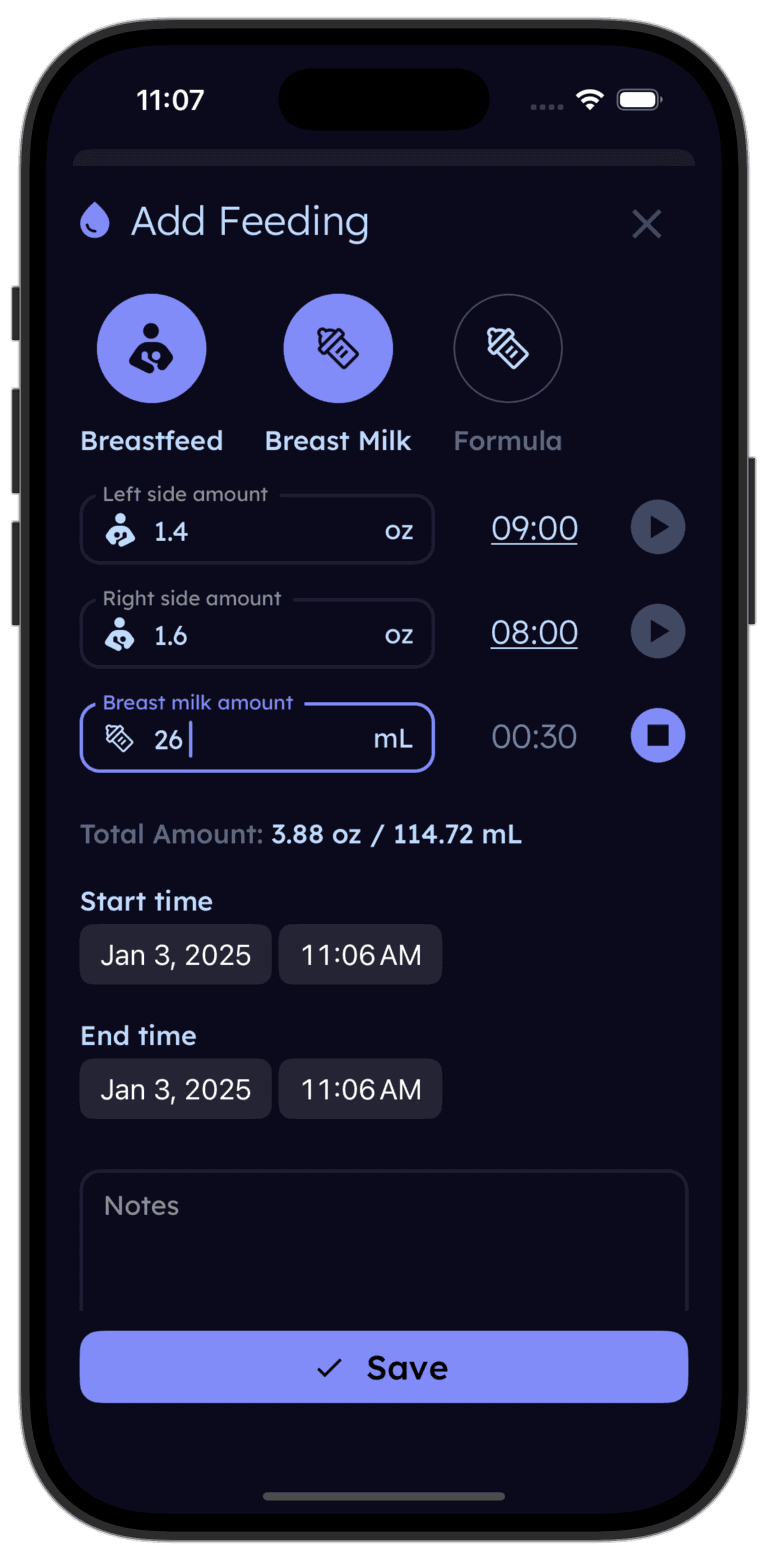
tinylog nursing tracker with notes on breastfeeding position

Add a quick note to each session — 'football hold, left side, good latch.' When you find what works, you'll want to remember it.

tinylog lets you log nursing sessions with position notes in seconds. Build a library of what works best for each side — especially useful if your partner or a caregiver needs to help with positioning.

Download on the App StoreGet It On Google Play

Matching Position to Situation

After a C-section: Football hold or side-lying. Keep baby's weight off your incision.

With large breasts: Football hold gives you the best sightline to see baby's latch. A rolled towel or cloth under the breast can help support its weight.

With a very small or premature baby: Cross-cradle gives you the most head control. Laid-back nurturing can also work well because gravity holds baby against you.

For night feeds: Side-lying. You can rest while baby nurses. Have your partner help position baby if needed, and follow safe co-sleeping guidelines (firm surface, no loose bedding near baby's face, no alcohol or sedatives).

When baby is fussy and fighting the breast: Laid-back position. Something about the tummy-down, gravity-supported position calms many fussy nursers. It activates primitive feeding reflexes that traditional holds don't.

When one side is refused: Try a different position on that side. The football hold on the left breast positions baby similarly to the cradle hold on the right breast. Some babies who refuse the left in cradle will take it in football because the approach angle is familiar.

When you're dealing with overactive letdown: Laid-back or side-lying. Both positions use gravity to slow milk flow, so baby doesn't choke on a fast letdown. Recline and let gravity work for you instead of against you. For more on overactive letdown, see our oversupply guide.


What the Evidence Actually Says

"Laid-back breastfeeding is just a trendy fad." It's actually rooted in research by Suzanne Colson on biological nurturing. Her studies showed that semi-reclined positioning activates primitive neonatal reflexes — including stepping, rooting, and crawling — that help babies self-attach to the breast. It's not new-age; it's neurobiology.

"You should alternate positions to prevent clogged ducts." There's limited evidence that varying positions prevents clogs, but it's a common recommendation because different positions drain different areas of the breast more effectively. It's harmless advice and may help, so it's reasonable to rotate positions occasionally.

"The cradle hold is the standard for a reason." Actually, the cross-cradle hold is now recommended more often for newborns by IBCLCs because it offers better head control. The cradle hold became "standard" partly because it's what people see in images — but it's harder for beginners. Don't feel bad if the classic hold isn't working for you.

When to Get Help and What Kind

See an IBCLC if: you can't find a comfortable position, baby consistently fights the breast in every hold, one side is always painful regardless of position, or you've tried everything and feeds are still stressful. An IBCLC can physically help you adjust positioning — sometimes a half-inch change makes all the difference.

See your pediatrician if: baby has a strong side preference that might indicate torticollis (a tight neck muscle) or other physical issue. Some babies prefer one side because turning their head the other way is uncomfortable, and that's worth evaluating.

See a physical therapist if: your back, neck, or shoulders are hurting from nursing posture. Breastfeeding-related back pain is incredibly common and a pelvic floor/postpartum physical therapist can help with both positioning ergonomics and recovery.

Related Guides

Sources

  • Colson, S. D., et al. (2008). Optimal positions for the release of primitive neonatal reflexes stimulating breastfeeding. Early Human Development, 84(7).
  • American Academy of Pediatrics (AAP). (2022). Breastfeeding and the Use of Human Milk. Pediatrics, 150(1).
  • World Health Organization. (2023). Breastfeeding counselling: A training course.
  • Academy of Breastfeeding Medicine. (2020). ABM Clinical Protocol #26: Persistent Pain with Breastfeeding. Breastfeeding Medicine, 15(2).
  • Henderson, A., et al. (2001). Postpartum positioning and attachment education for increasing breastfeeding: A randomized trial. Birth, 28(4).

Medical Disclaimer

This guide is for informational purposes only and is not a substitute for professional medical advice. If you're experiencing breastfeeding difficulties, consider consulting an IBCLC (International Board Certified Lactation Consultant) or your pediatrician.

Get this positions guide in your inbox.
We'll email you this visual reference so you can try a new hold without one-handed scrolling.
Track which position works best for each side.
Download tinylog free — add notes to your nursing sessions and build your own playbook.
Download on the App StoreGet It On Google Play